Fastest Growing Shade Trees: 15 Picks And How Fast They Really Grow
On this page
Everyone who plants a shade tree wants shade sooner rather than later. Some trees deliver. A fast grower can add 2 to 3 feet of height a year once established, and a few go faster still. But the very quickest trees often come with weak wood, short lives, or roots that lift sidewalks.
This guide ranks 15 of the fastest growing shade trees for American yards and explains how fast each one really grows. It also covers what speeds growth up, what slows it down, and which fast trees are worth planting for the long term. Growth rates come from university extension and arboretum references. They describe young trees in good conditions, so expect less in poor soil, dry climates, or shade.
How Fast Is Fast?
Nurseries and extension services usually group trees into three growth classes, based on yearly height gain.
Slow, Medium, And Fast Growth Rates
A slow growing tree adds less than 12 inches a year. A medium grower adds 13 to 24 inches. A fast grower adds 25 inches or more. Those figures describe young trees during their main growth years, not seedlings in their first season or mature trees that have reached full height.
The First Years Are Slower
Gardeners have a saying for newly planted trees: the first year they sleep, the second year they creep, and the third year they leap. A transplanted tree spends its first season or two rebuilding roots. Real height gains usually start in year two or three.
What Changes Growth Speed
Full sun, deep and well drained soil, steady moisture, and a long growing season all speed growth. Compacted soil, drought, competition from lawn grass, and deep planting slow it down. A red maple in a wet Southern yard can outgrow the same tree on a dry Western lot by a wide margin.
The Fastest Shade Trees
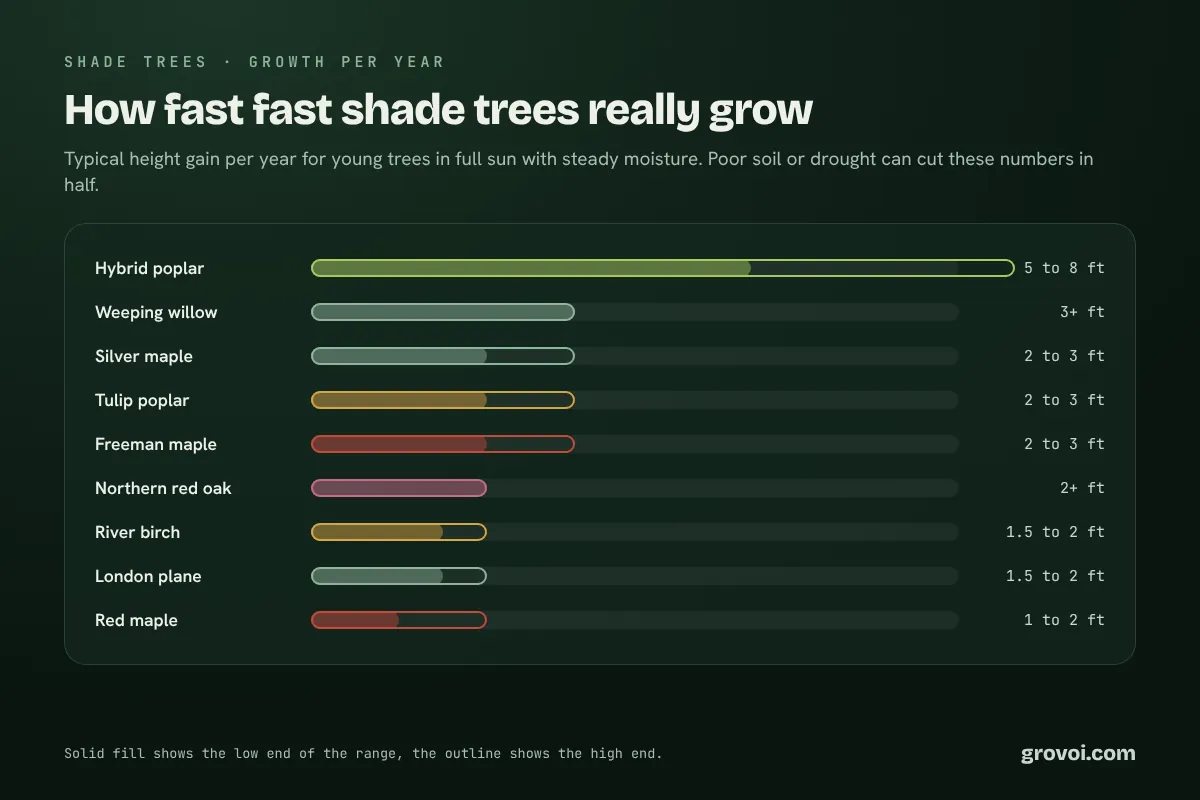
These five trees are the quickest growers on the list. Each carries trade offs, so read the cautions before planting.
1. Hybrid Poplar
Hybrid poplar is the fastest shade tree you can plant, often gaining 5 to 8 feet a year when young. It reaches 40 to 50 feet in zones 3 to 9. The catch is a short life, often 15 to 30 years, along with weak wood, canker diseases, and aggressive roots. Use it as a quick, temporary screen while slower, longer lived trees grow up beside it.
2. Weeping Willow
Weeping willow can add 3 feet or more a year in moist soil and reaches 30 to 50 feet tall and wide. It grows in zones 4 to 8, depending on the type. Its roots seek out water and can invade drains, so plant it at least 50 feet from pipes, septic systems, and foundations. Our weeping willow tree guide covers where it works and where it does not.
3. Silver Maple
Silver maple (Acer saccharinum) commonly grows 2 to 3 feet a year and reaches 50 to 80 feet in zones 3 to 9. It gives dense shade quickly. The trade off is brittle wood that breaks in ice and wind storms, plus shallow roots that lift pavement. Many cities no longer plant it along streets. If you want a fast maple, the Freeman maple below is a better choice.
4. Tulip Poplar
Tulip poplar (Liriodendron tulipifera), also called tulip tree, is a native that grows 2 to 3 feet a year and becomes one of the tallest hardwoods in eastern forests, at 70 to 90 feet in yards. It grows in zones 4 to 9. Tulip shaped yellow and orange flowers appear in late spring, and leaves turn golden in fall. It needs room, so it suits large lots only.
5. Freeman Maple
Freeman maple (Acer x freemanii) is a cross between red and silver maple. Cultivars such as ‘Autumn Blaze’ grow about 2 to 3 feet a year to 40 to 55 feet tall, in zones 3 to 8. They combine the speed of silver maple with stronger wood and the bright red fall color of red maple. It is one of the most popular fast shade trees in the country.
Fast Growing Oaks And Maples
Many people assume all oaks are slow. Several grow quickly in good conditions and live for well over a century.
6. Red Maple
Red maple (Acer rubrum) grows about 1 to 2 feet a year and reaches 40 to 60 feet in zones 3 to 9. It handles wet soil, delivers reliable red or orange fall color, and has red flowers in late winter. Avoid it in alkaline soils, where its leaves can turn yellow from iron deficiency.
7. Northern Red Oak
Northern red oak (Quercus rubra) is one of the fastest oaks, often adding about 2 feet a year when young. It grows 60 to 75 feet tall in zones 3 to 8, with strong wood and russet to red fall color. To avoid oak wilt, prune only in late fall and winter. Our oak tree guide covers types and care.
8. Pin Oak
Pin oak (Quercus palustris) grows at a medium to fast rate, often 1.5 to 2 feet a year, to 60 to 70 feet tall in zones 4 to 8. It has a pyramid shape with drooping lower branches. Like red maple, it needs acidic soil, or its leaves turn yellow.
9. Willow Oak
Willow oak (Quercus phellos) has narrow, willow like leaves and a dense, rounded crown. It grows about 1.5 to 2 feet a year to 40 to 75 feet tall, in zones 5 to 9. It handles heat, wet soil, and city conditions, which makes it a favorite street tree in the South.
Other Fast Shade Trees
These six trees round out the list with a mix of native and adapted species.
10. River Birch
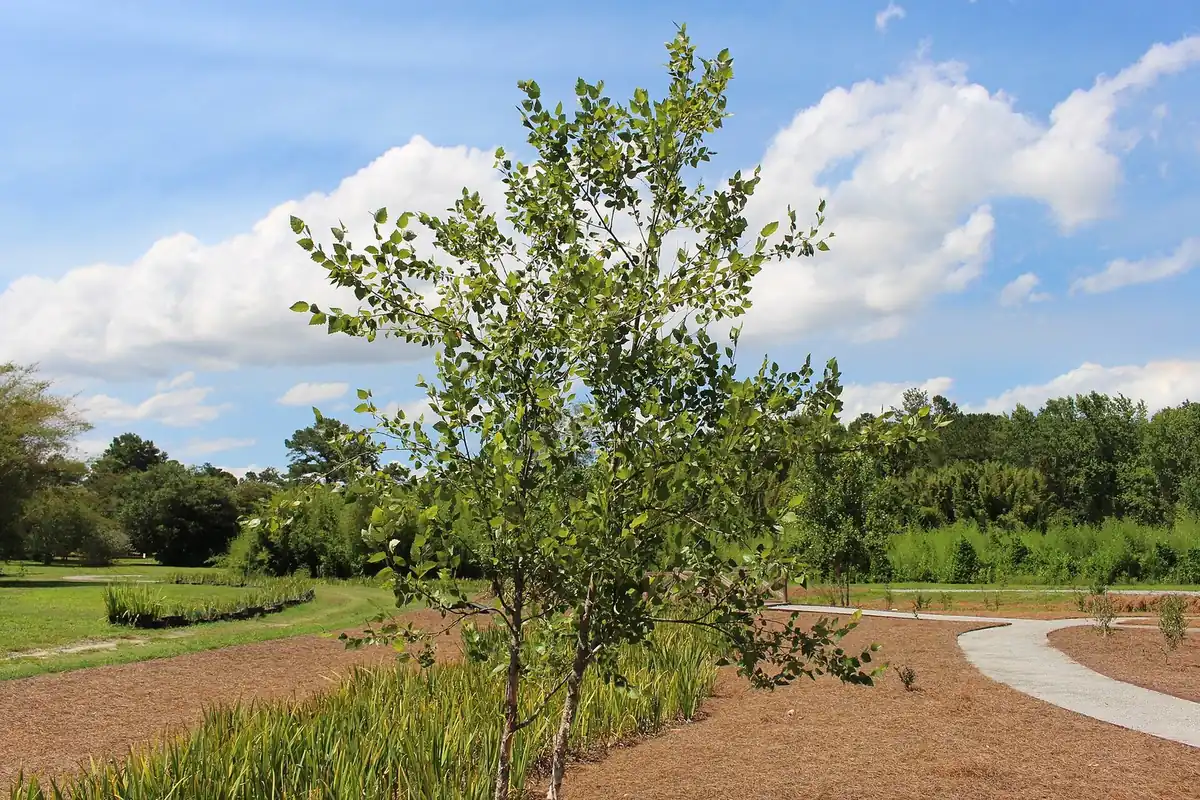
River birch (Betula nigra) grows about 1.5 to 2 feet a year to 40 to 70 feet, in zones 4 to 9. It is known for its peeling, salmon to cinnamon bark, which looks best on multi trunk trees. It resists the bronze birch borer far better than white barked birches and handles wet soil. It does need regular water in drought.
11. London Plane Tree
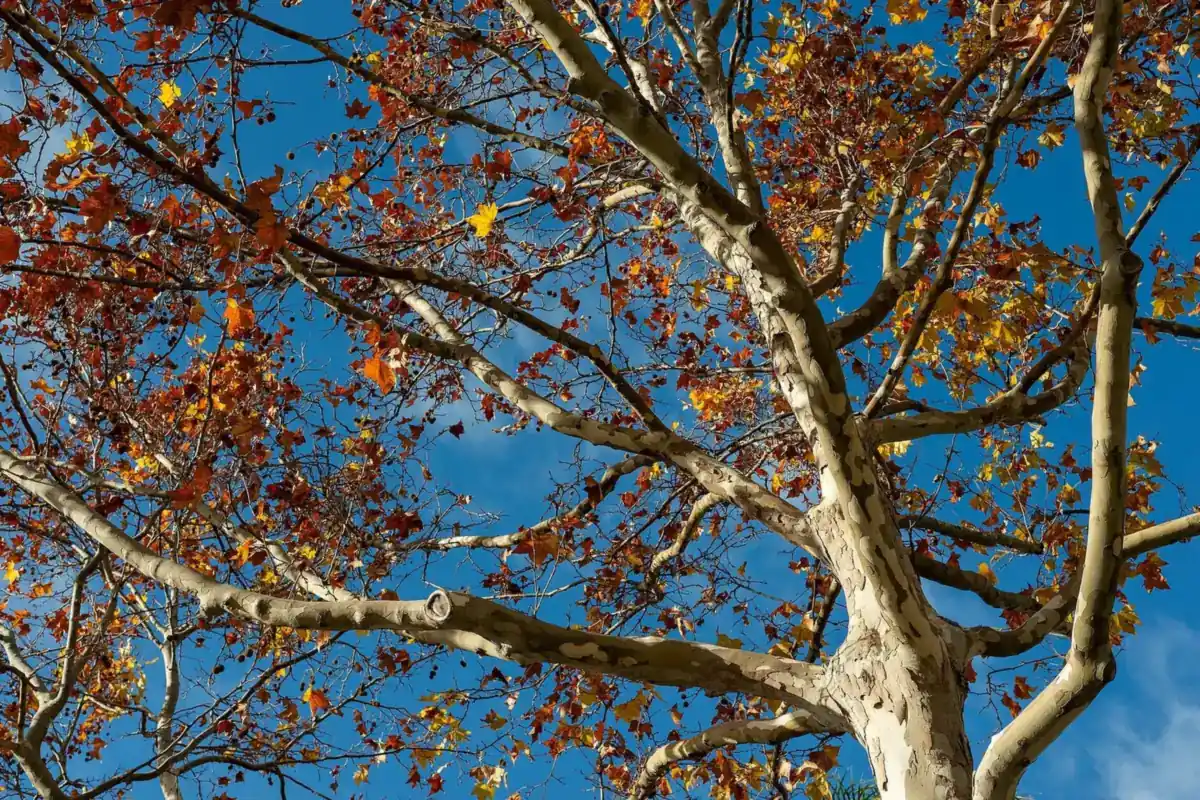
London plane tree (Platanus x acerifolia) grows about 1.5 to 2 feet a year to 75 to 100 feet, in zones 5 to 8. It tolerates pollution, compacted soil, and heat, which is why it lines city streets from New York to Paris. Its mottled, camouflage bark is striking. Resistant cultivars such as ‘Bloodgood’ hold up better against anthracnose.
12. American Sycamore
American sycamore (Platanus occidentalis) is a native relative of the London plane. It grows 2 feet or more a year and can exceed 75 to 100 feet in zones 4 to 9. White upper bark makes it easy to spot along rivers. It is messy, dropping leaves, bark, and seed balls, and it is prone to anthracnose in wet springs.
13. Dawn Redwood
Dawn redwood (Metasequoia glyptostroboides) is a deciduous conifer that can grow 2 feet or more a year to 70 to 100 feet tall, in zones 5 to 8. Its soft, feathery needles turn rusty orange before dropping in fall. It tolerates wet soil and has few pest problems, but its narrow, upright shape gives less shade than broad trees.
14. Thornless Honeylocust
Thornless honeylocust (Gleditsia triacanthos var. inermis) grows about 2 feet a year to 30 to 70 feet, in zones 3 to 8. Its tiny leaflets cast light, filtered shade, so grass grows well beneath it. Fallen leaves almost disappear on their own. Choose seedless cultivars to avoid the long pods.
15. Hackberry
Common hackberry (Celtis occidentalis) grows about 1.5 to 2 feet a year to 40 to 60 feet tall, in zones 3 to 9. It handles drought, wind, poor soil, and alkaline conditions where many shade trees fail. The warty gray bark is distinctive, and birds eat the small fruits.
Growth Rate Comparison
This table compares typical yearly growth for young trees in good conditions, along with mature size and hardiness.
| Tree | Growth per year | Mature height | USDA zones |
|---|---|---|---|
| Hybrid poplar | 5 to 8 ft | 40 to 50 ft | 3 to 9 |
| Weeping willow | 3 ft or more | 30 to 50 ft | 4 to 8 |
| Silver maple | 2 to 3 ft | 50 to 80 ft | 3 to 9 |
| Tulip poplar | 2 to 3 ft | 70 to 90 ft | 4 to 9 |
| Freeman maple | 2 to 3 ft | 40 to 55 ft | 3 to 8 |
| Red maple | 1 to 2 ft | 40 to 60 ft | 3 to 9 |
| Northern red oak | About 2 ft | 60 to 75 ft | 3 to 8 |
| Pin oak | 1.5 to 2 ft | 60 to 70 ft | 4 to 8 |
| Willow oak | 1.5 to 2 ft | 40 to 75 ft | 5 to 9 |
| River birch | 1.5 to 2 ft | 40 to 70 ft | 4 to 9 |
| London plane | 1.5 to 2 ft | 75 to 100 ft | 5 to 8 |
| American sycamore | 2 ft or more | 75 to 100 ft | 4 to 9 |
| Dawn redwood | 2 ft or more | 70 to 100 ft | 5 to 8 |
| Thornless honeylocust | About 2 ft | 30 to 70 ft | 3 to 8 |
| Hackberry | 1.5 to 2 ft | 40 to 60 ft | 3 to 9 |
How To Make A Shade Tree Grow Faster
You cannot turn a slow tree into a fast one, but you can help any tree reach its natural top speed.
Plant Small And Plant Right
A young tree in a 5 to 15 gallon pot often catches up with a much larger transplant within a few years, because it loses less of its root system and settles in faster. Plant with the root flare at soil level in a hole two to three times wider than the root ball.
Water Deeply In The First Years
Steady moisture is the biggest single growth booster. Soak the root zone deeply once a week in dry weather for the first two or three years, rather than giving light daily sprinkles.
Clear The Grass And Mulch
Turfgrass competes hard for water and nutrients. A mulched circle 3 to 6 feet wide, kept a few inches from the trunk, can noticeably speed early growth. Widen it as the tree grows.
Feed Only When Needed
Most trees in reasonable soil grow well without fertilizer. If growth is weak and leaves are pale, test the soil before feeding. The NC State Extension explains how to fertilize trees based on a soil test. Our guide to the best fertilizer for fruit trees also explains how to read a fertilizer label.
Fast Trees To Think Twice About
Speed is not everything. A few fast trees cause more trouble than they are worth.
Weak Wooded Trees
Silver maple, hybrid poplar, and Siberian elm grow fast because their wood is light and soft. That wood breaks easily in storms, which is a real hazard over homes and driveways.
Invasive Species
Callery pear, including the Bradford pear, and empress tree (Paulownia) grow quickly but spread into natural areas. Several states now restrict or ban their sale. Tree of heaven is also highly invasive. Choose native or non invasive alternatives.
Mix Fast And Slow Trees
A practical approach is to plant one quick grower for early shade alongside a slower, long lived tree such as a white oak or sugar maple. When the long lived tree fills in, remove the short lived one.
Frequently Asked Questions
What is the fastest growing shade tree?
Hybrid poplar is the fastest, often adding 5 to 8 feet a year when young. It is short lived and weak wooded, though. For a fast tree that also lasts, Freeman maple, tulip poplar, and northern red oak are better long term choices.
How long does it take a shade tree to provide shade?
A fast growing tree planted at 6 to 8 feet tall can cast useful shade over a patio in about 5 to 10 years. Slower trees may take 15 years or more. Growth in the first two years is slow while roots establish.
What fast growing shade tree has non invasive roots?
Freeman maple, northern red oak, tulip poplar, thornless honeylocust, and river birch are less likely than willows, poplars, and silver maples to cause root problems. Still, plant any large shade tree at least 20 feet from foundations and pipes.
Does fertilizer make trees grow faster?
Only when the soil is short of nutrients. In average soil, water, sunlight, and mulch matter far more than fertilizer. Too much nitrogen can produce weak, soft growth that attracts pests and diseases.
What is the fastest growing oak tree?
Northern red oak, pin oak, willow oak, and Nuttall oak are among the fastest oaks, often growing 1.5 to 2 feet a year in good conditions. White oaks grow more slowly but live longer.
Is a fast growing tree a good investment?
It can be, if you choose a fast tree with strong wood such as Freeman maple, red oak, or London plane. Very fast trees like hybrid poplar are best treated as short term shade while longer lived trees mature.
Final Thoughts
The best fast growing shade tree balances speed with strength and lifespan. Freeman maple, tulip poplar, northern red oak, and London plane give quick shade without the heavy downsides of poplars and silver maples.
Your Fast Shade Tree Checklist
Check your USDA zone and soil pH. Measure the space for the tree’s mature height and spread. Choose a fast grower with strong wood and few pest problems. Plant a smaller tree at the right depth, mulch a wide circle, and water deeply for two to three years. For more species guides, browse our tree finder, or read our Japanese maple guide for a smaller tree with brilliant fall color.