Japanese Maple: How To Choose, Plant And Care For Stunning Fall Color
On this page
- What Is A Japanese Maple?
- Best Japanese Maple Varieties
- Sun, Shade, And Leaf Scorch
- Soil, pH, And Drainage
- How To Plant A Japanese Maple
- Growing Japanese Maples In Containers
- Watering And Fertilizing
- Pruning A Japanese Maple
- Pests, Diseases, And Verticillium Wilt
- The Science Of Japanese Maple Fall Color
- Companion Plants For Japanese Maples
- Frequently Asked Questions
- Final Thoughts
A Japanese maple is the small tree people stop to photograph. Acer palmatum, native to the woodlands of Japan, Korea, and China, rarely passes 25 feet in a yard, yet it delivers more color per square foot than any shade tree on the lot. Hundreds of named cultivars offer red, green, gold, or variegated leaves, upright or weeping forms, and fall displays that run from clear yellow to deep crimson.
This guide explains how to choose a Japanese maple that fits your space and climate, how to plant it in the ground or in a container, and how to keep it healthy through heat, drought, and the diseases that trouble maples. It also covers the science behind the fall color, so you can site the tree where that color is strongest. The advice draws on university extension services, the Morton Arboretum, and the Missouri Botanical Garden.
What Is A Japanese Maple?
Japanese maple is the common name for Acer palmatum and, loosely, for two close relatives: the full moon maple (Acer japonicum) and the Korean maple (Acer pseudosieboldianum). All three are small, slow growing, understory trees with leaves that split into five to nine pointed lobes, which is where the name palmatum comes from.
Size, Shape, And Growth Rate
A seedling Japanese maple reaches 15 to 25 feet tall and wide in 20 years. Named cultivars are smaller, and weeping laceleaf types often stay under 8 feet. Growth is slow to moderate, about 12 inches a year when young, according to the Morton Arboretum. That slow pace is a feature: the tree never outgrows a courtyard, a foundation bed, or a large pot.
Hardiness Zones
Most Japanese maples are hardy in USDA zones 5 through 8. A few tough cultivars such as ‘Bloodgood’ and ‘Emperor 1’ survive zone 5 winters without trouble, while Korean maple hybrids extend the range into zone 4. In zone 9, the tree needs afternoon shade and steady water to survive summer, and in zone 10 it rarely thrives.
Best Japanese Maple Varieties
Nurseries sell several hundred Japanese maple cultivars, but a handful of reliable ones cover almost every yard. They sort into four groups: upright red leaf, upright green leaf, coral bark, and weeping laceleaf (dissectum).
Bloodgood: The Classic Upright Red
‘Bloodgood’ is the standard against which other red Japanese maples are judged. It grows 15 to 20 feet tall with an upright, rounded crown, holds burgundy red leaves through summer better than most, and turns bright crimson in fall. It is hardy to zone 5 and tolerates more sun than the laceleaf types.
Emperor 1: Bloodgood’s Tougher Cousin
‘Emperor 1’ (sometimes sold as ‘Wolff’) looks much like ‘Bloodgood’ but leafs out about two weeks later in spring, which protects the new growth from late frosts. Its red color is a shade brighter and lasts well in heat, so growers in the Midwest and Upper South often prefer it.
Coral Bark (Sango Kaku): Winter Interest
‘Sango Kaku’, the coral bark maple, earns its place in winter. Young branches turn vivid coral pink once the leaves drop, and the color deepens after frost. Spring leaves open yellow green with red edges, then turn gold in fall. It reaches 20 feet and suits zones 6 to 8. Plant it where you will see it from a window in January.
Laceleaf Or Dissectum Types
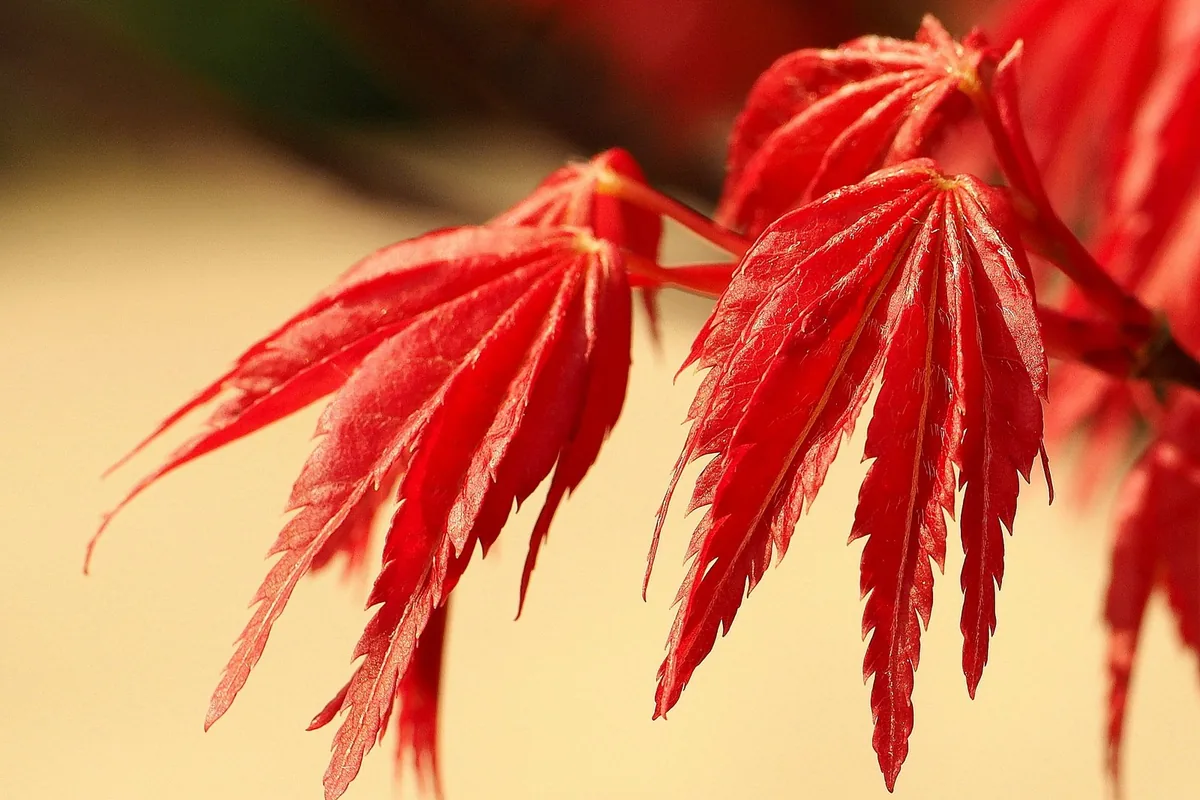
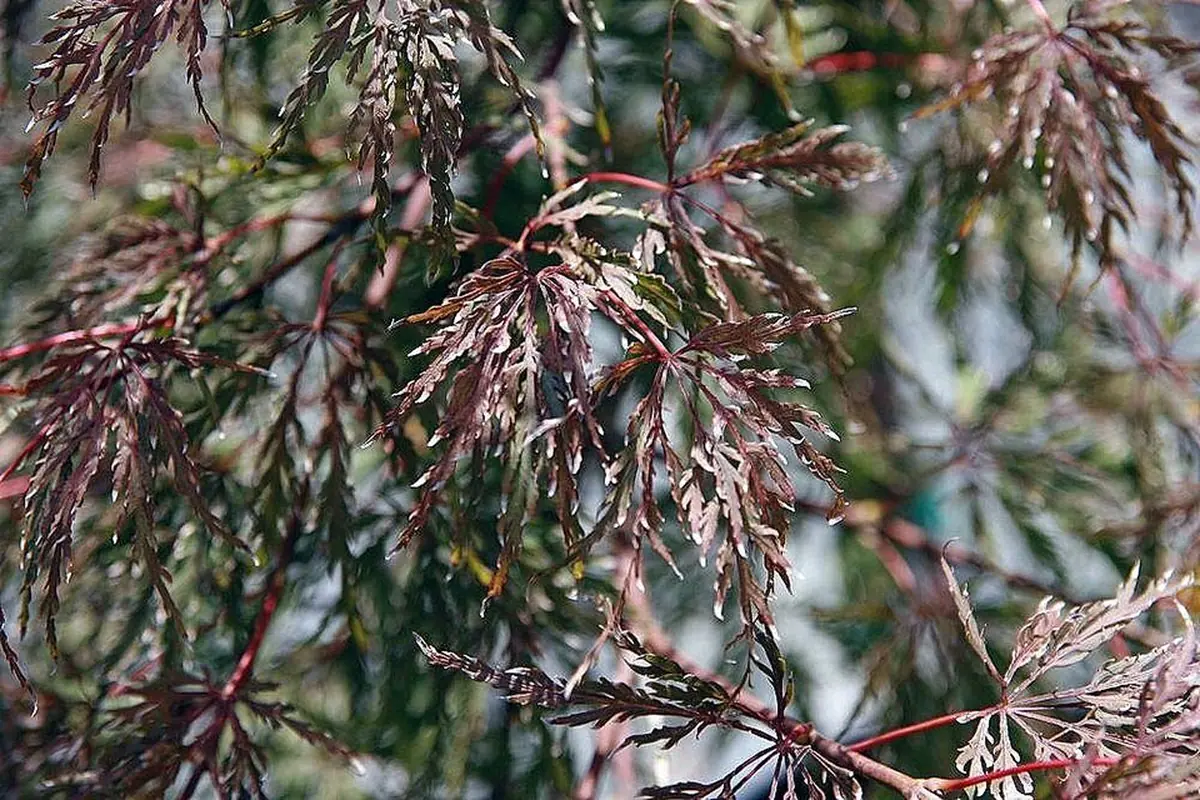
Dissectum cultivars have leaves cut so finely they look like ferns, and most grow as low, weeping mounds that spread wider than they are tall. ‘Crimson Queen’ keeps deep red leaves all summer and reaches 8 to 10 feet wide. ‘Tamukeyama’ is the most heat tolerant red laceleaf, a good pick for the South. ‘Viridis’ is the green laceleaf, turning gold and orange in fall. ‘Inaba Shidare’ grows faster and more upright than the others. Laceleaf trees scorch more easily than upright types, so give them afternoon shade.
Japanese Maple Comparison Table
| Cultivar | Type | Mature size | Summer leaf | Fall color | USDA zones | Best for |
|---|---|---|---|---|---|---|
| ‘Bloodgood’ | Upright red | 15 to 20 ft tall, 15 ft wide | Burgundy red | Crimson | 5 to 8 | Specimen tree, more sun |
| ‘Emperor 1’ | Upright red | 15 ft tall, 12 ft wide | Bright red | Scarlet | 5 to 8 | Late frost areas, hot summers |
| ‘Sango Kaku’ | Coral bark | 20 ft tall, 15 ft wide | Yellow green | Gold | 6 to 8 | Winter bark color |
| ‘Crimson Queen’ | Weeping laceleaf | 8 ft tall, 10 ft wide | Deep red | Bright red | 5 to 8 | Pond edges, beds, pots |
| ‘Tamukeyama’ | Weeping laceleaf | 6 ft tall, 8 ft wide | Purple red | Crimson | 5 to 8 | Southern yards |
| ‘Viridis’ | Weeping laceleaf | 6 ft tall, 8 ft wide | Bright green | Gold to orange | 5 to 8 | Shady corners |
| ‘Osakazuki’ | Upright green | 20 ft tall, 15 ft wide | Green | Intense scarlet | 5 to 8 | Best fall color of all |
| ‘Shishigashira’ | Compact upright | 10 ft tall, 8 ft wide | Dark green, crinkled | Orange red | 6 to 8 | Small spaces, containers |
Sun, Shade, And Leaf Scorch
Light is the single biggest factor in whether a Japanese maple looks good in August. In its native forests the tree grows under taller trees, with dappled light all day.
How Much Sun Does A Japanese Maple Need?
The ideal spot gets four to six hours of morning sun and shade from about 1 p.m. onward. Red cultivars need some direct sun to hold their color; in deep shade they fade to bronze green. Green and variegated cultivars tolerate more shade. In the Pacific Northwest and the northern states, full sun is fine. In zones 7 to 9, afternoon shade is close to mandatory.
Why Leaves Scorch And How To Stop It
Leaf scorch shows as brown, crisp edges that spread inward, usually in July and August. It happens when the leaves lose water faster than the roots can replace it, so the causes are hot afternoon sun, drying wind, and dry or shallow soil, often together. The Missouri Botanical Garden notes that laceleaf and variegated cultivars scorch most readily. Scorched leaves will not recover this season, but the tree is not dying. Water deeply, add mulch, and consider moving a young tree to a shadier spot in fall.
Soil, pH, And Drainage
Japanese maples want what their forest floor gave them: loose, moist soil full of leaf litter that drains freely after rain.
The Ideal Soil Mix
Aim for a slightly acidic pH between 5.5 and 6.5. The tree tolerates a neutral pH of 7, but above that iron becomes hard to absorb and the leaves yellow between the veins. Heavy clay is the common problem in much of the country. Rather than digging a single amended hole, which becomes a bathtub that holds water, loosen a wide area, plant slightly high, and mulch with shredded bark or leaf mold. Test your soil before planting; a county extension office soil test costs little and tells you whether sulfur or lime is needed.
Drainage Test Before You Dig
Dig a hole 12 inches deep, fill it with water, let it drain, then fill it again and time it. If the second fill takes more than four hours to drain, build a raised bed 10 to 12 inches high or choose a different spot. Wet feet invite root rot and verticillium wilt, the two problems most likely to kill the tree.
How To Plant A Japanese Maple
Fall and early spring are the best planting windows. Fall planting gives roots months to settle before summer heat; spring planting works if you commit to watering through the first summer.
Step By Step Planting
- Choose a site with morning sun, afternoon shade, and shelter from strong wind.
- Dig a hole two to three times as wide as the root ball but no deeper. The root flare, where the trunk widens at the base, must sit at or slightly above ground level.
- Slide the tree out of its pot and loosen circling roots with your fingers or a hand fork. Cut any root that wraps tightly around the ball.
- Set the tree in the hole, check that the flare is level with the surrounding soil, and backfill with the native soil you removed. Firm it gently with your hands, not your feet.
- Water slowly until the soil is saturated, then add more soil if it settles.
- Spread 2 to 3 inches of bark mulch in a ring at least 3 feet across, keeping it 3 inches clear of the trunk.
- Stake only if the tree rocks in wind, and remove the stake after one growing season.
Follow the same root flare rule that applies to an oak tree or any other yard tree: planting too deep is the most common cause of a slow decline that shows up years later.
Spacing
Plant an upright cultivar 8 to 10 feet from a house wall. Laceleaf types can sit 4 to 5 feet from a path. Keep all Japanese maples out of the root zone of silver maples and walnuts.
Growing Japanese Maples In Containers
A Japanese maple is one of the best trees for a large pot. Slow growth, a shallow fibrous root system, and tolerance of light root pruning mean a tree can live in a container for decades.
Pot Size And Potting Mix
Start with a pot at least 18 inches wide and deep for a tree from a 3 gallon nursery container, and move up one size every two or three years. Use a bark based potting mix rather than garden soil. Terracotta and glazed ceramic keep roots cooler than black plastic in summer. The same approach works for the dwarf fruit trees for pots covered elsewhere on Grovoi.
Winter Protection For Potted Trees
Roots in a pot face air temperature, so a potted Japanese maple is about two zones less hardy than the same tree in the ground. In zone 6 and colder, move the pot into an unheated garage once the leaves drop, or sink it into a garden bed and mulch over it. Water lightly once a month in storage and bring the tree out after the last hard freeze.
Watering And Fertilizing
Water is where most Japanese maple trouble starts: too little in July or too much in a wet, heavy site.
Watering Schedule
For the first two years, water deeply once a week in the absence of rain, soaking the soil 10 to 12 inches down. In heat waves, check twice a week; water when the top 2 inches under the mulch are dry. Established trees need deep watering only in drought, while potted trees may need water every day in midsummer. Water in the morning so the soil surface dries by evening.
Fertilizer: Less Is More
Japanese maples grow slowly by nature, and forcing them with nitrogen produces weak, floppy shoots that scorch and break. In most soils a yearly top dressing of compost under the mulch is enough. If a soil test shows a shortage, apply a slow release, low nitrogen fertilizer such as a 4-8-8 in early spring before the leaves open, at half the rate on the bag. Never fertilize after July, since late growth will not harden before frost. The logic matches our guide to the best fertilizer for fruit trees: feed the soil, not the tree.
Pruning A Japanese Maple
The best pruning for a Japanese maple is the least pruning. The tree finds its own graceful shape, and heavy cuts spoil it for years.
When To Prune
Prune in late winter, from late January to early March in most regions, while the tree is fully dormant and before the sap rises. Maples cut in early spring bleed sap heavily. Avoid pruning in late summer and early fall, when new growth will not harden before frost. Light tidying of dead twigs can be done any time.
What To Remove
- Dead, broken, or diseased wood, cut back to healthy tissue.
- Branches that cross and rub, keeping the one that follows the natural line of the tree.
- Suckers from below the graft union, which will be plain green seedling growth.
- On laceleaf types, a few interior branches to open the layered look and let light reach the inner leaves.
Make each cut just outside the branch collar and never remove more than 20 percent of the canopy in one year. The three cut method described in how to prune fruit trees applies to any limb thicker than your thumb.
Pests, Diseases, And Verticillium Wilt
A well sited Japanese maple has few serious problems. The ones below are worth recognizing early.
Verticillium Wilt
Verticillium wilt is the one disease that regularly kills Japanese maples. A soil fungus enters through the roots and blocks the water vessels, so one branch or one side of the tree wilts and dies while the rest looks fine. Peel back bark on a dead branch and you may see olive green or brown streaks in the wood. There is no cure. Prune out dead wood with sterilized tools, water and mulch to reduce stress, and avoid replanting a maple in the same spot. Good drainage is the best prevention, because the fungus thrives in wet, compacted soil.
Other Diseases And Pests
- Anthracnose: brown blotches along leaf veins in cool wet springs. Rake and destroy fallen leaves; the tree outgrows it.
- Pseudomonas tip dieback: black, dying shoot tips after a wet spring or late frost. Prune out affected tips in dry weather.
- Aphids: sticky honeydew and curled new leaves. A strong jet of water or insecticidal soap controls them.
- Scale insects: small bumps on twigs. Treat with horticultural oil while the tree is dormant.
- Japanese beetles: skeletonized leaves in July. Hand pick in the morning; the damage is cosmetic.
The Science Of Japanese Maple Fall Color
Understanding why the leaves change color tells you how to get the best display from your tree.
Anthocyanins, Carotenoids, And Chlorophyll
Through summer, green chlorophyll masks the yellow and orange carotenoid pigments already present in the leaf. As days shorten, the tree stops replacing chlorophyll and the yellows show through, which is the fall color of ‘Sango Kaku’ and ‘Viridis’. The reds are different. Anthocyanin pigments are made fresh in fall from sugars trapped in the leaf, and they form most strongly when bright sunny days build sugar and cool nights above freezing keep it from moving out of the leaf. Red leaf cultivars such as ‘Bloodgood’ carry anthocyanins all season, which is why they are red in June.
How To Get The Best Fall Display
- Site the tree where it gets sun in fall. Shaded maples produce less anthocyanin and turn yellow or dull brown.
- Stop fertilizing by midsummer. Nitrogen keeps leaves green and delays color.
- Keep the soil evenly moist through September. A drought stressed tree drops leaves early instead of coloring.
- Expect the best years after a warm, sunny September followed by crisp October nights.
Companion Plants For Japanese Maples
The trees look best with plants that share their taste for part shade, moist soil, and a slightly acidic pH.
Shade Loving Partners
Hostas, ferns, and Japanese forest grass (Hakonechloa) spread beneath the canopy without competing hard for water. Heuchera in purple or lime echoes the leaf colors. Azaleas and rhododendrons share the acidic soil preference and flower before the maple leafs out fully. For a Japanese garden effect, add a dwarf conifer and a mossy boulder, and leave open ground around the trunk so the branch structure shows.
Plants To Avoid Nearby
Skip anything that needs frequent digging, since Japanese maple roots are shallow. Avoid lawn right up to the trunk; string trimmers wound the thin bark, and lawn fertilizer pushes soft growth. Browse the tree encyclopedia and the tree care section for more on pairing trees and understory plants.
Frequently Asked Questions
How fast does a Japanese maple grow?
A Japanese maple grows about 12 inches a year when young and slows to a few inches a year as it matures. Upright cultivars such as ‘Bloodgood’ reach 15 to 20 feet in 15 to 20 years. Weeping laceleaf types grow more slowly and rarely pass 8 feet tall. Good soil and steady water speed growth; heavy fertilizer does not help and causes weak wood.
Can a Japanese maple grow in full sun?
In cool summer regions such as the Pacific Northwest, New England, and the Upper Midwest, most Japanese maples tolerate full sun. In zones 7 to 9, full afternoon sun scorches the leaves by midsummer, especially on laceleaf and variegated cultivars. Morning sun with afternoon shade is the safest arrangement everywhere, and it still gives red cultivars enough light to hold their color.
Why are my Japanese maple leaves turning brown and crispy?
Brown, crisp leaf edges in summer are almost always leaf scorch from hot sun, wind, or dry soil rather than disease. Water deeply once or twice a week, keep a 3 inch mulch layer over the roots, and shade the tree in the afternoon if you can. If a whole branch wilts and dies while the rest of the tree looks healthy, suspect verticillium wilt instead and check for green streaks in the wood.
Which Japanese maple has the best fall color?
‘Osakazuki’ is widely rated the best for fall color, with large green leaves that turn an intense, glowing scarlet. Among red leaf trees, ‘Bloodgood’ and ‘Emperor 1’ finish crimson. For gold, choose ‘Sango Kaku’ or the green laceleaf ‘Viridis’. Whatever the cultivar, fall sun and cool nights produce the brightest display.
When is the best time to plant a Japanese maple?
Fall, from September to November in most of the United States, is the best time to plant a Japanese maple. The soil is still warm, so roots grow for weeks before winter, and the tree faces no heat stress. Early spring, as soon as the ground can be worked, is the second choice. Avoid planting in summer heat.
Do Japanese maples need fertilizer?
Rarely. A yearly layer of compost under the mulch supplies what the tree needs in most soils. If growth is weak and a soil test confirms a shortage, use a slow release, low nitrogen fertilizer at half strength in early spring. Never feed after July, and never use lawn fertilizer near the tree.
Final Thoughts
A Japanese maple asks for little: morning sun, afternoon shade, soil that drains, a wide mulch ring, and deep water in summer. Give it those and it will reward you every October for the rest of your life, in a space where no other tree would fit.
Which Japanese Maple To Plant
Choose ‘Bloodgood’ or ‘Emperor 1’ for a red specimen tree, ‘Sango Kaku’ for winter bark, ‘Crimson Queen’ or ‘Tamukeyama’ for a weeping mound beside a path, ‘Osakazuki’ for the brightest fall color, and ‘Shishigashira’ for a pot. Whichever cultivar you pick, plant it high, mulch it wide, and let it grow at its own pace.
Pingback: Best Trees For Small Yards: 20 Compact Picks For Shade, Flowers And Fruit - Grovoi