Pygmy Date Palm: How To Grow And Care For It In Pots Or Landscapes
On this page
- Pygmy Date Palm: The Short Answer
- What Is A Pygmy Date Palm?
- Watch Out For The Spines
- Hardiness Zones And Climate
- Planting In The Landscape
- Growing A Pygmy Date Palm In A Pot
- How To Water A Pygmy Date Palm
- Fertilizing: Potassium, Magnesium And Manganese
- Pruning: Remove Only Dead Fronds
- Cold Protection
- Pests And Diseases
- Growing Pygmy Date Palms From Seed
- Pygmy Date Palm Vs Other Small Palms
- Pygmy Date Palm FAQs
Pygmy Date Palm: The Short Answer
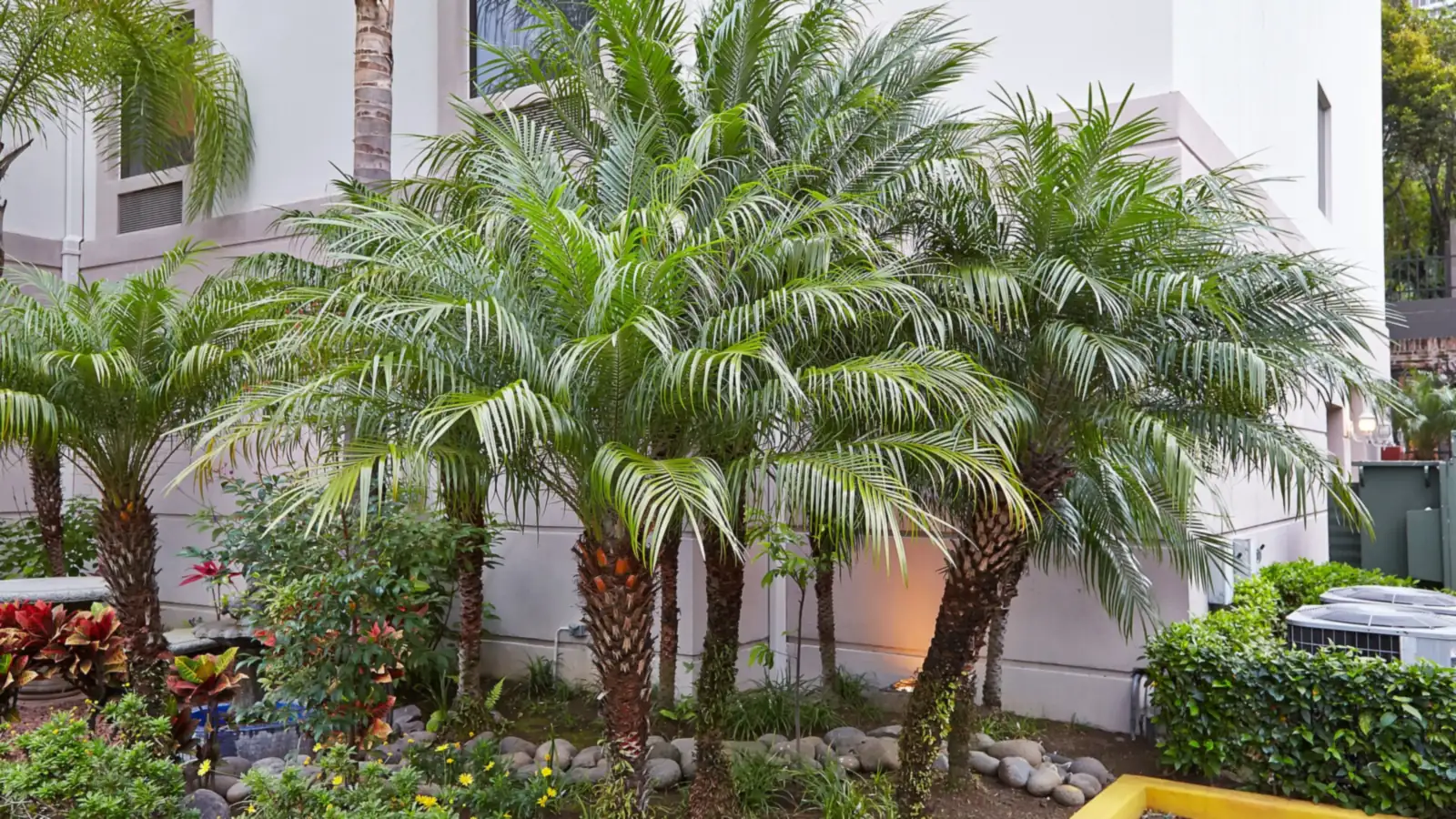
The pygmy date palm is a small, slow palm with a fine, feathery crown. It suits a small yard, an entry bed or a large pot. In the ground it needs a frost-free or nearly frost-free climate, which in the United States means USDA zones 10 to 11, with many grown in zone 9b. Everywhere else, it lives in a container and spends winter indoors.
Care comes down to a few habits. Plant it in soil that drains, and set it no deeper than it grew in the pot. Water steadily while it settles in. Feed it with a palm fertilizer that contains potassium, magnesium and manganese, because this palm is famous for running short of all three. Cut off fronds only once they are completely brown. Keep it away from paths, because the base of every leaf is armed with sharp spines.
The advice below draws on UF/IFAS Extension, which studies this palm closely in Florida, and the NC State Extension Plant Toolbox. For more palms and warm-climate trees, browse our palms and tropical trees hub.
What Is A Pygmy Date Palm?
The pygmy date palm, Phoenix roebelenii, is a small relative of the palm that gives us edible dates and of the much larger Canary Island date palm. UF/IFAS calls it one of the most popular small landscape palms in Florida, and it is just as common in pots.
The species name honors Carl Roebelen, a plant collector who brought the palm to the attention of botanists. Common names include pygmy date palm, dwarf date palm, miniature date palm and roebelenii palm.
Where It Comes From
NC State Extension describes its home as the banks of fast-moving rivers in southern China, Laos, Myanmar, Thailand and Vietnam. That explains its taste for steady moisture with good drainage, in sun or light shade.
How Big Does A Pygmy Date Palm Get?
UF/IFAS gives a mature height of about 12 feet with a spread of 6 to 8 feet in Florida landscapes. NC State lists a smaller 6.5 feet outdoors and 5 to 6 feet as a houseplant. Warm climates and age push plants toward the upper figure.
Either way, it is a slow grower, so buy a plant close to the size you want.
The Trunk And Leaves
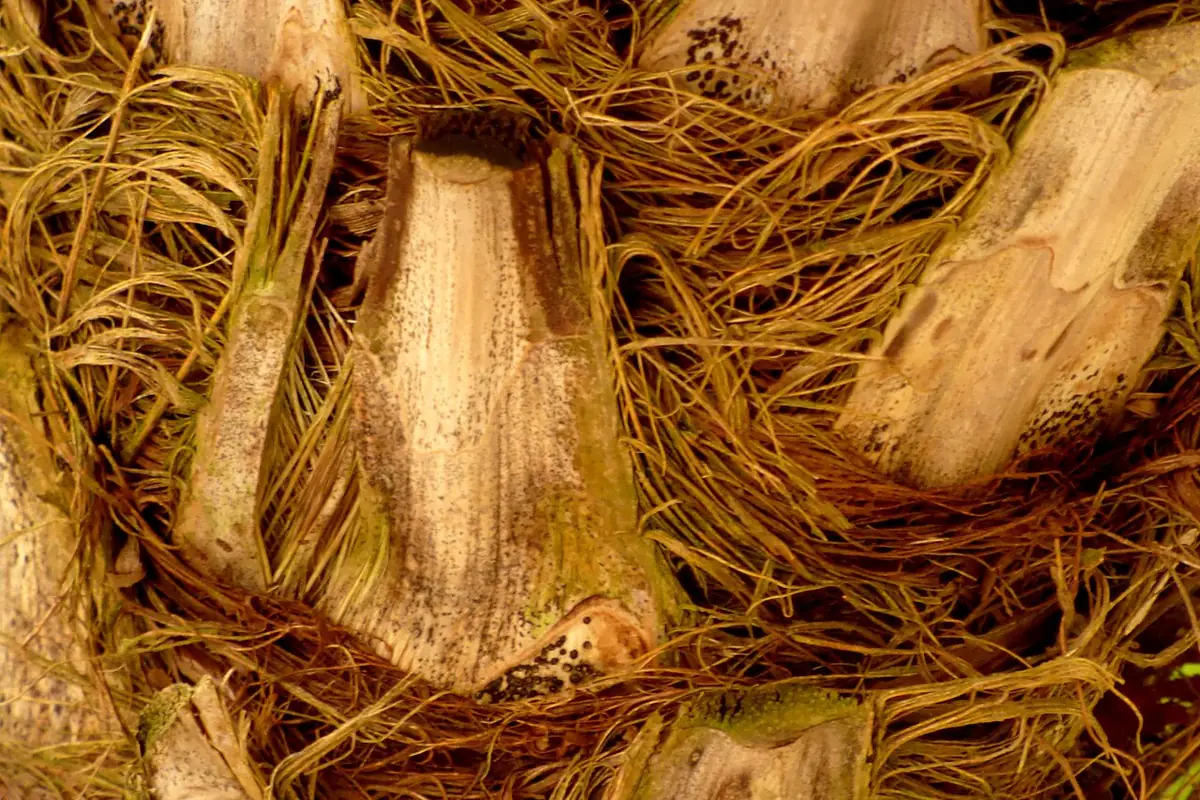
The slender, often crooked trunk is 3 to 6 inches thick and covered in short, peg-like stubs left by old leaf bases. Older palms also grow a mass of root initials around the base of the trunk. The feather-shaped leaves have thin stalks and soft, narrow leaflets that droop at the tips, which gives the crown its fine texture.
Single Trunk Or Multi-Trunk?
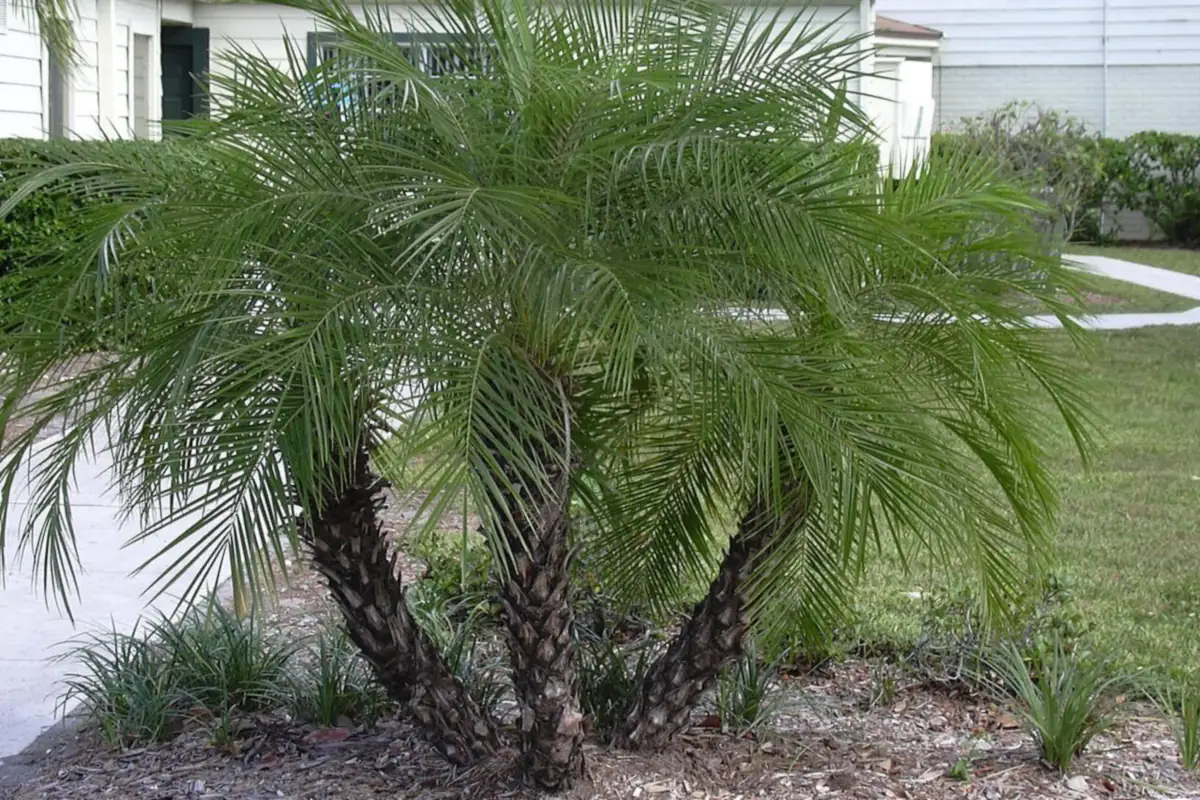
Each pygmy date palm has one trunk. UF/IFAS explains that it is often grown in clumps of 2 to 4 closely spaced plants, which look like one multi-trunk palm as they age. NC State adds that the wild palm can form suckers at its base, but most cultivated plants do not. Growers often put three or five seedlings in one pot to make a fuller plant, and the trunks arch away from each other as they grow.
Flowers And Fruit
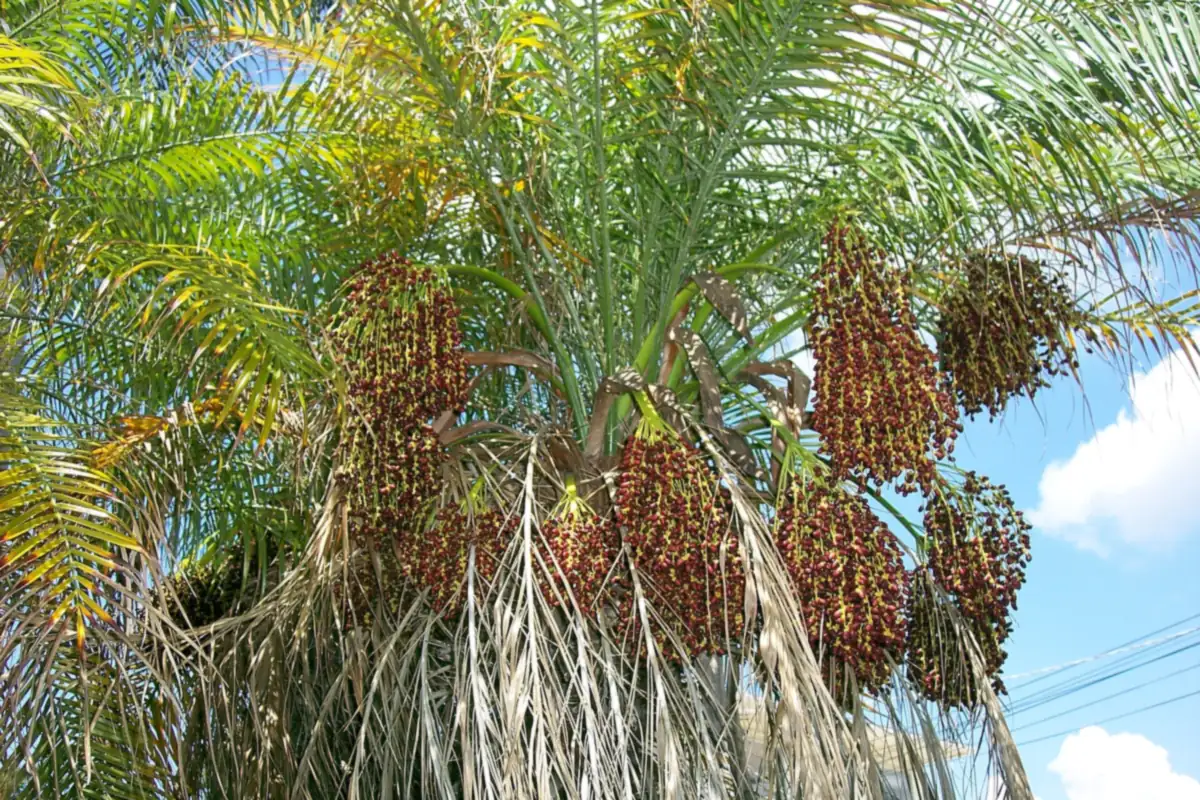
Male and female flowers grow on separate plants. Cream-colored flower clusters appear in spring on mature palms. Female plants then carry small, elongated fruits that ripen from reddish brown to black. NC State notes that the fruits are edible.
Watch Out For The Spines
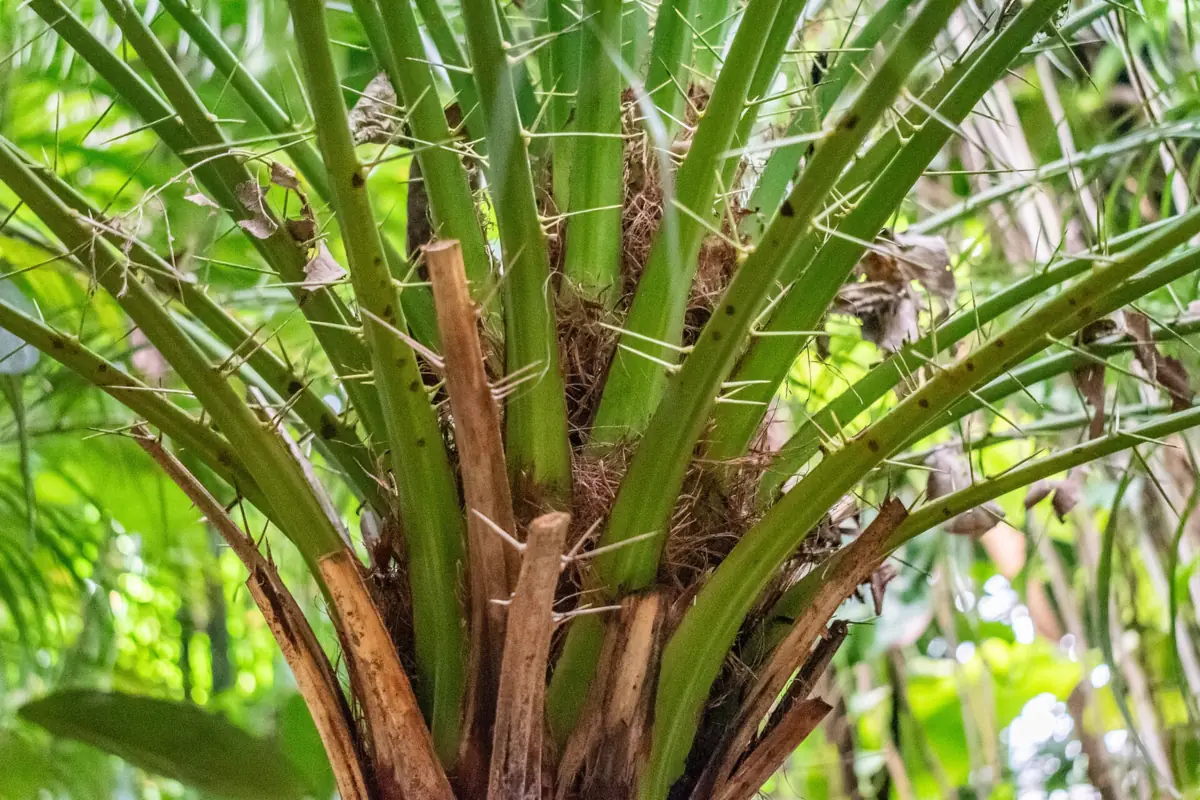
The soft look of the crown hides a real hazard. Like all date palms, the lowest leaflets on each leaf are modified into stiff spines. UF/IFAS puts them at 2 to 3 inches long. They sit right where the leaf joins the trunk, which is exactly where your hands go when you prune, repot or weed.
Where To Plant With Spines In Mind
Keep the palm back from walkways, driveways, play areas and pool decks so no one brushes against the base. In a pot, set it where people do not squeeze past it.
How To Handle It Safely
Wear thick gloves, long sleeves and eye protection when you work near the trunk. Cut fronds from the side, not by reaching into the crown. When you move a potted palm, wrap the lower leaves loosely with an old sheet or burlap first.
Hardiness Zones And Climate
Zones 10 To 11, And Zone 9b With Risk
UF/IFAS rates the pygmy date palm as cold hardy to USDA zone 10a, where winter lows reach about 30°F. It also notes that the palm is widely grown in zone 9b, where lows can reach about 25°F. NC State lists zones 10a to 11b. In practice, zone 10 and 11 gardens can plant it with confidence, while zone 9b gardeners should expect some leaf damage in a hard freeze and plan to protect it.
In colder zones, grow it in a pot. It can spend summer outside on a patio and come indoors before cold weather arrives. Check your zone on the USDA Plant Hardiness Zone Map before you plant one in the ground.
Salt And Coastal Sites
UF/IFAS states plainly that the pygmy date palm does not tolerate salt spray or salty soil. Avoid front-line beach plantings and spots that catch spray from the ocean. A few blocks inland, behind buildings or other plants, it usually does fine.
Planting A Pygmy Date Palm In The Landscape
Palms are easy to transplant compared with most trees. Their roots grow from a zone at the base of the trunk and keep being replaced through the palm’s life, so circling roots from a nursery pot are not a lasting problem. UF/IFAS says there is no need to cut them. What matters most is the site, the depth and the first months of watering.
Choosing A Site
Pick a spot with full sun to part shade and soil that drains after rain. UF/IFAS says pygmy date palms adapt to a wide range of soil types, but they do poorly where water sits. Avoid low spots and areas with a high water table. Keep the palm back from paths because of the spines, and away from lawn areas that get heavy turf fertilizer, which can upset its nutrient balance.
Spacing
Plan for the mature spread of 6 to 8 feet. A single palm or tight group needs to sit at least 3 to 4 feet from a wall, fence or walkway so the fronds can arch freely. If you plant a row, space the palms about 5 to 6 feet apart for crowns that just touch, or wider if you want each one to stand on its own.
Soil Preparation
You rarely need to change the soil. Loosen a wide area so the new roots spread easily. Skip heavy amendments of manure or composted sewage sludge in the planting hole. UF/IFAS notes that these products can tie up manganese, and the pygmy date palm is one of the species most prone to manganese shortage.
How To Plant It Step By Step
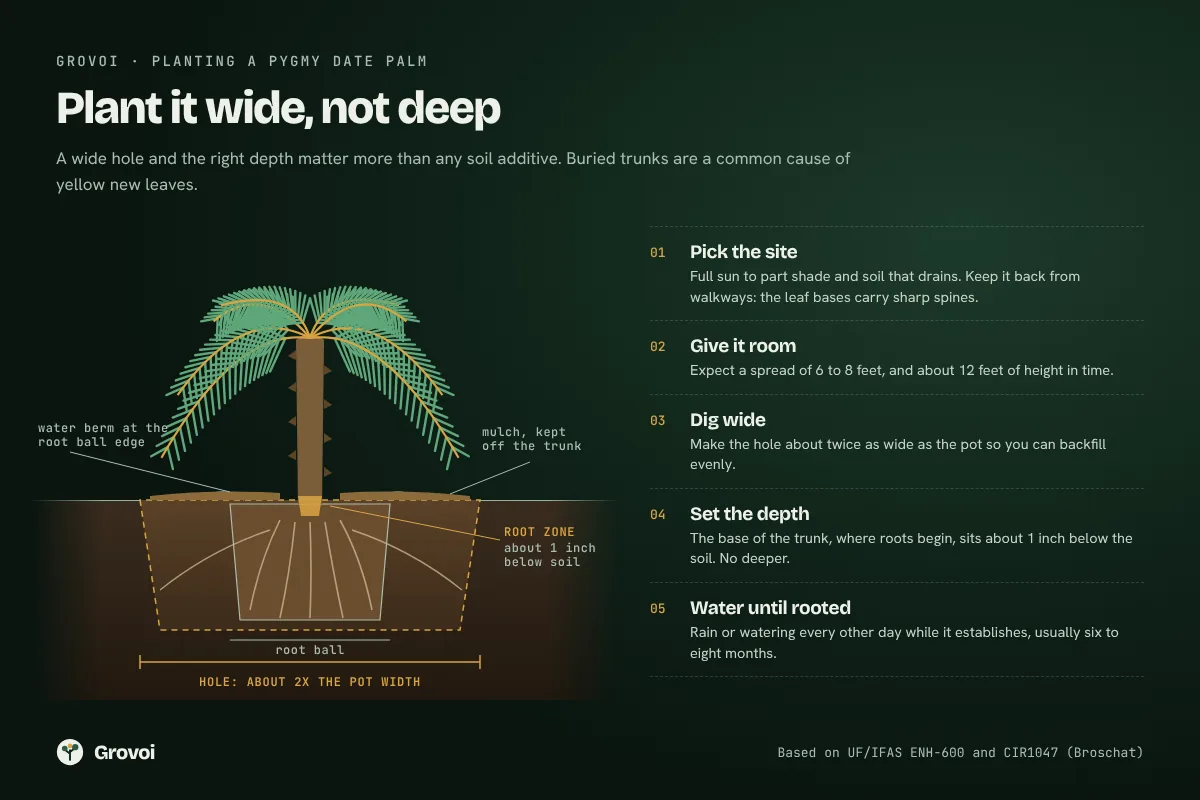
- Water the palm in its pot the day before so the root ball holds together.
- Dig a hole about twice as wide as the container and only as deep as the root ball.
- Slide the palm out of the pot. Wear gloves and keep your face clear of the spines.
- Find the point where the trunk meets the roots. Potting mix often settles over time, so this point can sit above or below the top of the root ball.
- Set the palm so that point is about 1 inch below the surrounding soil, as UF/IFAS recommends. Do not bury the trunk deeper.
- Backfill with the soil you removed, firming it gently to remove air pockets.
- Build a low ring of soil just outside the root ball to hold water, then soak the whole area.
- Spread 2 to 3 inches of mulch over the bed, keeping it a few inches away from the trunk.
Depth matters more than it seems. UF/IFAS links iron shortage in pygmy date palms to planting too deep or in poorly drained soil. The new leaves come in evenly yellow, and iron fertilizer often fails to fix it because the cause is the roots, not the soil.
Watering And Feeding New Plantings
A palm from a container keeps most of its roots in the original potting mix for months, and that mix dries faster than garden soil. UF/IFAS advises regular watering until the palm is established, which takes six to eight months. Rain or irrigation every other day is usually enough during that time. After that, cut back gradually.
UF/IFAS research also found that palms moved from containers established faster when they received a higher-nitrogen fertilizer for the first six months, spread over the root ball and 6 to 12 inches beyond it. After that, switch to a regular palm fertilizer as described below.
Growing A Pygmy Date Palm In A Pot
The slow growth and modest size make this one of the best palms for a container. A potted pygmy date palm can decorate a patio all summer and a bright room all winter. Our guide to the areca palm covers another palm that does well indoors if you want to compare the two.
Pot Size
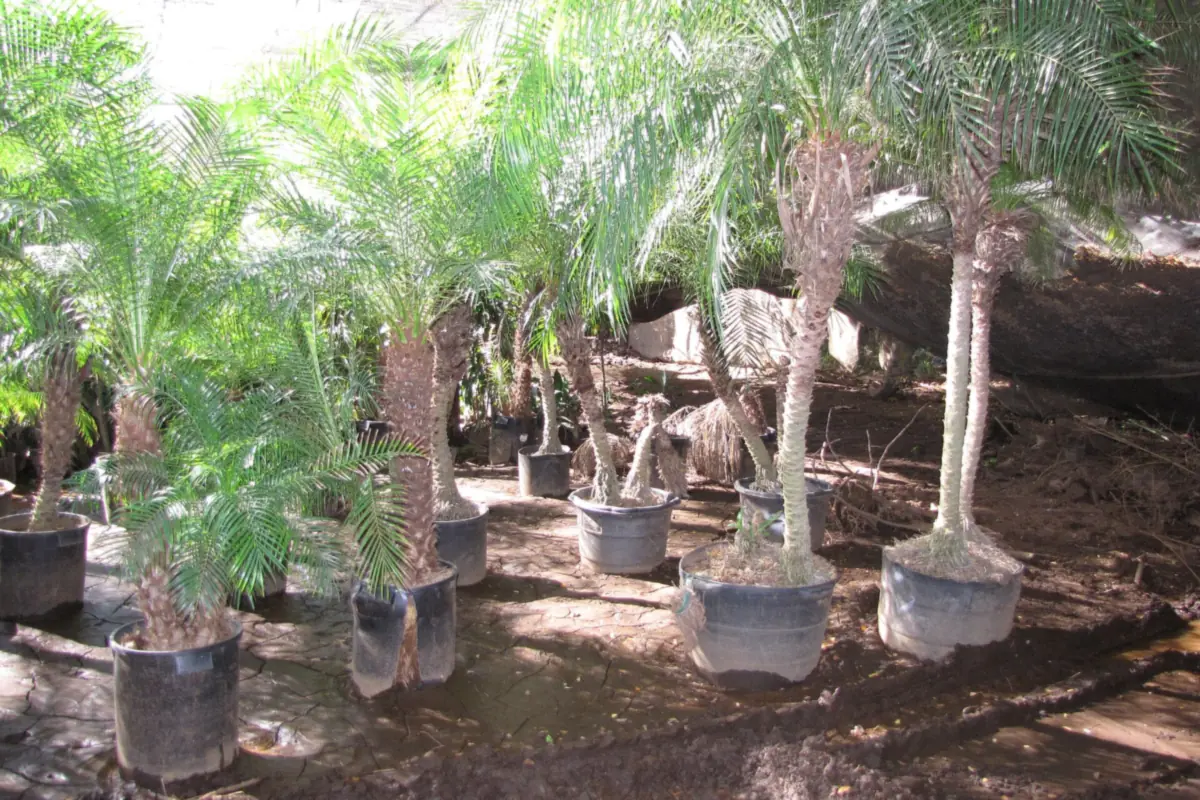
NC State notes that this palm prefers to be slightly root-bound and does not need frequent repotting. Choose a pot only an inch or two wider than the root ball. An oversized pot holds extra wet mix around the roots, which invites rot. Every pot needs drainage holes, and a heavy one keeps a tall palm from tipping in wind.
Potting Mix And Drainage
Use a coarse, well-drained potting mix. A quality bagged mix with pine bark works, and adding a few handfuls of perlite or bark fines opens it up further. Avoid garden soil, which packs down and stays wet in a pot. Our guide to growing dwarf trees in pots covers drainage and pot choices in more detail.
Light Indoors
NC State recommends medium to high light indoors, with protection from hot afternoon sun. A spot near a bright east or west window, or a few feet back from a south window, works well. In a dim room the palm grows very slowly, and the crown thins as older fronds die faster than new ones appear. Turn the pot a quarter turn every few weeks so the crown grows evenly.
Indoors it also likes medium to high humidity and no cold drafts. Keep it away from heating vents, air conditioners and doors that open to cold air in winter.
Moving A Palm Indoors Or Outdoors
Leaves adapt to the light they grow in. UF/IFAS research on container palms found that a leaf produced in full sun will not survive typical indoor light. Make changes gradually: start a palm headed outdoors in bright shade for a week or two, and bring it back in before nights turn cold. A few older fronds may yellow as it adjusts.
Repotting
Repot only when roots fill the pot, grow from the drainage holes or make watering difficult. Spring and early summer are the best times. Slide the palm out with the pot on its side, keep the root ball intact, and set it in the new pot at the same depth as before. Water well and keep it out of strong sun for a week or two while it settles.
How To Water A Pygmy Date Palm
Pygmy date palms like even moisture, but they will not tolerate soggy soil for long. The right schedule depends on whether the palm is in the ground or in a pot.
In The Ground
New plantings need regular water for the first six to eight months. After that, UF/IFAS notes that watering can be reduced and often stopped, though a deep soak during long dry spells helps, especially in sandy soil.
In Containers
NC State advises keeping the growing medium slightly moist during the growing season without overwatering, since too much water leads to root rot. Push a finger into the mix. If the top inch is dry, water slowly until water runs from the drainage holes, then empty the saucer. Water less in winter, when growth slows, especially indoors.
Signs Of Too Much Or Too Little Water
Too much water shows up as yellowing fronds while the mix is still wet, a sour smell from the pot and a soft base on the trunk. Too little water shows up as dry, brown leaflet tips across the crown and mix that pulls away from the side of the pot. Brown tips on only the oldest leaves usually point to potassium shortage instead, covered next.
Fertilizing: Potassium, Magnesium And Manganese
Feeding is where most pygmy date palms go wrong. The UF/IFAS pygmy date palm fact sheet states that most pygmy date palms in Florida show signs of potassium shortage on their oldest leaves. They are also prone to manganese, magnesium and boron shortages. The fix is not more fertilizer but the right kind, spread the right way.
Which Fertilizer To Use
For landscape palms, UF/IFAS recommends a palm fertilizer with an analysis of 8-2-12 or 8-0-12 plus magnesium. All of the nitrogen, potassium and magnesium should be in slow, controlled-release form. The fertilizer should also contain micronutrients such as manganese and iron in a water-soluble form, such as sulfates or chelates. Read the label: the fine print lists both the release type and the micronutrients.
A general lawn or shrub fertilizer is not a good substitute. Our guide to the best fertilizer for fruit trees explains how to read an N-P-K label if the numbers are new to you.
How Much And How Often
The UF/IFAS fertilization guide for landscape palms gives a rate of 1.5 pounds of 8-2-12 plus 4% magnesium per 100 square feet of canopy area, applied about every three months in south Florida. In central and north Florida, winter applications can be skipped. Spread it evenly over the whole area under the crown. Do not pile it against the trunk or use spikes and holes, because palm roots take up nutrients mainly from directly below where the fertilizer lands.
For palms in pots, use a controlled-release fertilizer at the label rate during spring and summer. Container palms need more nitrogen than palms in the ground, because the microbes that break down bark and peat in the mix use nitrogen too. A palm or foliage plant fertilizer with micronutrients covers this well.
Potassium Shortage
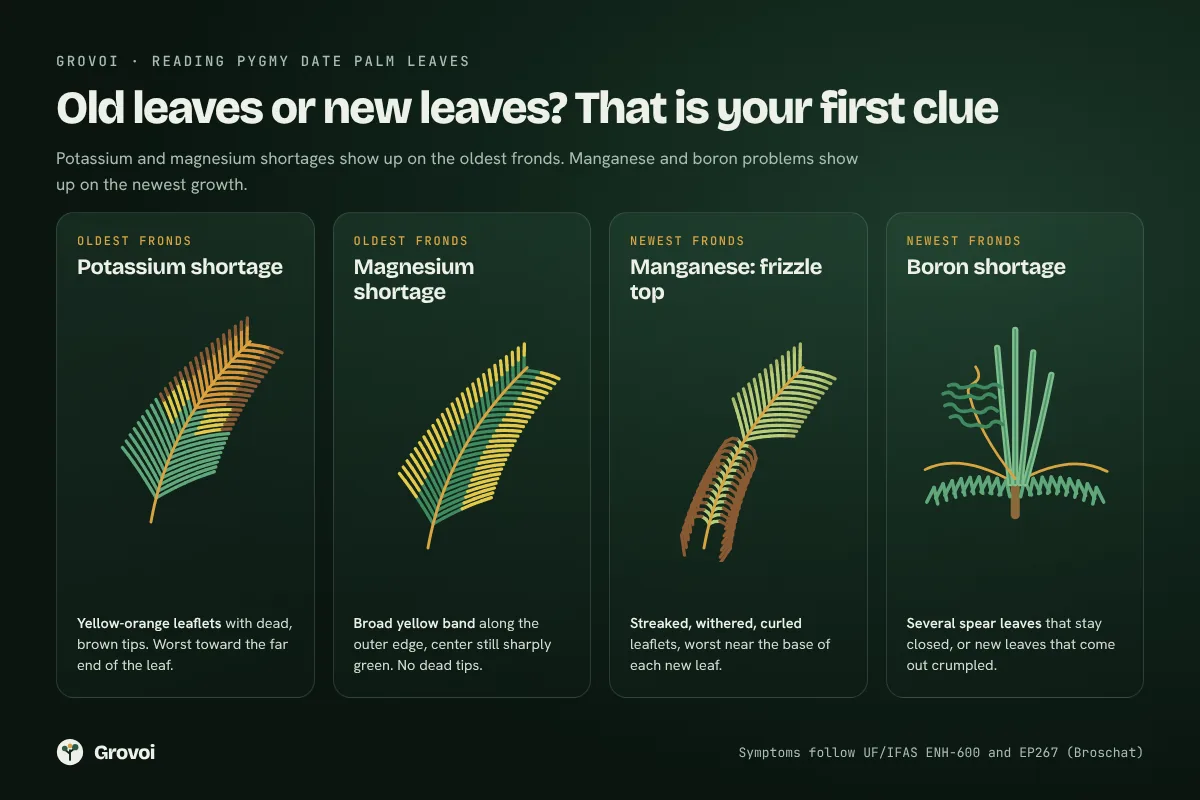
Potassium shortage starts on the oldest leaves and is worst toward the tips of those leaves. UF/IFAS describes yellow-orange discoloration of the leaflets and dead, brown leaflet tips. It also makes leaves die early, so a short palm carries fewer fronds than a healthy one.
Recovery is slow. The UF/IFAS fertilization guide says treating potassium shortage can take one to three years or longer, because the whole crown must be replaced with healthy new leaves. Steady feeding gradually adds fronds, and once the crown is full and round, the symptoms fade.
Magnesium Shortage
Magnesium shortage also starts on the oldest leaves, but the pattern differs. UF/IFAS describes a broad yellow band along the outer edge of each leaf, with the center sharply green. Unlike potassium shortage, it does not kill the leaflet tips.
UF/IFAS says magnesium shortage in this palm usually comes from the wrong fertilizer. Products high in nitrogen or potassium but low in magnesium, applied to the palm or to nearby turf, create an imbalance. A balanced palm fertilizer with magnesium prevents it and can correct mild cases.
Manganese Shortage And Frizzle Top
Manganese shortage is common in pygmy date palms growing in alkaline soil. It shows up on the newest leaves. Leaflets first develop long, dead streaks on a slightly yellow background. As it worsens, the leaflets wither and curl, giving the new leaves a frizzled look that growers call frizzle top. UF/IFAS notes that the damage is worst toward the base of each new leaf.
Routine use of an 8-2-12 palm fertilizer prevents most cases. Severe cases may need extra manganese sulfate spread under the canopy at the rate on the label. Do not use manure or composted sludge around the palm, since they bind manganese in the soil.
Boron And Iron
UF/IFAS calls boron shortage fairly common in pygmy date palms. The most common sign is several spear leaves that fail to open, or new leaves that come out crumpled. Because symptoms overlap with other problems and too much boron is harmful, a leaf test through your local extension office is a sensible step before adding a boron product.
Iron shortage is uncommon and usually comes from planting too deep or poor drainage, as covered in the planting section. Correct the cause rather than adding iron.
Pruning: Remove Only Dead Fronds
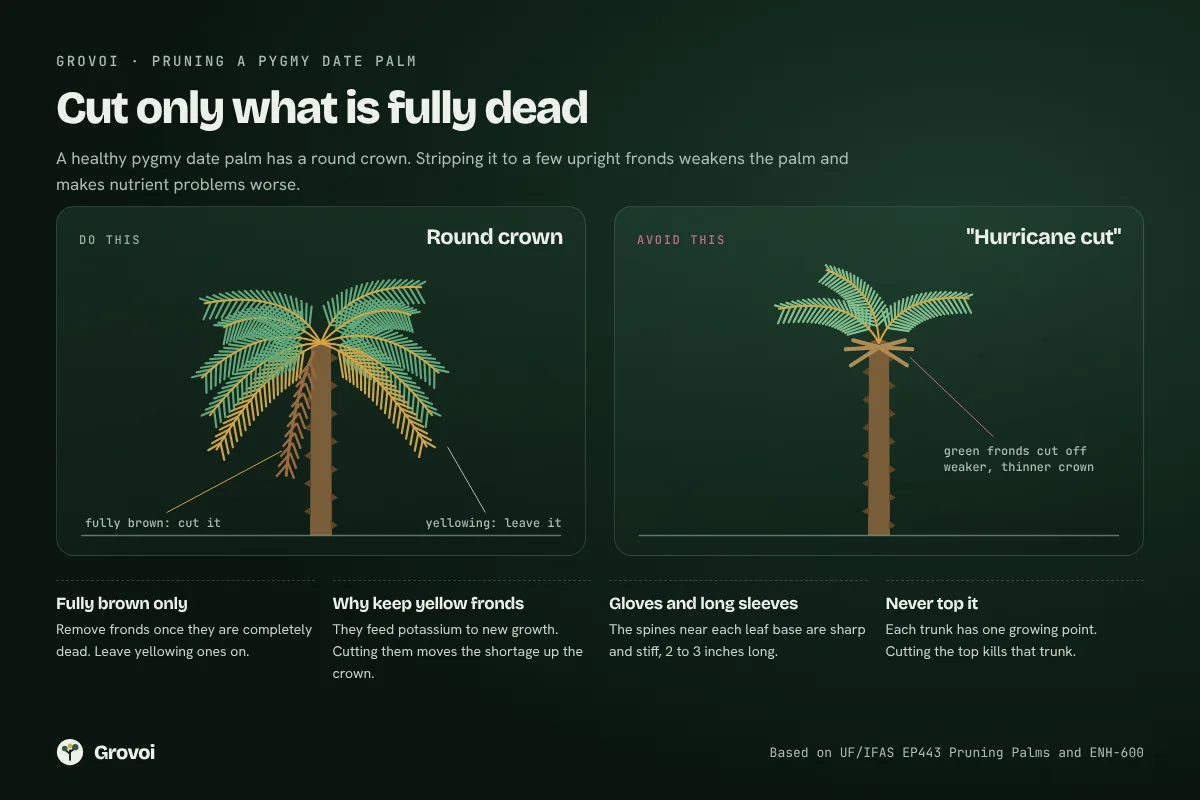
A healthy pygmy date palm should have a full, round crown with green leaves down to the bottom. The UF/IFAS guide to pruning palms is direct about it: palms are meant to have round crowns, not feather-duster crowns. Pruning is about removing dead material, not shaping.
What To Cut
Cut off fronds that are completely brown and dry, along with old flower and fruit stalks if you do not want fruit. Use clean, sharp loppers or a pruning saw, and cut close to the trunk without gouging it. Leave the short leaf base on the trunk. These stubs give the trunk its pattern and dry out in place.
Why You Should Leave Yellowing Fronds On
Potassium moves within the palm. When the soil runs short, the palm pulls potassium out of its oldest leaves to feed new growth. UF/IFAS warns that potassium-deficient leaves should stay on until they are completely dead, because they act as a backup supply. Research by Broschat found that removing these leaves speeds up the palm’s decline, as the shortage simply moves to the next leaves up.
Why The Hurricane Cut Backfires
A hurricane cut removes most of the fronds and leaves only a tuft of young leaves at the top. UF/IFAS reports that palms pruned this way before hurricanes were actually more likely to have their crowns snap off than palms with full crowns. Overpruning also reduces the palm’s food supply, can lead to a thinner trunk over time, and, based on field observations, may make palms fare worse in cold weather.
Never Cut The Top
Each trunk grows from a single bud at its tip. If you cut the top off to control height, that trunk dies. To lower a tall group, remove a whole trunk at the base instead.
Cold Protection
Cold is the main limit on where this palm grows. UF/IFAS describes three kinds of cold injury in palms: chilling damage above freezing, frost on clear and calm nights, and hard freezes driven by cold wind. Tropical palms can show chilling damage even above 32°F, especially when a cold night follows a warm spell.
Before A Cold Night
- Plant in a sheltered spot. UF/IFAS notes that palms near buildings or under trees survive cold better.
- Keep the palm well fed. In a UF/IFAS coconut palm study, fertilized palms showed much less chilling damage.
- Do not overprune. Fronds, even dead ones, insulate the bud.
- Cover small palms with frost cloth that reaches the ground, and uncover them the next day.
- Move potted palms indoors before nights drop near freezing.
After A Freeze
Cold damage shows within days as brown or dead leaflets. Resist the urge to trim right away. UF/IFAS advises leaving damaged fronds on until the danger of more cold weather has passed, because even dead leaves give the bud some protection.
A few weeks later, gently tug the spear leaf, the newest unopened leaf in the center. If it holds firm, the bud is most likely alive. If it pulls out easily with a rotten base, UF/IFAS suggests removing it and drenching the bud area with a copper fungicide, used exactly as the label directs, to slow secondary rot. When growth resumes, the first new leaves may look odd or show temporary manganese or boron symptoms. These usually clear up as the soil warms, and later leaves come in normal.
Pests And Diseases
UF/IFAS describes pygmy date palms as fairly resistant to disease, with two exceptions that are common enough to know. Insects and mites cause damage only now and then.
Scale, Mealybugs And Other Pests
UF/IFAS lists mites, mealybugs, scales, weevils and caterpillars as occasional pests, and NC State adds fern scale and banded greenhouse thrips. Scale looks like small bumps on leaflets and stalks; mealybugs look like white cotton tufts in leaf joints. Wipe or rinse light cases off, and treat heavier ones with insecticidal soap or horticultural oil as the label directs. Our citrus tree care guide covers scale control in more depth.
The White Coating On New Leaves Is Normal
Young pygmy date palm leaves are naturally covered with a whitish, waxy material. UF/IFAS notes that people often mistake it for whiteflies, mealybugs or scale. It drops off on its own as the leaves age, so there is nothing to treat.
Leaf Spot
Pestalotiopsis leaf spot is common, especially during cooler months. It causes dead patches on the leaflets, the leaf stalks and the central rib. Severe cases can kill the palm, so remove badly spotted fronds once they die, keep water off the leaves where you can, and feed the palm properly so it replaces leaves quickly.
Ganoderma Butt Rot
Ganoderma butt rot is a fungal disease that decays the bottom couple of feet of the trunk. Early signs are wilting or a general decline. It is confirmed when a hard, shelf-like conk grows on the lower trunk. UF/IFAS states there is no control. Remove the palm, including as much of the stump and roots as possible, and do not plant another palm in the same spot without special precautions, since the fungus survives in the soil.
Growing Pygmy Date Palms From Seed
Seed is the main way to propagate this palm. Most cultivated plants do not produce suckers, and palms cannot be grown from stem cuttings.
Getting Seed
Since male and female flowers grow on separate plants, you need a female palm with a male nearby to get viable seed. Be aware that Phoenix species cross easily. UF/IFAS notes that Canary Island date palms readily hybridize with other Phoenix species, so seed from a garden where several date palms grow may produce seedlings that look different from the parent.
Cleaning And Storing Seed
Pick fruit once it is fully ripe and dark. Soak it in water for a day or two to soften the flesh, then rub the pulp off and rinse the seeds. The UF/IFAS seed germination guide recommends planting soon after cleaning. If you must store seed, keep it dry in a sealed bag at 65 to 75°F. In UF/IFAS trials, cleaned pygmy date palm seed stayed viable for about 8 months at 73°F.
Soaking cleaned seed in water for 1 to 7 days, with the water changed daily, is a common pretreatment. Research on this species has given mixed results, with one study finding a benefit and another a negative response, so a short soak is plenty.
Sowing And Germination
- Fill a deep pot or tray with a moist, well-drained seed mix.
- Press the seeds in so they are just covered.
- Keep the mix evenly moist and warm. UF/IFAS gives 70 to 100°F as the working range for palm seed, with 85 to 95°F giving the best results. A heat mat helps indoors.
- Be patient. Palm seed is known for slow and uneven germination.
- Pot seedlings individually once they have a strap-like first leaf and a good root, or plant three together for a fuller look.
Date palm seeds use what UF/IFAS calls remote germination: the seedling emerges from a stalk that grows down from the seed, so a deep pot works better than a shallow tray.
Pygmy Date Palm Vs Other Small Palms
Here is how the pygmy date palm compares with common alternatives. Sizes are outdoor figures from UF/IFAS and NC State Extension.
| Palm | Mature size outdoors | USDA zones | Trunk habit | Spines | Best use |
|---|---|---|---|---|---|
| Pygmy date palm (Phoenix roebelenii) | About 12 ft tall, 6 to 8 ft wide | 10a to 11; often grown in 9b | Single trunk, often planted 2 to 4 together | Yes, at the leaf base | Small yards, entries, large pots |
| Areca palm (Dypsis lutescens) | 20 to 30 ft tall, 8 to 10 ft wide | 10a to 11 | Clumping, many stems | No | Screens outdoors, bright rooms indoors |
| Canary Island date palm (Phoenix canariensis) | 40 to 50 ft tall in time, trunk 2 to 3 ft thick | 9a to 11 | Single, massive trunk | Yes, long and sharp | Large lawns and avenues only |
| Mediterranean fan palm (Chamaerops humilis) | 6 to 15 ft tall, 6 to 20 ft wide | 8a to 11b | Clumping; can be trained to one trunk | Yes, on the leaf stalks | Cooler gardens, dry sites, containers |
The pygmy date palm wins for small spaces where you want a true tree-like palm with a trunk. The areca palm is the softer, spine-free choice for a screen or a living room, though it grows much larger outdoors. The Canary Island date palm grows into a giant, and the Mediterranean fan palm suits gardens a zone or two colder.
Pygmy Date Palm FAQs
How Tall Does A Pygmy Date Palm Get?
UF/IFAS gives a mature height of about 12 feet with a spread of 6 to 8 feet in Florida landscapes. NC State lists a smaller 6.5 feet outdoors and 5 to 6 feet indoors. It grows slowly, so a nursery plant takes many years to reach full size, and plants in pots stay smaller than those in the ground.
How Fast Does A Pygmy Date Palm Grow?
Slowly. NC State Extension rates it a slow grower, and a nursery plant changes little from one year to the next. Good light, warm weather, steady water and a palm fertilizer with potassium and magnesium keep it growing at its best pace. Buy a plant close to the size you want rather than expecting a small one to fill a space quickly.
Can A Pygmy Date Palm Survive A Freeze?
It can survive a light freeze, but it is not truly cold hardy. UF/IFAS rates it hardy to zone 10a, about 30°F, though it is widely grown in zone 9b, where lows reach about 25°F. Expect leaf damage in a hard freeze. Cover small palms, move pots indoors, and leave damaged fronds on until cold weather has passed.
Why Are The Leaves On My Pygmy Date Palm Turning Yellow?
Check which leaves are affected. Yellow-orange oldest fronds with dead tips point to potassium shortage, which UF/IFAS says affects most pygmy date palms in Florida. Yellow edges with a green center suggest magnesium. Streaked or curled new leaves suggest manganese. Evenly yellow new leaves often mean the palm was planted too deep or the soil drains poorly.
Should I Cut The Brown Leaves Off My Pygmy Date Palm?
Cut a frond only once it is completely brown. Yellowing or partly green fronds are still feeding potassium to new growth, and UF/IFAS research found that removing them speeds up decline in potassium-deficient palms. Never strip the palm to a few upright fronds, and wear gloves and long sleeves, because the leaf bases carry sharp spines.
Can You Grow A Pygmy Date Palm Indoors?
Yes. NC State notes it can be grown as a houseplant, where it usually reaches 5 to 6 feet. Give it medium to high light near a bright window, protection from hot afternoon sun, medium to high humidity and no cold drafts. Keep the mix slightly moist but never soggy, and repot only when roots fill the pot.
Is A Pygmy Date Palm Toxic To Dogs And Cats?
The NC State Extension Plant Toolbox lists the pygmy date palm as non-toxic to dogs, cats and horses. The bigger risk is physical. The stiff spines at the base of each leaf can puncture skin, paws and eyes, so place the palm where pets and children do not brush against the trunk. Call your veterinarian if a pet seems hurt or unwell.