Date Palm Tree: How To Grow, Pollinate And Harvest Dates
On this page
- What Is A Date Palm Tree?
- Where A Date Palm Tree Will Actually Fruit
- Best Date Palm Cultivars
- Planting A Date Palm Tree
- Watering And Fertilizing Date Palms
- How To Pollinate A Date Palm By Hand
- Fruit Stages, Thinning And Harvest
- Pruning And Cold Protection
- Date Palm Pests And Diseases
- Date Palms In Pots, Cooler Zones And Lookalikes
- Frequently Asked Questions
- Final Thoughts
A date palm tree (Phoenix dactylifera) is one of the oldest cultivated fruit trees on earth, and one of the most demanding. It wants blistering summer heat, dry air, deep water at the roots and a grower willing to climb a ladder with pollen. In return, a single palm can hang 10 to 12 heavy bunches of dates every fall for decades.
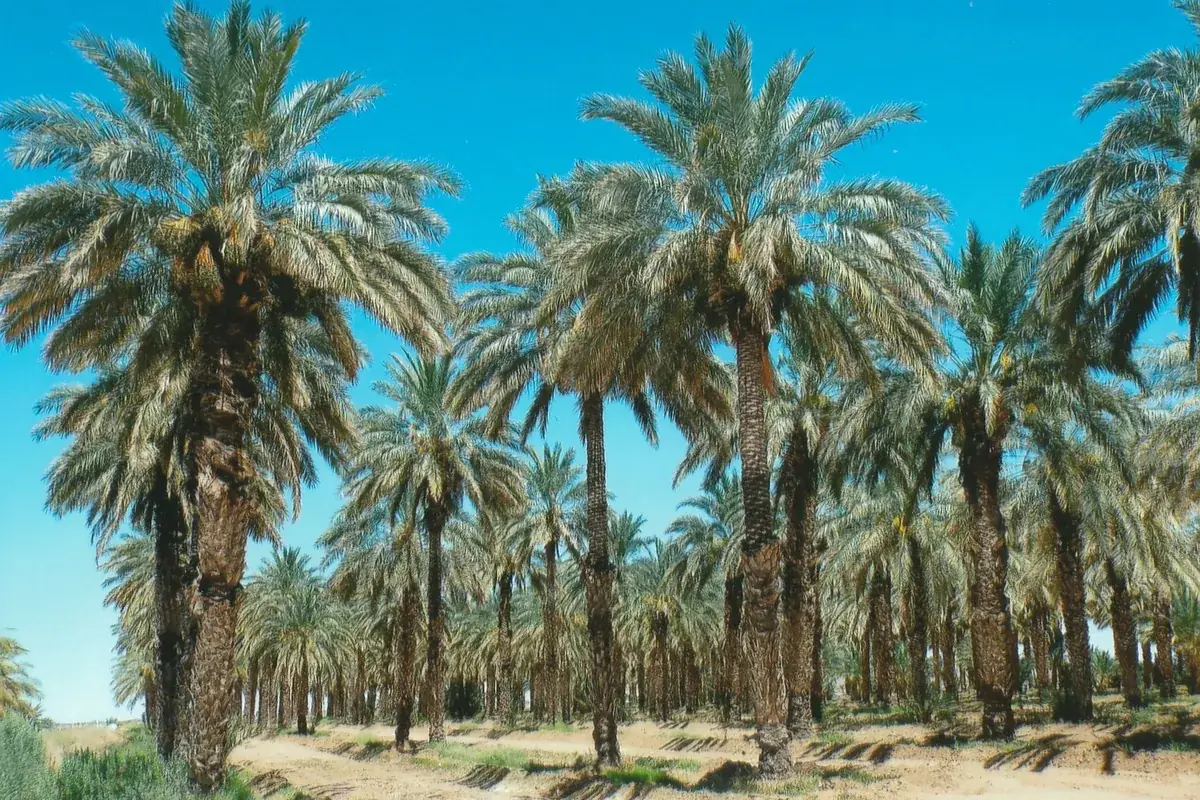
In the United States that combination exists in only a few places. The Coachella Valley in California grows about 95 percent of the dates Americans eat, according to UC ANR, with the Yuma and Phoenix areas making up most of the rest. Elsewhere, a date palm is a handsome ornamental that rarely ripens fruit.
This guide covers how to grow dates from offshoot to harvest: zones, cultivars, planting, watering, hand pollination, ripening stages, curing, pruning and pests. For the wider family, start at our palms and tropical hub.
What Is A Date Palm Tree?
Origin, size and lifespan
Phoenix dactylifera is a feather palm from North Africa or the Middle East; UF/IFAS notes its true native range is uncertain after 5,000 years of cultivation. It reaches 50 to 80 feet on a single trunk patterned with old leaf bases. Fronds grow 10 to 20 feet long, and the lower leaflets harden into 3 to 4 inch spines.
Growth is slow, about a foot of trunk a year. An offshoot-grown palm bears a first light crop in 4 to 5 years, peaks at 10 to 15 years, and can fruit for 60 years or longer.
Male and female palms
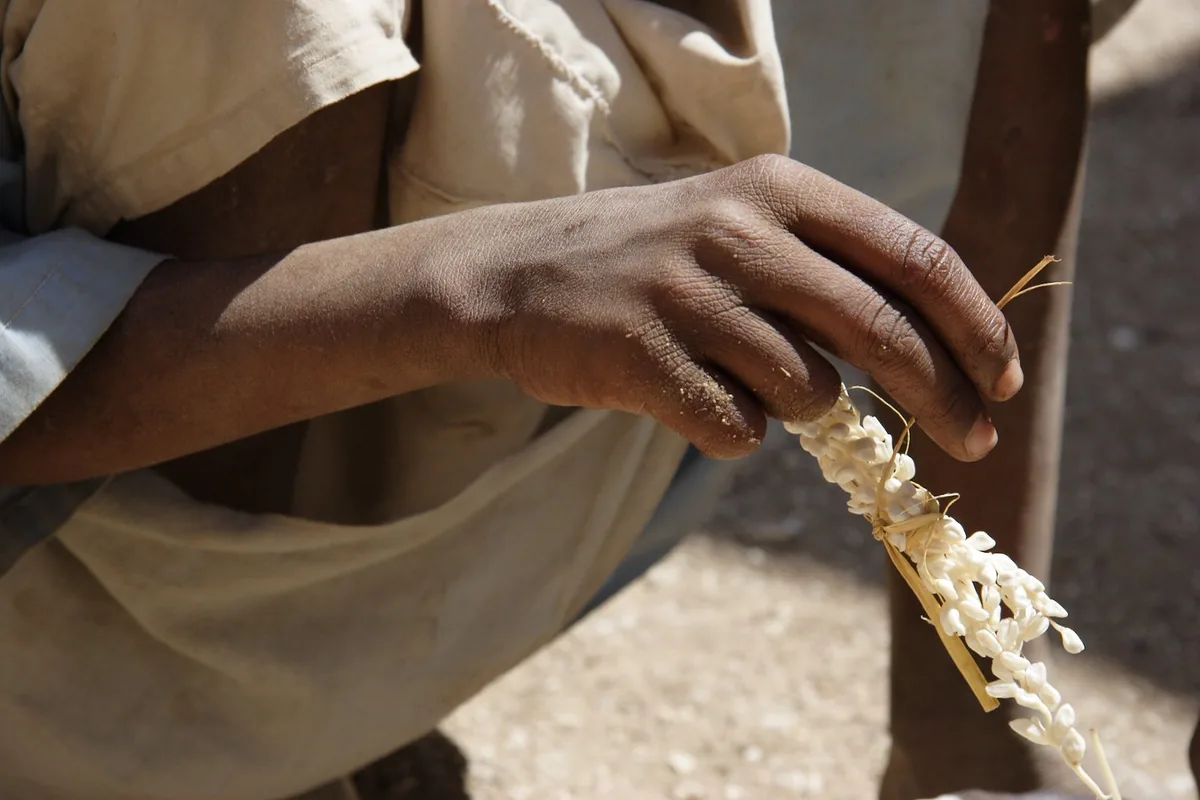
Date palms are dioecious: every tree is either male or female. Males produce broad spathes packed with creamy, dusty flowers in late winter. Females produce slimmer spathes and, after pollination, strands of fruit. Only females bear dates, so you need both sexes or a supply of pollen. This single fact shapes how to grow dates.
Where A Date Palm Tree Will Actually Fruit
USDA zones and the heat requirement
The tree itself is tough. UF/IFAS lists it as surviving where winter lows stay above about 15F, which covers USDA zones 9 through 11. Fruit is a different matter. Low desert growers count on summer highs above 100F for weeks at a stretch, roughly 100 or more such days between pollination and harvest, with very low humidity. UC ANR describes high summer temperatures and low humidity as the two conditions that define where dates can be produced.
Humidity matters as much as heat. Damp air during the Khalal and Rutab stages causes souring and rot, which is why UF/IFAS reports that true date palms struggle to fruit in Florida.
US growing regions
- Coachella Valley, California: the heart of the industry and home to the USDA germplasm collection.
- Bard Valley and Yuma: the largest Medjool region in the country.
- Salt River Valley, Arizona: Arizona State University keeps more than 50 cultivars here.
Best Date Palm Cultivars
Cultivar comparison
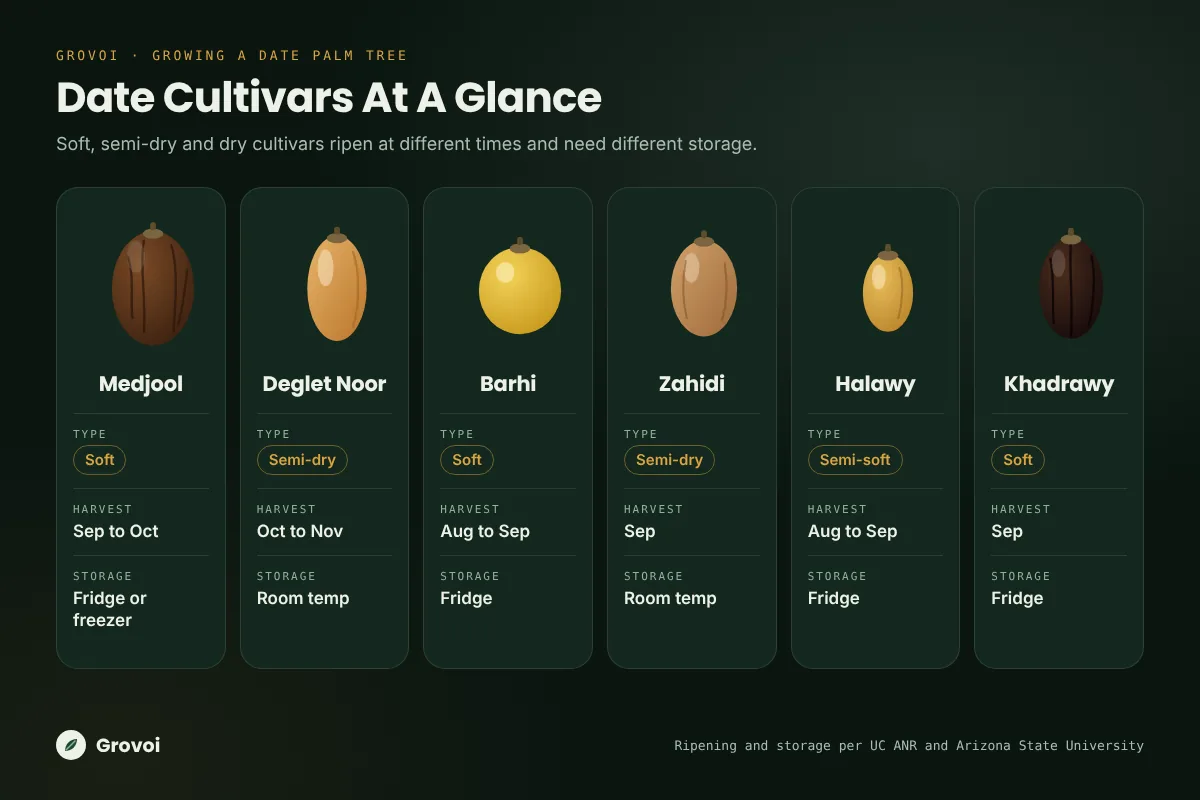
Dates are grouped by texture: soft, semi-dry and dry. These six cultivars are the ones most often sold in the US.
| Cultivar | Fruit type | Flavor and texture | Ripening | Best climate |
|---|---|---|---|---|
| Medjool | Soft to semi-soft | Very large, caramel sweet, fibrous skin | Mid season, September to October | Hottest, driest sites; needs heavy thinning |
| Deglet Noor | Semi-dry | Medium, firm, nutty, translucent amber | Late, October to November | Coachella Valley standard; tolerates a little humidity |
| Barhi | Soft | Round, honey sweet; eaten crunchy at Khalal | Early, August to September | Low desert; fruit must be refrigerated |
| Zahidi | Semi-dry to dry | Oval, mild, sugary, keeps at room temperature | Mid season, September | Reliable in cooler desert edges |
| Halawy | Semi-soft | Small, golden, very sweet | Early, late August to September | Good for shorter hot seasons |
| Khadrawy | Soft | Dark, rich, fudge-like; smaller palm | Early, September | Home gardens with limited height |
Which one to plant
For a home palm in Phoenix, Yuma or Indio, Medjool is the obvious pick. On the cooler desert edge, Halawy, Khadrawy or Zahidi ripen earlier. Whatever you choose, buy a named female offshoot from a nursery that can confirm its sex.
Planting A Date Palm Tree
Offshoots versus seed
Every commercial date palm starts as an offshoot, or pup, cut from the base of a known female. Arizona State University points out that about half of seedlings turn out male and the females do not come true, and you wait 6 to 8 years to find out. Grow seedlings for shade, not for dates.
Remove an offshoot when it is 3 to 5 years old and at least 6 to 8 inches across at the woody base, ideally between May and August:
- Dig away soil to expose the offshoot’s own roots.
- Tie the fronds together and cut off the leaf above the tie to reduce water loss.
- Sever the connection to the mother trunk with a chisel and heavy hammer, keeping as many roots attached as possible.
- Plant slightly deeper than it grew and water well until new leaves appear.
Site, soil and spacing
Choose full sun. Date palms accept sand, loam and alkaline desert soil, and tolerate more salt than almost any other fruit tree. They do not tolerate standing water, so plant on a slight mound if drainage is doubtful. Space palms about 30 feet apart, the standard grove spacing, and keep them away from pools because ripe dates drop and stain.
Watering And Fertilizing Date Palms
Deep irrigation, dry crown
The old saying that a date palm likes its feet in water and its head in fire is folklore, not an instruction. The facts behind it are simpler: the roots want frequent deep soaking, and the crown wants hot, dry air. Flood or bubbler irrigation in a basin gives the best fruit. Soak the root zone every 7 to 10 days in summer and less often in winter. Waterlogged roots rot, so drainage is not optional.
Nitrogen and manure
Arizona and Nevada Extension guidance recommends a palm fertilizer near a 4-1-6-2 ratio of nitrogen, phosphorus, potassium and magnesium, applied in late February before the spathes open. Mature palms get one or two applications a year, watered into the basin. Traditional groves also spread composted manure around each palm every winter for slow nitrogen. Avoid fast-release nitrogen late in the season. Our guide to the best fertilizer for fruit trees explains how to read those ratios.
How To Pollinate A Date Palm By Hand
Why hand pollination is needed
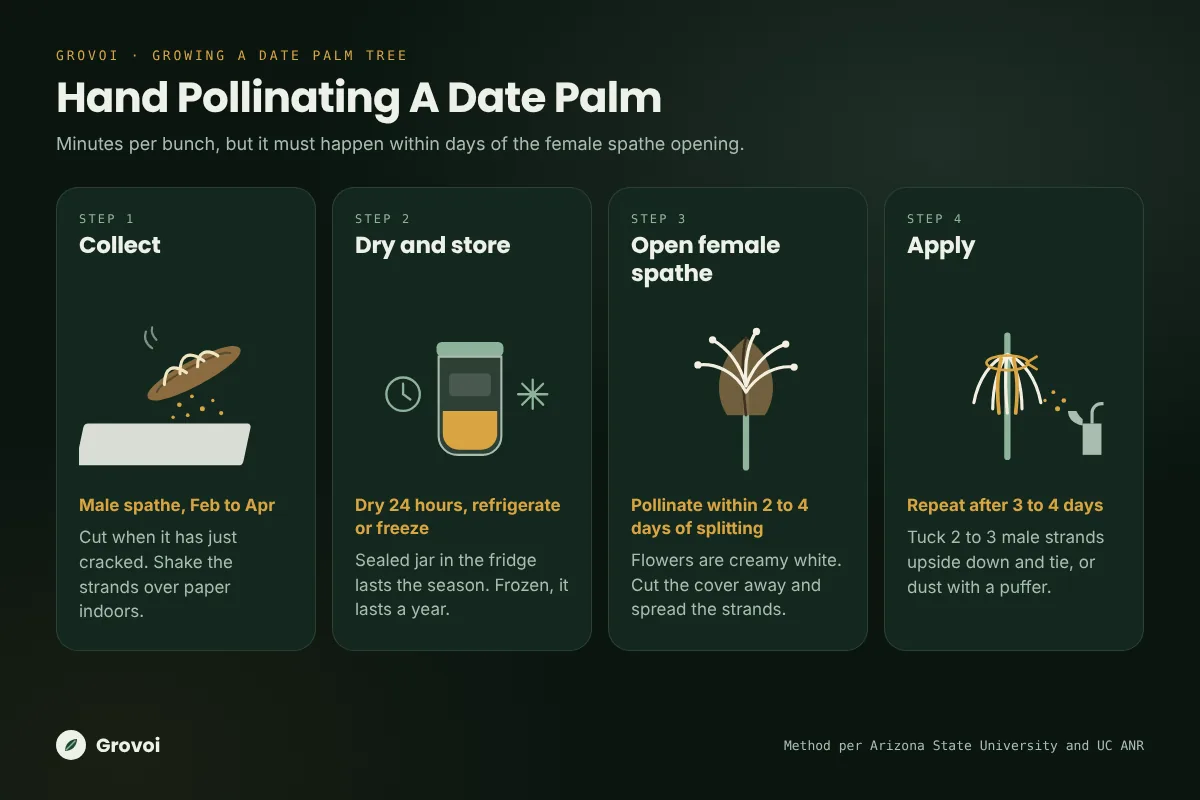
Female date flowers have no scent, so insects ignore them, and still desert air carries little pollen. Groves keep roughly one male for every 50 females and pollinate every bunch by hand. A home grower with one female can buy fresh or frozen pollen from a date grower each spring.
Collecting pollen
Male spathes open from February to April. Cut one when it has just cracked, shake the strands over paper indoors, and dry the pollen for a day. Refrigerated in a sealed jar it stays viable all season; frozen, it lasts a year. Stretch it with flour at about one part pollen to nine parts filler.
Pollinating the female flowers
- Pollinate within 2 to 4 days of the female spathe splitting, when the flowers are creamy white. Medjool is receptive for only about 3 days.
- Cut the spathe cover away and spread the strands.
- Tuck 2 to 3 fresh male strands upside down into the center of the cluster and tie loosely, or dust pollen over it with a puffer bottle.
- Work late morning to mid afternoon on a dry day. Repeat 3 to 4 days later, and again if rain falls within hours.
- Tie a string around every pollinated bunch so you do not lose track.
Fruit Stages, Thinning And Harvest
From Kimri to Tamar
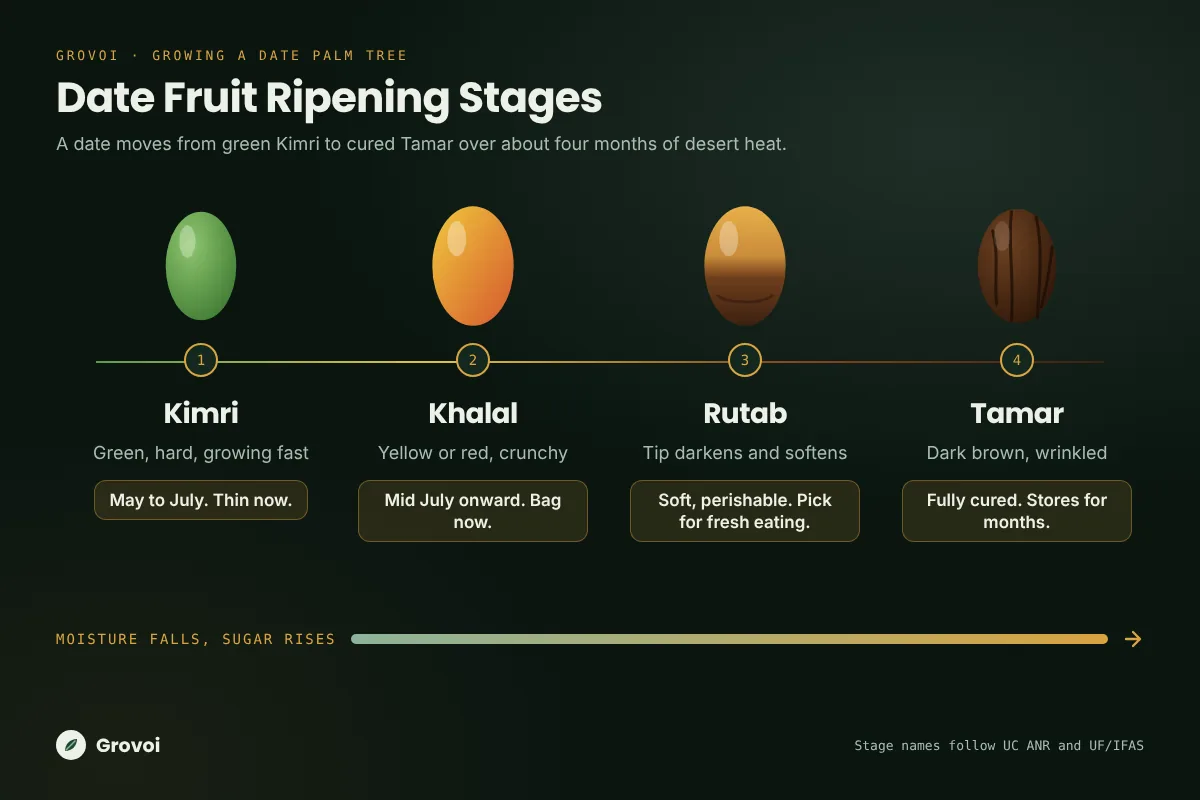
Date fruit passes through four named stages that tell you when to bag and when to pick.
- Kimri: green, hard and growing fast from May into July. Thin now.
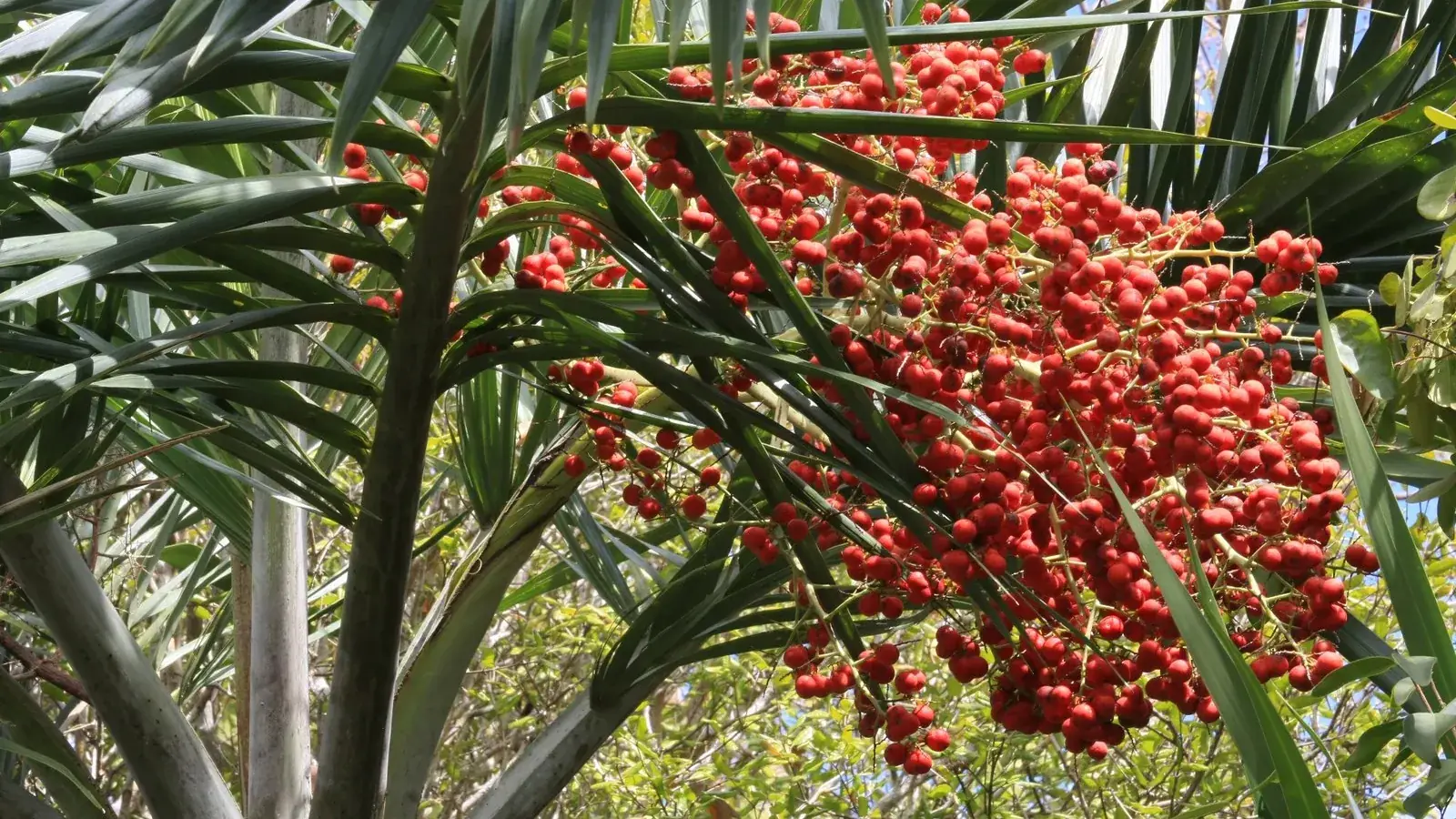
- Khalal: full size, crunchy, yellow or red, from mid July. Barhi is eaten fresh at this stage.
- Rutab: the tip softens and darkens as moisture drops. Sweet, soft and perishable.
- Tamar: fully cured, wrinkled, dark and shelf stable. The date most people buy.
Thinning and bagging
A palm sets far more fruit than it can ripen well. At pollination, cut a third off the center strands. When fruit is pea sized in May or June, remove whole strands until about 35 remain, each carrying 15 to 20 dates. Limit a mature palm to 10 to 12 bunches or it will skip the next year. Once the stalks bend, tie each bunch over a frond so it hangs freely; Medjool stalks are brittle.
Bag bunches at the Khalal stage in cheesecloth, light burlap or waxed paper open at the bottom. Plastic traps heat and ruins the fruit. Bags keep out birds and late summer rain.
Harvest timing, curing and storage
Harvest runs from August for Barhi and Halawy, through September for Khadrawy, Medjool and Zahidi, to November for Deglet Noor. Most cultivars are bunch cut once three quarters of the fruit reaches Rutab. Medjool is picked in two or three passes by shaking ripe dates into a tray. Rinse lightly, never soak, and cure on screens in shade at about 90F until the skins wrinkle. Soft dates go in the refrigerator or freezer; semi-dry and dry dates keep for months at room temperature. Figs cure in a similar way, as described in our fig tree guide.
Pruning And Cold Protection
Fronds, spines and old fruit stalks
Prune once a year in January. Remove only dead fronds, old fruit stalks and the spines on the current season’s leaves so you can work in the crown safely, wearing leather gloves. Never strip green fronds and never top a palm: it has one growing point, and cutting it kills the tree. The rules in our guide on how to prune fruit trees do not apply to palms.
Cold damage and protection
Mature date palms shrug off light frost. Fronds brown at around 20F, and a hard freeze near 15F can kill the bud on young palms. In zone 9, tie the fronds up around the spear and drape frost cloth over the crown on freeze nights. Leave damaged fronds until spring, because they shelter the bud.
Date Palm Pests And Diseases
Insect pests
The red palm weevil, which UC ANR calls the most destructive palm pest worldwide, has been detected in California. Its larvae tunnel near the growing point and can kill a palm before symptoms show; report suspected weevils to your county Extension office. Parlatoria date scale crusts fronds and fruit with tiny gray shells and is managed with horticultural oil. Carob moth attacks ripening fruit, another reason to bag bunches and clear fallen dates.
Diseases and birds
Bayoud, the Fusarium wilt that has destroyed millions of palms in North Africa, is not present in the United States, and quarantine on imported offshoots is meant to keep it out. Problems you may see include Diplodia rot on freshly cut offshoots, bud rot after cold wet winters and Ganoderma butt rot in old trunks. In Florida, UF/IFAS warns that lethal bronzing, spread by planthoppers, kills Phoenix palms. Birds strip unbagged bunches fast, so bag early.
Date Palms In Pots, Cooler Zones And Lookalikes
Growing where it will not fruit
Below zone 9, or anywhere with humid summers, treat the date palm tree as an ornamental. A young palm grows for years in a large container in full sun, but it will not fruit in a pot. For fruit in a tub, see our guide to dwarf fruit trees for pots, or heat lovers such as the olive tree, the pomegranate tree and citrus covered in our citrus tree care guide.
Date palm vs pygmy date palm vs Canary Island date palm
Three Phoenix species are often confused. The pygmy date palm (Phoenix roebelenii) stays under 12 feet and sets tiny inedible fruit. The Canary Island date palm (Phoenix canariensis) grows a massive trunk and a dense crown, hardy to about 18F, but its fruit is dry and not worth eating. Only Phoenix dactylifera, the slender 50 to 80 foot species that suckers at the base, is worth hand pollinating.
Frequently Asked Questions
How long does a date palm take to produce fruit?
A palm grown from an offshoot usually sets a small first crop 4 to 5 years after planting and reaches full yield at 10 to 15 years. Seed-grown palms take 6 to 8 years just to flower, and half will be male. Hand pollination, thinning and a long hot summer are all needed before you taste the first ripe date.
Can I grow a date palm tree from a store-bought date pit?
Yes, a fresh pit from an unpasteurized date will sprout in warm, moist soil within a few weeks. The resulting palm makes a fine ornamental. It will not match the parent cultivar, and you cannot tell whether it is male or female until it flowers years later, so do not count on it for fruit.
Do I need a male date palm to get dates?
You need male pollen, not necessarily a male tree. Growers keep about one male per 50 females and pollinate by hand. A home gardener with a single female palm can order fresh or frozen pollen from desert date growers each spring, or collect strands from a male palm nearby, and apply it within a few days of the spathe opening.
Why does my date palm flower but never ripen fruit?
The usual reasons are no pollination, not enough summer heat, or too much humidity. Unpollinated flowers drop or form small seedless fruit. In coastal or humid climates the dates reach the Khalal stage, then sour or rot instead of curing. Only a long, hot, dry season carries fruit all the way to Tamar.
How much water does a date palm need?
A mature fruiting palm in the desert uses a great deal of water, but it wants it delivered as deep, infrequent soakings into a basin, not daily sprinkles. Water every 7 to 10 days in summer and every few weeks in winter. Check that the soil drains freely, because waterlogged roots rot and kill the tree faster than drought does.
When are dates harvested in the United States?
Harvest runs from late August through November depending on cultivar and site. Barhi and Halawy come first, Khadrawy, Medjool and Zahidi follow in September and early October, and Deglet Noor finishes the season in late October and November. Bunches are cut when most fruit reaches the Rutab stage, then cured in shade.
Is the date palm the same as the Canary Island date palm?
No. Both are Phoenix species, but the Canary Island date palm (Phoenix canariensis) is a stout ornamental with a thick trunk and dry, unpalatable fruit. The true date palm (Phoenix dactylifera) is taller, slimmer, produces suckers at the base and is the only species grown for edible dates.
Final Thoughts
The short version
A date palm tree is easy to keep alive across zones 9 to 11 and hard to bring to harvest anywhere but the low desert. In Coachella, Yuma or Phoenix, plant a named female offshoot, water deep, feed in February and hand pollinate in March. Thin, bag and let the heat do the rest. Everywhere else, enjoy it as a stately palm and grow your fruit from the trees in our fruit trees hub. For deeper technical detail, the UF/IFAS fact sheet on Phoenix dactylifera and Arizona State University’s date gardening guide are the best free references for American growers.