Common Tree Diseases: How To Identify, Treat And Prevent Them
On this page
Most sick trees tell you something is wrong long before they die. Leaves spot, twigs blacken, bark cracks, or mushrooms appear at the base. The trick is reading those signs early and knowing which ones need action and which ones are only cosmetic.
This guide walks through the tree diseases home gardeners in the United States meet most often. For each one you will learn how to identify it, how to treat it, and how to prevent it next season. The advice follows university extension services and the USDA Forest Service. When a disease threatens a large tree near a house, a certified arborist should make the final call.
How Tree Diseases Start
A tree disease needs three things at the same time: a host tree that can be infected, a pathogen such as a fungus or bacterium, and weather that favors the pathogen. Plant scientists call this the disease triangle. Take away any one side and the disease stalls.
Fungi, Bacteria, And Other Causes
Fungi cause most tree diseases. They spread by spores carried on wind, rain splash, insects, and pruning tools. Bacteria cause a smaller group, including fire blight. A few problems come from water molds, viruses, or tiny worm like nematodes. Many trees that look diseased are actually stressed by drought, flooding, deep planting, or root damage, which then opens the door to infection.
Why Stressed Trees Get Sick First
A healthy tree walls off small infections on its own. A tree short on water, buried too deep, or wounded by a mower has fewer reserves. Canker fungi and root rots are especially quick to attack weak trees. That is why good care is the first line of defense against almost every disease on this list.
Weather That Favors Disease
Wet springs drive most leaf diseases. Spores need a film of water on the leaf to germinate, so long periods of rain, dew, or overhead irrigation raise infection rates. Warm, humid nights favor bacterial diseases and powdery mildew. A dry year often means fewer leaf spots, but more drought stress and canker problems later.
How To Identify A Tree Disease
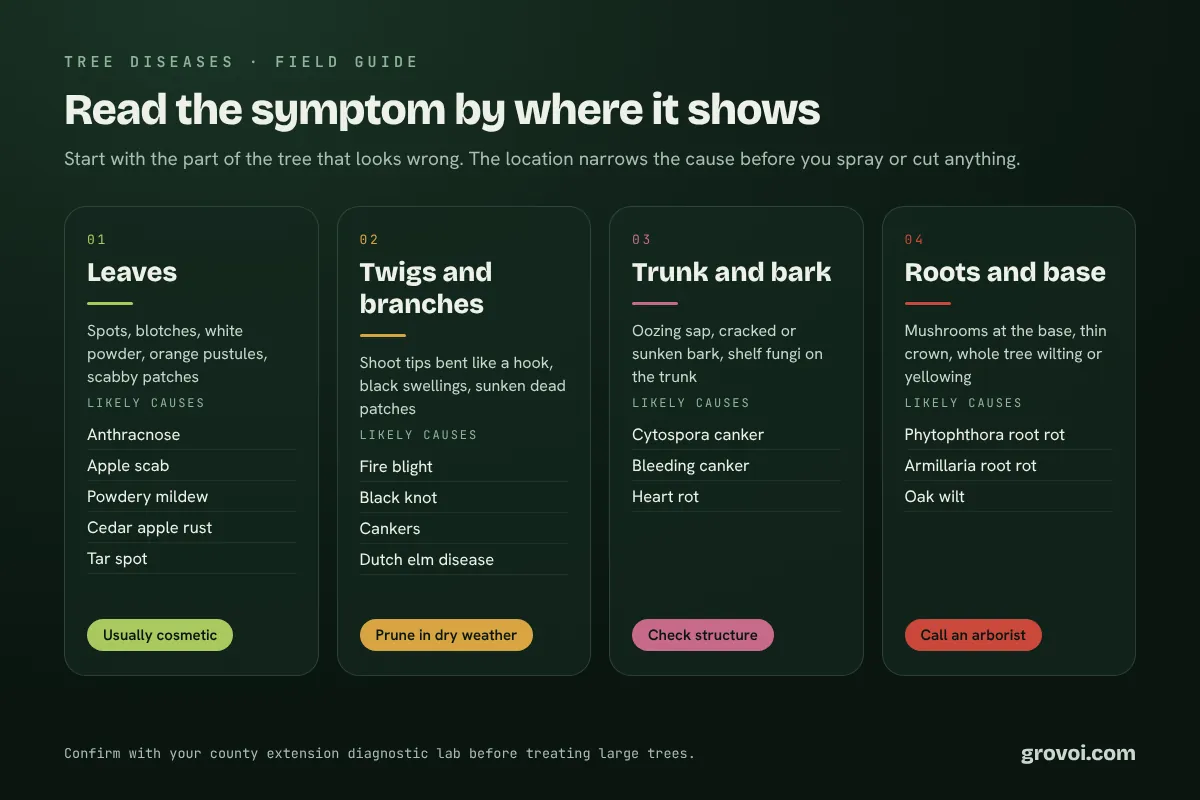
Start with where the symptom shows up. Leaves, branches, trunk, and roots each point to different groups of problems. Then note when it appeared and whether it is spreading.
Leaf Symptoms
Spots, blotches, white powder, orange pustules, and early leaf drop usually mean a foliar disease. These often look alarming but rarely kill a tree by themselves. Compare the symptom on several branches. A problem on one side only may be wind, salt, or herbicide drift rather than disease.
Branch And Twig Symptoms
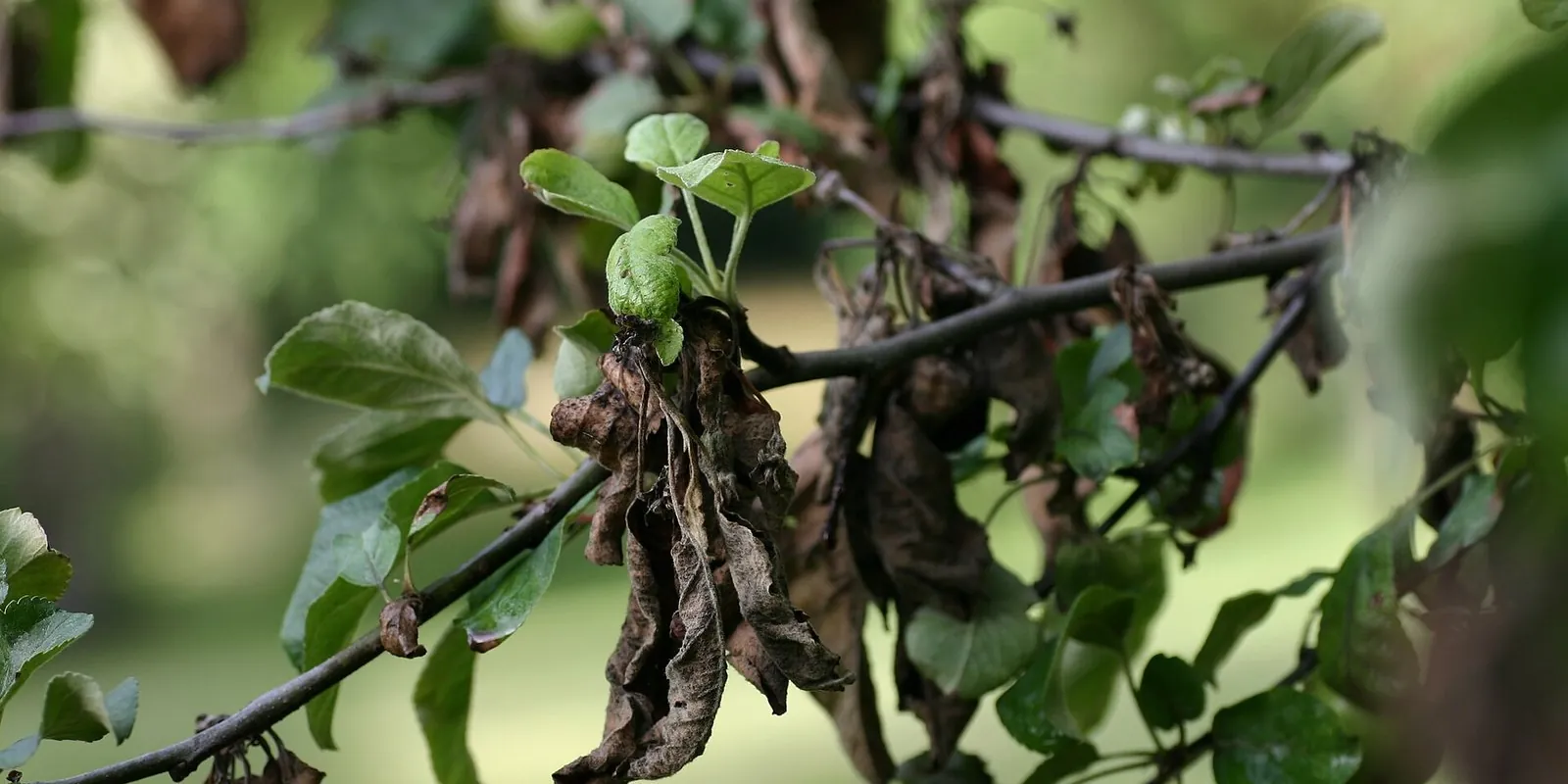
Blackened shoot tips bent into a hook, sunken patches of dead bark, and hard black swellings on twigs point to more serious trouble. Dieback that starts at the tips and moves inward often signals a canker or a vascular disease.
Trunk And Root Symptoms
Oozing sap, cracked or peeling bark, shelf fungi, and mushrooms around the base suggest decay inside the trunk or roots. A tree that leans more each year, or has a thinning crown with small, pale leaves, may have root rot. These signs deserve a closer look, because they affect whether the tree is safe.
Collect A Sample For Testing
If you cannot tell what is wrong, your county extension office can help. Many run plant diagnostic labs that test samples for a small fee. Cut a branch that shows both healthy and damaged tissue, wrap it in dry paper, and deliver it quickly. Photos of the whole tree help the lab see the pattern.
Common Leaf Diseases
Leaf diseases are the ones you notice first. Most are worse in wet years and fade in dry ones.
Anthracnose
Anthracnose is a group of fungal diseases that hit sycamore, ash, maple, oak, and dogwood in cool, wet springs. Look for irregular brown blotches along the leaf veins, curled leaves, and early leaf drop. Sycamores may lose most of their first flush of leaves and then grow a second set. Healthy shade trees usually recover without treatment. Rake up fallen leaves, prune out dead twigs, and keep the tree watered in dry spells. Dogwood anthracnose is more serious, so choose resistant kousa dogwoods for new plantings.
Apple Scab
Apple scab is the most common disease of apples and crabapples. It causes olive green to black velvety spots on leaves and corky scabs on fruit. Badly infected trees drop many leaves by midsummer. The fungus overwinters on fallen leaves, so fall cleanup cuts the next year’s spore load. Resistant varieties such as ‘Liberty’ and ‘Enterprise’ are the easiest fix. On susceptible trees, protective fungicides go on from green tip until a few weeks after petal fall. Our apple tree guide covers the spray timing in more detail.
Powdery Mildew
A white, dusty coating on leaves and shoots is powdery mildew. It shows up on maples, oaks, crabapples, lilacs, and crepe myrtles when warm days follow cool, humid nights. Light infections are cosmetic. Heavy ones distort new growth. Give the tree more sun and airflow, avoid overhead watering, and go easy on nitrogen fertilizer, which pushes the soft new growth mildew loves.
Cedar Apple Rust
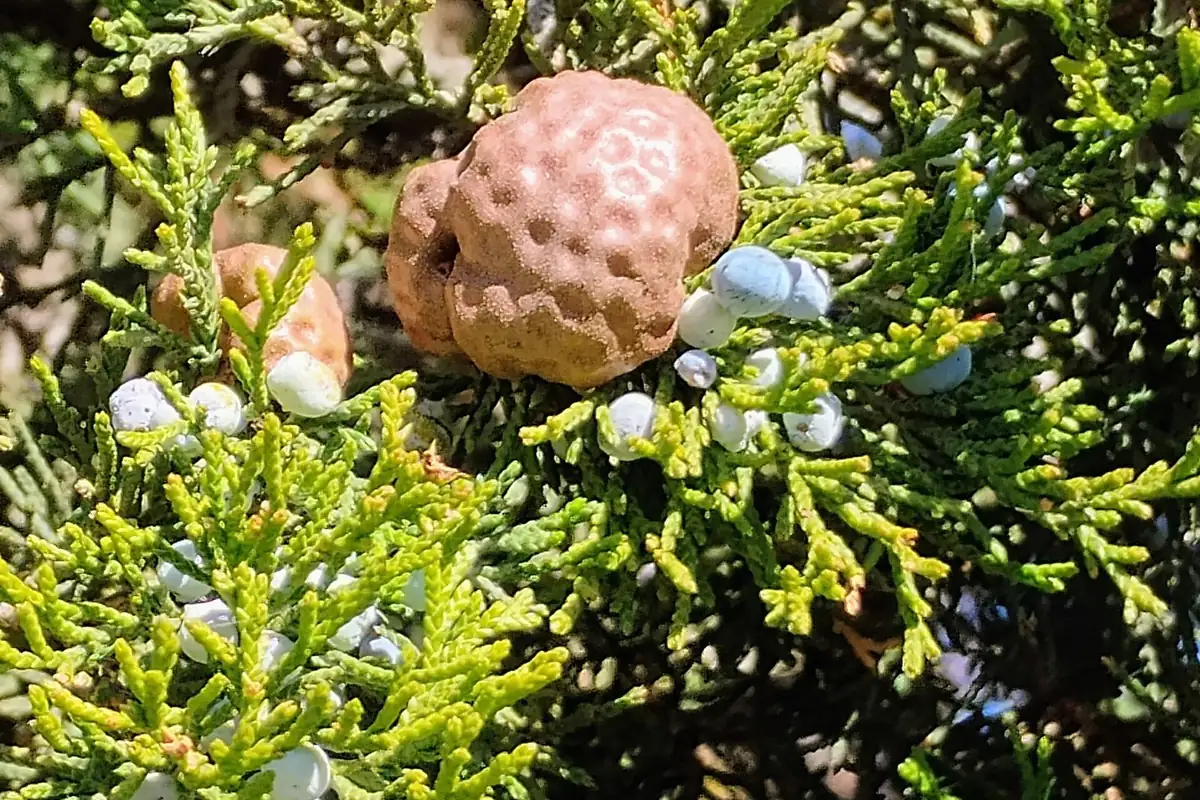
This rust fungus needs two hosts. It spends part of its life on eastern red cedar and junipers, where it forms brown galls that swell into bright orange, jelly like horns after spring rain. Spores from those horns then infect apple and crabapple leaves, which develop yellow orange spots. Removing nearby cedars helps, but spores travel a long way. Rust resistant apple varieties are the most reliable answer.
Tar Spot And Other Leaf Spots
Tar spot covers maple leaves with raised black spots that look like drops of tar. It is cosmetic and needs no spray. Many other leaf spots fit the same pattern. Rake and remove fallen leaves in fall, and the problem usually stays small.
Branch And Trunk Diseases
Diseases of the wood are harder to treat than leaf diseases. Early pruning is often the only real cure.
Fire Blight
Fire blight is a bacterial disease of apples, pears, quince, crabapples, and mountain ash. Infected blossoms and shoots wilt and turn black, as if scorched, and shoot tips bend into a shepherd’s crook. Amber ooze may drip from cankers in warm, wet weather. Pears are especially prone. Prune out infected shoots in dry weather, cutting at least 8 to 12 inches below the visible damage, and disinfect pruners between cuts. Avoid heavy nitrogen feeding, which drives the soft growth the bacteria attack. Our guide to the pear tree explains which varieties resist it best.
Black Knot
Black knot attacks plums and cherries, both cultivated and wild. Hard, black, rough swellings form on twigs and branches, often after an olive green stage the season before. The knots girdle the branch over time. In late winter, cut knots out at least 4 inches below the swelling and destroy them. Remove infected wild cherries nearby when you can.
Cankers
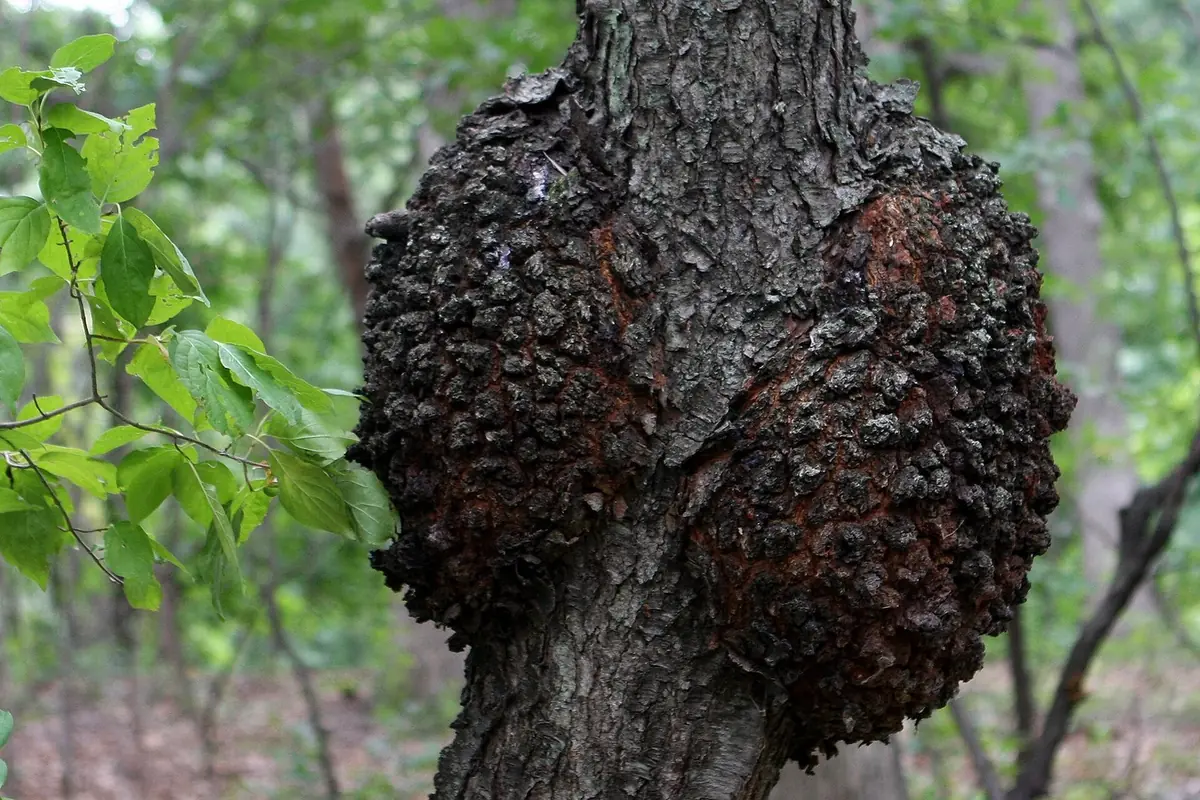
A canker is a sunken, dead patch of bark caused by a fungus or bacterium. Cytospora, Nectria, and Thyronectria cankers are common on stressed trees, especially spruce, maple, honeylocust, and stone fruits. You may see cracked bark, oozing sap, or small pimple like fruiting bodies. Prune out cankered branches below the damage. Then fix the stress that let the fungus in, which is often drought, deep planting, or wounds from string trimmers.
Wilt And Root Diseases
These diseases block a tree’s water flow or rot its roots. They are the ones most likely to kill a tree.
Oak Wilt
Oak wilt is a fungal disease that clogs the water conducting tissue of oaks. Red oaks are hit hardest and can die within weeks of the first symptoms. Leaves turn bronze or brown from the edges inward and drop while still partly green. The fungus spreads through grafted roots between nearby oaks and by sap beetles that carry spores to fresh wounds. The USDA Forest Service lists oak wilt among the most serious oak diseases in the eastern United States. The key rule is simple: do not prune or wound oaks in spring and early summer. If a wound happens, cover it right away with a thin coat of wound paint, one of the few cases where that is advised. Our oak tree guide covers safe pruning times.
Dutch Elm Disease
Dutch elm disease wiped out most American elms in the twentieth century. Elm bark beetles carry the fungus from tree to tree. Leaves on one branch yellow, wilt, and curl, and the symptoms spread through the crown. Remove dead elm wood promptly so beetles cannot breed in it. For new plantings, choose disease resistant elm cultivars such as ‘Princeton’, ‘Valley Forge’, or ‘New Harmony’.
Verticillium Wilt
This soil borne fungus enters through the roots of maples, redbuds, smoke trees, catalpa, and many others. One branch or one side of the tree wilts and dies, often in midsummer. Cut a dying branch and you may see olive or brown streaks in the wood. There is no cure. Water during droughts, prune out dead limbs, and plant resistant species such as oaks, birches, or conifers where it has struck before.
Root Rots
Armillaria root rot shows up as clusters of honey colored mushrooms at the base in fall and white, fan shaped fungal mats under the bark. Phytophthora root rot thrives in soggy soil and causes thin crowns, small leaves, and dark, wet patches on the lower trunk. Both are hard to stop once established. Prevention means good drainage, correct planting depth, and no piling of mulch against the trunk. A tree with major root decay can fall without warning, so have an arborist check it.
How To Treat A Diseased Tree
Treatment depends on the disease, but the same steps apply to most of them.
Prune Out Infected Wood
- Prune in dry weather, so spores and bacteria do not spread in water.
- Cut well below the visible damage, back into healthy wood.
- Make each cut just outside the branch collar, never flush with the trunk.
- Dip or wipe tools in 70 percent rubbing alcohol between cuts.
- Bag or burn diseased wood where local rules allow. Do not compost it.
For more on clean cuts and timing, see our guide on how to prune fruit trees.
When Fungicides Make Sense
Fungicides prevent infection. They do not cure leaves that are already spotted. They make sense on fruit trees with a history of scab or rust, where the crop matters, and the timing has to match the spring infection period. On large shade trees, spraying is rarely practical or needed. Always read and follow the label, since the label is the law for pesticide use.
When To Call An Arborist
Call a certified arborist when a large tree shows trunk decay, root rot, sudden wilting, or dead limbs over a house, driveway, or play area. Arborists can confirm the disease, inject some vascular wilt treatments, and tell you whether the tree is safe to keep.
How To Prevent Tree Diseases
Prevention costs less than treatment and works for nearly every disease on this list.
Choose Resistant Trees
Buy cultivars bred to resist the diseases common in your region. Scab resistant apples, fire blight tolerant pears, mildew resistant crepe myrtles, and resistant elms remove the biggest problems before you plant. Your local extension office can tell you what grows well near you.
Plant In The Right Place
Match the tree to your sun, soil, and space. A sun loving tree in shade, or a dry land tree in a wet spot, will struggle and get sick. Set the root flare at or just above soil level, and leave room for the mature crown.
Keep Trees Watered And Mulched
Deep watering during dry spells keeps trees strong enough to fight off cankers. Spread 2 to 4 inches of mulch over the root zone, but keep it a hand’s width from the trunk. Avoid wounding bark with mowers and string trimmers, since every wound is an entry point.
Clean Up Every Fall
Many leaf fungi spend the winter on fallen leaves and fruit. Rake and remove leaves from scab, rust, and anthracnose prone trees, and pick up mummified fruit. Feed fruit trees in moderation as well. Our guide to the best fertilizer for fruit trees explains why too much nitrogen invites disease.
Frequently Asked Questions
How can I tell if my tree is diseased or just stressed?
Stress usually affects the whole tree evenly, with smaller leaves, early fall color, or scorched edges after a drought. Disease more often shows a pattern, such as spots, cankers, oozing, or one branch dying at a time. When in doubt, send a sample to your county extension diagnostic lab.
Can a diseased tree be saved?
Often, yes. Leaf diseases such as anthracnose and tar spot rarely kill trees. Fire blight, black knot, and cankers can be controlled with timely pruning. Oak wilt, Dutch elm disease, and advanced root rot are harder, and a tree with heavy trunk or root decay may need removal for safety.
What is the most common tree disease?
Leaf spot diseases such as anthracnose, apple scab, and powdery mildew are the most common in home yards. They are also among the least harmful. Fire blight is one of the most common serious diseases on apples and pears.
Should I paint pruning cuts on a diseased tree?
No, in most cases. Wound paint does not stop decay and can trap moisture. The main exception is oak, where a thin coat of paint on fresh wounds made during spring and summer helps keep oak wilt beetles away.
Is it safe to compost diseased leaves and branches?
It is safer not to. A home compost pile rarely gets hot enough to kill all pathogens. Bag diseased material for yard waste pickup, or burn it where local rules allow.
When is the best time to treat tree diseases?
Prune out cankers and black knot in late winter while trees are dormant. Cut fire blight in dry weather as soon as you see it, or in winter. Protective fungicides for scab and rust go on in spring, from bud break through a few weeks after bloom.
Final Thoughts
Most tree diseases are easier to prevent than to cure. Choose resistant trees, plant them in the right spot, and keep them watered, mulched, and free of wounds. When symptoms appear, identify the problem before you spray or cut.
Your Tree Disease Checklist
Walk your trees once a month in spring and summer. Note where symptoms appear: leaves, twigs, trunk, or roots. Prune infected wood in dry weather and clean your tools between cuts. Rake up fallen leaves each fall. Ask your extension office for help with diagnosis, and call an arborist for large trees with trunk or root decay. For more practical guides, browse the tree care section.