Apple Tree: How To Grow, Care For And Harvest Crisp Apples In Any Backyard

On this page
- Origin And History Of The Apple Tree
- Best Apple Varieties For Home Gardens
- Climate, Hardiness Zones And Chill Hours
- Choosing A Rootstock: Dwarf, Semi-Dwarf Or Standard
- Sun And Soil Requirements For Apple Trees
- When And How To Plant An Apple Tree
- Pollination: Why Most Apple Trees Need A Partner
- Watering And Mulching Apple Trees
- How To Fertilize An Apple Tree
- How To Prune An Apple Tree
- Thinning Apples For Bigger, Better Fruit
- Growing Apple Trees In Containers And Small Spaces
- How Long Until An Apple Tree Bears Fruit?
- How To Harvest Apples At Peak Ripeness
- How To Store Apples So They Last
- Common Apple Tree Pests
- Apple Tree Diseases And How To Prevent Them
- Apple Tree Care Calendar
- Best Ways To Use Your Apples
- Apple Tree FAQs
The apple tree, known botanically as Malus domestica, is a deciduous fruit tree in the rose family, Rosaceae. It is the most widely planted fruit tree in American backyards, and one healthy tree can supply a family for decades.

Apple trees are easier to grow than their reputation suggests. Success comes down to four early choices: a variety that suits your chill hours, the right rootstock for your space, a compatible pollination partner and a sunny, well-drained site.
Get those right and routine care is simple: water young trees deeply, prune once a year in late winter, thin the fruit in early summer and pick when the background color turns from green to yellow. This guide walks through every step.
Origin And History Of The Apple Tree
Every modern apple descends mainly from Malus sieversii, a wild apple that still forms forests in the Tian Shan mountains of Kazakhstan. Traders on the Silk Road carried its seeds and fruit west toward Europe thousands of years ago.
Romans spread grafting across their empire, which let growers copy the best trees exactly. That matters because apples do not grow true from seed: a seedling rarely tastes like its parent, so every named variety is propagated by grafting.
European settlers brought apples to North America in the 1600s, and John Chapman, remembered as Johnny Appleseed, planted seedling nurseries across the Midwest. Today the United States grows well over 100 commercial apple varieties, led by Washington, New York and Michigan.
Best Apple Varieties For Home Gardens
Choose varieties by three filters: your chill hours, your preferred flavor and disease resistance. For low-spray backyard growing, scab-resistant varieties such as Liberty, Enterprise, Freedom and GoldRush save far more work than any spray schedule.
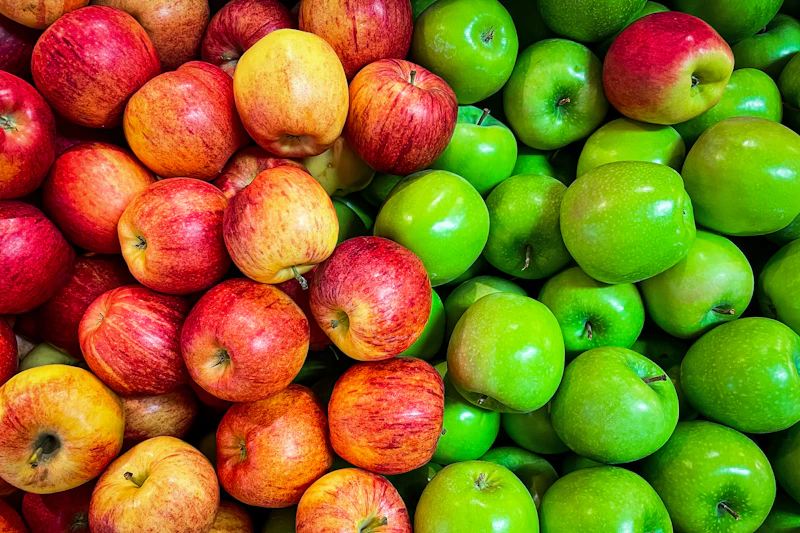
Honeycrisp and McIntosh excel in cold northern zones, while Gala, Fuji and Granny Smith need longer, warmer seasons. In the Deep South, Florida and Southern California, low-chill apples like Anna, Dorsett Golden and Pink Lady are the reliable choices.
Mixing early, mid and late varieties stretches your harvest from July into November. Keep flowering time in mind as you choose, because pollination partners must bloom together.
| Variety | Chill hours | Harvest | Flavor and texture | Best for |
|---|---|---|---|---|
| Honeycrisp | 800 to 1,000 | September | Very crisp, sweet-tart, juicy | Fresh eating in cold zones |
| Gala | 500 to 600 | August | Sweet, mild, crisp | Early fresh eating, kids |
| Fuji | 400 to 500 | October | Very sweet, dense, crunchy | Warmer zones, long storage |
| Granny Smith | 400 to 600 | October to November | Tart, firm, green skin | Baking and pies |
| Golden Delicious | 600 to 700 | September to October | Sweet, mellow, tender | Universal pollinator partner |
| Liberty | 800 | September to October | Sweet-tart, McIntosh style | Disease-resistant, low spray |
| Anna | 250 to 300 | June to July | Sweet-tart, crisp | Hot, low-chill climates |
Climate, Hardiness Zones And Chill Hours
Most apple trees grow best in zones 3 through 8 on the USDA plant hardiness zone map. Cold hardiness is rarely the problem. The real limit in warm regions is winter chill, not summer heat.
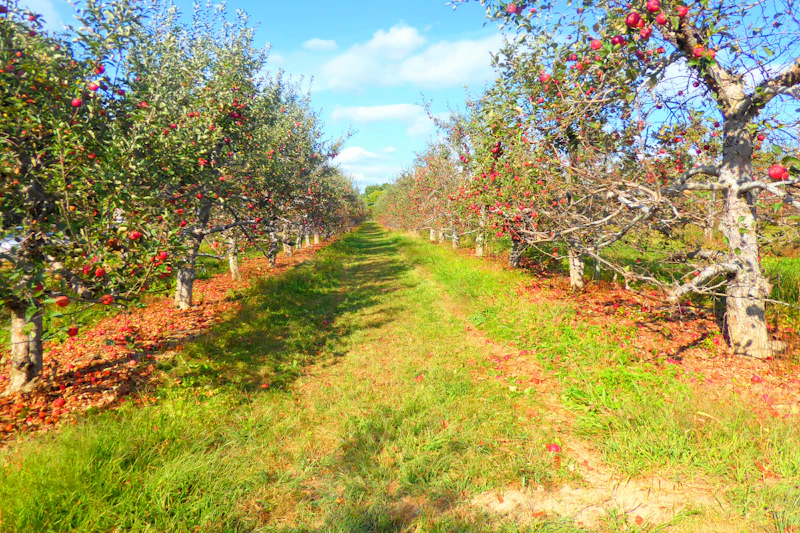
Chill hours are the number of winter hours spent between roughly 32 and 45 °F. An apple variety that does not receive its required chill hours blooms late and unevenly, then sets little or no fruit. Check your local chill total before buying.
Spring frost is the other climate risk. Blossoms are damaged near 28 °F, so plant on a slope or higher ground where cold air drains away, and avoid low frost pockets at the bottom of a hill.
Choosing A Rootstock: Dwarf, Semi-Dwarf Or Standard
Nearly every nursery apple is two trees joined together: a fruiting variety grafted onto a rootstock. The rootstock, not the variety, decides how big the tree gets, how soon it fruits and how well it anchors itself.
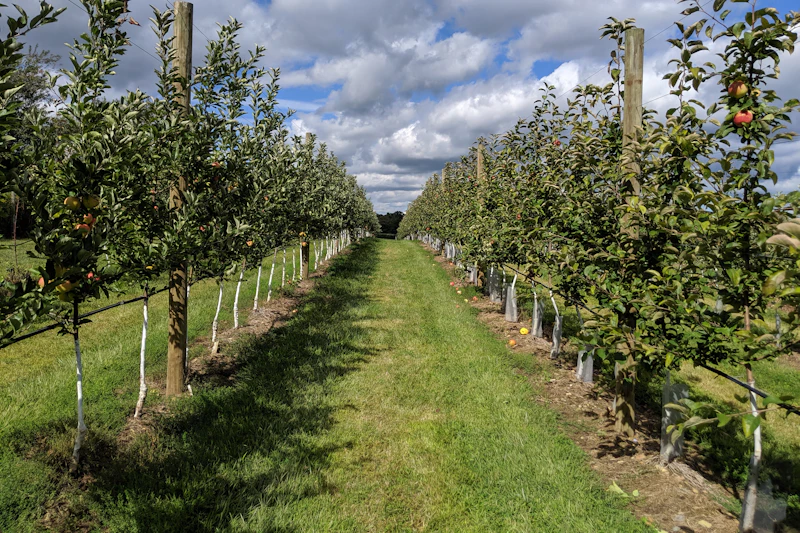
Dwarf rootstocks such as Budagovsky 9, M.9 and Geneva 11 keep trees small and fruiting within two to three years, but they need a permanent stake or trellis. Semi-dwarf M.7, M.26 and Geneva 30 suit most yards and stand freely.
Standard seedling rootstocks create large, long-lived trees that are hard to prune, spray and pick. Geneva rootstocks add resistance to fire blight and replant disease, which makes them a smart pick for new plantings.
| Tree size | Example rootstocks | Mature height | Spacing | Years to first fruit |
|---|---|---|---|---|
| Dwarf | B.9, M.9, G.11 | 6 to 10 ft | 6 to 8 ft | 2 to 3 |
| Semi-dwarf | M.7, M.26, G.30 | 12 to 16 ft | 12 to 15 ft | 3 to 5 |
| Standard | Seedling, Antonovka | 20 to 30 ft | 20 to 25 ft | 5 to 8 |
Sun And Soil Requirements For Apple Trees
Apple trees need full sun, ideally eight hours of direct light a day. Morning sun is especially valuable because it dries dew from leaves quickly, which lowers the risk of apple scab and other fungal diseases.
The ideal soil is a deep, well-drained loam with a pH between 6.0 and 7.0. Apple roots rot in soil that stays wet, so drainage matters more than fertility. Avoid spots where puddles linger after rain.
Test soil before planting and adjust pH with lime or sulfur as the results recommend. On heavy clay, plant on a wide, raised mound rather than filling a hole with rich compost, which only creates a bathtub that holds water.
When And How To Plant An Apple Tree
Plant bare-root trees in early spring as soon as the soil can be worked, while they are still dormant. Container trees can go in from spring to early fall. In mild-winter regions, late fall and winter planting also works well.
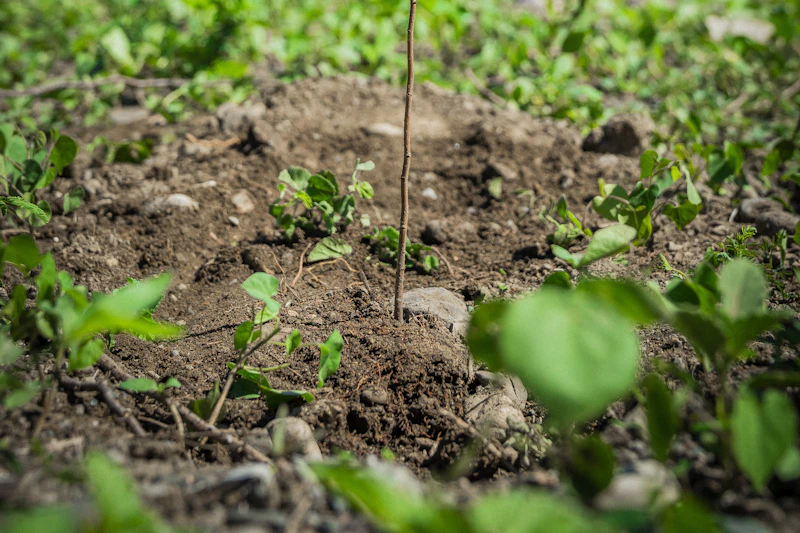
Dig a hole two to three times wider than the root spread but no deeper. Spread the roots, then set the tree so the graft union, the knobby bump on the trunk, sits 2 to 3 inches above the soil line.
Never bury the graft union, because the variety will root and turn your dwarf tree into a full-size one. Backfill with native soil, water deeply, stake dwarf trees, and do not add fertilizer to the planting hole, which can burn new roots.
Pollination: Why Most Apple Trees Need A Partner
Most apple varieties are self-unfruitful, meaning their flowers need pollen from a different apple variety that blooms at the same time. Bees carry that pollen, so a single isolated tree often flowers heavily yet produces very few apples.
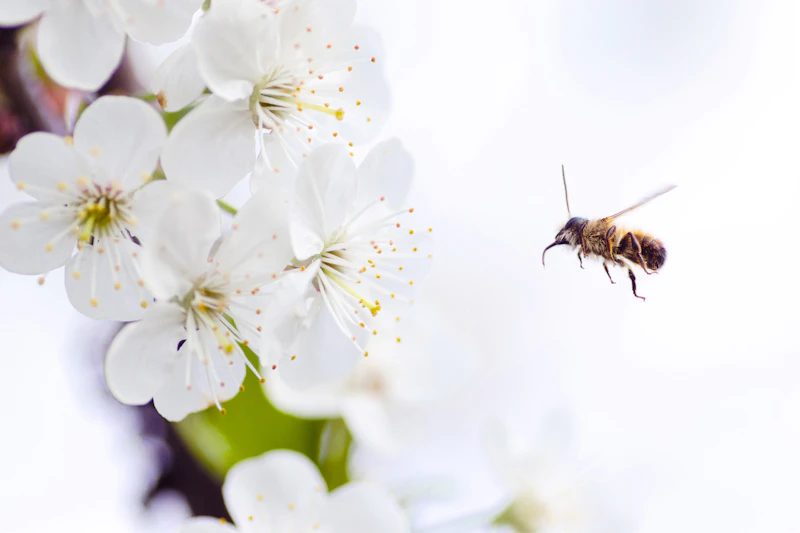
Plant a second, compatible variety within about 100 feet, as recommended by the University of Minnesota Extension. A flowering crabapple in the neighborhood also counts, since crabapples are excellent pollinators for many apples.
Triploid varieties such as Jonagold and Mutsu produce sterile pollen, so they need two other varieties nearby. Golden Delicious, Gala and Granny Smith are dependable partners, and some trees, like Golden Delicious, set fruit partly on their own.
Watering And Mulching Apple Trees
Newly planted apple trees need about an inch of water a week during their first two growing seasons. Water deeply at the base so moisture reaches the full root zone, then let the top few inches of soil dry slightly.
Established trees are fairly drought tolerant, but they still need deep watering every week or two during dry spells, especially from fruit set through harvest. Water stress in summer causes small fruit and early drop.
Spread 2 to 3 inches of wood chip mulch in a wide circle beneath the canopy. Keep mulch a few inches away from the trunk, because mulch piled against bark invites rot and gives voles cover to chew it.
How To Fertilize An Apple Tree
Skip fertilizer at planting and let the tree settle for its first season. After that, a soil test is your best guide, because too much nitrogen produces lush leaves, weak fruit set and more fire blight.
Watch annual shoot growth to judge feeding. Young trees should grow about 12 to 18 inches a year, and bearing trees about 8 to 12 inches. If growth falls short, apply a balanced fertilizer such as 10-10-10 in early spring.
Spread granules evenly under the canopy and slightly beyond the drip line, never piled against the trunk. Stop feeding by early summer so new growth hardens before winter. Compost spread each spring adds gentle nutrition and improves soil structure.
How To Prune An Apple Tree
Prune apple trees in late winter while they are dormant, after the coldest weather but before buds swell. The goal is an open canopy where sunlight reaches every branch, because shaded wood produces few flowers and poorly colored apples.
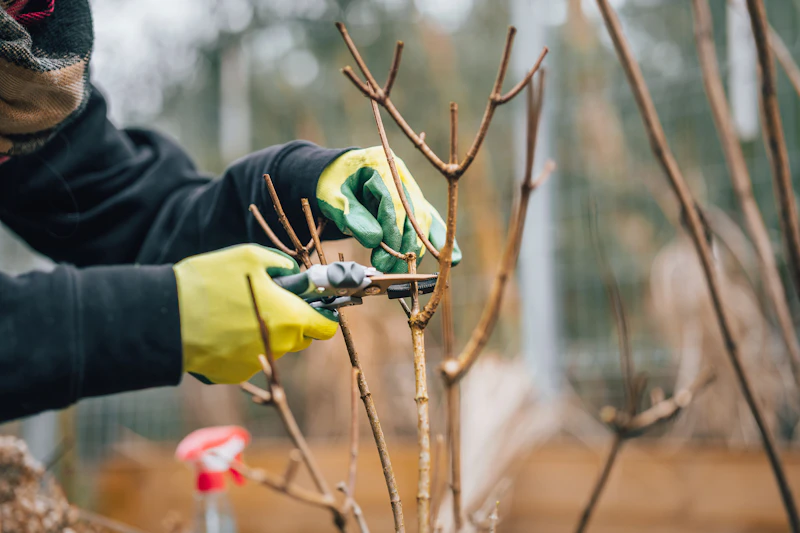
Most home growers train a central leader system: one upright trunk with three or four well-spaced scaffold branches at each level. Choose branches with wide angles, near 60 degrees, since narrow crotches split under the weight of fruit.
Each year, remove dead, damaged and diseased wood first, then crossing branches, upright water sprouts and suckers from the rootstock. Use clean, sharp tools and avoid removing more than about a quarter of the canopy in one season.
Thinning Apples For Bigger, Better Fruit
Apple trees usually set far more fruit than they can size up. Thinning removes extra fruitlets so the remaining apples grow larger, sweeter and better colored, and it helps prevent biennial bearing, where a tree fruits only every other year.
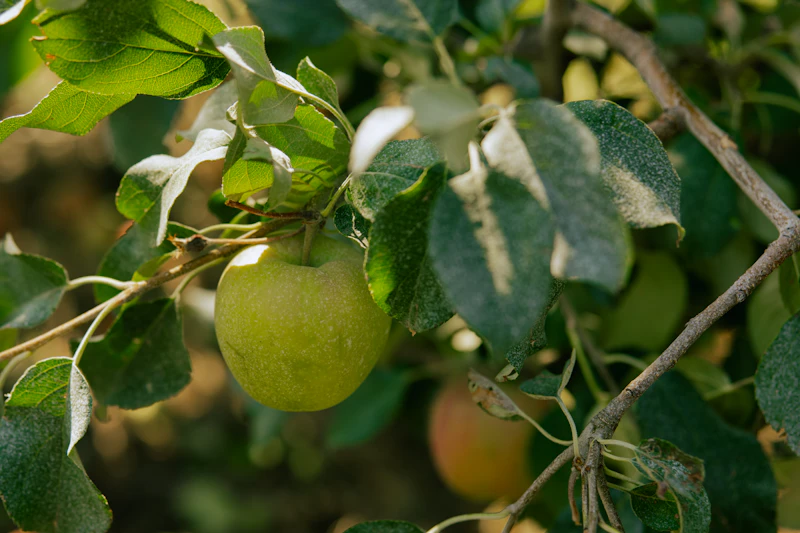
Thin about four to six weeks after bloom, once the fruitlets reach marble size and the natural June drop has passed. Leave one apple per cluster, usually the largest, and space the remaining fruit 6 to 8 inches apart along each branch.
It feels wasteful, but a thinned tree yields almost the same weight of fruit in larger, more useful apples. Thinning also breaks up tight clusters where codling moth larvae and rot like to hide.
Growing Apple Trees In Containers And Small Spaces
You do not need an orchard to grow apples. A dwarf apple on B.9 or M.9 rootstock can live for years in a 15 to 20 gallon container with drainage holes, placed in full sun on a patio or deck.
Use a quality potting mix, never garden soil, and water often in summer, because containers dry out quickly. Repot or root-prune every two to three years, and protect pots from hard freezes by grouping them against a wall.
Espalier is another space saver: train a dwarf tree flat against a fence or wall in tiers. Columnar varieties grow as a single upright stem and fit narrow spaces too. You can find more compact options in our guide to trees for small spaces.
How Long Until An Apple Tree Bears Fruit?
A grafted tree on dwarf rootstock usually produces its first apples two to three years after planting. Semi-dwarf trees take three to five years, and standard trees can take five to eight years before a meaningful crop.
Pinch off any flowers during the first year on dwarf trees so energy goes into roots. If a mature tree flowers but never fruits, the cause is almost always missing pollination or a late spring frost, not the tree itself.
Trees grown from seed can take eight to ten years and produce unpredictable fruit, often small and sour. For fruit you can count on, buy a named, grafted variety from a reputable nursery.
How To Harvest Apples At Peak Ripeness
Depending on variety, apples ripen from July to November. Do not rely on red skin color alone, because many apples color well before they are ripe. Instead, look at the ground color, the skin beneath the red blush.
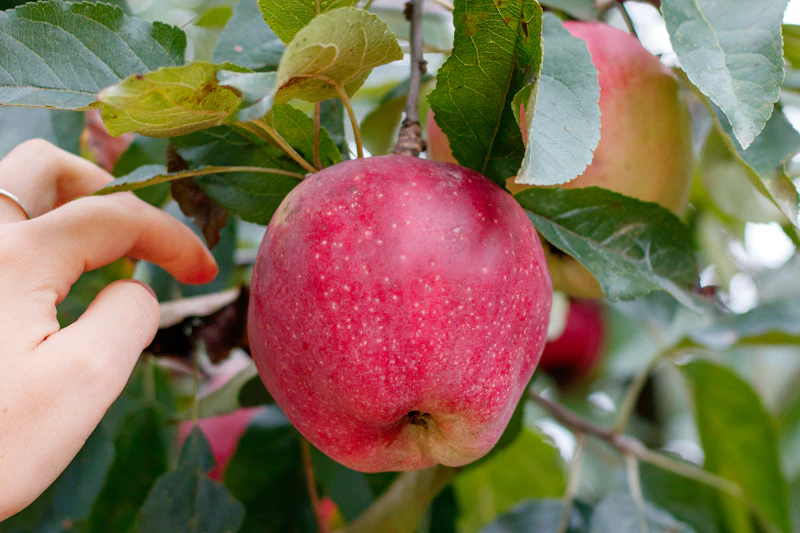
An apple is ready when its ground color shifts from green to yellow or cream, its seeds turn brown and the fruit lifts off the spur with a gentle upward twist. Taste one or two before picking the whole tree.
Pick by rolling the apple upward rather than pulling straight down, which tears off next year’s fruiting spur. Handle fruit gently, since bruised apples rot quickly in storage, and set damaged apples aside for immediate use.
How To Store Apples So They Last
Late-season varieties such as Fuji, Granny Smith and GoldRush store best, often keeping for three to five months. Early apples like Gala and summer varieties soften within weeks, so eat or preserve them soon after picking.
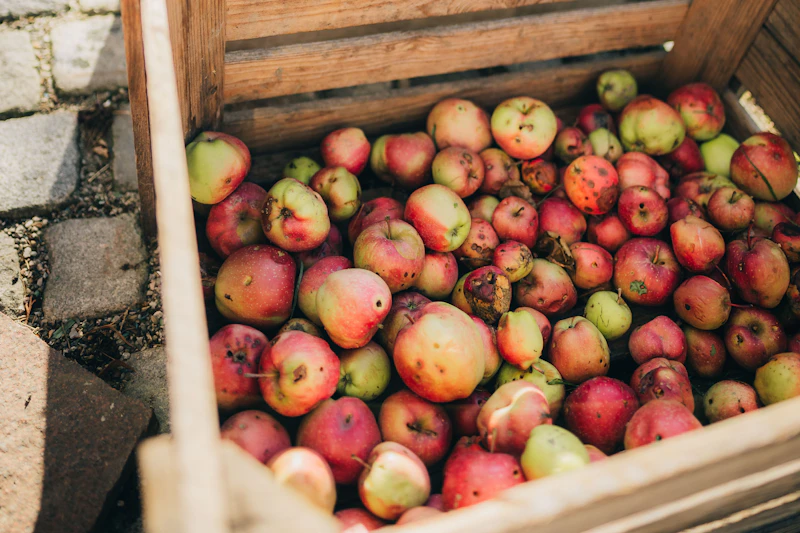
Store apples near 32 to 35 °F with high humidity, in a refrigerator crisper or a cold, dark cellar. Perforated plastic bags hold humidity without trapping moisture, and wrapping individual fruits in paper stops rot from spreading.
Apples release ethylene gas, which speeds ripening in other produce. Keep stored apples away from potatoes, carrots and leafy greens, and check them every week to remove any fruit that starts to soften.
Common Apple Tree Pests
Codling moth is the classic “worm in the apple.” Its larvae tunnel to the core in early summer. Apple maggot flies lay eggs under the skin in midsummer, and plum curculio leaves crescent-shaped scars on young fruit.
Hang red sticky spheres to trap apple maggot flies, and bag individual fruitlets with nylon footies or paper bags after thinning to block codling moth. Kaolin clay sprays create a barrier that many insects avoid.
Aphids, San Jose scale and mites respond to horticultural oil applied in late dormancy. Protect trunks from voles and rabbits with hardware cloth guards, and use fencing where deer browse, since they eat both buds and fruit.
Apple Tree Diseases And How To Prevent Them
Apple scab is the most common disease, causing olive-brown spots on leaves and cracked, corky patches on fruit. Rake and remove fallen leaves in autumn, since the fungus overwinters there and reinfects the tree each spring.
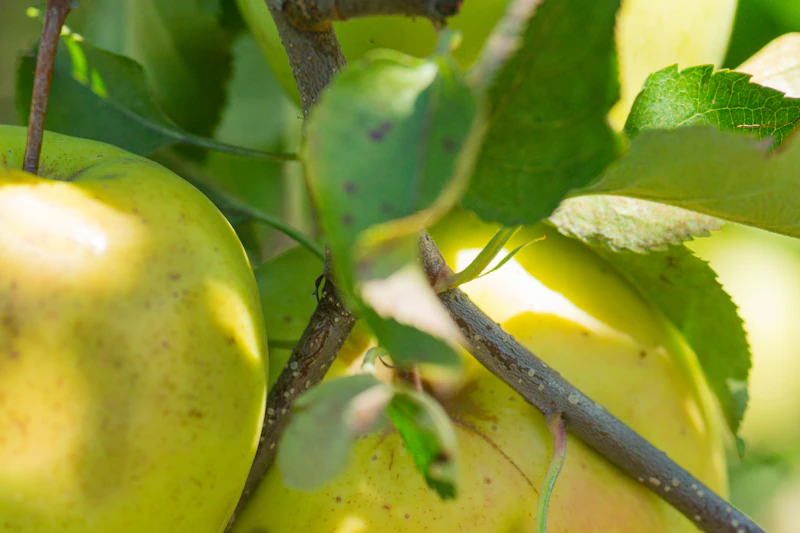
Fire blight is a bacterial disease that makes shoots wilt and blacken into a shepherd’s crook shape. Cut infected branches at least 8 to 12 inches below the visible damage in dry weather, and disinfect pruners between cuts.
Cedar apple rust produces bright orange spots and needs nearby juniper or red cedar to complete its life cycle. Powdery mildew and black rot also appear on stressed trees. Resistant varieties and good airflow prevent most problems. Learn more in our tree care guides.
Apple Tree Care Calendar
Apple care follows the seasons. This month-by-month summary shows what to do and when, so you never miss the timing that matters most for a healthy tree and a full harvest.
| Season | Main tasks |
|---|---|
| Late winter | Prune while dormant, apply dormant oil, check stakes and trunk guards |
| Early spring | Plant bare-root trees, spread compost, fertilize if a soil test calls for it |
| Bloom | Protect bees by avoiding sprays, cover young trees on frost nights |
| Early summer | Thin fruit to one per cluster, hang maggot traps, water deeply |
| Mid to late summer | Keep watering, remove water sprouts, watch for pests and disease |
| Fall | Harvest by ground color, store fruit cold, rake and remove fallen leaves |
| Winter | Protect trunks from voles and sunscald, plan new varieties and pollinators |
Following this simple rhythm keeps most problems small. Most apple failures come from missed timing, not missing products, so a calendar reminder does more than any single spray.
Best Ways To Use Your Apples
Fresh apples are an excellent source of fiber and vitamin C, and eating them with the skin on keeps most of the nutrients. Crisp varieties like Honeycrisp and Fuji are best eaten straight from the tree.
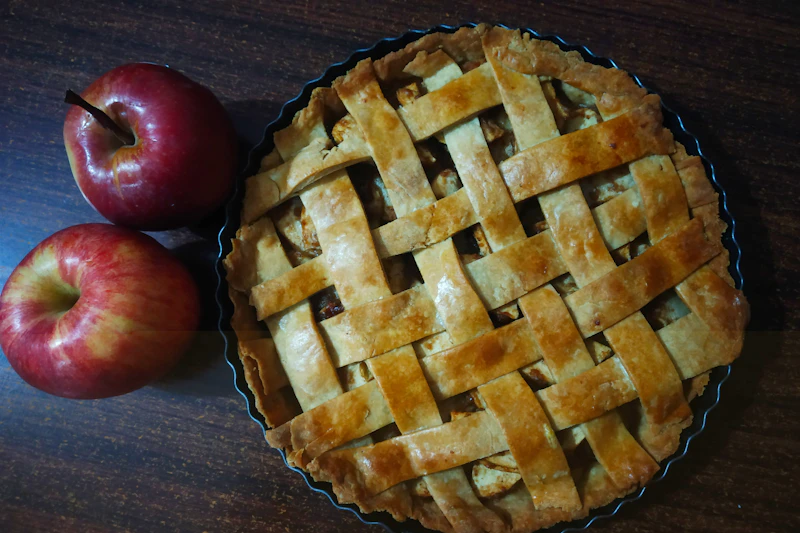
Tart, firm apples such as Granny Smith, Northern Spy and Jonagold hold their shape in pies, crisps and tarts. Softer varieties like McIntosh break down quickly, which makes them ideal for applesauce and apple butter.
Blend several varieties when pressing fresh cider for a balanced flavor. Surplus apples also dry well into chips, freeze as sliced pie filling and keep for months as canned sauce. Compare other backyard fruit in our fruit trees collection.
Apple Tree FAQs
Do You Need Two Apple Trees To Get Fruit?
Usually, yes. Most apple varieties need pollen from a different variety that blooms at the same time, planted within about 100 feet. A neighbor’s apple or a flowering crabapple nearby can also do the job.
How Long Does It Take An Apple Tree To Bear Fruit?
A grafted dwarf apple tree fruits in two to three years. Semi-dwarf trees take three to five years, standard trees five to eight, and seed-grown trees often take eight years or more.
Can You Grow An Apple Tree From Seed?
You can, but the fruit will not match the parent apple and is often small or sour. Seedlings also take many years to fruit, so buy a grafted tree for predictable apples.
When Is The Best Time To Plant An Apple Tree?
Early spring is best for bare-root trees, as soon as the soil can be worked. Container-grown trees can be planted from spring through early fall with regular watering.
Why Is My Apple Tree Not Producing Fruit?
The usual causes are no pollination partner, a spring frost during bloom, heavy shade, too much nitrogen fertilizer or a tree that is simply too young. Fix pollination and sunlight first.
How Much Sun Does An Apple Tree Need?
Apple trees need full sun, with at least six and ideally eight hours of direct light daily. Shaded trees produce fewer flowers, smaller apples and more fungal disease.
Pingback: Plum Tree: How To Grow, Prune & Harvest Plums
Pingback: Dwarf Fruit Trees For Pots: 15 Best Varieties And How To Grow Them - Grovoi
Pingback: Common Tree Diseases: How To Identify, Treat And Prevent Them - Grovoi
Pingback: How To Plant A Tree Step By Step: Hole Size, Depth And Watering - Grovoi
Pingback: Types Of Fruit Trees: 30 Fruit Trees To Grow In Your Yard - Grovoi