Crepe Myrtle: How To Plant, Prune And Get Bigger Blooms Every Year
On this page
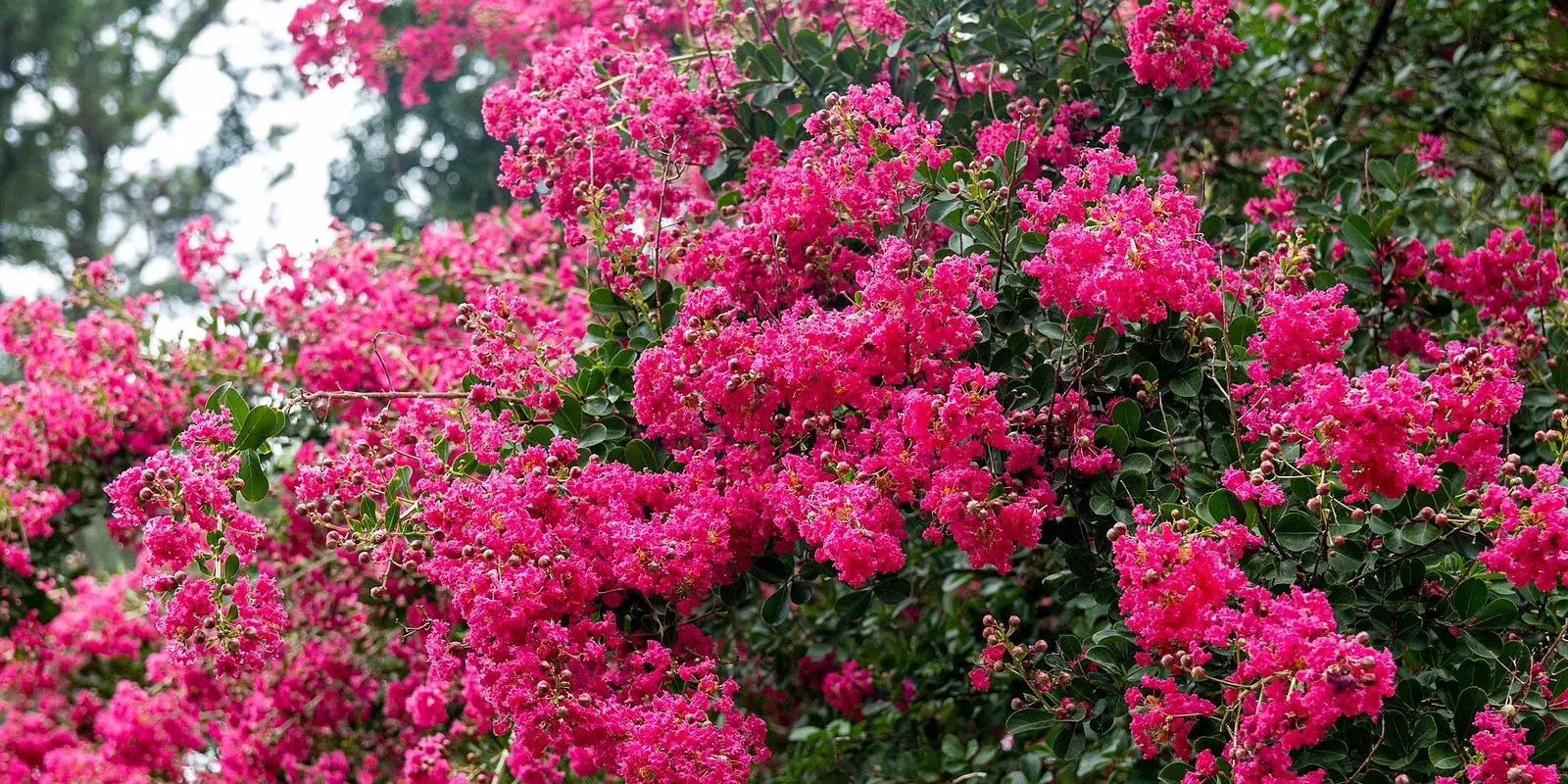
A crepe myrtle flowers when most of the garden has quit. From early summer into September it carries big, crinkled clusters of pink, red, lavender, or white, and in winter the smooth, peeling bark takes over. It is one of the easiest flowering trees to grow in the South, and also one of the easiest to ruin with bad pruning.
This guide covers how to choose a crepe myrtle that fits your space, how to plant it, how and when to prune it, and the handful of habits that give you bigger blooms every year. The advice follows the University of Georgia Extension, Texas A&M AgriLife, and other university extension services. Get the size and the sun right at planting, and the tree will need very little from you after that.
What Is A Crepe Myrtle?
Crepe myrtle is the common name for Lagerstroemia indica and its hybrids, a deciduous shrub or small tree native to China and other parts of eastern and southern Asia. It reached Charleston, South Carolina, in the late 1700s and has been a fixture of Southern streets and yards ever since. It belongs to the loosestrife family, Lythraceae, which it shares with the pomegranate tree.
Crepe Or Crape: The Name
Both spellings are correct. “Crape myrtle” is the older form and the one most extension services use, while “crepe myrtle” is the spelling most gardeners search for. The name comes from the thin, ruffled petals, which look like crepe paper.
Size, Bark, And Lifespan
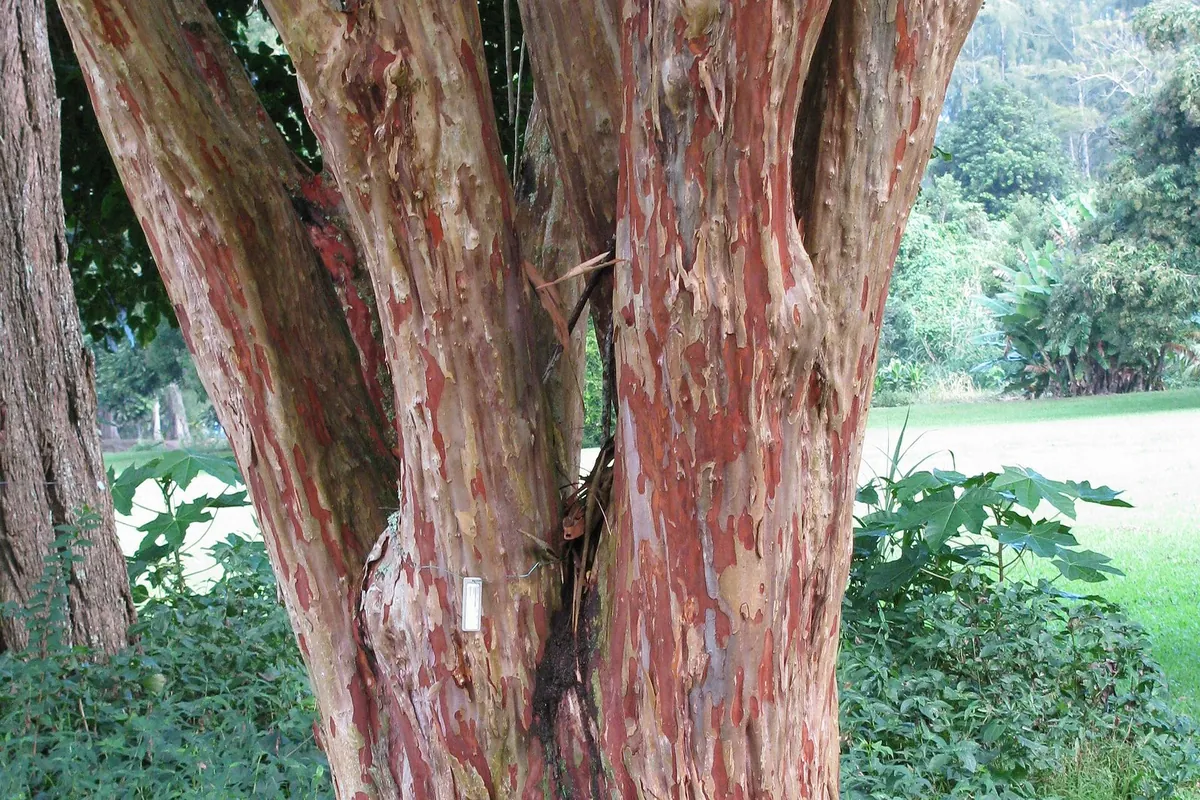
Mature size runs from under 3 feet for dwarf shrubs to more than 25 feet for tree forms, so the cultivar matters more than the species. The leaves are small, glossy, and often turn orange or red in fall. Older trunks shed their outer bark in strips, revealing smooth patches of cinnamon, tan, gray, and cream. A well sited crepe myrtle is long lived and stays attractive for decades.
Hardiness Zones And Climate
Crepe myrtles grow best in USDA zones 7 through 9 and do well in the warmer parts of zone 10. In zone 6, hardy cultivars survive but often die back to the ground in a hard winter. Because the tree flowers on new growth, a frozen plant usually regrows from the roots and still blooms the same summer, just as a shorter shrub. Heat and humidity do not bother it.
Choosing The Right Size
Most pruning problems start at the garden center. A cultivar that wants to reach 25 feet will be hacked back every winter if it is planted under a 10 foot eave. Read the tag for the mature height and buy for the space you have.
Size Classes And Example Cultivars
| Class | Mature height | Example cultivars | Best use |
|---|---|---|---|
| Dwarf | 3 to 5 feet | ‘Pocomoke’, ‘Chickasaw’, ‘Victor’ | Containers, front of borders, low hedges |
| Semi dwarf | 5 to 10 feet | ‘Acoma’, ‘Hopi’, ‘Tonto’, ‘Zuni’, ‘Caddo’ | Foundation beds, under windows, small yards |
| Intermediate | 10 to 20 feet | ‘Sioux’, ‘Osage’, ‘Lipan’, ‘Apalachee’, ‘Comanche’ | Patio trees, corners of a house, screens |
| Tree | 20 feet and taller | ‘Natchez’, ‘Muskogee’, ‘Tuskegee’, ‘Biloxi’, ‘Kiowa’ | Street trees, lawn specimens, shade |
Why The Tribe Named Hybrids Are Worth Finding
Many of the cultivars in the table were bred at the U.S. National Arboretum by crossing Lagerstroemia indica with the Japanese crepe myrtle, Lagerstroemia fauriei. Most carry Native American tribal names. These hybrids show strong resistance to powdery mildew, and the larger ones have the best peeling bark. If mildew is a problem in your area, a hybrid is the simplest fix.
Color And Bloom Timing
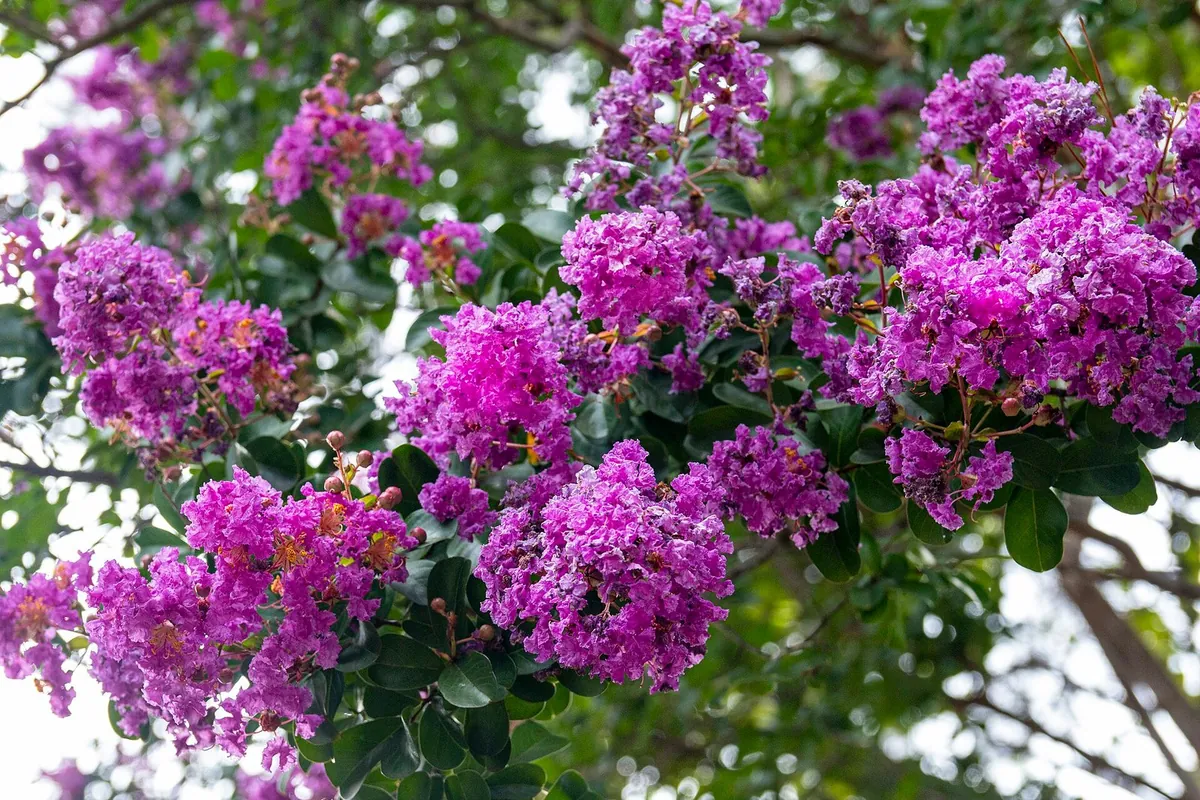
Flower color ranges from white through pink, red, lavender, and deep purple. Bloom time varies too. Early cultivars open in June, while late ones wait until mid or late July, so planting two types stretches the season.
How To Plant A Crepe Myrtle
Planting a crepe myrtle is simple. The tree forgives a lot, but not deep planting, soggy ground, or shade.
When To Plant
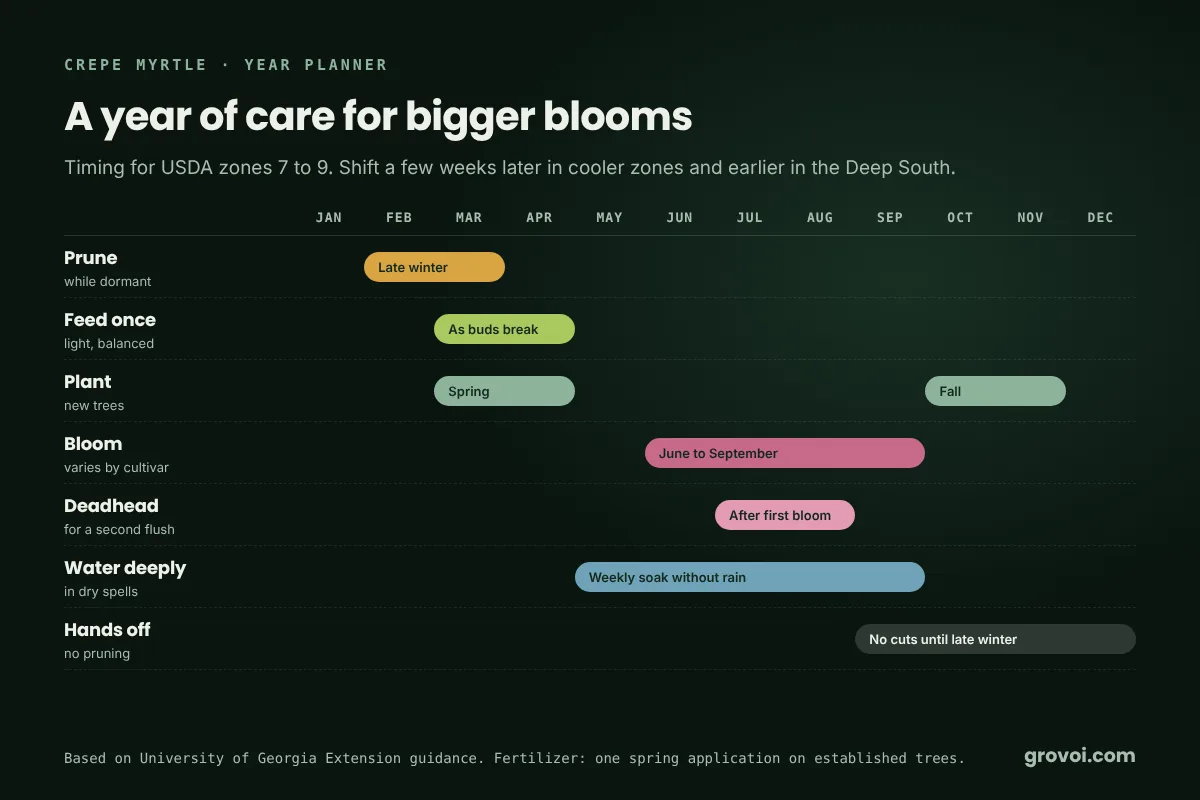
Fall and early spring are the best planting windows. Fall planting lets roots settle before summer heat arrives.
Picking The Spot
Choose the sunniest place you have. Full sun means at least six hours of direct light, and more is better. Shade cuts flowering and raises the risk of powdery mildew and sooty mold. Allow room for the mature canopy so you never need to cut it back.
Step By Step Planting
- Dig a hole at least twice as wide as the root ball and no deeper than it.
- Slide the plant out and loosen any roots circling the outside of the pot.
- Set the plant so the top of the root ball sits level with the surrounding soil, or slightly above it in heavy clay.
- Backfill with the native soil you removed. Break up clods, but skip compost or other amendments in the hole, which can keep roots from spreading outward.
- Water slowly until the whole root zone is soaked.
- Spread about 3 inches of mulch in a wide ring, keeping it a few inches away from the trunks.
Watering, Soil, And Fertilizer
An established crepe myrtle is tough. The first season is the one that needs your attention.
Watering New And Established Trees
Water a new planting thoroughly about once a week whenever rain does not do it for you, and keep that up for the first two months. After the first year, a crepe myrtle handles dry spells well. Even so, a deep soak during a summer drought keeps the tree flowering instead of stalling.
Soil And pH
Crepe myrtles grow in clay, loam, or sand as long as water drains away. Slightly acidic to neutral soil suits them best. Poorly drained, waterlogged ground leads to root rot, so plant on a gentle mound if your yard holds puddles after rain.
How Much Fertilizer To Use
Go light. The University of Georgia Extension recommends a single spring application on established plants: about 1 pound of 8-8-8 or 10-10-10 per 100 square feet, or half that amount of a higher nitrogen product such as 16-4-8. Newly planted one gallon plants get about a teaspoon a month from March through August, scattered around the edge of the planting hole. Water the fertilizer in afterward. For a closer look at what the numbers on the bag mean, see our guide to the best fertilizer for fruit trees.
How To Prune A Crepe Myrtle
A crepe myrtle does not need pruning to flower. That one fact undoes the most common mistake in Southern yards.
Why Crape Murder Hurts The Tree
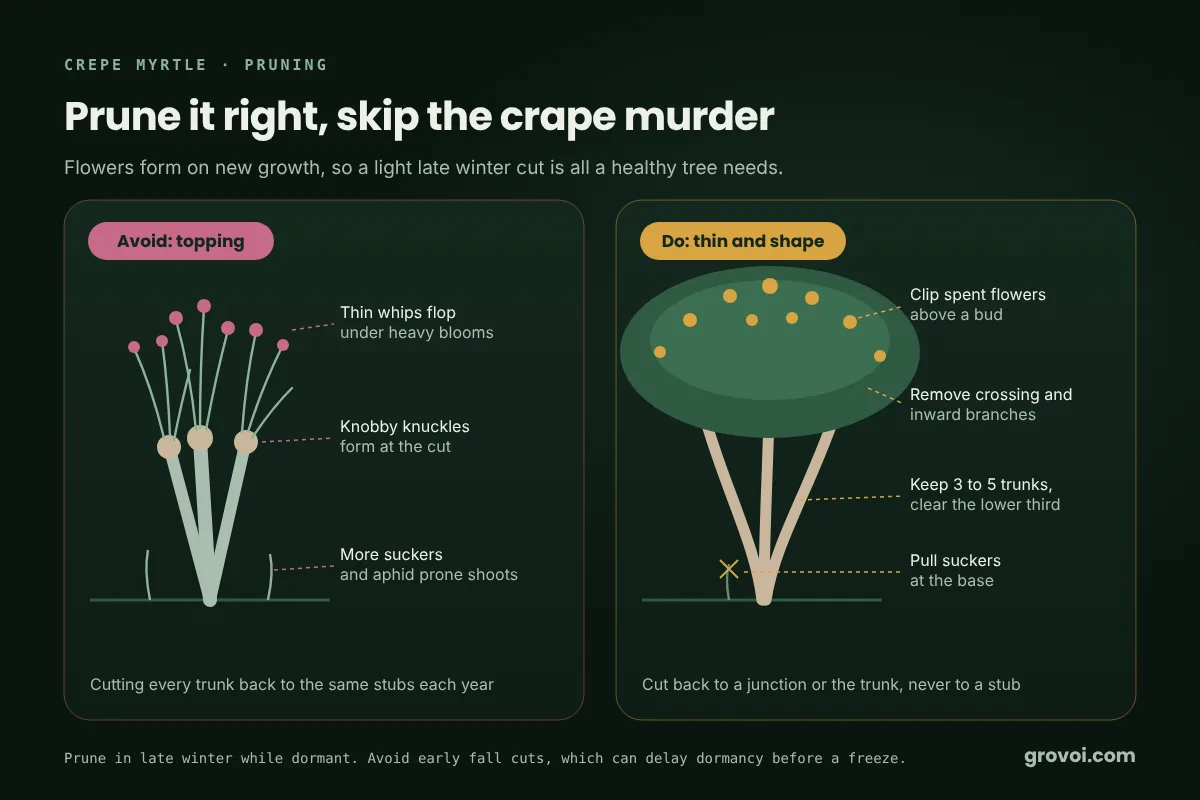
“Crape murder” is the habit of cutting every trunk back to the same stubby height each winter. It leaves swollen knuckles at the cut points, which sprout dozens of thin, straight shoots. Those whips are too weak to hold heavy flower clusters, so they bend and flop after rain. Severe cuts also push out suckers and soft, aphid prone growth.
When To Prune
Prune in late winter or very early spring, while the tree is still dormant and before new leaves appear. Because flowers form on the current season’s growth, a winter cut never removes the coming summer’s blooms. Avoid pruning in early fall, since the new growth it triggers may not harden off before the first freeze.
Step By Step Pruning
- Pull or cut suckers sprouting from the roots and the base of the trunks.
- For a tree form, keep three to five strong, evenly spaced trunks and remove the rest at ground level.
- As the tree grows, remove side branches from the lower third of the trunks to show off the bark.
- Cut out branches that cross, rub, or grow back toward the center.
- Remove dead or broken wood back to healthy tissue.
- Make each cut at a junction with a larger branch or at the trunk, never midway along a limb.
Use clean, sharp tools, and follow the three cut method in our guide on how to prune fruit trees for any limb thicker than your thumb. That approach keeps the bark from tearing below the cut.
Fixing A Topped Tree
A crepe myrtle that has been topped for years can be retrained. In late winter, pick two or three of the strongest, outward facing shoots on each knuckle and remove the rest. Over a few seasons those shoots thicken into real branches. For a badly damaged tree, cut every trunk to just above ground level, then train three to five of the new shoots as fresh trunks.
How To Get Bigger Blooms Every Year
Poor flowering comes down to a short list of causes. Fix these, and a crepe myrtle will cover itself in color each summer.
Give It Full Sun
Sun is the fuel for flowers. A crepe myrtle that gets less than six hours of direct light will grow leaves but few blooms. If nearby trees have grown and cast more shade over the years, thin their lower limbs or move the crepe myrtle in fall or late winter.
Feed Lightly, Not Often
Too much fertilizer produces lush leaves and fewer flowers. Lawn fertilizer is a common hidden cause, because high nitrogen turf feed spread up to the trunk gives the tree far more than it needs. Stick to one light spring feeding, and keep heavy lawn products a few feet back from the canopy edge.
Water During The Bloom Season
Drought and extreme heat cut flowering short. During a dry summer, water deeply once a week from late spring through the end of bloom.
Deadhead For A Second Flush
When the first round of flowers fades, clip off the spent clusters just above a leaf or side bud before they set seed. On many cultivars, this triggers a second, smaller wave of blooms a few weeks later. Early blooming types respond best, while cultivars that start flowering after mid July rarely rebloom. On a tall tree, deadhead what you can reach.
Prune Lightly And Be Patient
Light thinning in late winter lets sun and air into the crown. Young plants grown from seed may take a few years to reach flowering size.
Pests And Diseases
Crepe myrtles are fairly trouble free, especially the mildew resistant hybrids. A few problems turn up often enough to know on sight.
Powdery Mildew
A white, powdery coating on new leaves and flower buds is powdery mildew, the most widespread disease of crepe myrtles. It shows up in late spring and fall, when warm days follow cool, humid nights, and it can distort new shoots and make buds drop. Full sun and good airflow help. Resistant hybrids are the best long term answer, and a labeled fungicide applied at the first sign controls outbreaks.
Aphids And Sooty Mold
The crepe myrtle aphid feeds on the undersides of leaves and drips sticky honeydew. A black, soot like fungus then grows on that honeydew, coating leaves and anything parked below. Blast aphids off with a strong spray of water, encourage lady beetles, and use insecticidal soap on bad infestations.
Crape Myrtle Bark Scale
Crape myrtle bark scale is an introduced insect now spreading across the South. Look for white or gray felt like crusts on the bark, often in branch crotches and pruning wounds. When crushed, the scales release a pink fluid. Black sooty mold on the trunk is usually the first thing people notice. Texas A&M AgriLife Extension suggests scrubbing reachable bark with a soft brush and a mild soap solution, then treating heavy infestations with a systemic insecticide applied to the soil between May and July. Read the label carefully, since some of these products can harm bees that visit the flowers, and check new plants for scale before you buy.
Cercospora Leaf Spot And Other Issues
Large brown spots on lower leaves in a wet summer, followed by yellowing and early leaf drop, point to Cercospora leaf spot. Rake up fallen leaves and choose resistant cultivars for new plantings. Root rot appears only in soggy ground.
Growing Crepe Myrtle In Pots
Dwarf and semi dwarf crepe myrtles grow well in containers on a sunny patio. The same rules apply, with a few changes.
Container Size And Care
Choose a pot at least 18 to 24 inches wide with drainage holes, and fill it with a quality potting mix rather than garden soil. Potted plants dry out much faster than those in the ground, so check moisture every day or two in summer. Feed with a slow release fertilizer in spring. In zone 7 and colder, move the pot against a sheltered wall or into an unheated garage for winter, because roots in a container freeze more easily. Our guide to dwarf fruit trees for pots covers potting mix in more detail.
Frequently Asked Questions
When is the best time to prune a crepe myrtle?
Prune a crepe myrtle in late winter or very early spring, while it is dormant and before new leaves open. Flowers form on new growth, so winter pruning does not remove the coming summer’s blooms. Avoid pruning in early fall, because new growth may not harden before the first freeze.
Why is my crepe myrtle not blooming?
The most common causes are too little sun, too much fertilizer, and drought. A crepe myrtle needs at least six hours of direct sun. Excess nitrogen, often from lawn fertilizer, produces leaves instead of flowers. Young plants grown from seed and late blooming cultivars can also take longer to flower.
Does deadheading a crepe myrtle make it bloom again?
Yes, on many cultivars. Cutting off faded flower clusters before they form seed can trigger a smaller second round of blooms a few weeks later. Early blooming cultivars respond best. Cultivars that start flowering after mid July rarely rebloom, so deadheading those is optional.
How fast does a crepe myrtle grow?
Most crepe myrtles grow at a moderate to fast rate in full sun and well drained soil, adding roughly 1 to 3 feet a year when young. Tree forms reach their mature height in about ten to fifteen years. Dwarf cultivars grow more slowly and stay compact without pruning.
What is crape murder?
Crape murder is the practice of cutting all of a crepe myrtle’s trunks back to the same stubby height every winter. It creates swollen knuckles, weak shoots that flop under heavy flowers, extra suckers, and more aphids. Choosing a cultivar that fits the space removes any need for it.
Are crepe myrtle roots invasive?
No. Crepe myrtle roots are fibrous and spread widely near the surface, but they are not aggressive and rarely damage foundations or sound pipes. Plant tree forms at least 6 to 10 feet from the house, mostly so the canopy has room to grow without constant cutting.
Final Thoughts
A crepe myrtle rewards a little planning with months of summer color and year round bark. Choose a cultivar that fits the space, plant it in full sun, and skip the annual hard cut.
Your Crepe Myrtle Checklist
Plant in fall or early spring in well drained soil. Water weekly for the first two months and during summer droughts. Feed once in spring, lightly. Thin in late winter, remove suckers, and clear the lower trunks. Deadhead early bloomers for a second flush, and choose a mildew resistant hybrid when you can. For more flowering and shade trees, browse the tree finder or the tree care section.