How To Plant A Tree Step By Step: Hole Size, Depth And Watering
On this page
Planting a tree takes an hour. Planting it well decides whether that tree thrives for fifty years or struggles for five. Most young trees that fail do so because of a few common mistakes: a hole that is too deep, roots left circling, or water given in the wrong amount.
This guide covers each step in order. You will learn when to plant, how wide and deep to dig, how to handle container, balled and burlapped, and bare root trees, and exactly how to water for the first two years. The method follows guidance from university extension services and the International Society of Arboriculture. It works for shade trees, flowering trees, and fruit trees alike.
When To Plant A Tree
Timing gives roots a head start before the tree faces summer heat.
Fall: The Best Window In Most Regions
Early fall is ideal for most of the United States. The soil is still warm, so roots keep growing for weeks after the leaves drop, while cool air means less water loss from the crown. Aim to plant at least six weeks before the ground freezes.
Spring Planting
Early spring, as soon as the soil can be worked, is the next best time. It is the better choice in very cold climates and for trees that establish slowly, such as magnolias, birches, and many evergreens. Spring planted trees need closer watering through their first summer.
What About Summer?
Container trees can go in during summer if you can water them faithfully. Plant in the cool of the morning or evening, and expect to water two or three times a week during hot spells.
Choosing The Right Spot
A perfect planting job cannot fix the wrong location. Check four things before you dig.
Mature Size
Read the tag for the tree’s height and spread at maturity, then measure the space. Keep large shade trees at least 15 to 20 feet from the house and well clear of overhead power lines. Small flowering trees can sit closer.
Sun, Soil, And Drainage
Match the tree to the light it will get. Then test drainage. Dig a hole about a foot deep, fill it with water, let it drain, and fill it again. If the second filling has not drained within about 12 hours, choose a tree that tolerates wet soil or plant on a low, wide mound.
Call Before You Dig
Dial 811 a few days before digging anywhere in the United States. The free service marks buried utility lines so you do not hit a gas or power line with your shovel.
Hole Size And Depth
This is the part people get wrong most often. The hole should be wide and shallow, not deep and narrow.
How Wide To Dig
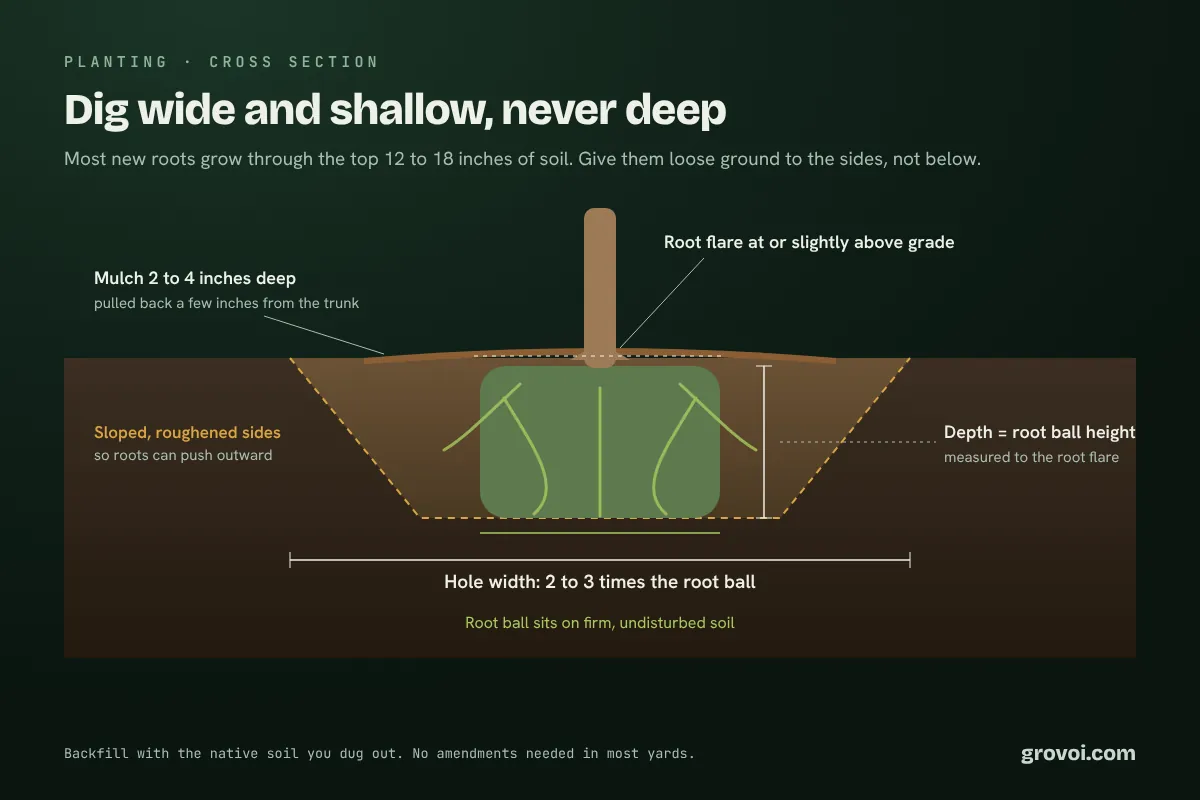
Dig the hole two to three times as wide as the root ball. Most new roots grow outward through the top 12 to 18 inches of soil, so loose soil around the sides lets them spread quickly. Slope the sides of the hole outward like a shallow bowl. In heavy clay, rough up any smooth, glazed walls with the shovel tip so roots can push through.
How Deep To Dig
Dig only as deep as the root ball, measured from the bottom of the ball to the root flare. The root flare is where the trunk widens and the top roots begin. It must sit at or slightly above the surrounding soil. Leave the soil under the root ball firm and undisturbed so the tree does not sink after watering. If you dig too deep by mistake, refill and pack the bottom before setting the tree.
Find The Root Flare First
Many nursery trees arrive with the flare buried under extra soil in the pot or burlap. Before you measure the hole, gently scrape away soil from the top of the root ball until you find the first main root. Measure from there. A tree planted with its flare buried can develop girdling roots and trunk decay years later.
| Root ball width | Hole width | Hole depth |
|---|---|---|
| 12 inches (5 gallon pot) | 24 to 36 inches | Height of root ball to flare |
| 18 inches (15 gallon pot) | 36 to 54 inches | Height of root ball to flare |
| 24 inches (B&B) | 48 to 72 inches | Height of root ball to flare |
| 36 inches (large B&B) | 6 to 9 feet | Height of root ball to flare |
How To Plant A Tree Step By Step
Gather a shovel, a garden fork, pruners, a utility knife, a hose, and mulch before you start.
Step 1: Prepare The Tree
Water the tree in its container an hour or two before planting. Moist roots slide out of the pot more easily and suffer less shock. Keep the tree in shade until the hole is ready.
Step 2: Dig The Hole
Mark a circle two to three times the root ball width. Set the turf and soil on a tarp so cleanup is easy. Dig to the depth of the root ball from its flare, no deeper.
Step 3: Set The Tree
Lift the tree by the root ball, never by the trunk. Lower it into the hole and check the depth by laying a shovel handle across the hole. The root flare should sit level with the handle or an inch or two above it. Turn the tree so its best side faces where you will see it most, then check from two directions that the trunk is straight.
Step 4: Backfill With Native Soil
Refill the hole with the soil you dug out. Break up large clods. Most research shows that heavy amendments such as compost, peat, or potting mix in the hole do more harm than good, because roots stay inside the rich pocket instead of growing into the surrounding ground. Fill halfway, then water to settle the soil and remove air pockets. Finish filling and water again. Firm the soil gently with your hands, not your boots.
Step 5: Build A Water Ring
Shape a low ring of soil, about 3 inches high, just beyond the edge of the root ball. It holds water over the roots so it soaks down instead of running off. Rake the ring flat after the first year.
Step 6: Mulch
Spread 2 to 4 inches of shredded bark or wood chips in a circle at least 3 feet wide. Pull mulch back a few inches from the trunk so the bark stays dry. Mulch piled against the trunk in a volcano shape invites rot, rodents, and girdling roots.
Container, B&B, And Bare Root Trees
The basic steps stay the same, but each type of nursery tree needs a little extra handling.
Container Trees
Slide the tree out and look at the roots. If they circle the outside of the root ball, tease them loose with your fingers. For a tightly root bound tree, make three or four shallow vertical cuts down the sides of the ball, or shave off the outer inch of circling roots. Straighten or cut any roots that wrap around the trunk.
Balled And Burlapped Trees
Set the ball in the hole first, then remove the twine and cut away the wire basket and burlap from at least the top half of the ball. Synthetic burlap does not break down and must come off completely. Natural burlap left on the sides will rot, but any burlap left above the soil wicks water away from the roots.
Bare Root Trees
Plant bare root trees in late winter or early spring while they are dormant. Soak the roots in a bucket of water for 2 to 6 hours before planting, but not overnight. Build a cone of soil in the center of the hole, spread the roots over it, and set the tree so the flare sits at soil level. Bare root fruit trees are common, and our guide to the apple tree covers planting grafted trees so the graft union stays above the soil.
How To Water A New Tree
Water is the most important part of aftercare. A new tree’s roots are still confined to the original root ball, which can dry out in days even when the soil around it feels damp.
How Much Water
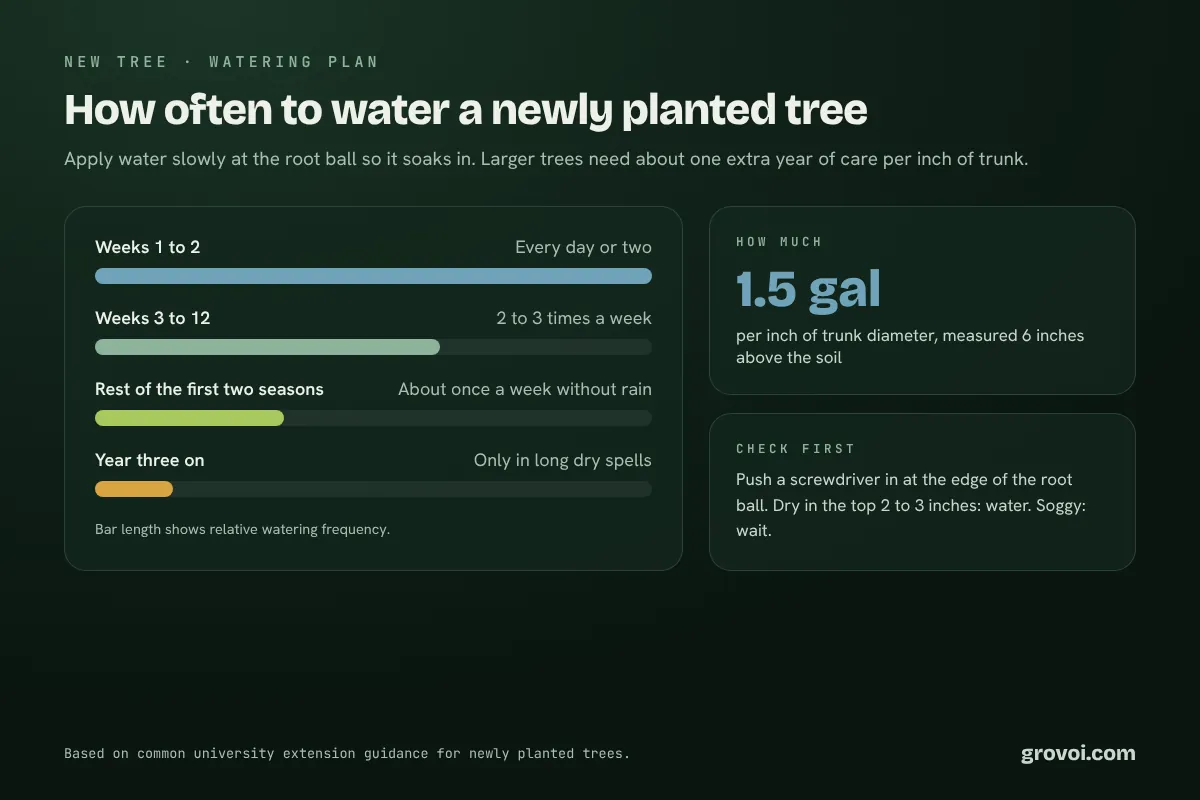
A common rule from extension services is about 1.5 gallons of water for each inch of trunk diameter, measured 6 inches above the soil. A 2 inch tree therefore needs about 3 gallons per watering. Apply it slowly so it soaks in. A hose on a slow trickle for 15 to 20 minutes, a soaker hose, or a slow release watering bag all work well.
How Often To Water
Water every day or two for the first two weeks. Then water two or three times a week for the next two to three months. After that, water about once a week through the rest of the first two growing seasons, whenever rain does not do it for you. Larger trees take longer to establish. A useful guide is about one year of extra care for each inch of trunk diameter.
How To Check Soil Moisture
Push a screwdriver or your finger into the soil at the edge of the root ball. If the top 2 to 3 inches feel dry, water. If the soil is soggy, wait. Overwatering drowns roots just as surely as drought dries them, especially in clay.
Aftercare, Staking, And Mistakes To Avoid
Once the tree is in the ground, restraint is the main skill.
Should You Stake A New Tree?
Most container trees do not need staking. A trunk that can sway a little grows thicker and stronger. Stake only in very windy spots, in loose sandy soil, or for top heavy trees with small root balls. Use wide, soft straps placed low on the trunk, leave some slack, and remove them after one growing season.
Pruning And Fertilizer After Planting
Prune only dead, broken, or crossing branches at planting time. The leaves feed root growth, so keep as many as you can. Skip fertilizer in the first year unless a soil test shows a real deficiency. When feeding becomes useful later, our guide to the best fertilizer for fruit trees explains how much to use.
Common Planting Mistakes
- Planting too deep, with the root flare buried.
- Digging a narrow hole that roots cannot escape.
- Leaving circling roots, wire baskets, or synthetic burlap in place.
- Filling the hole with rich compost or potting soil.
- Piling mulch against the trunk.
- Watering lightly and often instead of deeply.
- Leaving stakes and ties on for years.
The International Society of Arboriculture publishes a free planting guide for homeowners that follows the same principles.
Frequently Asked Questions
How big should the hole be when planting a tree?
Dig the hole two to three times as wide as the root ball and only as deep as the root ball measured to the root flare. The flare should end up at or slightly above the surrounding soil. A wide, shallow hole lets new roots spread quickly into loose soil.
How deep should a tree be planted?
Plant so the root flare, where the trunk widens into the roots, sits at ground level or an inch or two above it. Never bury the flare. Trees planted too deep often decline slowly from girdling roots, poor oxygen, and trunk rot.
How much water does a newly planted tree need?
A good guide is about 1.5 gallons per inch of trunk diameter at each watering. Water daily for the first two weeks, two or three times a week for the next few months, and weekly after that through the first two seasons when rain is short.
Should I add compost to the planting hole?
Usually no. Backfill with the native soil you removed. Rich amendments can keep roots inside the planting hole and cause water to pool in clay soils. Spread compost or mulch on the surface instead, where it improves the soil slowly.
What is the best time of year to plant a tree?
Early fall is best in most regions because warm soil and cool air favor root growth. Early spring is the next best choice and suits very cold climates. Container trees can be planted in summer with careful watering.
Do I need to stake a newly planted tree?
Most trees do not need staking. Stake only in windy sites, loose soil, or for top heavy trees. Use soft, wide ties low on the trunk, allow some movement, and remove the stakes after one growing season.
How long does it take a new tree to establish?
Roughly one year for each inch of trunk diameter. A 2 inch tree may need two years of regular watering before its roots spread far enough to cope with dry spells on their own.
Final Thoughts
Good tree planting comes down to a wide hole, the right depth, and steady water. Get those three right and nearly any healthy nursery tree will settle in and grow.
Your Tree Planting Checklist
Plant in early fall or early spring. Call 811 before you dig. Find the root flare, then dig two to three times wider than the root ball and no deeper. Loosen circling roots, backfill with native soil, and water as you fill. Mulch in a wide ring, away from the trunk. Water deeply on a schedule for two seasons. Need ideas on what to plant? Browse our tree finder or read our oak tree guide for a long lived shade tree.