Areca Palm Care: How To Keep It Green, Full And Pest Free Indoors
On this page
- Areca Palm Care: The Short Answer
- What Is An Areca Palm?
- Light: Bright, Indirect And Steady
- How To Water An Areca Palm
- Humidity And Temperature
- Soil, Pot And Drainage
- Feeding: Potassium, Magnesium And Salt Sensitivity
- When And How To Repot
- Removing Dead Fronds
- How To Propagate By Division
- Growing Areca Palms Outdoors
- Why Are My Areca Palm Tips Turning Brown?
- Why Are My Areca Palm Leaves Turning Yellow?
- Pests: Spider Mites, Mealybugs And Scale
- Areca Palm Problems: A Symptom Table
- Is An Areca Palm Safe For Pets?
- Areca Palm Care FAQs
Areca Palm Care: The Short Answer
Areca palm care comes down to five habits. Give the plant bright, indirect light. Water when the top of the mix starts to dry, and never leave it sitting in water. Keep the air warm and fairly humid. Feed lightly with a palm fertilizer two or three times in spring and summer. Check the undersides of the leaves for spider mites every time you water.
Most problems people blame on the plant come from one of those five things. Brown tips usually point to dry air, missed waterings or too much fertilizer. Yellow fronds often mean a nutrient shortage, too much sun or simple old age. Pale, speckled leaves mean spider mites until you prove otherwise.
This guide covers light, watering, humidity, soil, feeding, temperature, repotting, frond removal, division and outdoor growing, then works through brown tips, yellowing and pests. The advice draws on UF/IFAS Extension, NC State Extension, Clemson Extension and the ASPCA. If you are new to indoor trees, our guide to bonsai and indoor trees shows other plants that suit a bright room.
What Is An Areca Palm?
The areca palm is a clumping palm from eastern Madagascar. UF/IFAS notes that it is endangered in the wild because its habitat along rivers and in wet forests is disappearing, yet it is one of the most widely planted palms in warm climates. Indoors, it is one of the most popular palms you can buy.
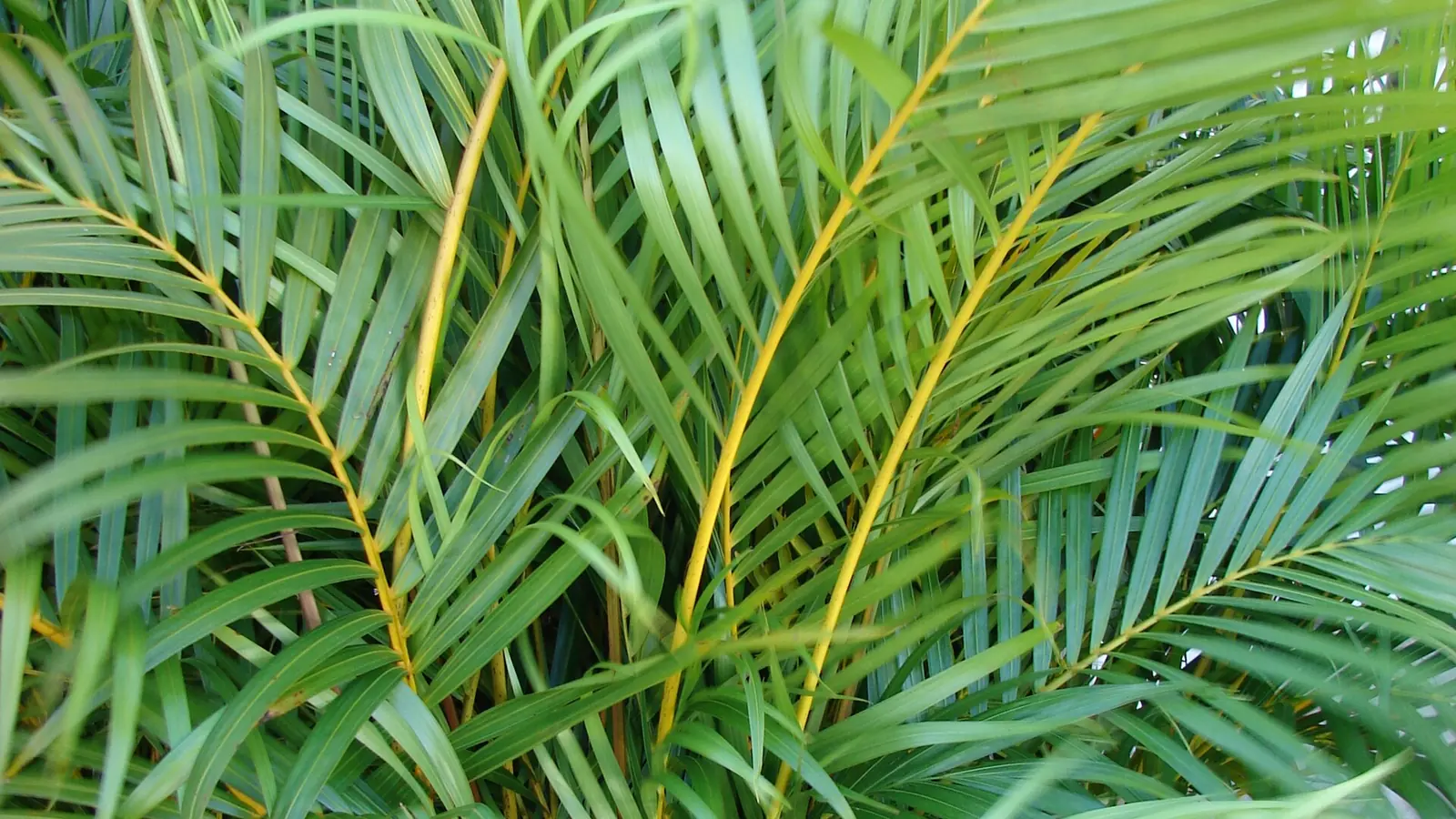
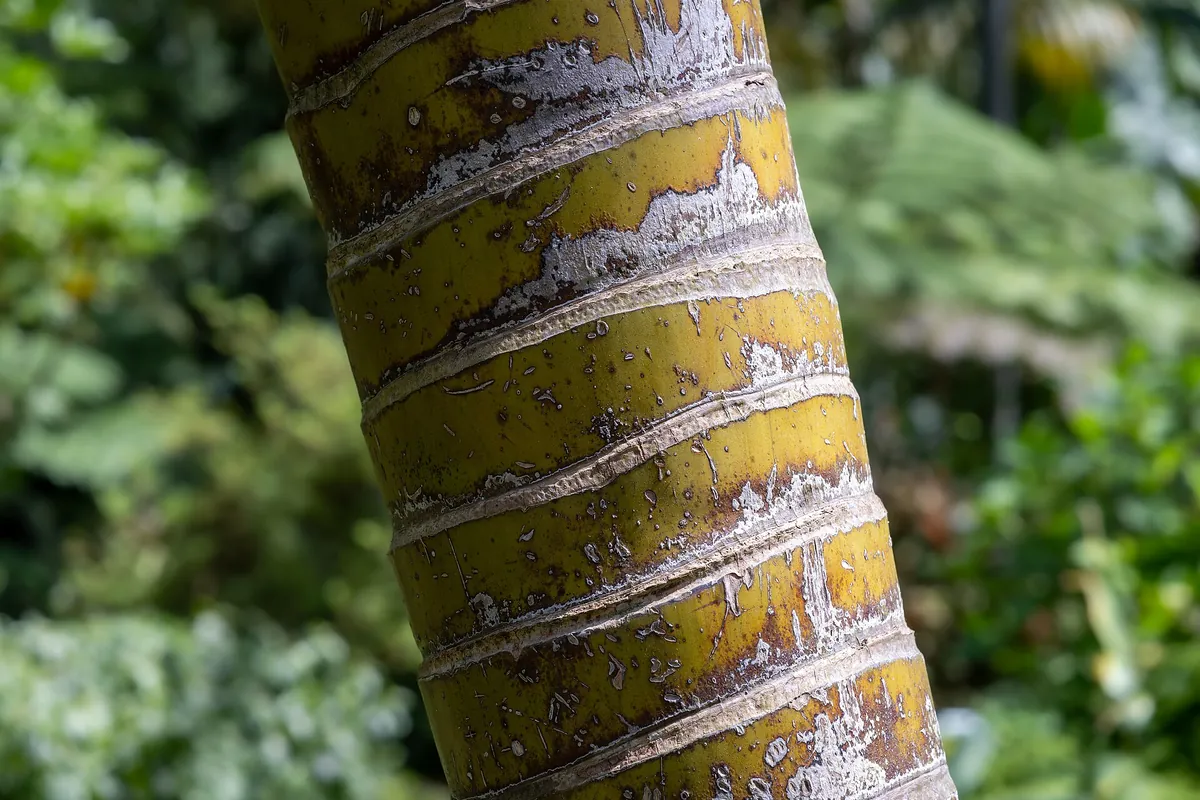
It grows as a cluster of smooth, ringed stems that look a lot like bamboo. Each stem carries long, arching, feather-shaped fronds. The leaflets rise from the midrib in a shallow “V”, and the stems and leaf stalks are often golden yellow. That color gives the plant several of its common names: golden cane palm, yellow palm, yellow bamboo palm and butterfly palm.
Dypsis Or Chrysalidocarpus?
For years the plant was sold as Dypsis lutescens, and most labels still say that. Botanists have since moved it back to an older name, Chrysalidocarpus lutescens, and the NC State Extension areca palm profile now lists it that way. Both names refer to the same plant, so the care in this guide applies to either label.
How Big Does An Areca Palm Get?
Outdoors in the tropics it is a large shrub or small tree. UF/IFAS gives a height of 20 to 30 feet and a spread of 8 to 10 feet in the landscape. Indoors it stays far smaller. Clemson Extension says an areca grows 6 to 7 feet tall indoors and adds 6 to 10 inches a year, so give it room. It often outgrows a small corner within a few years.
Palms grow from a single bud at the top of each stem. Clemson points out that you cannot cut a palm back to make it shorter, because that removes its only growing point. Pick a spot with headroom from the start.
Light: Bright, Indirect And Steady
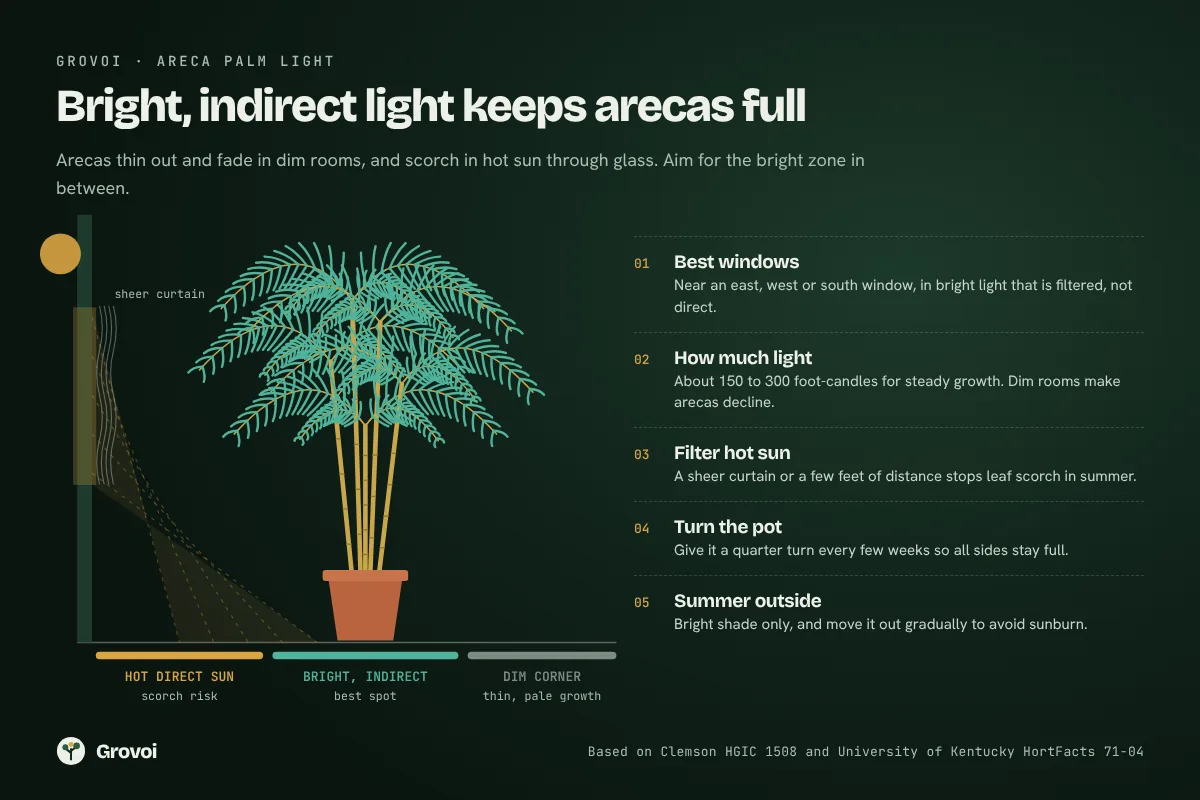
Light is the single biggest factor indoors. A University of Kentucky extension fact sheet says arecas need about 150 to 300 foot-candles for good growth and notes that too little light often causes them to decline indoors. That level is typical a few feet from a bright window, not in the middle of a large room.
Clemson recommends bright, indirect sunlight near an east-, west- or south-facing window. Filter strong afternoon sun with a sheer curtain, or set the pot a little back from the glass, so the leaves do not scorch. Give the pot a quarter turn every few weeks so every side gets its share of light and the clump stays full.
Signs Of Too Little Light
A palm short on light grows slowly and makes fewer new fronds. The new stems stretch and lean toward the window, and the clump looks thin. Older fronds may yellow and die faster than new ones replace them. Move it closer to the window or add a grow light.
Signs Of Too Much Sun
Direct sun through glass can bleach leaflets or leave dry, tan patches on the side facing the window. UF/IFAS also notes that young arecas in full sun tend to turn yellow. If the damage is only on the sunny side, filter the light and the new fronds should come in greener.
How To Water An Areca Palm
Arecas like steady moisture but hate wet feet. NC State says to keep the mix moist but not soggy during the growing season. Clemson’s rule for indoor palms is simple: water thoroughly when the surface of the soil dries, then discard any water in the saucer after the pot drains. Never let the palm dry out completely, and never let it stand in water.
- Push a finger into the mix. If the top inch feels dry, it is time to water.
- Water slowly over the whole surface until water runs from the drainage holes.
- Let the pot drain for 10 to 15 minutes, then empty the saucer.
- Check again in a few days. Expect to water more often in summer and less in winter.
The University of Kentucky lists overwatering as one of the main threats to arecas indoors, along with overfeeding and mites. When in doubt, wait a day.
Signs You Are Overwatering Or Underwatering
Overwatering shows up as yellowing fronds while the mix is still wet, a sour smell from the pot and stems that feel soft at the base. Clemson notes that root rot usually comes from a mix that drains slowly or from watering too often.
Underwatering shows up as brown, crisp leaflet tips, drooping fronds and mix that has shrunk from the side of the pot. Soak a very dry root ball slowly, or stand the pot in a sink of water for 20 minutes, then let it drain.
Flush Out Salts
Fertilizer and hard tap water leave salts behind in the mix. Over time these build up and burn leaflet tips. UF/IFAS advises letting some water drain out of the container at every watering to keep salts from building up. A few times a year, run plenty of water through the pot to rinse the mix. If you see a white crust on the soil surface or the rim of the pot, flush right away.
Humidity And Temperature
Humidity
Arecas come from humid forests, and NC State lists high humidity as one of their needs indoors. Dry winter air from heating is the most common cause of brown tips. It also invites spider mites, which Clemson notes thrive in low humidity and warm temperatures.
Clemson suggests raising humidity when it falls below 50%. You can fill the saucer with gravel and water so the pot sits above the water line, run a room humidifier, or group the palm with other houseplants. A humidifier makes the biggest difference. Misting only helps for a short time.
Temperature
Arecas like the same warmth people do. Clemson gives 65 to 70°F at night and 75 to 85°F during the day as ideal. Most houseplant palms need to stay above 45°F to avoid chilling damage. Cold injury shows up as reddish-brown dead patches on the leaves a few days after the chill.
Drafts And Vents
Keep the palm away from drafty doors, cold windows in winter, air conditioners and heating vents. Hot, dry air from a vent dries leaflet tips fast. Cold air from a door that opens often can cause the reddish-brown patches described above.
Soil, Pot And Drainage
Palm roots need air as much as water. Clemson says a soil mix for palms must be porous, with plenty of organic matter, so it holds moisture and drains well at the same time. A good bagged indoor potting mix works. Many growers add a few handfuls of pine bark fines or perlite to open it up.
Avoid garden soil, which packs down in a pot. Also skip moisture-control mixes if you tend to water often, since they stay wet for a long time.
Choosing A Pot
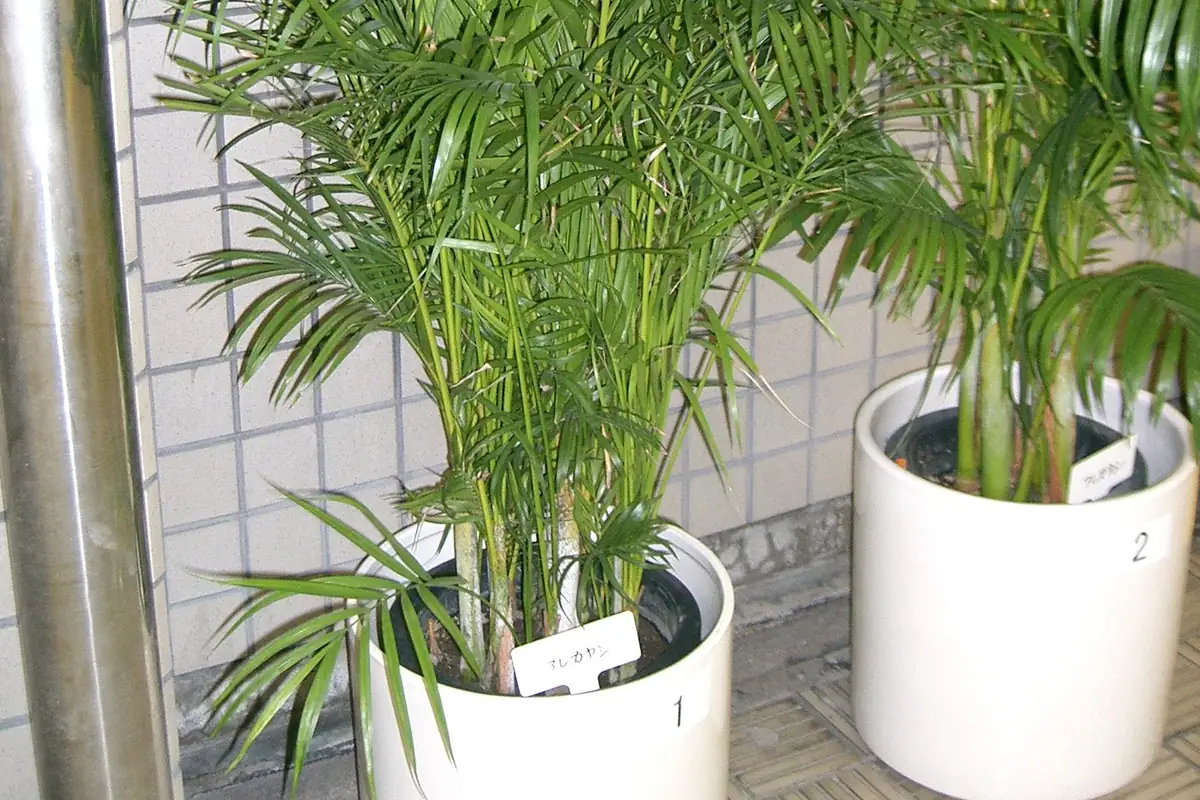
Any pot must have drainage holes. Choose one only slightly larger than the root ball. UF/IFAS warns against over-potting palms, because a pot that is too big stays wet for too long. Clemson adds that palms do best when their roots are a little confined.
Plastic and glazed pots hold moisture longer, which suits arecas in dry rooms. Unglazed clay dries faster and is heavier, which helps keep a tall clump from tipping over. If you use a decorative cover pot, lift the inner pot out to drain after each watering. For more on pot setup and drainage, see our guide to growing dwarf trees in pots.
Fresh Mix Matters
Old potting mix breaks down over time. UF/IFAS explains that bark and peat slowly decompose into a dense, airless muck. Roots in that muck cannot take up iron well, and the newest fronds turn pale yellow. The fix is fresh mix, not more fertilizer.
Feeding: Potassium, Magnesium And Salt Sensitivity
Arecas need regular feeding to stay green, but they are easy to overfeed. The University of Kentucky lists overfertilization as one of their main problems indoors. That makes the type of fertilizer and the amount more important than how often you feed.
What Fertilizer To Use
Clemson recommends a slow-release palm fertilizer with an analysis such as 12-4-12 or 8-2-12. It should also contain micronutrients, such as iron, manganese, zinc, boron and copper. Palm fertilizers are higher in potassium than general plant food, and the better ones add magnesium too.
How Often To Feed
Clemson says to feed indoor palms only two to three times a year, while the plant is growing in spring and summer. Use the rate on the label or a little less. Do not feed in winter, when growth slows, and do not feed a palm that is bone dry. Water first, then fertilize.
Why Arecas Need Potassium
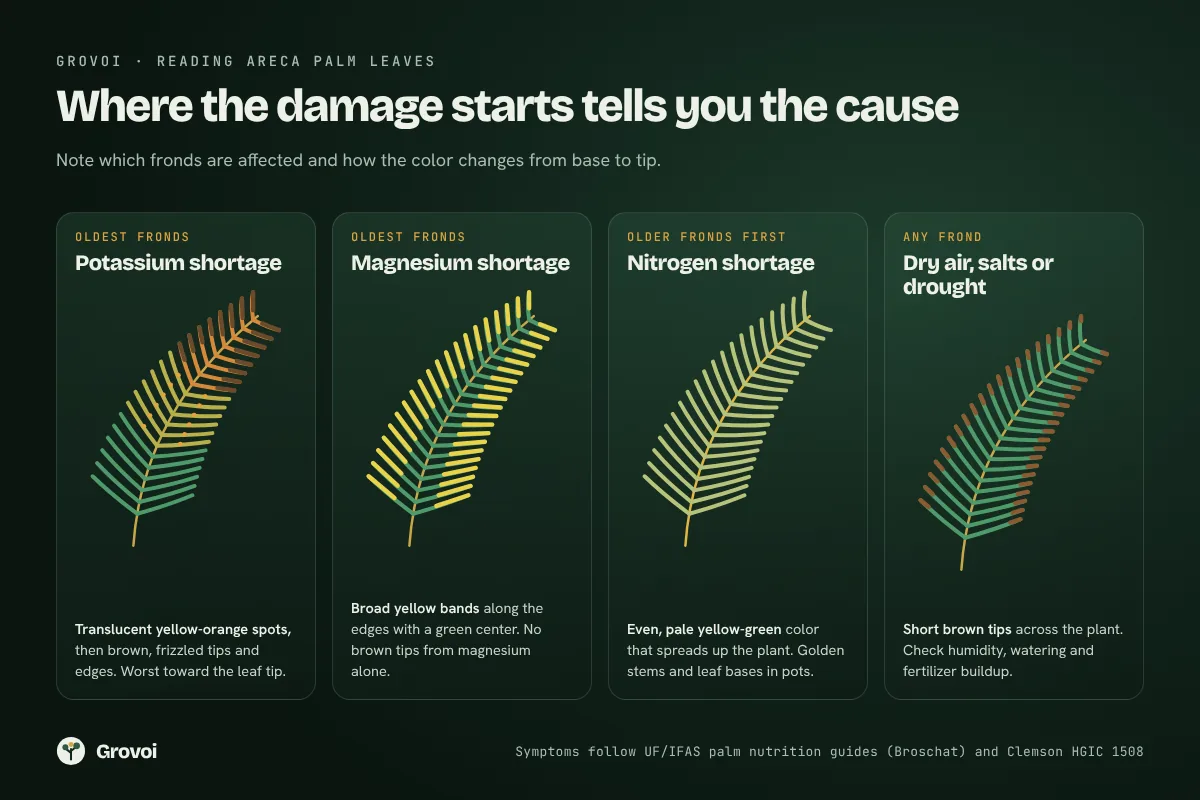
Potassium shortage is the most common nutrient problem in palms grown outdoors. UF/IFAS calls it relatively uncommon in container palms that are fed well, but it still shows up when a pot goes unfed for a long time. In arecas, the oldest fronds get translucent yellow or orange spots first. Later the tips and edges of the leaflets turn brown and frizzled.
UF/IFAS is clear that damaged fronds never recover. They have to be replaced by healthy new fronds, which come in once the plant gets enough potassium. Steady feeding with a palm fertilizer is the best way to prevent the problem.
Why Arecas Need Magnesium
Magnesium shortage also starts on the oldest fronds, but it looks different. UF/IFAS describes broad yellow bands along the edges of the leaf, with the center staying clearly green. It does not cause brown tips on its own.
Potting mixes usually include dolomitic lime as a source of magnesium. UF/IFAS notes that this supply is often used up after about six months, so palms kept in the same pot for a long time can run short. A palm fertilizer that contains magnesium prevents the problem.
Signs Of Overfeeding
Too much fertilizer builds up salts in the mix. Clemson notes that the tips of lower leaves may turn brown and die from too much fertilizer, and that too much iron can spot the foliage. If you see a white crust or a sudden wave of brown tips after feeding, flush the pot with plenty of water and skip the next feeding.
Our guide to citrus tree care covers the same balance for another heavy feeder that lives in pots.
When And How To Repot
Do not rush to repot. NC State suggests repotting every 2 or 3 years, and Clemson says palms may only need it every two to three years, when roots fill the pot. Signs it is time include roots circling the surface or poking from the drainage holes, water running straight through, and a plant that dries out within a day or two.
Repot in spring or early summer, when the palm is growing. Clemson warns that many palms have fragile roots, so handle the root ball gently.
- Water the palm the day before so the root ball holds together.
- Lay the pot on its side and slide the plant out. Do not pull it out by the stems.
- Loosen circling roots with your fingers, and trim off any that are black and mushy.
- Choose a new pot 1 to 2 inches wider than the old one, with drainage holes.
- Set the palm at the same depth it grew before. Do not bury the stems deeper.
- Fill around it with fresh mix, firm gently and water well.
- Keep it out of direct sun for a week or two while it settles.
If the palm is as large as you want it, you can return it to the same pot. Shake off some of the old mix, trim a little of the outer root mass, and refill with fresh mix. You can also divide it, as explained below.
Removing Dead Fronds
Arecas need very little pruning. The aim is to remove dead material, not to shape the plant. A healthy old frond turns yellow, then brown, as the palm replaces it. Once it is fully brown, cut it off close to the stem with clean, sharp pruners.
What Not To Cut
Do not cut fronds that are still partly green. UF/IFAS explains that palms pull potassium from their oldest leaves to feed new growth. If you cut a yellowing frond early, the palm takes potassium from the next frond up instead. Repeated cutting leaves fewer green fronds, not more.
Never cut the top off a stem to control height. Each stem grows from one bud at its tip and will not branch or regrow from the cut. If a single cane gets too tall or dies, cut it off at the base. Younger stems in the clump will fill the space.
Trimming Brown Tips
Brown tips will not turn green again. If they bother you, trim them with sharp scissors, following the natural pointed shape of the leaflet. Leave a thin strip of brown at the edge so you do not cut into healthy tissue. Then fix the cause, or the tips will brown again.
How To Propagate By Division
UF/IFAS and NC State both list seed and division as the ways to propagate an areca. Seed is slow and rarely available, since indoor plants seldom flower. Division is easy because the plant is already a clump of separate stems. Palms do not root from stem cuttings, so do not try to start one from a cut cane.
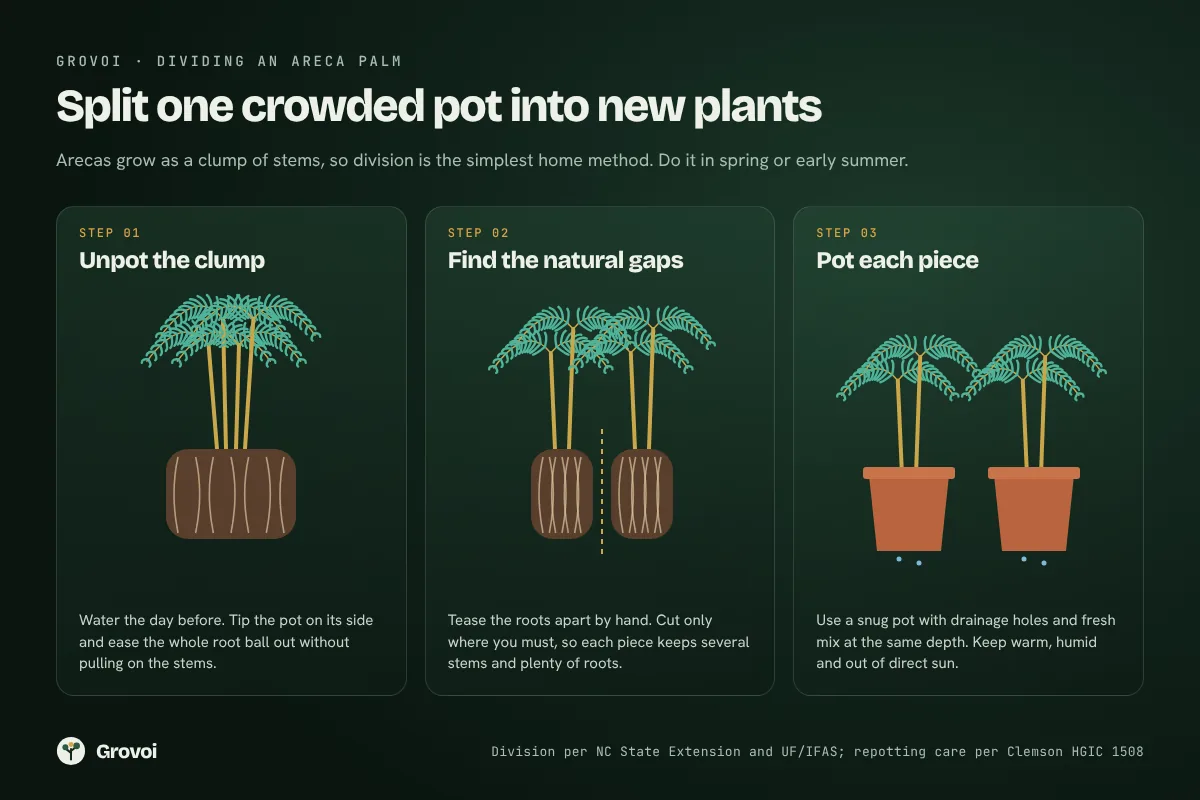
- Divide in spring or early summer, when the palm is growing.
- Water the day before, then slide the whole root ball from the pot.
- Look for natural gaps between groups of stems. Many nursery pots hold several seedlings planted together, which makes this easier.
- Tease the roots apart by hand. Where they are matted, cut with a clean knife, keeping several stems and a good share of roots with each piece.
- Pot each division into a snug pot of fresh mix, at the same depth as before.
- Water well and keep the new plants warm, out of direct sun and in higher humidity for a few weeks. A clear bag loosely over small divisions helps.
Expect some brown tips and a slow few weeks while the roots recover. Do not feed the divisions until you see new growth.
Growing Areca Palms Outdoors
In The Ground: Zones 10 To 11
UF/IFAS and NC State both list USDA zones 10a to 11 for planting areca palms in the ground. UF/IFAS adds that it survives best where the average lowest temperature of the year is 35 to 40°F. In those areas it makes a dense screen or a specimen by a pool or patio.
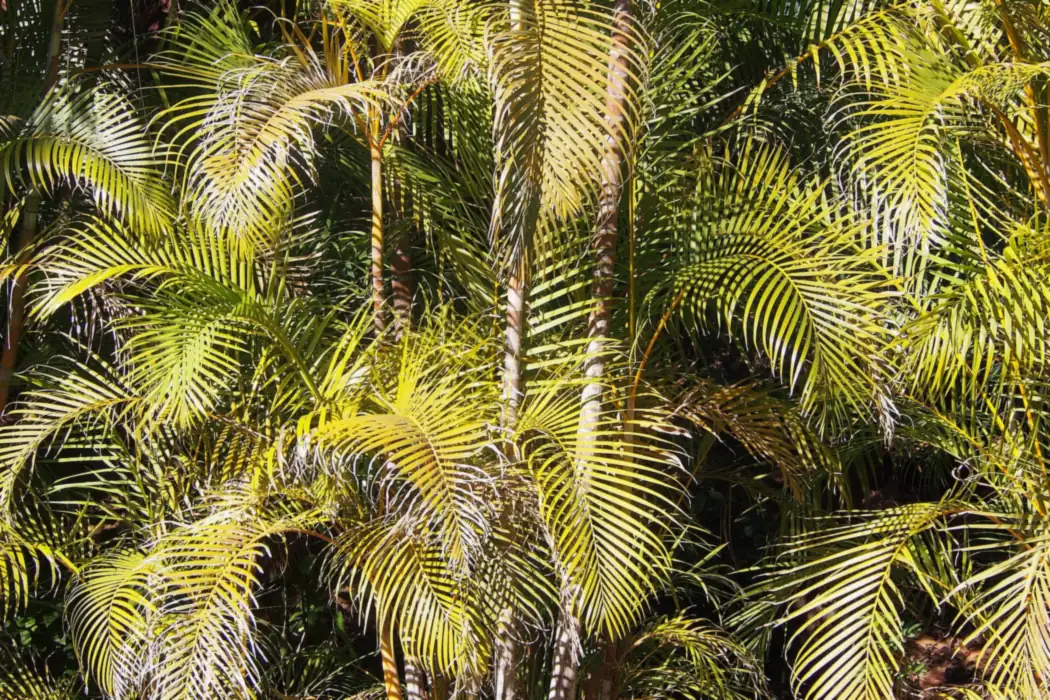
Outdoors it takes full sun to partial shade, though NC State says it prefers partial shade. Small palms benefit from some shade until they are a few feet tall. Plant in fertile, well-drained soil and water during dry spells. UF/IFAS suggests planting during the summer rainy season so roots can establish.
In South Florida, UF/IFAS flags the areca for caution because it can spread beyond gardens. Plant it with care there, and remove seedlings that come up where you do not want them.
Summer Outdoors In Colder Zones
In cooler regions, a potted areca can spend summer outside once nights stay warm. Clemson notes that palms benefit from a summer outdoors, where rain and natural predators help control pests. Keep it in bright shade, not direct sun, and move it out over a week or two so the leaves adjust. Lift the pot off its saucer so rain can drain away.
Bring it back in well before nights fall to 45°F, the point where Clemson says chilling damage starts. Check it closely for pests before it comes indoors, including the soil and the drainage holes.
Why Are My Areca Palm Tips Turning Brown?
Brown tips are the most common areca complaint. Start by noting which fronds are affected and what the rest of the leaf looks like.
Dry Air
Short, dry brown tips across many fronds, worst in winter, usually mean low humidity. Clemson lists dry air as a cause of browning in indoor palms. Add a humidifier and move the plant away from heating vents.
Uneven Watering
Clemson also lists lack of water. If the mix dries out completely between waterings, tips brown first. Check the pot more often, especially in summer and in small pots.
Fertilizer Salts
Brown tips on the lower fronds after a round of feeding point to fertilizer burn. Flush the pot and feed less. Avoid fertilizer spikes and stronger doses than the label suggests.
Potassium Shortage
If the browning sits on the oldest fronds, starts at the tips and edges, and comes with yellow-orange spots, suspect potassium. Switch to a palm fertilizer with potassium and magnesium, and leave the affected fronds in place until they are fully brown.
Cold Or Sun Damage
Reddish-brown patches that appear a few days after a cold night are chilling injury. Dry tan patches on the side facing a window are sunburn. Neither will heal, but new fronds will be fine once you move the plant.
Why Are My Areca Palm Leaves Turning Yellow?
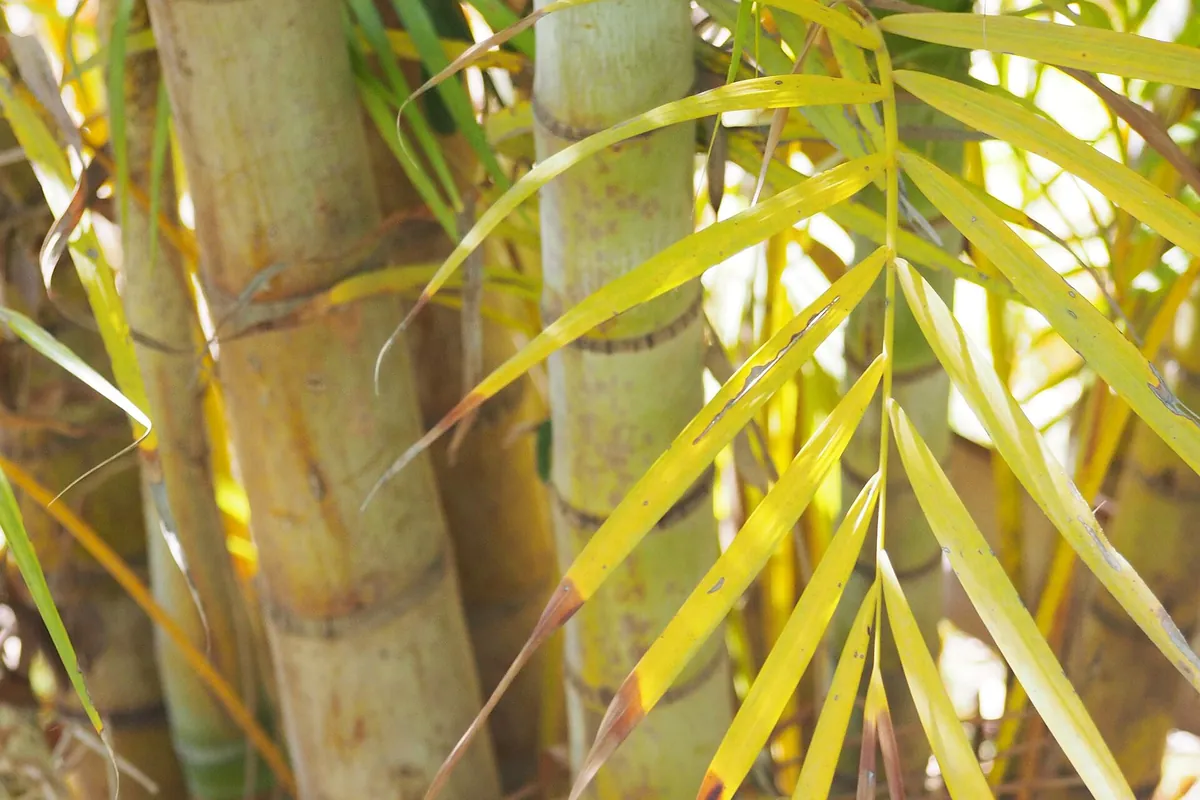
Some yellowing is normal. UF/IFAS notes that the yellow color of the stems and leaf stalks is a natural feature of the plant, and it gets stronger in bright sun. One old frond at the bottom yellowing as a new one opens is also normal.
Old Fronds Yellowing
Several lower fronds yellowing at once suggests a nutrient shortage. UF/IFAS lists potassium as a frequent cause of yellowing older leaves on arecas, often speckled with bronze or yellow. Broad yellow edges with a green center suggest magnesium. An even, pale yellow-green across the older fronds, with golden leaf stalks, points to nitrogen. UF/IFAS notes that the golden stalks often seen on potted arecas are caused by nitrogen shortage.
New Fronds Yellowing
Pale yellow new fronds usually mean the roots cannot take up iron. UF/IFAS traces this to old, airless potting mix, root rot or salt damage, not to a lack of iron in the soil. Repot into fresh mix and water less often.
Yellowing With Wet Soil
Yellowing fronds on a palm whose mix stays wet, especially with soft stem bases, points to overwatering and possibly root rot. Unpot it, trim dark, mushy roots and repot into fresh, fast-draining mix.
Pests: Spider Mites, Mealybugs And Scale
NC State lists scale, whiteflies and spider mites as pests of the areca. Clemson adds mealybugs to the list for indoor palms. Check leaf undersides and the bases of the stems each time you water. Isolate a new plant from your other houseplants for a few weeks, since pests often arrive on new plants.
Spider Mites
Clemson describes areca palms as very susceptible to spider mites. These tiny pests suck sap from the leaflets, leaving fine pale speckles and a dull, dusty look. In bad cases you will see fine webbing between leaflets.
Rinse the whole plant in a lukewarm shower, tops and undersides, and repeat often. Clemson notes that repeated water sprays help control spider mites. For heavier infestations, spray with insecticidal soap. Raising humidity helps prevent them coming back.
Mealybugs
Mealybugs look like small tufts of white cotton tucked into leaf joints and along the stems. Clemson suggests wiping them off with a cotton swab dipped in rubbing alcohol, then following up with insecticidal soap.
Scale
Scale insects look like small brown or tan bumps stuck to stems and leaflets. UF/IFAS notes that scale on arecas is often followed by sooty mold, a black coating that grows on the sticky honeydew the insects leave behind. Scrape them off with a fingernail or a soft brush, then treat with insecticidal soap or horticultural oil as the label directs. Our citrus pest guide covers scale in more depth.
Insecticidal soap works only on contact, so wet the undersides of the leaves as well as the tops. One round rarely gets every pest, so repeat as the label directs. Do not use leaf shine products, which Clemson warns can badly injure palm foliage.
Areca Palm Problems: A Symptom Table
When something goes wrong, check three things first: how wet the mix is, which fronds are affected, and any change in the last few weeks. Then match the symptom below.
| Symptom | Most likely cause | What to do |
|---|---|---|
| Short brown tips on many fronds | Dry air or uneven watering | Add a humidifier; water when the surface dries |
| Brown tips on lower fronds after feeding | Fertilizer salts | Flush the pot; feed less often |
| Yellow-orange spots, then brown tips on oldest fronds | Potassium shortage | Use a palm fertilizer; leave the old fronds on |
| Yellow edges, green center on oldest fronds | Magnesium shortage | Use a palm fertilizer with magnesium |
| Even pale green fronds, golden stalks | Nitrogen shortage | Feed in spring and summer |
| Pale yellow new fronds | Old, airless mix or root damage | Repot into fresh mix; water less |
| Yellowing with wet mix, soft stem bases | Overwatering or root rot | Trim rotted roots; repot; let the surface dry |
| Reddish-brown patches after a cold night | Chilling injury | Keep above 45°F and away from cold drafts |
| Bleached or tan patches facing the window | Sunburn | Filter the light or move it back |
| Fine pale speckles, light webbing | Spider mites | Shower the plant; insecticidal soap; raise humidity |
| White cottony tufts in leaf joints | Mealybugs | Rubbing alcohol on a swab; insecticidal soap |
| Brown bumps, sticky leaves, black film | Scale and sooty mold | Scrape off; insecticidal soap or horticultural oil |
| Thin, leaning stems and few new fronds | Too little light | Move closer to a bright window |
Is An Areca Palm Safe For Pets?
Yes. The ASPCA lists the areca palm (Dypsis lutescens) as non-toxic to dogs, cats and horses. That makes it a common choice for homes with pets, and a good swap for palms and palm-like plants that are toxic, such as the sago palm.
Non-toxic does not mean pets should eat it. Chewing a lot of any plant can upset a pet’s stomach, and sharp leaflet tips can irritate a mouth. NC State also notes that the heart of the palm, the growing point at the top of each stem, contains compounds that can cause nausea and vomiting in people, so it should not be eaten. If your pet eats a large amount and seems unwell, call your veterinarian or the ASPCA Animal Poison Control Center at (888) 426-4435.
For more pet-friendly indoor trees, see our money tree care guide. The ASPCA lists the money tree as non-toxic too. Our guides to the rubber tree plant and fiddle leaf fig cover two popular indoor trees that the ASPCA lists as toxic, so they need more care around pets.
Areca Palm Care FAQs
How Often Should You Water An Areca Palm?
Water when the top inch of the mix feels dry, then soak it until water runs from the drainage holes and empty the saucer. In a warm, bright room that may be once or twice a week in summer, and less often in winter. Keep the mix moist but never soggy, and never let it dry out completely.
Why Are The Tips Of My Areca Palm Turning Brown?
The most common causes are dry air, uneven watering and fertilizer salts. Brown tips across many fronds in winter point to low humidity. Brown tips on the lower fronds after feeding point to salts, so flush the pot with plenty of water. Brown tips with yellow-orange spots on the oldest fronds suggest potassium shortage.
Why Is My Areca Palm Turning Yellow?
A little yellow on the stems and leaf stalks is natural, and one old frond yellowing at a time is normal. Several older fronds yellowing at once usually means a shortage of potassium, magnesium or nitrogen. Pale new fronds point to old, airless mix, while yellowing with wet soil points to overwatering.
Should I Cut Brown Fronds Off My Areca Palm?
Cut fronds off only once they are fully brown. UF/IFAS explains that palms move potassium out of old fronds to feed new growth, so cutting yellowing fronds early can make a shortage worse. You can trim brown tips with sharp scissors, following the leaflet shape, but never cut the top off a stem.
How Much Light Does An Areca Palm Need?
Arecas need bright, indirect light, such as a spot near an east, west or south window with hot sun filtered by a sheer curtain. A University of Kentucky fact sheet gives about 150 to 300 foot-candles for good growth. In dim rooms the clump thins out and declines, while hot direct sun through glass can scorch the leaflets.
Is An Areca Palm Toxic To Cats And Dogs?
No. The ASPCA lists the areca palm as non-toxic to dogs, cats and horses. Chewing a lot of any plant can still upset a pet’s stomach, so discourage nibbling. If your pet eats a large amount and seems unwell, call your veterinarian or the ASPCA Animal Poison Control Center for advice.
Can You Grow An Areca Palm From A Cutting?
No. Palms grow from a single bud at the top of each stem, and a cut cane will not grow roots. The easy home method is division. In spring or early summer, slide the clump from its pot, tease it into sections that each keep several stems and good roots, and pot each one in fresh mix.
Pingback: Pygmy Date Palm: How To Grow And Care For It In Pots Or Landscapes - Grovoi