Plum Tree: How To Grow, Care For And Harvest Plums For Years
On this page
- Plum Tree Growing Guide For Home Gardens
- European, Japanese And American Plums
- Damson Plums
- USDA Zones And Chill Hours For Plum Trees
- Plum Tree Pollination: Self-Fertile Or Partner Needed?
- Best Plum Varieties For Home Gardens
- Best Site And Soil For A Plum Tree
- How To Plant A Plum Tree
- Watering Plum Trees
- Fertilizing Plum Trees
- Pruning Plum Trees In Summer
- Thinning Plums For Bigger, Sweeter Fruit
- Plum Curculio
- Black Knot
- Brown Rot
- Aphids And Other Plum Problems
- When And How To Harvest Plums
- Storing Fresh Plums
- Growing Plum Trees In Containers And On Dwarf Rootstocks
- Plum Tree FAQs
Plum Tree Growing Guide For Home Gardens
A plum tree is one of the most forgiving fruit trees for a home garden. Plums tolerate heavier soil than peaches, bloom later than apricots and keep cropping for many years with simple, steady care.
Success starts with the right type. European, Japanese, American hybrid and damson plums differ in hardiness, chill hours and pollination needs. So, match the tree to your USDA zone before you choose a flavor.
This guide walks through each step: choosing a variety, planting, watering, feeding, summer pruning, thinning and pest control. It finishes with harvest signs, storage tips and options for small yards and patio containers.
European, Japanese And American Plums
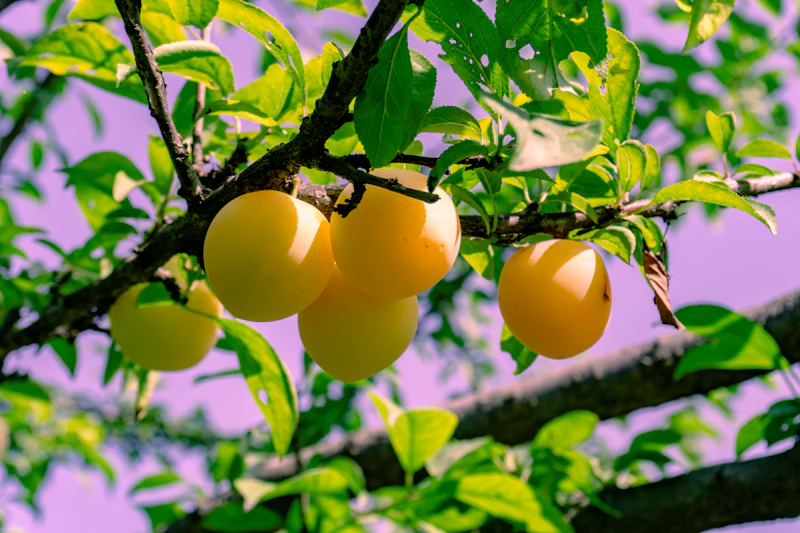
Japanese plums (Prunus salicina) produce large, round, juicy fruit with red, yellow or almost black skin. The trees spread wide and bloom early. As a result, they suit warmer zones and taste best eaten fresh.
European plums (Prunus domestica) include oval blue prune plums and green gages. They grow upright and bloom 10 to 14 days after Japanese types. Their dense, sweet flesh dries, bakes and cans especially well.
American plums (Prunus americana) and their hybrids are the cold specialists, hardy to zone 3. The fruit is smaller, yet hybrids such as Superior and Alderman taste close to Japanese plums. Some types sucker into thickets.
Damson Plums
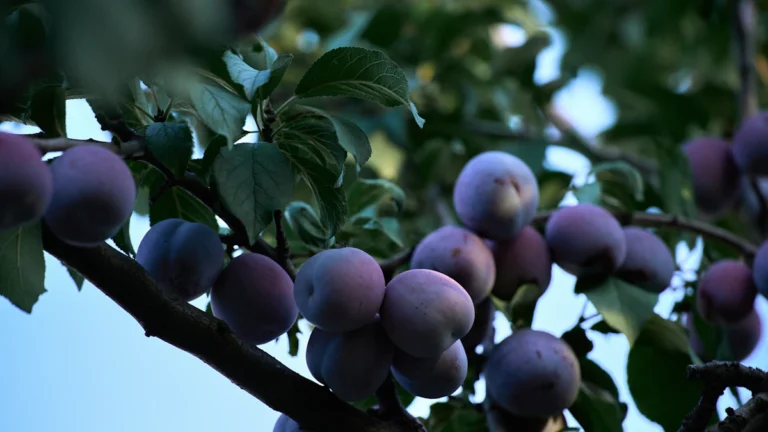
Damsons are small, oval, blue-black plums with a dusty bloom and sharp, tart flesh. They are often classed as Prunus insititia, a close cousin of the European plum. Raw, they taste astringent, but cooking transforms them.
That strong flavor makes damsons prized for jam, jelly, sauces and pies. Because the fruit carries plenty of pectin, preserves set easily. Most damsons are self-fertile, so a single tree crops well on its own.
Damson trees are tough, compact and fairly disease tolerant. They flower late and cope with cool, exposed sites. However, they also ripen late, often in September, so they need a reasonably long growing season.
USDA Zones And Chill Hours For Plum Trees
European plums grow best in USDA hardiness zones 5 to 8, while Japanese plums handle zones 5 to 9. Meanwhile, American plums and their hybrids reach much farther north and survive zone 3 winters.
Chill hours are winter hours spent between about 32°F and 45°F. Japanese plums typically need 500 to 900 hours, and European plums need 700 to 1,100. Low-chill picks such as Methley need noticeably fewer.
Too little chill delays leafing and causes weak, scattered bloom. In contrast, early warm spells push Japanese plums into flower before the last frost. So, ask your county extension office which varieties succeed locally.
Plum Tree Pollination: Self-Fertile Or Partner Needed?
Pollination decides whether a lone tree crops. Many European plums, including Stanley, Italian and Green Gage, are self-fertile. Even so, a second European variety nearby usually lifts yields, much as it does for an apple tree.
Most Japanese plums are self-unfruitful and need a different Japanese or American variety that blooms at the same time. Methley is self-fertile and pollinates many others, while Santa Rosa is only partly self-fertile.
European and Japanese plums rarely pollinate each other, because their bloom times barely overlap. American hybrids also need partners, and Toka or a native American plum suits most. Plant partners close together, ideally within 50 feet.
Best Plum Varieties For Home Gardens
The best plum variety depends on your zone, chill hours and how you plan to use the fruit. Fresh eating favors juicy Japanese types, while drying, baking and canning favor dense European prune plums.
For warm Southern gardens, Methley and Santa Rosa are reliable early croppers. In cooler regions, Stanley and Italian set heavy crops of freestone fruit. Meanwhile, Superior, Alderman and Toka shrug off harsh northern winters.
Ripening dates matter too. By planting one early, one midseason and one late variety, you spread the harvest across summer. Compare the table below, then confirm local performance with your nursery or extension office.
| Variety | Type | Pollination | Best Zones | Typical Ripening | Why Grow It |
|---|---|---|---|---|---|
| Methley | Japanese | Self-fertile | 5 to 9 | June | Very early, low chill, pollinates other Japanese plums |
| Santa Rosa | Japanese | Partly self-fertile | 5 to 9 | Late June to July | Classic tangy red plum with amber flesh |
| Satsuma | Japanese | Needs a partner such as Santa Rosa or Methley | 5 to 9 | July to August | Dark red flesh that makes rich jam |
| Shiro | Japanese | Needs a Japanese partner | 5 to 9 | July | Sweet, juicy yellow plum and a heavy cropper |
| Stanley | European | Self-fertile | 5 to 8 | Late August to September | Hardy, reliable freestone prune plum |
| Italian | European | Self-fertile | 5 to 8 | September | Rich prune plum for drying and baking |
| Green Gage | European | Self-fertile | 5 to 8 | August | Honey-sweet green dessert plum |
| Shropshire Prune | Damson | Self-fertile | 5 to 7 | September | Tart, high-pectin fruit for jam and sauces |
| Superior | American hybrid | Needs a partner such as Toka | 3 to 8 | August | Large red fruit on a very cold-hardy tree |
| Toka | American hybrid | Partly self-fertile | 3 to 8 | Late August | Spicy flavor and the go-to pollinizer for hybrids |
Best Site And Soil For A Plum Tree
Plum trees need full sun, at least six to eight hours daily, for sweet fruit and strong flower bud set. Also, choose a gentle slope or high spot, because frost pockets kill early plum blossoms.
Plums tolerate heavier soil better than a peach tree, yet their roots still rot in standing water. So, choose a deep, well-drained loam. If drainage is slow, plant on a wide mound or raised bed.
Aim for a soil pH near 6.0 to 6.5, which is slightly acidic. In alkaline soils, plums may show iron chlorosis, with yellow leaves and green veins. Also, avoid spots where stone fruit grew recently.
How To Plant A Plum Tree
Plant bare-root plum trees in late winter or early spring while they are still dormant. Container trees can go in during spring or early fall. Before planting, soak bare roots in water for a few hours.
Dig a hole two to three times as wide as the root ball and no deeper. Keep the graft union about 2 inches above the soil. Then, backfill with native soil and water deeply to settle it.
Space standard trees 18 to 22 feet apart and semi-dwarf trees about 12 to 15 feet apart. Finally, head a bare-root whip back to 18 to 24 inches so low scaffold branches form that first spring.
Watering Plum Trees
During the first season, water a new plum tree about twice a week so the root ball never dries out. Young trees may need 3 to 5 gallons weekly in hot weather, especially in sandy soil.
Established trees prefer deep, infrequent soaking. In dry spells, water every two to three weeks so moisture reaches at least 2 feet down. Drip irrigation or a soaker hose keeps the leaves dry and healthy.
Spread 2 to 3 inches of mulch over the root zone, kept several inches from the trunk. Steady moisture matters most as fruit swells, because drought shrinks plums and sudden heavy watering can split their skins.
Fertilizing Plum Trees
Plums are moderate feeders, so test your soil before adding anything. Too much nitrogen pushes soft, leafy growth, which attracts aphids and delays fruiting. Instead, aim for balanced vigor and steady annual shoot growth.
Utah State University Extension suggests ½ to 1 cup of a nitrogen fertilizer such as 20-0-0 for trees under five years old. Older trees need 1 to 2 cups, spread around the drip line in early spring.
Then, watch the growth. Young trees should add 10 to 20 inches of new shoots each year, and mature trees about 8 to 10 inches. If growth runs longer, cut back the fertilizer the following spring.
Pruning Plum Trees In Summer
Plums bear fruit on short spurs along two and three year old wood, plus some one year shoots. So, plum trees need lighter pruning than peaches. Typically, removing about 25 percent of growth each year is plenty.
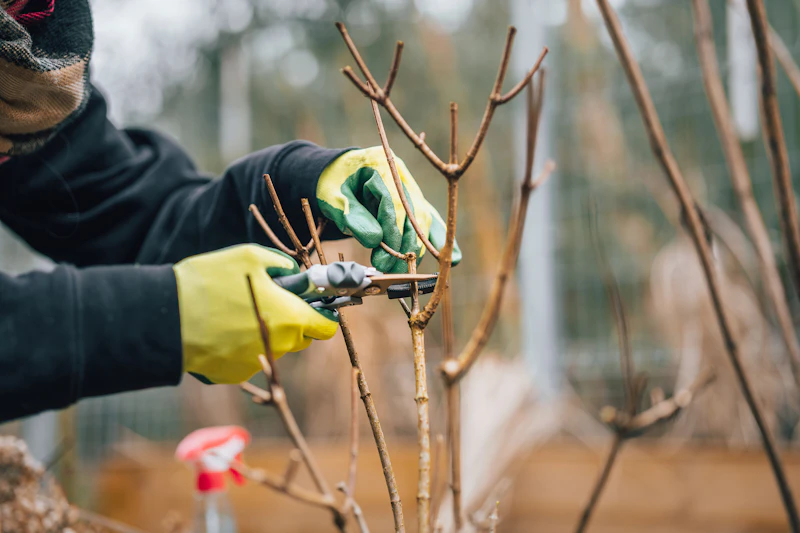
Train Japanese plums to an open center with three or four scaffold limbs. European plums suit a modified central leader, much like a pear tree. Shape young trees in early spring, removing water sprouts and crossing limbs.
Prune established plums in dry summer weather, not in fall or winter. Silver leaf spores infect fresh wounds mainly from September to May, and summer cuts heal faster. The exception is black knot, which you remove in winter.
Thinning Plums For Bigger, Sweeter Fruit
Japanese plums often set far more fruit than the tree can size and ripen. Overloaded branches then produce small, bland plums and may snap. Thinning also limits brown rot, since touching fruit spreads infection quickly.
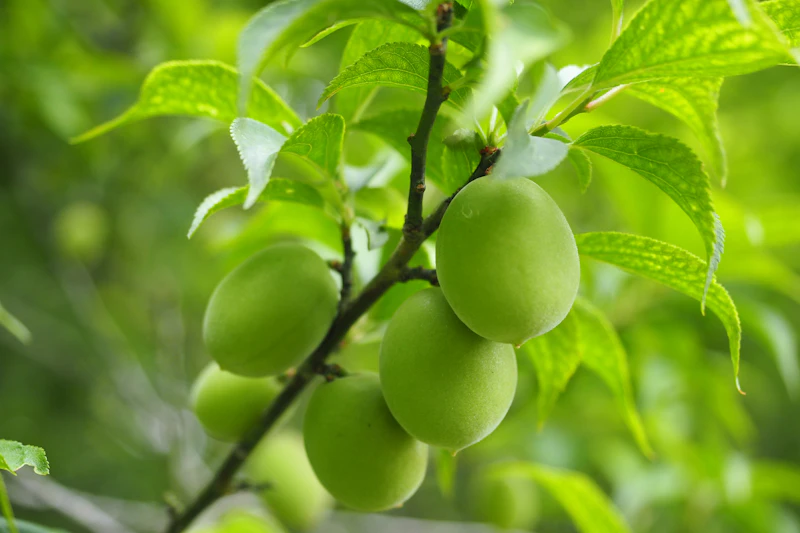
Thin by hand once fruit reaches roughly marble size, usually 30 to 45 days after bloom. Twist off small, damaged or scarred plums first, especially any carrying the crescent-shaped marks left by plum curculio.
Leave one plum every 4 to 6 inches along each branch. European plums usually need lighter thinning, unless the crop is very heavy. Meanwhile, American hybrids and damsons rarely need any thinning at all.
Plum Curculio
Plum curculio is a small, dark weevil about 1/4 inch long with a curved snout. In spring, females cut a 1/8 inch crescent-shaped scar into young fruit, then lay a single egg beneath it.
The larvae tunnel inside, and damaged plums usually drop early. Activity often begins once night temperatures reach about 60°F. Therefore, gather and destroy every dropped fruit before the larvae can escape into the soil.
On small trees, spread a sheet underneath on cool mornings and tap each limb sharply. Stunned weevils fall onto the sheet for easy removal. Alternatively, apply a labeled insecticide at petal fall, following directions exactly.
Black Knot
Black knot is a fungal disease caused by Apiosporina morbosa. It first forms olive-brown swellings on twigs. By the second year, these become hard, black, rough galls that girdle and kill whole branches.
Spores spread during wet spring weather, so inspect trees each winter while branches are bare. Cut out every knot 6 to 8 inches below the gall, into clean wood. Then, burn or bury the prunings.
University of Wisconsin experts advise against relying on fungicides for this disease. Instead, remove infected wild plums and cherries within 500 feet. The same disease hits the cherry tree, so check both.
Brown Rot
Brown rot, caused by the fungus Monilinia fructicola, attacks blossoms and ripening fruit. Infected flowers wilt and turn brown. Later, ripening plums develop soft brown patches that quickly sprout tan, powdery tufts of spores.
Rotted fruit shrivels into hard mummies that hang on branches or lie under the tree. These mummies carry the fungus into the next spring. So, pick off and destroy every one during winter cleanup.
Thin fruit so plums do not touch, and prune for good airflow. Also, control insects, because their feeding wounds let rot enter. In humid regions, labeled fungicides at bloom and before harvest add protection.
Aphids And Other Plum Problems
Aphids cluster on new shoots in spring, curling leaves and leaving sticky honeydew. A strong spray of water knocks many off. Otherwise, insecticidal soap, neem or horticultural oil handles heavier infestations safely.
Other pests matter too. San Jose scale crusts the bark, and peachtree borers tunnel into the lower trunk. Meanwhile, bacterial spot pits Japanese plums in humid areas, while birds and wasps target ripe fruit.
Cankers deserve attention as well. Amber gum oozing from bark can signal cytospora or bacterial canker. So, avoid mower wounds, paint young trunks white against sunscald and clean pruning tools between cuts.
When And How To Harvest Plums
Most plum trees bear a first real crop three to six years after planting, and hybrids may start sooner. Harvest runs from June for early Japanese types into September for prune plums and damsons.
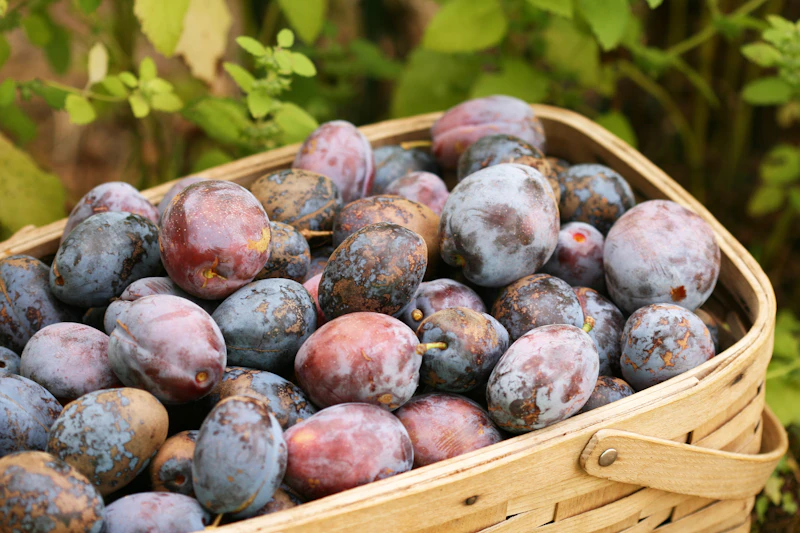
Japanese plums can be picked firm-ripe once full color develops, then softened indoors. European plums should hang until they soften slightly and the ground color turns yellow. Prune plums for drying can hang longer.
Ripe plums come away from the spur with a gentle lift and twist. Pick over several days, because fruit ripens unevenly. Also, handle each plum gently to protect the waxy bloom on its skin.
Storing Fresh Plums
Firm plums finish ripening at room temperature, ideally between 60°F and 80°F. Set them in a single layer, stem side down. A loose paper bag speeds softening, so check the fruit every single day.
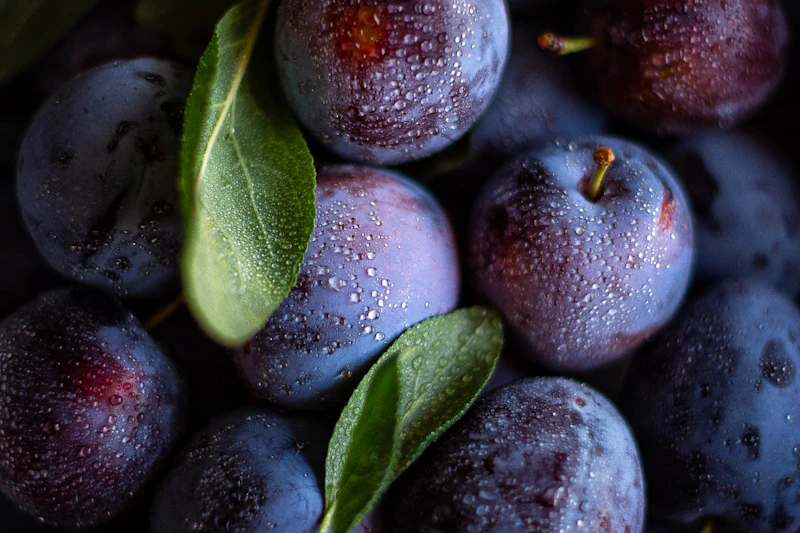
Once ripe, refrigerate plums unwashed in the crisper drawer. Utah State University advises using refrigerated ripe plums within three weeks. However, eat the softest fruit first, because it bruises and spoils fastest.
For longer storage, halve and pit plums, then freeze them on a tray before bagging. Alternatively, make jam, bake them into tarts or dry prune plums in a dehydrator for sweet, chewy homemade prunes.
Growing Plum Trees In Containers And On Dwarf Rootstocks
Rootstock controls final tree size. Myrobalan seedlings produce large standard trees, while semi-dwarfing rootstocks such as Citation and Krymsk 1 keep plums far smaller, often 10 to 15 feet tall with regular pruning.
For a patio, choose a compact, self-fertile plum such as Stanley or a damson on dwarfing roots. Use a 15 to 20 gallon pot with drainage holes and quality potting mix, not garden soil.
As with a potted lemon tree, pots dry out fast, and the drainage rules in our citrus tree care guide apply. Plums still need winter chill, but potted roots freeze easily, so shelter pots in an unheated garage.
Plum Tree FAQs
How Long Does A Plum Tree Take To Bear Fruit?
Most grafted plum trees fruit three to six years after planting. Hybrids and trees on dwarfing rootstocks often start sooner. Also, remove any fruit in the first year so the young tree builds roots instead.
Do You Need Two Plum Trees To Get Fruit?
It depends on the type. Most European plums and damsons are self-fertile, so one tree crops alone. However, most Japanese and American hybrid plums need a compatible partner that blooms at the same time.
Why Is My Plum Tree Not Producing Fruit?
Common causes include a missing pollination partner, frost damage to early blossoms, too few chill hours, heavy nitrogen feeding or a tree that is simply too young. Heavy winter pruning also removes fruiting spurs.
When Should You Prune A Plum Tree?
Train young trees in early spring as buds break. Then, prune established trees in dry summer weather, either midseason or right after harvest. Avoid fall and winter cuts, which invite silver leaf and canker.
What Is The Difference Between A Plum And A Prune?
A prune is simply a dried plum, usually from a European prune plum such as Italian or French. These varieties carry enough sugar to dry whole around the pit without fermenting or spoiling.
How Long Do Plum Trees Live?
Home plum trees commonly stay productive for 15 to 20 years, and well-sited trees can last longer. Good drainage, careful summer pruning and prompt black knot control all help extend a tree’s useful life.
Pingback: Peach Tree: Grow, Thin & Harvest Sweet Peaches