Peach Tree: How To Grow, Thin And Harvest Sweet Peaches Every Summer
On this page
- Peach Tree Growing Guide For Home Gardens
- USDA Zones And Chill Hours For Peach Trees
- Choosing Peach Varieties: Freestone Vs Clingstone
- Best Site And Soil For A Peach Tree
- How To Plant A Peach Tree
- Watering Peach Trees
- Fertilizing Peach Trees
- Pruning A Peach Tree To An Open Center
- Thinning Peaches: Spacing And Timing
- Peach Leaf Curl
- Brown Rot
- Peach Tree Borers
- Other Pests And Problems
- When And How To Harvest Peaches
- Storing Fresh Peaches
- Growing Peach Trees In Containers And Dwarf Forms
- Common Peach Tree Mistakes To Avoid
- Month-By-Month Peach Tree Care Calendar
- Peach Tree FAQs
Peach Tree Growing Guide For Home Gardens
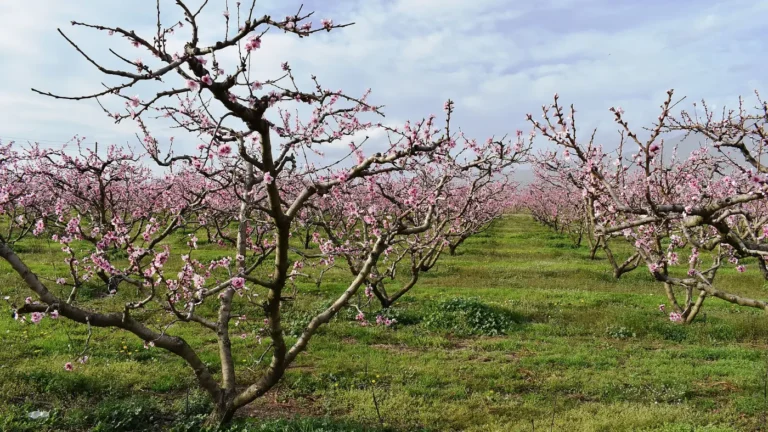
A peach tree rewards gardeners with sweet, juicy fruit that no store can match. However, Prunus persica needs the right climate, steady care and firm thinning. This guide covers each step, from planting to harvest.
First, know what makes peaches tricky. They bloom early, so spring frost can ruin a crop. Also, pests and diseases target the fruit. Even so, choosing a hardy cultivar solves many problems before they start.
Most self-pollinating varieties fruit alone, so one tree is enough. Then, with good pruning and thinning, a standard tree yields several bushels each summer. Therefore, follow each section, because every task builds on the last.
USDA Zones And Chill Hours For Peach Trees
Peaches grow in USDA hardiness zones 4 through 10. However, most peach trees perform best in zones 5 to 8. In zone 4, flower buds often die when winter lows drop below about minus 15°F.
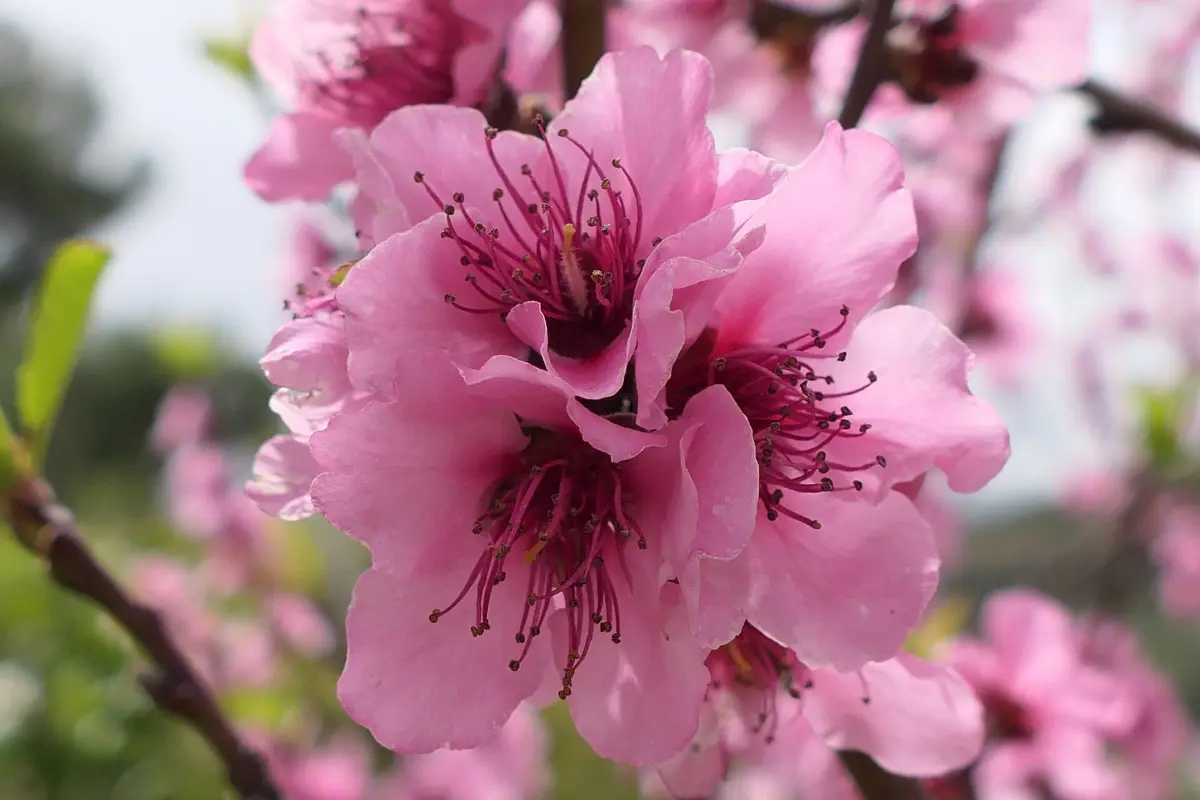
Next, check chill hours. These are winter hours spent between 32°F and 45°F. Each variety needs a set number before it blooms. Low-chill types need 150 to 400 hours, while high-chill types need over 800.
With too few chill hours, a tree leafs out late and then blooms poorly. Meanwhile, too many warm spells trigger early bloom. So, your county extension office can confirm local chill totals before you buy.
Choosing Peach Varieties: Freestone Vs Clingstone
Peach varieties split into two groups. Freestone flesh pulls cleanly from the pit, so it suits fresh eating and home freezing. In contrast, clingstone flesh grips the stone, yet it holds shape well for canning.
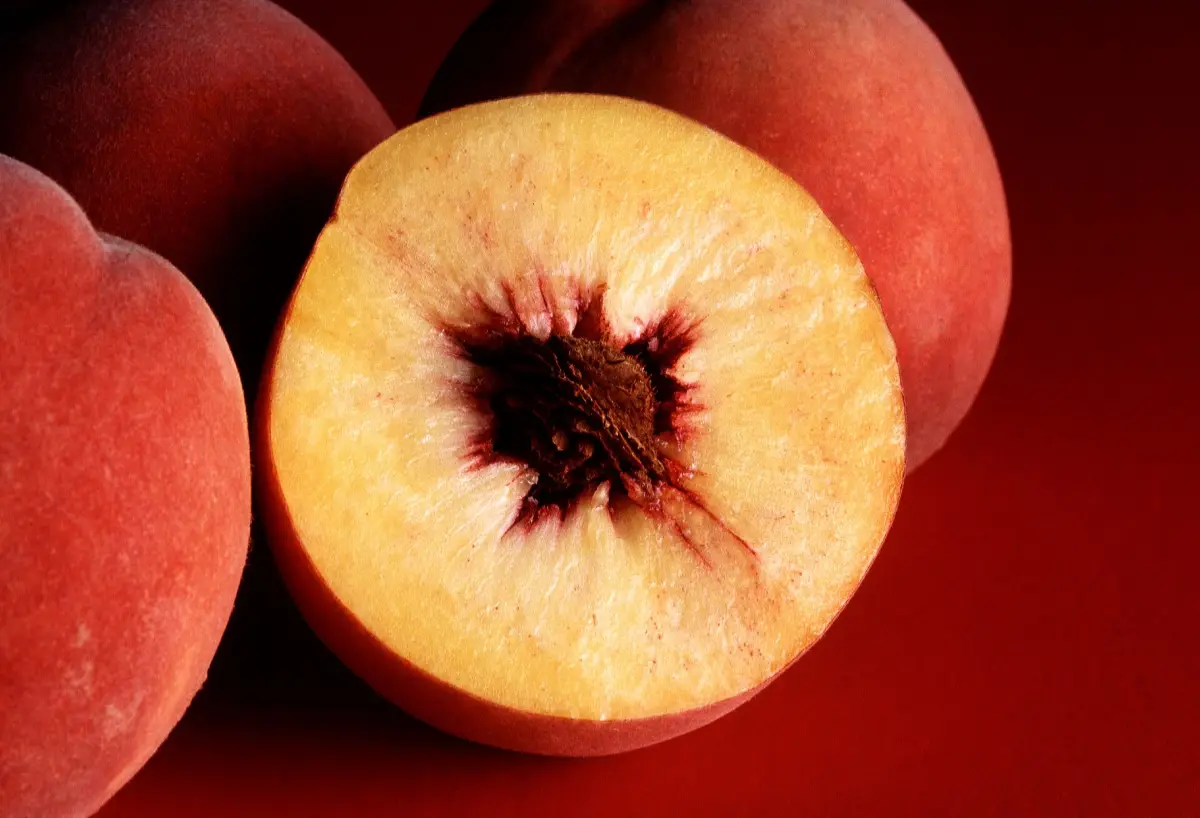
Flesh color also matters. Yellow flesh peaches taste tangy and rich. However, white flesh peaches such as Babcock are milder and low-acid. Meanwhile, donut peaches like Saturn offer a flat shape and a sweet bite.
Above all, match the cultivar to your chill hours. For example, Redhaven and Elberta suit colder northern gardens. Florida Prince fits Gulf Coast heat. Also, Frost and Indian Free resist leaf curl, which saves spraying.
| Variety | Stone Type | Flesh | Chill Hours (approx.) | Best Zones | Typical Ripening | Why Grow It |
|---|---|---|---|---|---|---|
| Florida Prince | Clingstone | Yellow | 150 | 8 to 10 | Late May | Very early crop for Gulf Coast and Florida heat |
| Babcock | Freestone | White | 250 to 300 | 6 to 9 | July | Sweet, low-acid white peach for mild winters |
| Santa Barbara | Freestone | Yellow | 300 | 7 to 10 | July | Rich flavor in low-chill Southern California gardens |
| Bonfire | Clingstone | Yellow | 400 | 5 to 9 | July | Genetic dwarf, 4 to 6 ft, red leaves, ideal for pots |
| Frost | Freestone | Yellow | 700 | 5 to 9 | August | Strong resistance to peach leaf curl |
| Indian Free | Freestone | Red | 700 to 800 | 6 to 9 | September | Leaf curl resistant, tangy red heirloom flesh |
| Elberta | Freestone | Yellow | 800 to 850 | 5 to 8 | Late August | Classic large peach for canning and freezing |
| Redhaven | Freestone | Yellow | 850 to 950 | 5 to 8 | Mid July | Popular, reliable home peach, tolerant of leaf curl and bacterial spot |
| Reliance | Freestone | Yellow | 1,000 | 4 to 8 | Late July | Flower buds survive about minus 25°F winters |
| Contender | Freestone | Yellow | 1,050 | 4 to 8 | August | Late bloomer that dodges spring frost in the North |
Best Site And Soil For A Peach Tree
Peaches need full sun, ideally eight hours or more daily. Also, choose a gentle slope with good air drainage. Cold air sinks into low frost pockets, and that air kills open blossoms on cold nights.
Next, check the soil. A deep, well-drained sandy loam works best. Unlike a pear tree, peach roots rot quickly in heavy clay or soggy ground. So, if drainage is poor, plant on a raised mound.
Finally, test the soil pH. Peaches prefer a level between 6.0 and 6.5. Add lime to raise it if needed. Also, avoid spots where stone fruit grew recently, because replant disease and nematodes may linger.
How To Plant A Peach Tree
Plant in late winter or early spring while the tree is still dormant. Most growers buy a one-year-old bare-root whip. First, soak the roots for two hours. Then, trim away any broken or circling roots.
Next, dig a hole twice as wide as the root ball and as deep. Set the graft union 2 to 3 inches above the soil. After that, backfill with native soil and water in deeply.
Spacing matters here too. Give a standard tree 15 to 20 feet. Meanwhile, a semi-dwarf tree needs 12 to 15 feet. Lastly, head back the whip to 24 to 30 inches so low branches form.
Watering Peach Trees
Young peach trees need about 1 to 1.5 inches of water each week. During the first summer, soak the root zone once or twice weekly. Shallow sprinkling, however, keeps roots weak and near the surface.
Next, lay drip irrigation or a soaker hose under the canopy. This keeps foliage dry, so fungal problems drop. Also, spread a 2 to 3 inch layer of mulch, kept 6 inches from the trunk.
Water matters most during the four to six weeks before harvest. At that stage, fruit size increases quickly. As a result, drought stress produces small, dry peaches. In contrast, steady moisture yields large, juicy fruit.
Fertilizing Peach Trees
Peaches are hungry trees, yet too much nitrogen causes soft, leafy growth. First, wait until the newly planted tree shows new leaves. Then, scatter about one pound of balanced 10-10-10 fertilizer around the drip line.
After that, add one pound for each year of age. Cap the total near ten pounds for a mature tree. Split each year’s amount into two feedings: one in early spring, another in early summer.
Watch shoot growth closely. Healthy trees push 12 to 18 inches of new growth yearly. Also, stop feeding by midsummer, because late growth cannot harden off before frost. Instead, add compost in autumn if needed.
Pruning A Peach Tree To An Open Center
Peaches grow best with an open center, also called a vase shape. This form lets bright sunlight reach every single branch. As a result, fruit colors evenly, and air moves freely, so disease pressure drops.
At planting, choose three or four scaffold branches spaced evenly around the main trunk. Ideally, each sits at a wide 60 to 90 degree angle. Then, remove the central leader above the top scaffold limb.
Prune from just before bloom until two weeks after petal fall. Peaches fruit on one-year-old wood, so remove about 40 percent of last year’s growth. Also, cut out upright water sprouts and keep fruiting shoots.
Thinning Peaches: Spacing And Timing
A healthy peach tree sets far more fruit than it can properly ripen. Without fruit thinning, peaches stay small, bland and badly crowded. Moreover, overloaded limbs can also snap under the heavy weight in midsummer.
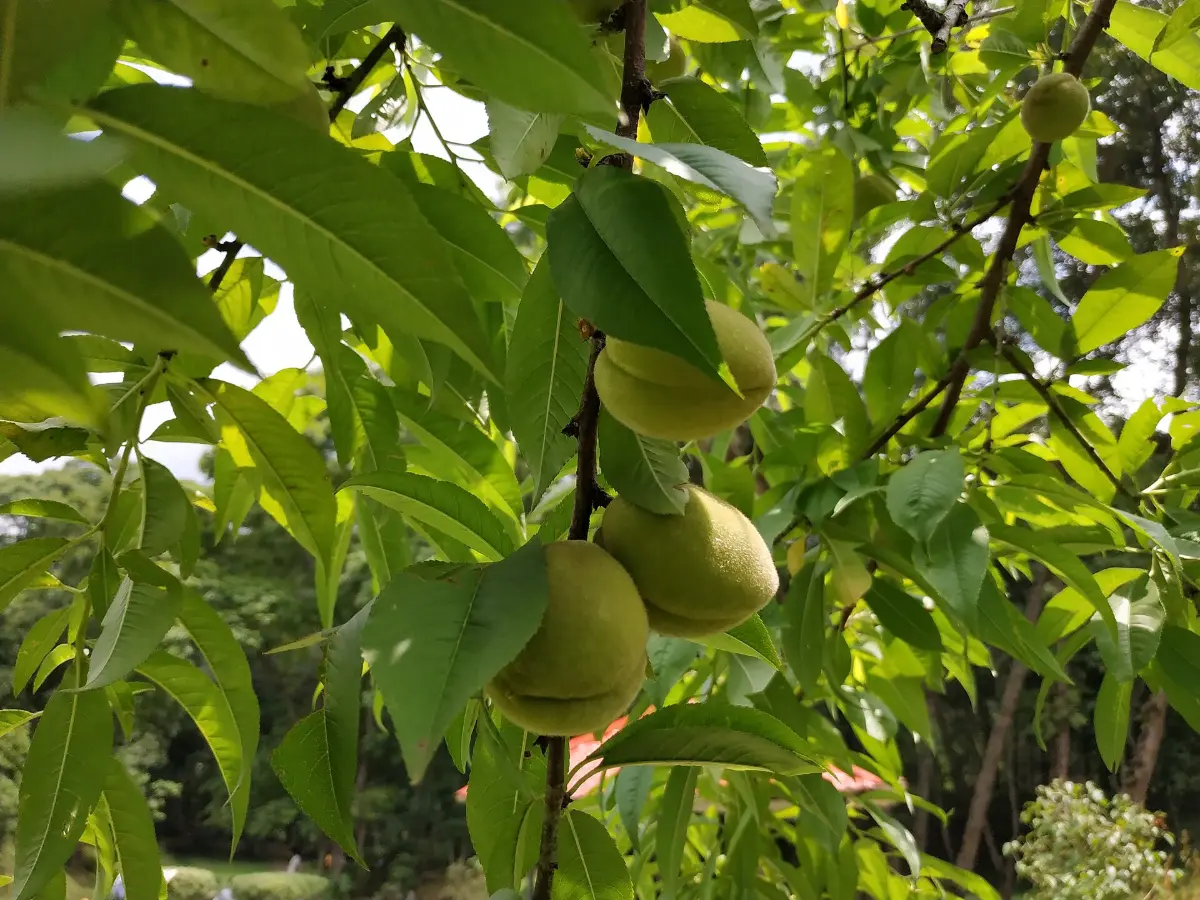
Thin about four to six weeks after bloom, when fruit reaches thumb size. Don’t wait for the natural June drop to finish. Then, remove fruit by hand with a twist, starting at each branch tip.
Leave one peach every 6 to 8 inches along the branch. Also, keep only one fruit per cluster. Keep the largest, cleanest fruit and drop damaged ones. In return, remaining peaches grow bigger and sweeter.
Peach Leaf Curl
Peach leaf curl is caused by the fungus Taphrina deformans. In spring, new leaves turn red, thick and puckered. Later, they yellow and drop. As a result, the tree loses energy, and fruit sets poorly.
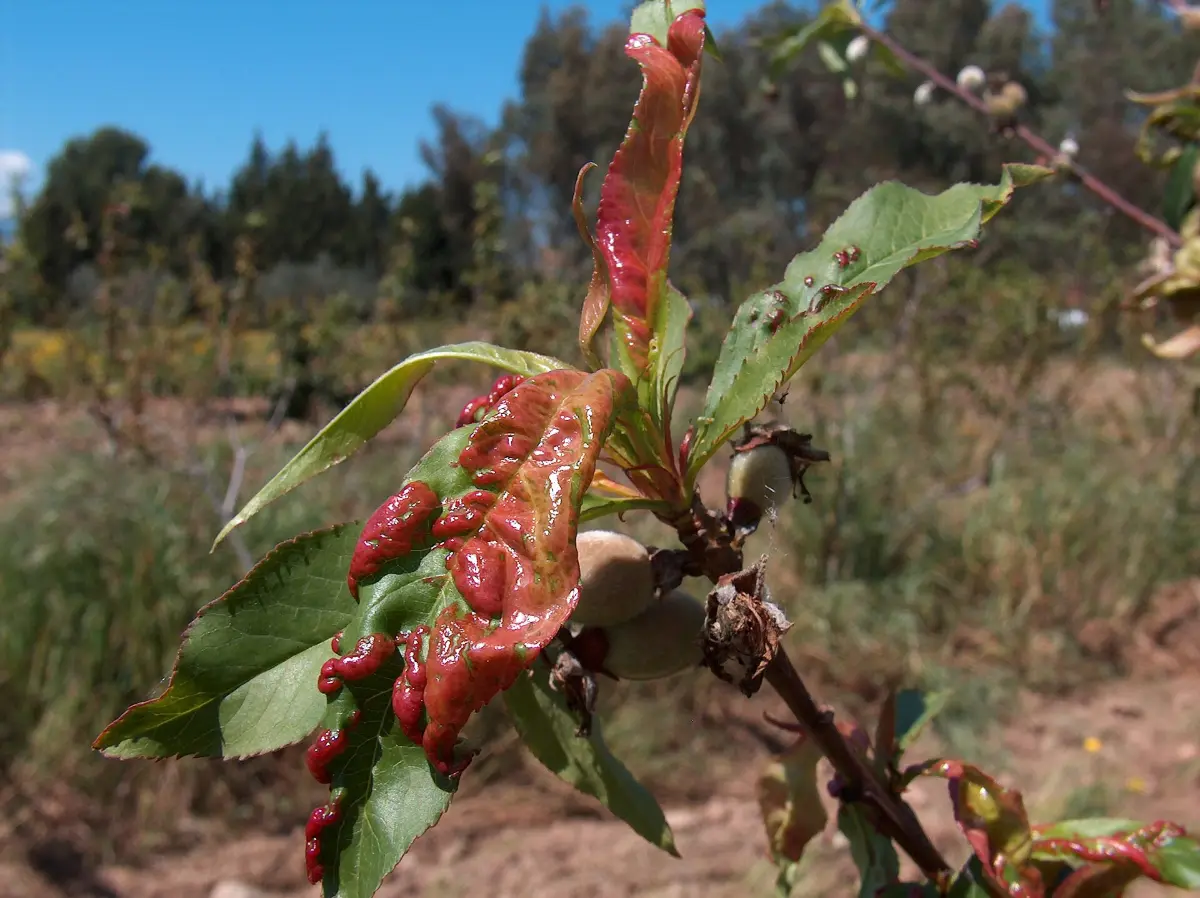
Unfortunately, spraying after symptoms appear does not work. Instead, apply a copper fungicide or lime sulfur right after leaves fall in autumn. Then, in wet regions, spray again in late winter, just before bud swell.
Resistant varieties offer an easier path. For example, Frost, Indian Free and Muir shrug off most infections. Meanwhile, Redhaven shows some tolerance. Also, pick up fallen infected leaves so spores have fewer places to overwinter.
Brown Rot
Brown rot comes from the fungus Monilinia fructicola. First, it causes blossom blight, which turns flowers brown. Later, ripe or ripening fruit develops soft, round brown spots. Soon after, those spots grow tan, powdery spores.
Infected fruit often dries into shriveled mummies that cling to branches. These mummies carry the disease right into the next year. Therefore, remove every mummy during winter pruning, and rake up fallen fruit in autumn.
Good thinning helps too, because touching fruit spreads rot quickly. In addition, open pruning dries the canopy after rain. In humid regions, apply a labeled fungicide at bloom and again two to three weeks pre-harvest.
Peach Tree Borers
The peachtree borer is the most damaging insect for home peaches. Its larvae come from a clearwing moth that resembles a wasp. They tunnel into the lower trunk, just at or below the soil line.
Look for gummy sap mixed with sawdust-like frass at the trunk base. Then, scrape back the soil and probe holes with a thin wire. This simple method kills the hidden larvae without any chemical sprays.
Prevention beats repair. Keep grass and mulch away from the trunk, so damage stays visible. Also, beneficial nematodes can attack larvae in the soil. Finally, a trunk spray in late summer protects heavily infested trees.
Other Pests And Problems
Several other pests and diseases also attack home peaches. For example, plum curculio leaves crescent-shaped scars on young fruit. Meanwhile, oriental fruit moth larvae bore into shoot tips, so the tender new growth wilts suddenly.
Aphids curl tender young leaves, and Japanese beetles chew foliage in midsummer. In addition, bacterial spot causes small holes in leaves and pitted fruit. Fortunately, resistant varieties, such as Redhaven, reduce this leaf disease considerably.
Wildlife can be just as costly. Birds peck ripening fruit, while squirrels steal entire peaches. So, drape bird netting as harvest nears. Lastly, cover blooming trees with frost cloth when a late freeze is forecast.
When And How To Harvest Peaches
Most trees bear their first real crop two to four years after planting. Harvest usually runs from late June through August, depending on the chosen variety. Each cultivar ripens over about one to two weeks.
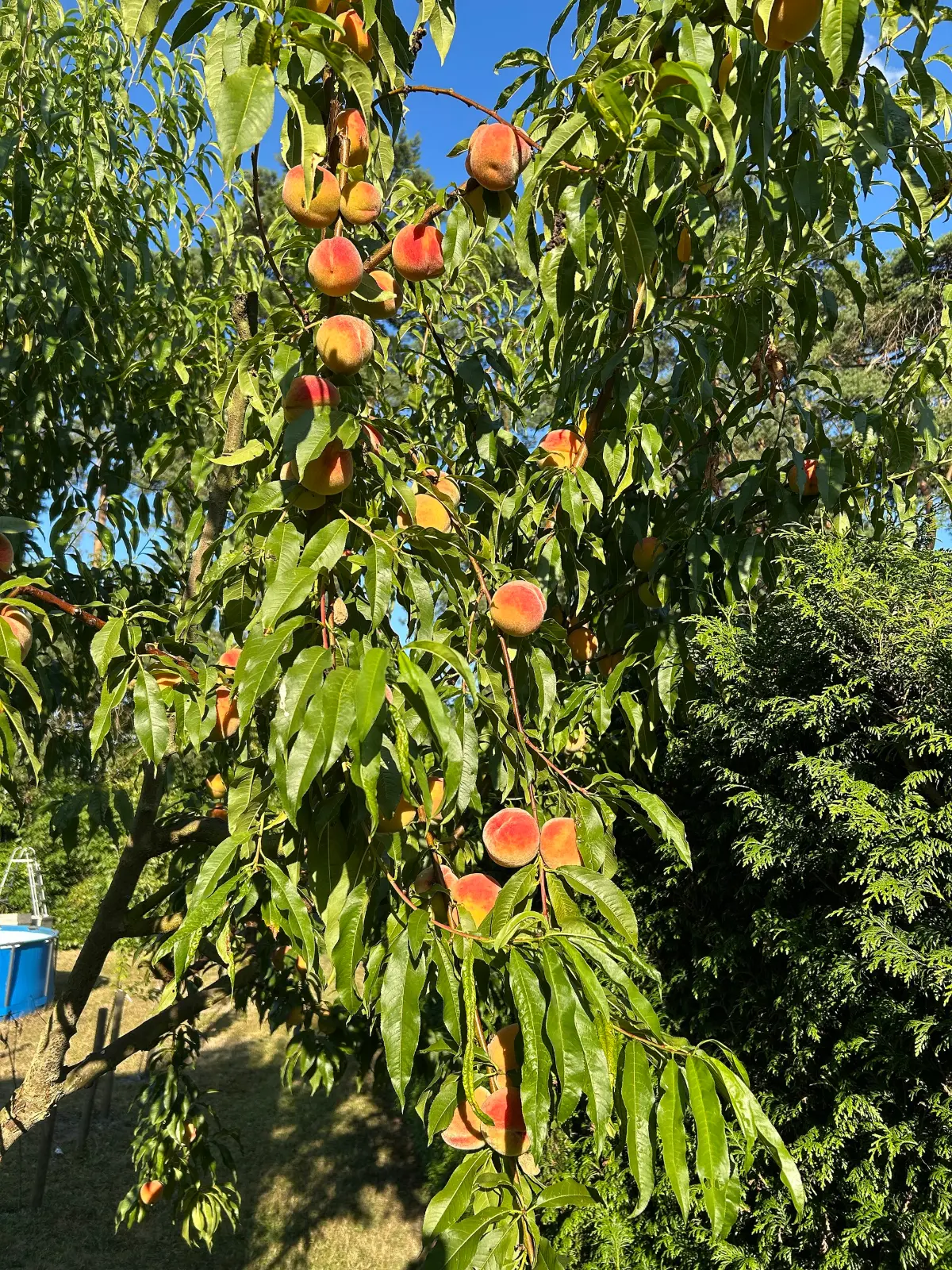
To judge ripeness, ignore the red blush. Instead, check the ground color near the stem. It should change from green to deep yellow or cream. Also, ripe fruit gives slightly when pressed and smells fragrant.
Next, cup each peach in your palm and lift it with a gentle twist. Never squeeze, because peaches bruise easily. Also, pick in the morning. Finally, set fruit in a shallow basket, one layer deep.
Storing Fresh Peaches
Peaches soften after picking, although they do not get sweeter. So, leave firm fruit at room temperature, stem side down, for one to three days. A closed paper bag speeds softening by trapping ethylene gas.
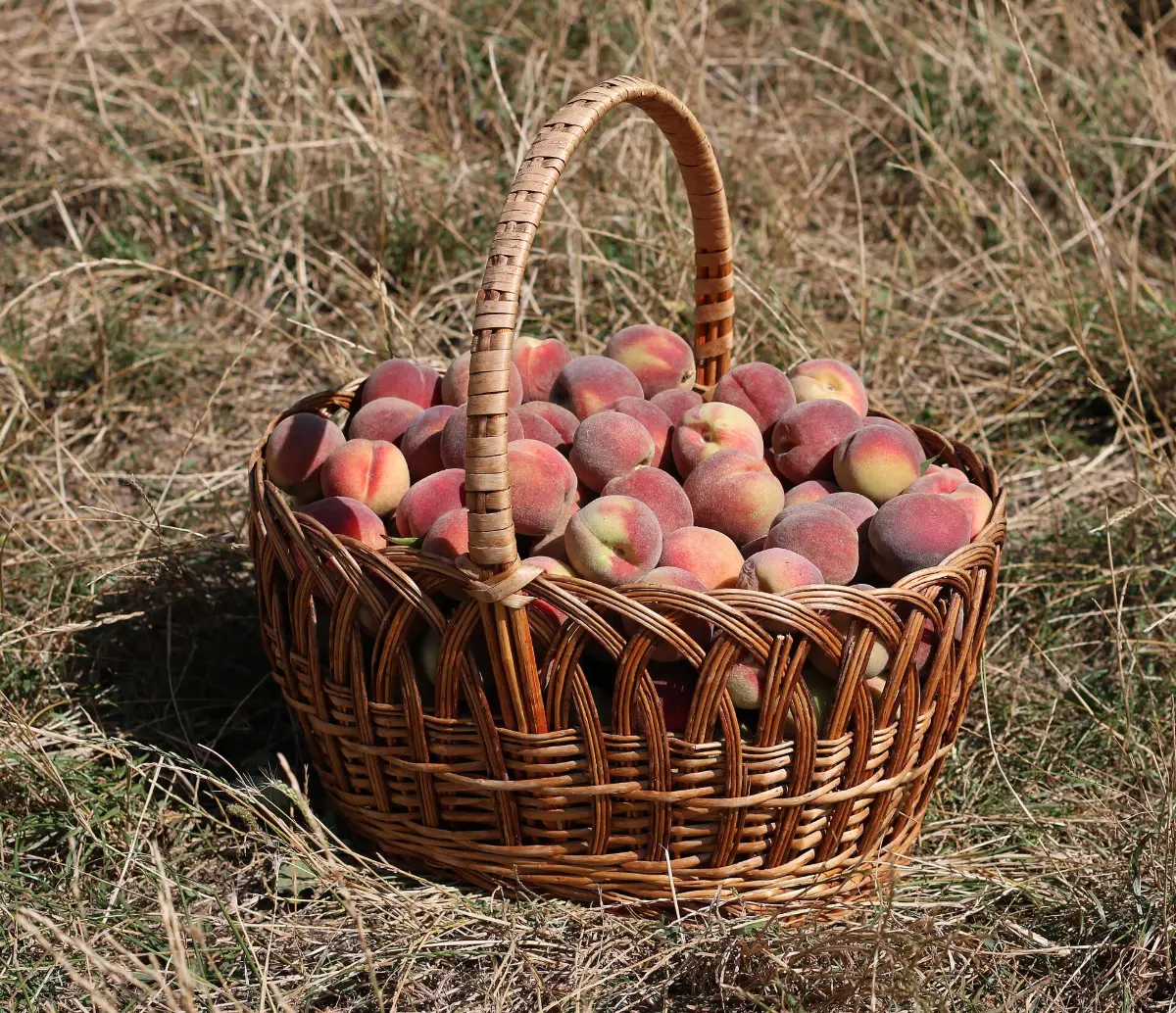
Once ripe, move peaches to the refrigerator crisper. They keep there in good condition for about five days. However, chilling unripe fruit causes chilling injury, so the flesh turns mealy and dry instead of juicy.
For long storage, freeze sliced peaches on a tray, then bag them. Also, toss the slices in fresh lemon juice first to prevent browning. Alternatively, canning and peach jam preserve a large harvest for winter.
Growing Peach Trees In Containers And Dwarf Forms
Fortunately, small yards and balconies can still grow peaches. Genetic dwarf varieties like Bonfire, El Dorado and Pix Zee reach only 4 to 6 feet. As a result, they suit a sunny patio or deck.
Choose a container of at least 15 to 20 gallons. It needs drainage holes and a quality potting mix. Then, water often, because pots dry out very fast. In hot weather, daily watering is normal.
Unlike a potted lemon tree, container peaches still need winter chill to bloom. However, potted roots freeze much faster. Therefore, shelter pots in an unheated garage during freezes. Also, fertilize lightly, because roots burn easily.
Common Peach Tree Mistakes To Avoid
Many first fruit tree crops fail for simple reasons. First, buyers pick a variety with the wrong chill hours. So, the tree blooms too early, too late or barely at all, and fruit never sets.
Another common mistake is skipping thinning out of kindness. However, leaving every fruit only produces small peaches and broken limbs. Similarly, over-fertilizing pushes leafy growth that shades fruit and invites aphids and other sap-feeding pests.
Finally, many gardeners prune at the wrong time. Heavy cuts in early winter leave wounds open to cytospora canker. Instead, wait until just before bloom, and always clean tools between trees to limit disease spread.
Month-By-Month Peach Tree Care Calendar
Peach care follows the seasons closely, from winter to autumn. So, a written care calendar keeps every task on time. Most jobs cluster around dormancy, bloom and harvest, with quieter months for planning in between.
The table below assumes zones 6 and 7. In warmer southern zones, shift each task two to four weeks earlier. Meanwhile, northern gardeners in zone 5 should push each task later by a similar margin.
Also, keep a simple garden journal each year. Note bloom dates, thinning dates and harvest dates for every tree. Over several seasons, those handy notes show your local timing far better than any general chart.
| Month | Tree Stage | Key Tasks |
|---|---|---|
| January | Dormant | Order trees, sharpen pruners, remove fruit mummies |
| February | Dormant | Plant bare-root trees; late winter leaf curl spray before bud swell |
| March | Bud swell to pink bud | Prune to an open center; first fertilizer feeding; frost cloth ready |
| April | Bloom and petal fall | Finish pruning by two weeks after petal fall; brown rot blossom spray in humid areas |
| May | Fruit set | Thin fruit to 6 to 8 inches apart at thumb size; watch for plum curculio |
| June | Fruit growth | Second feeding; deep weekly watering; pull water sprouts; early varieties ripen in the South |
| July | Ripening | Harvest midseason peaches; net against birds; remove rotting fruit; stop fertilizing |
| August | Late harvest | Pick late varieties; check trunk base for borer gum and frass |
| September | Post harvest | Clean up fallen fruit; treat borers if found; keep watering in drought |
| October | Leaf color | Rake leaves; deep soak before the ground freezes |
| November | Leaf drop | Copper or lime sulfur leaf curl spray right after leaves fall |
| December | Dormant | Wrap young trunks against sunscald; shield potted trees from hard freezes |
Peach Tree FAQs
How Long Does A Peach Tree Take To Bear Fruit?
Most nursery peach trees fruit within two to four years of planting. Dwarf trees often start a little sooner. Also, remove any fruit in year one, so the young tree builds roots and branches first.
Do You Need Two Peach Trees To Get Fruit?
No. Nearly all peach varieties are self-fertile, unlike most apple trees, so one tree sets fruit alone. Bees still improve pollination, though. Therefore, avoid spraying insecticides while the tree is in bloom to protect them.
Can You Grow A Peach Tree From A Pit?
Yes, but results vary. A tree grown from a seed may not match its parent, because pits come from cross-pollination. For a reliable, tasty crop, buy a grafted, named tree from a trusted nursery instead.
How Long Do Peach Trees Live?
Home peach trees usually produce well for 12 to 15 years. With good pruning and borer control, some trees last 20 years. However, yields decline as trees age, so plan a replacement tree in time.
Why Are My Peaches Small?
Small peaches usually come from skipped thinning, because too many fruits share limited energy. Water stress just before harvest also shrinks fruit. Similarly, heavy shade from poor pruning reduces both fruit size and sugar content.
What Is The Difference Between A Peach And A Nectarine Tree?
A nectarine is a peach with a single gene for smooth skin. Otherwise, both trees look nearly identical. Therefore, nectarines need the same zones, chill hours, pruning and thinning, though their skin bruises more easily.
Pingback: Plum Tree: How To Grow, Prune & Harvest Plums
Pingback: Apricot Tree: How To Grow, Protect And Harvest Apricots