Cherry Tree: How To Grow Sweet And Sour Cherries And Beat The Birds
On this page
- Cherry Tree Growing Guide For Home Gardens
- Sweet Vs Sour Cherries: Which Tree Should You Grow?
- Best Cherry Varieties For Home Gardens
- USDA Hardiness Zones And Chill Hours
- Pollination: Do You Need Two Cherry Trees?
- Rootstocks, Tree Size And Gisela 5
- Site, Soil And Planting
- Watering And Fertilizing Cherry Trees
- How To Prune A Cherry Tree
- Cherry Pests And Diseases
- How To Beat The Birds
- Harvest Timing, Yield And Years To Fruit
- Growing Cherry Trees In Containers
- Cherry Tree FAQs
Cherry Tree Growing Guide For Home Gardens
A cherry tree gives you two very different crops. Sweet cherries (Prunus avium) are for fresh eating, while sour cherries, also called tart cherries (Prunus cerasus), are hardier, self-fertile and made for pies. Pick the type that suits your climate first.
Most backyard trees need full sun, well-drained soil and the right chill hours for your area. Expect fruit in 3 to 5 years. After that, the real fight is with birds, so plan your harvest defense before the first cherries color.
This guide covers every step from choosing a variety to picking ripe fruit. You will learn about zones, pollination partners, dwarf rootstocks, pruning, pests and the bird netting setup that saves a harvest year after year.
Sweet Vs Sour Cherries: Which Tree Should You Grow?
A sweet cherry is the large, firm fruit sold in stores, like Bing and Rainier. Sweet cherry trees grow tall, often 20 to 30 feet on standard roots, and most need a second variety nearby to set fruit.
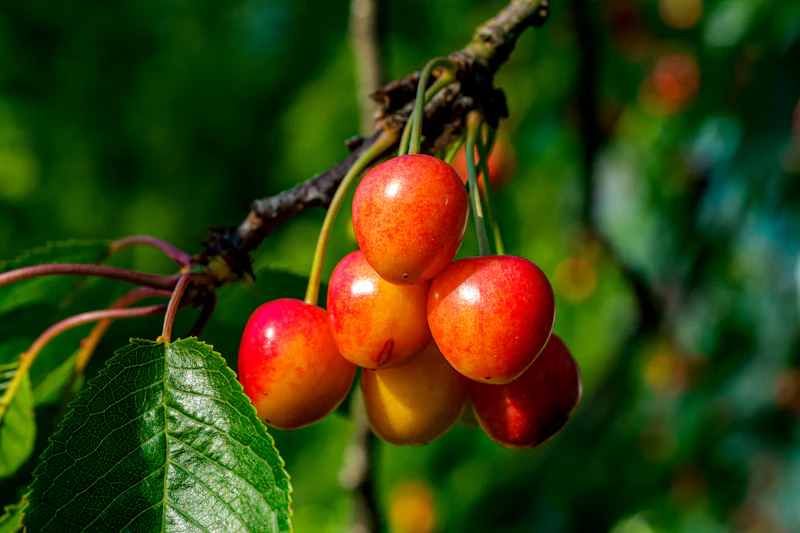
A sour cherry, or tart cherry, is smaller and softer, with bright acid flavor. It shines in pie cherries, preserves and jam. Tart trees are hardier, show better disease resistance and are almost always self-fertile.
Tree height matters too. Tart cherries usually stay at 12 to 20 feet, so they fit small yards. Also note that a flowering cherry, the ornamental type grown for spring blossom, produces little or no edible fruit.
Best Cherry Varieties For Home Gardens
Choosing the right cultivar solves half your problems in advance. Match zone, chill hours and pollination needs to your yard, then look at ripening season and crack resistance if your area gets June rain.
Bing is the classic dark red cherry, but it needs a partner and cracks in wet weather. Rainier has yellow skin with a red blush and a mild, sweet flavor. Stella and Lapins are self-fertile sweet types.
For tart fruit, Montmorency is the standard pie cherry in Michigan orchards. North Star and Meteor are compact and very cold-hardy. Carmine Jewel, a dwarf bush cherry, survives the coldest northern winters of all these choices. BlackGold and WhiteGold add late-frost tolerance, and Black Tartarian pollinates many others.
| Variety | Type | USDA Zones | Chill Hours | Pollination | Ripening Season |
|---|---|---|---|---|---|
| Bing | Sweet, dark red | 5 to 8 | 700 to 800 | Needs a partner (Stella, Lapins, Black Tartarian) | Mid-season, June |
| Rainier | Sweet, yellow skin with red blush | 5 to 8 | 700 to 800 | Needs a partner (Bing, Lapins, Stella) | Early to mid-season |
| Stella | Sweet, dark red | 5 to 8 | 400 to 700 | Self-fertile, universal pollinizer | Mid-season |
| Lapins | Sweet, dark red, good crack resistance | 5 to 9 | 400 to 500 | Self-fertile, universal pollinizer | Late season, July |
| Montmorency | Tart, bright red | 4 to 7 | 700 to 1,000 | Self-fertile | Late June to July |
| North Star | Tart, mahogany red | 4 to 8 | 800 to 1,000 | Self-fertile | Late June |
| Minnie Royal and Royal Lee | Sweet, low-chill | 7 to 9 | 200 to 400 | Plant both together | Early, May |
USDA Hardiness Zones And Chill Hours
Sweet cherries grow best in USDA hardiness zones 5 to 7, so zone 5 is about their cold limit and zone 7 their sweet spot. A few varieties push to zone 9. Tart cherries handle zone 4. Check your zone on the USDA Plant Hardiness Zone Map.
Chill hours are the hours a tree spends between 32 to 45°F during dormancy. Most cherries need 700 to 1,000 hours to bloom evenly. Without enough chill, flowering is weak and fruit set fails, regardless of how warm your summer is.
Winter temperatures are only part of the climate story. Cherries have an early bloom time, so a late frost can kill open flowers. That is why the Pacific Northwest and Michigan lead production. In warm areas, choose low-chill varieties instead.
Pollination: Do You Need Two Cherry Trees?
Most sweet cherries are self-sterile, also called self-unfruitful. Some, like Bing and Napoleon, are inter-sterile too, which means they cannot pollinate each other. You need a compatible variety with good bloom overlap for cross-pollination.
Tart cherries and a handful of sweet types are self-fertile, so one tree sets a full crop alone. Stella and Lapins work as a universal pollinizer for most sweet cherries. Plant the pollinator within about 50 feet.
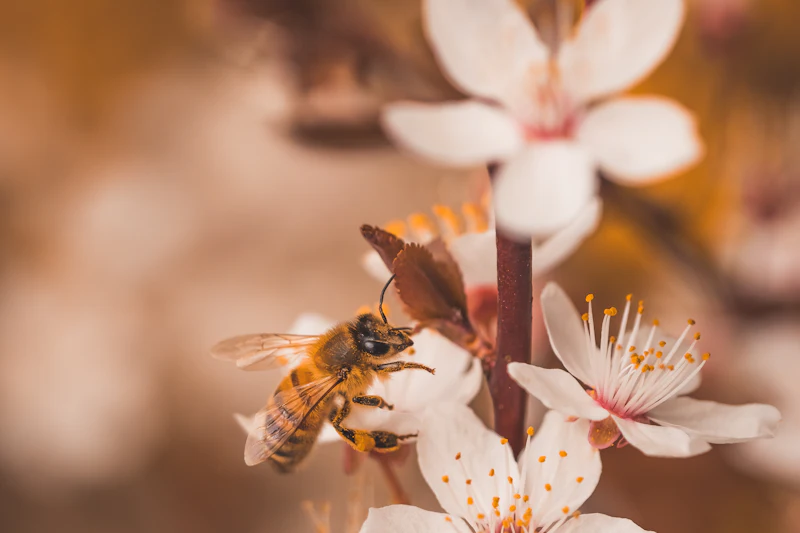
Honeybees and other bees do the work, so avoid spraying during bloom. Iowa State University Extension confirms that one sour tree is enough. The same planning applies when you pair partners for an apple tree.
Rootstocks, Tree Size And Gisela 5
Every nursery cherry is grafted onto a rootstock, and that rootstock sets mature height. Mazzard gives a vigorous standard tree of 25 feet or more. Mahaleb tolerates drier, alkaline soil and bears about a year earlier.
Gisela 5 is the go-to dwarf rootstock for home gardens. It keeps a sweet cherry near 8 to 12 feet and is precocious, so fruit often arrives in year 2 or 3. It does need permanent staking.
Gisela 6 and Krymsk rootstocks make a semi-dwarf tree of 12 to 18 feet. Plan spacing by size: 8 to 10 feet for dwarf trees, 15 to 20 feet for semi-dwarf and 30 to 40 feet for standard.
Site, Soil And Planting
Cherries need full sun, ideally 8 hours or more each day. Pick a gentle slope or high spot, not a frost pocket where cold air settles. Good airflow also helps keep leaves and fruit dry.
Drainage is the deal breaker. Cherry roots rot fast in waterlogged ground, so choose deep, well-drained soil such as loam with a soil pH 6.0 to 7.0. On heavy clay, build a raised bed or wide mound.
Plant bare-root trees in early spring while dormant, or container trees in spring or early fall. Dig a hole twice as wide as the roots and no deeper, keep the graft union about 2 inches above soil, water deeply, mulch 2 to 3 inches away from the trunk and stake dwarf trees on Gisela roots right away.
Watering And Fertilizing Cherry Trees
Give young trees about 1 inch per week during establishment, from rain or irrigation. Deep watering every 7 to 10 days beats daily sprinkles. Drip irrigation or a soaker hose keeps foliage dry and reduces disease.
Keep moisture steady as fruit ripens. A dry spell followed by heavy rain or overwatering causes fruit cracking. Mature trees in good soil need water only during long dry periods, but never let them stay soggy.
Cherries are a light feeder. Start with a soil test, then use compost or a small dose of 10-10-10 in early spring. If shoot growth tops 12 inches a year, skip nitrogen, since excess nitrogen delays fruiting.
How To Prune A Cherry Tree
Most tart cherries suit an open center, or vase shape, with three to five scaffold branches. Sweet cherries grow upright and do best with a central leader or modified central leader, which keeps a strong main trunk.
Timing matters more with cherries than with most fruit trees. Do dormant pruning in late winter, just before buds open, or summer pruning right after harvest. Never prune cherries in wet fall weather, because open cuts invite silver leaf and bacterial canker.
Remove water sprouts, suckers and crossing limbs first. Use thinning cuts to open the canopy and light heading cuts on young trees. Sterilize pruners between trees. Our pear tree guide covers similar central leader training.
Cherry Pests And Diseases
The cherry fruit fly (Rhagoletis) is the top insect pest. Adults lay eggs in ripening fruit, and maggots ruin the flesh. Hang yellow sticky traps in late May to see when flies arrive and time any spray.
Black cherry aphid curls new leaves, while plum curculio scars young fruit. Japanese beetles chew leaves in summer, and borers tunnel into weak trunks. Healthy, unstressed trees resist most of these pests far better.
Fungal disease is the bigger threat in humid areas. Good sanitation, airflow and a labeled fungicide at bloom stop most problems. Use this quick guide to spot and treat the most common issues.
| Problem | Signs | Fix |
|---|---|---|
| Black knot | Hard black swellings on twigs | Cut 6 to 8 inches below each knot in winter and destroy it |
| Brown rot (Monilinia) | Fuzzy gray mold on blossoms and fruit | Remove all mummies from the tree and ground |
| Cherry leaf spot | Purple spots, then yellow leaves dropping by midsummer | Rake and remove fallen leaves |
| Powdery mildew | White coating on young leaves | Improve airflow; worst on sweet cherries in dry, warm weather |
| Gummosis | Amber sap oozing from bark wounds | Check for canker, borers or stress and fix the cause |
| Fruit cracking | Splits after rain near harvest | Grow crack-resistant Lapins and keep watering even |
How To Beat The Birds
Robins, cedar waxwings and starlings can strip a tree in two days. They start feeding at the first color change, long before cherries taste ripe. That means your defense must be in place a week earlier.
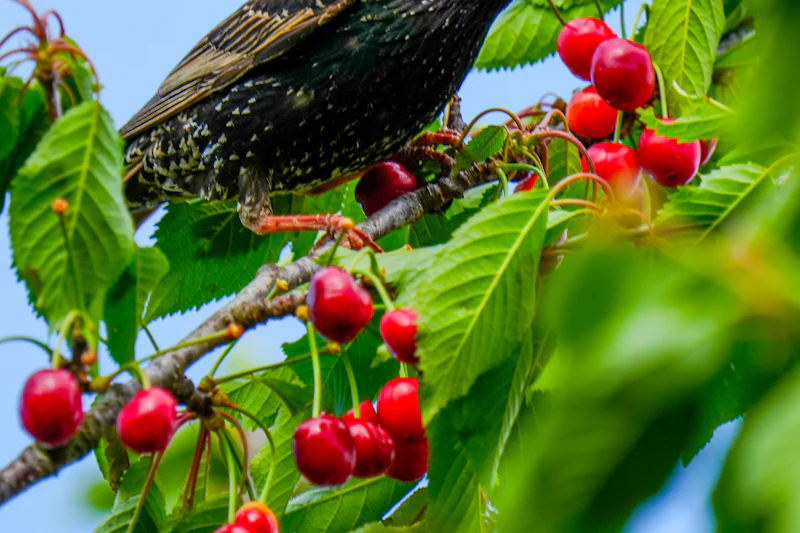
Bird netting is the only method that works reliably. Use a mesh size of 3/4 inch or smaller and drape it over a simple frame so birds cannot peck through. Seal the bottom around the trunk.
Growing a dwarf tree makes netting easy, which is a strong reason to pick Gisela 5. Combine the net with other tactics, and move scare devices every few days so birds do not get used to them.
| Method | How it works | Reliability |
|---|---|---|
| Bird netting on a frame | Physical barrier with 3/4 inch or smaller mesh | Most reliable |
| Reflective scare tape | Flashes and rattles in the wind | Good for the first week |
| Owl decoy or hawk kite | Mimics a predator; move it daily | Short term |
| Early-ripening varieties | Fruit ripens before wild fruit draws birds | Moderate |
| Sacrificial mulberry or serviceberry | Pulls birds away from your cherries | Moderate |
| Kestrel nest boxes | Small falcons hunt fruit-eating birds | Long term support |
Harvest Timing, Yield And Years To Fruit
Pick sweet cherries when they are fully colored, firm and glossy, with sweet flavor. Tart cherries are ready when soft, juicy and easy to pull. Most harvest falls in June and July, depending on variety.

Tart trees fruit in 3 to 5 years, while standard sweet trees can take longer. On Gisela 5, expect fruit in 2 to 3 years. A mature dwarf yields about 15 to 20 quarts, roughly 20 to 25 pounds, and a standard tree up to 50 quarts.
Pick with the stem attached to extend shelf life. Refrigerate right away at 32 to 35°F, unwashed, for up to a week. For long storage, try pitting the fruit before freezing, or measure your crop in gallons for canning.
Growing Cherry Trees In Containers
A cherry in a container works well on a patio or balcony. Choose a dwarf variety on Gisela 5, such as Stella, Lapins or North Star. These stay compact and fruit without a second tree.
Use a pot of at least 15 to 20 gallons, or a half barrel, with drainage holes. Fill it with quality potting mix, not garden soil. As with a potted lemon tree, check moisture often in summer.
Every 2 to 3 years, do some root pruning and repotting with fresh mix. Potted roots freeze faster than ground roots, so give winter protection by moving the tree to an unheated garage below 45°F. The citrus tree care rules for pot drainage apply here too.
Cherry Tree FAQs
Can You Grow A Cherry Tree From A Pit?
Yes, but stratify the pit in the fridge for about 10 weeks first. Seedlings take 7 to 10 years to fruit and rarely match the parent, so grafted nursery trees are a better choice.
Sow stratified pits 1 inch deep in spring in a small pot of seed mix and keep it evenly moist. Germination is often uneven, so sow several pits to get one strong seedling.
For reliable fruit, buy a grafted tree on a known rootstock. You get a named variety, a predictable size and fruit years sooner than with any seedling.
Are Cherry Tree Leaves And Pits Toxic?
Leaves, stems and crushed pits contain cyanogenic glycosides, which are toxic to pets and people in quantity. The fruit flesh is safe, so just keep wilted leaves away from dogs, cats and horses.
Wilted leaves are the most dangerous, because the toxin level rises as they dry. Clean up fallen branches after storms, especially near horse paddocks and pet runs.
Swallowing a whole pit by accident is rarely a problem for people. Crushing or chewing pits releases the compounds, so never grind them into food or smoothies.
How Far From The House Should I Plant A Cherry Tree?
Plant a standard tree at least 20 feet from the house and a dwarf tree at least 8 to 10 feet away. This protects foundations and gives room for netting and pruning.
Also keep trees away from septic lines and underground utilities. Call 811 before you dig so buried cables and pipes are marked on your property.
Leave open space around the canopy for airflow. Good circulation dries leaves after rain and cuts the risk of brown rot and cherry leaf spot.
How Long Does A Cherry Tree Live?
Sweet cherries often live 15 to 25 years in home gardens, while tart cherries commonly last 20 to 25 years. Good drainage, careful pruning timing and disease control add years to the lifespan.
Trees on Mazzard rootstock often outlive dwarf trees on Gisela 5. Standard trees can stay productive for 30 years or more with steady care.
Bacterial canker, borers and poor drainage shorten lifespan the most. Prune only in dry weather and keep mulch away from the trunk to protect the bark.
How Do I Stop Cherry Fruit Fly Without Heavy Spraying?
Hang yellow sticky traps by late May and spray an organic product such as spinosad only after flies appear. Pick up every dropped fruit so larvae cannot reach the soil and pupate.
Bird netting with fine mesh also blocks some flies when it is sealed at the trunk. Harvest every fruit at once so none are left hanging for the next generation.
Check traps twice a week through June. Spray only when you catch flies, and always follow the label for timing and days before harvest.
How Far Below Black Knot Should I Cut?
Cut 6 to 8 inches below the visible gall, into healthy wood, during late winter. Burn or bag the cut pieces, because black knot can still release spores from pruned branches.
Disinfect pruners between cuts with rubbing alcohol. This stops you from carrying spores to healthy wood as you move around the tree.
Remove wild plum and cherry trees nearby if they carry black knot. These hosts reinfect garden trees every spring if you leave them standing.
Pingback: Plum Tree: How To Grow, Prune & Harvest Plums
Pingback: Peach Tree: Grow, Thin & Harvest Sweet Peaches
Pingback: How To Prune Fruit Trees: When, Where And How Much
Pingback: Apricot Tree: How To Grow, Protect And Harvest Apricots - Grovoi