Pear Tree: How To Grow, Prune And Harvest Juicy Pears At Home
On this page
- Pear Tree Growing Guide For Home Gardens
- European Vs Asian Pear Trees
- Best Pear Varieties For Home Growers
- USDA Zones And Chill Hours
- Pollination Partners And Bloom Timing
- Rootstocks, Dwarf Trees And Containers
- Choosing The Best Site And Soil
- How To Plant A Pear Tree Step By Step
- Watering And Mulching Pear Trees
- Fertilizing Without Feeding Fire Blight
- Pruning With Central Leader Or Modified Leader
- Thinning Fruit For Bigger Pears
- Fire Blight, Pests And Common Diseases
- When And How To Harvest Pears
- Ripening And Storing Pears Indoors
- How Long Until A Pear Tree Bears Fruit
- Pear Tree FAQs
Pear Tree Growing Guide For Home Gardens
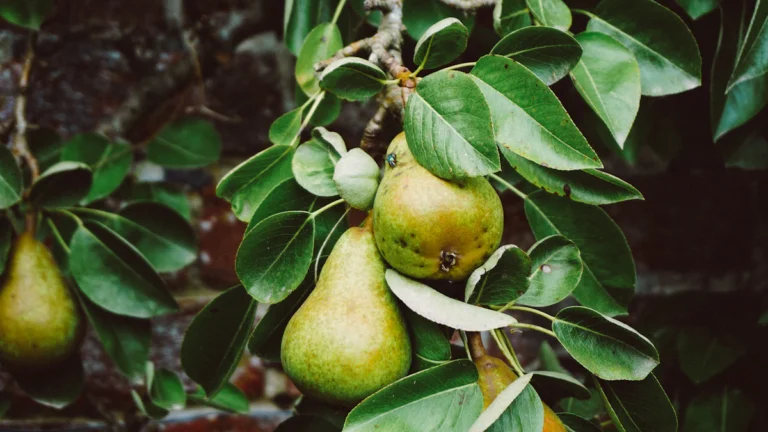
A pear tree is a long-lived deciduous member of the Rosaceae family, and its pome fruit forms from blossoms that open before apple flowers. Most home gardeners can harvest sweet pears with modest yearly effort.
Every species in the genus Pyrus needs the same basics: winter chill, a compatible pollen source, steady moisture and timely pruning. Learning how to grow pear tree varieties starts with matching them to your climate.
Good pear tree care is often simpler than apple care because pears face fewer insect pests. A single backyard tree, or a small home orchard of three trees, can supply fruit from August into winter.
European Vs Asian Pear Trees
The European pear, Pyrus communis, produces the classic bell-shaped fruit sold in stores. It develops a soft, buttery texture only when you pick it firm and let it ripen off the tree at room temperature.
The Asian pear, Pyrus pyrifolia, bears round fruit with crisp flesh that stays crunchy like an apple. Growers call it an apple pear or nashi, and its fruit must ripen on the tree before picking.
Asian types need fewer chill hours and often bear a year or two sooner. European types store longer and suit cooking better. Many gardeners plant one of each to stretch the season and compare flavors.
Best Pear Varieties For Home Growers
Bartlett is the most popular pear, turning yellow as it ripens, though fire blight attacks it readily. Bosc has russet skin, a long neck and dense flesh that holds its shape when baked or poached.
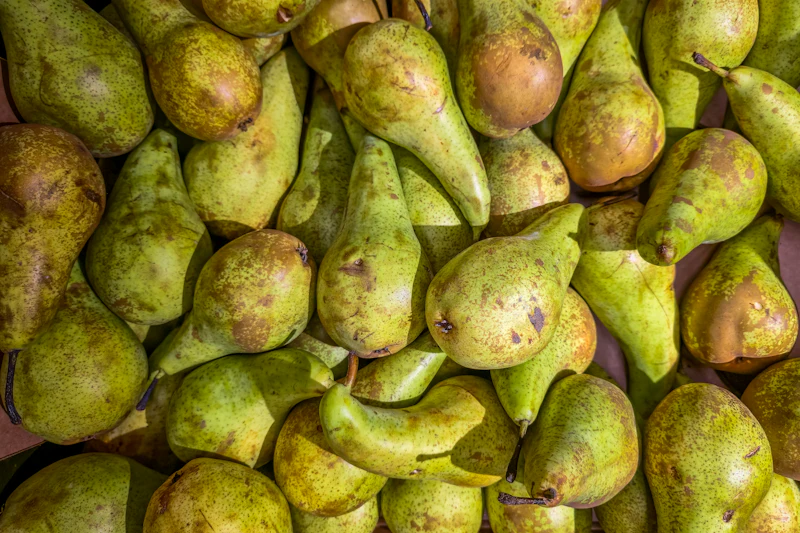
Anjou stores for months and comes in green and red forms. Seckel, the small sugar pear, resists fire blight fairly well. Comice is prized for dessert, while Kieffer is a tough, heat-tolerant hybrid for canning.
Reliable Asian choices include Hosui, with juicy golden-brown fruit, and Shinseiki, a smooth yellow pear. Chojuro has a rich butterscotch note, and Korean Giant produces large fruit that ripens late and stores well for months.
| Variety | Type | Flavor and texture | Best for |
|---|---|---|---|
| Bartlett | European | Sweet, juicy, turns yellow when ripe | Fresh eating, canning |
| Bosc | European | Dense flesh, russet skin, long neck | Baking and poaching |
| Anjou | European | Mild, sweet, green or red forms | Long storage |
| Seckel | European | Small, very sweet sugar pear | Fire blight tolerance |
| Comice | European | Rich, buttery dessert pear | Fresh dessert |
| Kieffer | Hybrid | Firm, coarse, heat tolerant | Canning in warm zones |
| Hosui | Asian | Juicy, golden-brown, crisp | Fresh eating |
| Korean Giant | Asian | Very large, crisp, late ripening | Storage |
USDA Zones And Chill Hours
Most European pears grow in USDA hardiness zones 4-8, and many Asian pears suit zones 5-9. Zone alone is not enough, because trees need a minimum number of chill hours every winter to bloom well.
Chill hours count the time spent between 32-45°F during dormancy. Most European pears need 600-900 hours, while some Asian pears need as few as 400. Warm Southern gardens should choose low-chill types such as Flordahome.
Cold Northern gardens in zones 3-4 can try varieties like Summercrisp, Ure and Patten. Pears bloom early, so a late frost can kill blossoms. Unlike an orange tree, a pear tree needs cold to fruit.
| Pear group | USDA zones | Chill hours | Example varieties |
|---|---|---|---|
| Most European pears | 4 to 8 | 600 to 900 | Bartlett, Bosc, Anjou |
| Asian pears | 5 to 9 | From about 400 | Hosui, Shinseiki, Chojuro |
| Low-chill pears | Warm Southern zones | Low | Flordahome, Kieffer |
| Cold-hardy pears | 3 to 4 | High | Summercrisp, Ure, Patten |
Pollination Partners And Bloom Timing
Most pears need cross-pollination from a different variety to set a full crop. Plant a second pollination partner within 50-100 feet, and check for bloom overlap, because both trees must flower during the same weeks.

Pear flowers produce a nectar that is low in sugar, so honeybees often prefer other blooms nearby. A strong pollinizer tree close by improves fruit set, especially during cool, windy springs when bees fly less.
Some pairs fail: Bartlett will not pollinate Seckel, and Magness has sterile pollen that fertilizes nothing. Certain types are partly self-fertile, yet even those yield more fruit with a compatible partner in the same yard.
Rootstocks, Dwarf Trees And Containers
The rootstock controls tree size, cold hardiness and disease tolerance. OHxF 333 gives a semi-dwarf tree about half to two-thirds normal height with fire blight resistance. OHxF 87 is another semi-dwarfing choice for home gardens.
A quince rootstock such as Quince A produces a true dwarf pear tree, but its shallow roots need staking. Bartlett and Bosc are incompatible with quince, so nurseries graft a compatible interstem between the two.
A standard tree on seedling roots can top 25 feet. Plant a dwarf in an 18-inch pot of potting mix with drainage holes. Keep the graft union above the soil, as with a lemon tree.
Choosing The Best Site And Soil
Pick a spot in full sun that receives at least 6-8 hours of direct light. Shade cuts flowering, slows fruit sugar development and leaves foliage damp, which raises the risk of fungal and bacterial disease.
Pears prefer well-drained soil such as a loam, yet they tolerate clay soil better than most fruit trees. Aim for a soil pH of 6.0-7.0, and run a soil test before planting to confirm levels.
Avoid low ground that forms a frost pocket, where cold air settles on spring nights and kills blossoms. A slope gives better air circulation, which dries leaves after rain and reduces fire blight and scab.
How To Plant A Pear Tree Step By Step
Plant bare-root trees in early spring while they are dormant, or plant container trees in spring or early fall. Soak bare roots in water for 2-4 hours before planting so they do not dry out.
Dig a planting hole twice as wide as the root ball but no deeper. Spread roots, set the graft union 2-3 inches above grade, and backfill with native soil. Water deeply to settle the soil.
Allow spacing: standard trees need 20-25 feet, and dwarfs need 8-12 feet. Drive a stake beside dwarf trees on weak roots. Make a heading cut on unbranched whips at 30-36 inches to encourage side branches.
Watering And Mulching Pear Trees
Young trees need deep watering every week during their first two seasons. Provide about 1 inch per week from rain or irrigation, soaking the soil 12-18 inches down instead of sprinkling the surface every day.
A drip irrigation line or soaker hose delivers water slowly to roots and keeps leaves dry. Established trees need water every 10-14 days in dry spells, because drought stress causes fruit drop and small pears.
Spread 2-4 inches of mulch such as wood chips in a 3-foot circle around the trunk. Keep mulch several inches from the bark. Avoid soggy soil, because standing water invites root rot and weakens trees.
Fertilizing Without Feeding Fire Blight
Pears need less nitrogen than most fruit trees. Too much feeding pushes soft, succulent growth that fire blight bacteria infect easily. Base your plan on annual growth and leaf color instead of a fixed schedule.
The University of Minnesota Extension advises feeding only when shoots grow less than 18 inches yearly. If growth is weak, apply compost or a balanced 10-10-10 product in early spring, before buds start to break.
An older rule of thumb uses one-eighth pound of ammonium nitrate per year of tree age, so watch growth before applying any. Pale yellow leaves suggest hunger, while long, whippy shoots signal too much nitrogen.
Pruning With Central Leader Or Modified Leader
Prune in late winter while trees are dormant. Like an apple tree, a young pear trains to a central leader: one upright trunk with tiers of side limbs. This shape lets sunlight reach lower branches.
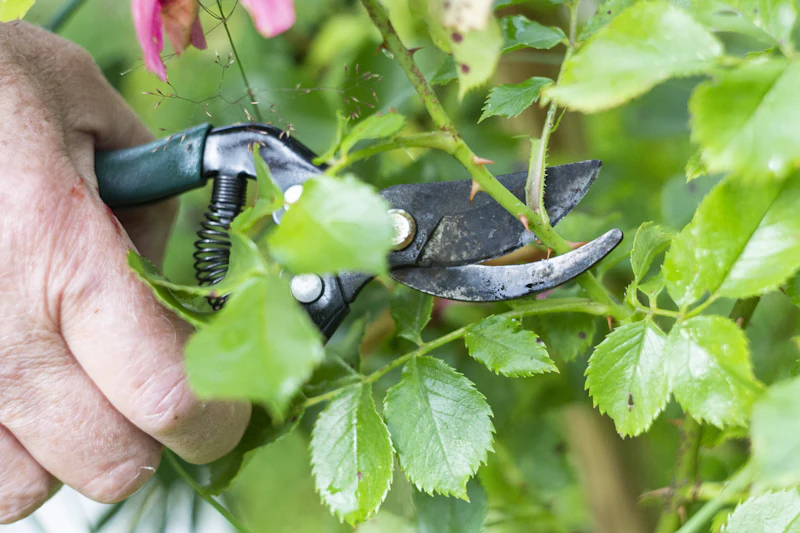
A modified central leader cuts the trunk at 8-10 feet to limit height. Choose 3-5 scaffold branches 12 inches apart. Pears grow upright, so use limb spreaders to widen each crotch angle to 45-60 degrees.
Remove water sprouts and suckers each year, and favor a thinning cut over a heading cut. Protect the fruiting spurs, which bear fruit for years. Small yards can train pears as an espalier against fences.
| Feature | Central leader | Modified central leader |
|---|---|---|
| Trunk | One upright leader kept full height | Leader cut back at 8 to 10 ft |
| Scaffold limbs | Tiers of side limbs | 3 to 5 limbs about 12 in apart |
| Crotch angle | Spread to 45 to 60 degrees | Spread to 45 to 60 degrees |
| Best for | Light to lower branches | Limiting height in small yards |
Thinning Fruit For Bigger Pears
Fruit thinning removes extra pears so the remaining fruit grows larger and sweeter. It also prevents branch breakage under heavy loads and reduces biennial bearing, where trees crop heavily one year and lightly the next.
Thin within 4-8 weeks after petal fall, while fruits are small. Leave one or two per fruit cluster on European trees. Asian pears need stricter thinning, to one fruit per cluster, for good fruit size.
Space the remaining fruit about 6 inches apart along each branch. Twist off the smallest, damaged or misshapen pears first. Thinning feels wasteful, yet the harvest weighs about the same and the fruit quality improves.
Fire Blight, Pests And Common Diseases
Fire blight, caused by the bacterium Erwinia amylovora, is the most serious pear disease. Infected shoots blacken and bend into a shepherd’s crook. Branches develop a sunken canker, and warm, wet weather brings bacterial ooze.
The University of Illinois Extension recommends cutting 6-8 inches below cankers in winter and 6-12 inches in summer. Disinfect pruners between cuts. Gardeners may apply streptomycin during bloom or a copper spray at green tip.
Pear psylla excretes honeydew that grows sooty mold. Treat with dormant oil or kaolin clay. Hang pheromone traps for codling moth. Pear rust spreads from juniper shrubs, and pear scab spots fruit in wet springs.
When And How To Harvest Pears
Pick European pears mature-green, while they are still hard. Watch for a lighter ground color under the green skin, and for lenticels, the tiny surface dots, that turn from white to brown on many varieties.
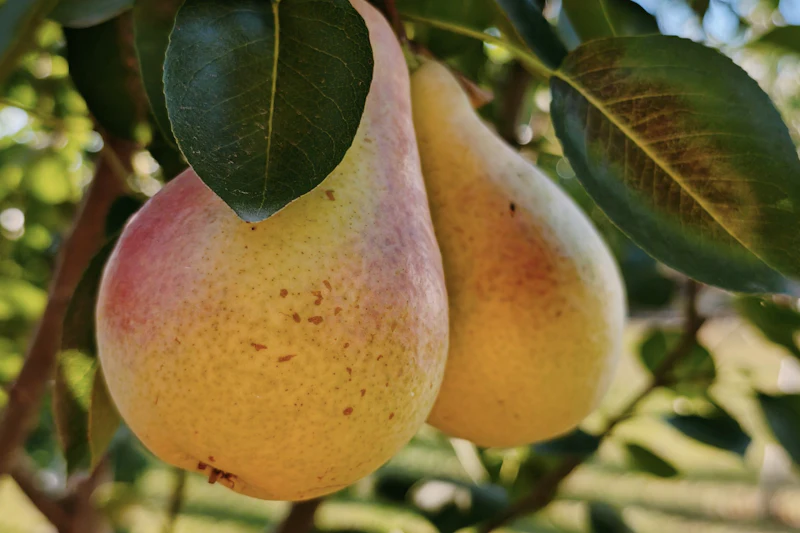
Use the lift-and-tilt test: raise the fruit level with its stem. A mature pear snaps off the spur. If it clings, wait several days. Growers confirm readiness with a pressure tester that measures flesh firmness.
Bartlett ripens first, around late summer, while Bosc, Anjou and Comice follow into fall. Asian pears are picked ripe, when they taste sweet. Check trees every few days, because each variety’s harvest window is short.
Ripening And Storing Pears Indoors
Many European pears need conditioning, a cold rest that triggers ripening. Bartlett needs little chilling, Bosc benefits from about two weeks, and Anjou and Comice ripen best after several weeks in cold storage before warming.
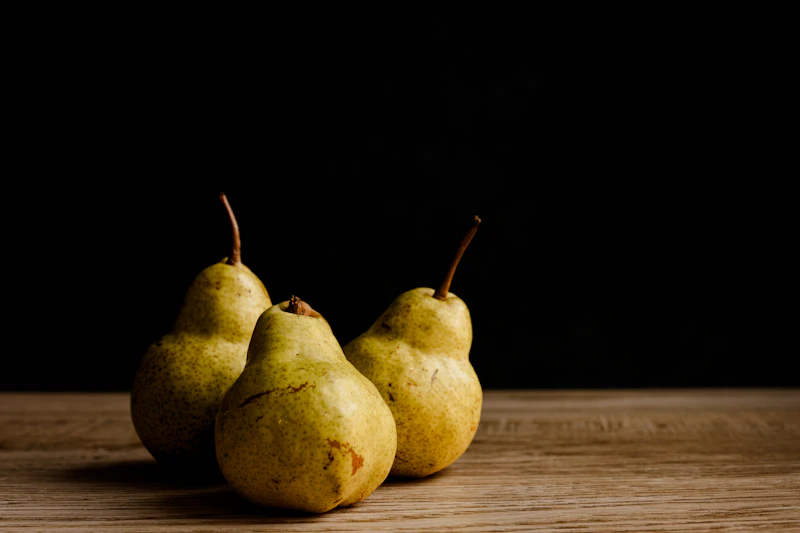
Ripen pears at room temperature, 65-75°F. They release ethylene, so a paper bag speeds ripening. Check the neck daily: when the flesh near the stem yields to thumb pressure, the pear is ready to eat.
For long storage life, hold pears at 30-32°F with relative humidity of 90-95%. At home, use a perforated bag in the refrigerator. Pears stored too warm or too long suffer core breakdown and turn brown.
How Long Until A Pear Tree Bears Fruit
The years to fruit depend mostly on rootstock. Dwarf trees usually crop in 3-5 years, while standard trees often take 4-8 years. Asian pears frequently bear a season or two earlier than European types do.
Every young tree passes through a juvenile period when it grows wood instead of flowers. Heavy pruning or excess feeding lengthens this stage. Your first crop may be a handful of pears, which is normal.
Yield rises as trees mature. A mature dwarf tree can produce 30-45 pounds per tree yearly, while standard trees may reach 150-200 pounds. Patient training in early years pays back with decades of steady harvests.
Pear Tree FAQs
Do You Need Two Pear Trees To Get Fruit?
Yes, most pear trees need a second compatible variety blooming at the same time to set a full crop. Plant both within about 50-100 feet so bees can carry pollen easily between the two trees.
A neighbor’s tree of a different variety can serve as your pollinator if it grows close enough. Flowering ornamental pears sometimes pollinate fruiting pears, though their bloom timing does not always match your fruiting variety.
With limited space, buy a multi-variety tree with three or four varieties grafted onto one trunk. You can also add a grafted branch of a pollinating variety to your existing pear tree for reliable cross-pollination.
Why Is My Pear Tree Not Producing Fruit?
The most common cause is a young tree that has not finished its juvenile stage. Other causes include missing pollination partners, frost damage to blossoms, and too little sunlight reaching the fruiting branches each day.
Excess nitrogen from lawn fertilizer or heavy feeding pushes leafy shoots instead of flower buds. Stop feeding nitrogen near the tree, and avoid fertilizing lawns within its root zone, which extends well beyond the canopy.
Over-pruning removes the fruiting spurs and triggers water sprouts instead of blossoms. Prune lightly, removing no more than about one-quarter of the canopy each year, and spread corrective work over two or three dormant seasons.
Why Are My Homegrown Pears Gritty Or Brown Inside?
Gritty texture usually means European pears were left to ripen on the tree. Tree-ripened fruit develops extra stone cells, called sclereids, which feel sandy, and the core turns brown and soft before the skin changes.
Brown, mushy centers also appear when fruit is overripe or held too long in storage. Pick European pears mature-green, chill them as their variety requires, and then ripen them at room temperature for best texture.
Some gritty texture is natural in Seckel, Kieffer and many Asian pears, which have more stone cells by nature. Thinning fruit, watering steadily and harvesting on time keep grit to a minimum in most varieties.
How Big Does A Pear Tree Get?
A standard pear on seedling roots reaches a mature height of 25-40 feet without pruning. Semi-dwarf trees on OHxF roots usually stay near 15-20 feet, while dwarf trees on quince roots stay around 8-12 feet.
The canopy spread is narrower than the height, because pears grow upright. Expect standard trees to spread about 15-25 feet and dwarf trees about 6-10 feet, depending on variety, rootstock, soil depth and training method.
You can set a pruning height of 10-12 feet for easy picking with a ladder. Remove the tallest limbs back to an outward side branch each winter, keeping the tree productive and easier to manage.
Can You Grow A Pear Tree From Seed?
Yes, but a seedling will not grow true to type, so its fruit may taste poor. Seeds combine genes from two parent trees, and the result rarely matches the variety you ate the fruit from.
Seeds need cold stratification for 60-90 days in moist sand in the refrigerator before they sprout. Plant them 1 inch deep in spring. Seedling pears often take 7-10 years before they flower and bear fruit.
For fruit you can count on, use grafting instead. Take a scion, a pencil-thick shoot from a named variety, and graft it onto a hardy rootstock in late winter. Most gardeners buy grafted nursery trees.
How Long Do Pear Trees Live?
Pear trees have a long lifespan compared with most fruit trees. Standard trees often live about 75 years, and trees can reach 100 years. Dwarf trees on quince roots live shorter lives than standard trees.
Most trees give many productive years when owners prune and thin them regularly. Yields drop as wood ages, shade builds up in the canopy, and old spurs become crowded, weak and less able to flower.
Neglected trees often respond to renovation pruning spread over three winters. Remove dead wood first, then open the center, then thin crowded spurs. This approach restores light and fruit without shocking the tree into sprouting.
Pingback: Peach Tree: Grow, Thin & Harvest Sweet Peaches
Pingback: Plum Tree: How To Grow, Prune & Harvest Plums
Pingback: Apricot Tree: How To Grow, Protect And Harvest Apricots
Pingback: Common Tree Diseases: How To Identify, Treat And Prevent Them - Grovoi