Apricot Tree: How To Grow, Protect And Harvest Apricots
On this page
- Apricot Tree Growing Guide For Home Gardens
- Apricot Climate, Hardiness And Chill Hours
- Why Spring Frost Is The Biggest Threat
- How To Protect Apricot Blossoms From Frost
- Best Apricot Varieties For Home Growers
- Choosing An Apricot Rootstock
- How To Plant An Apricot Tree
- Watering And Fertilizing Apricots
- Pruning An Apricot Tree To An Open Center
- Thinning Apricots For Bigger Fruit
- Apricot Pests And Diseases
- Harvesting And Storing Apricots
- Apricot Tree FAQs
Apricot Tree Growing Guide For Home Gardens
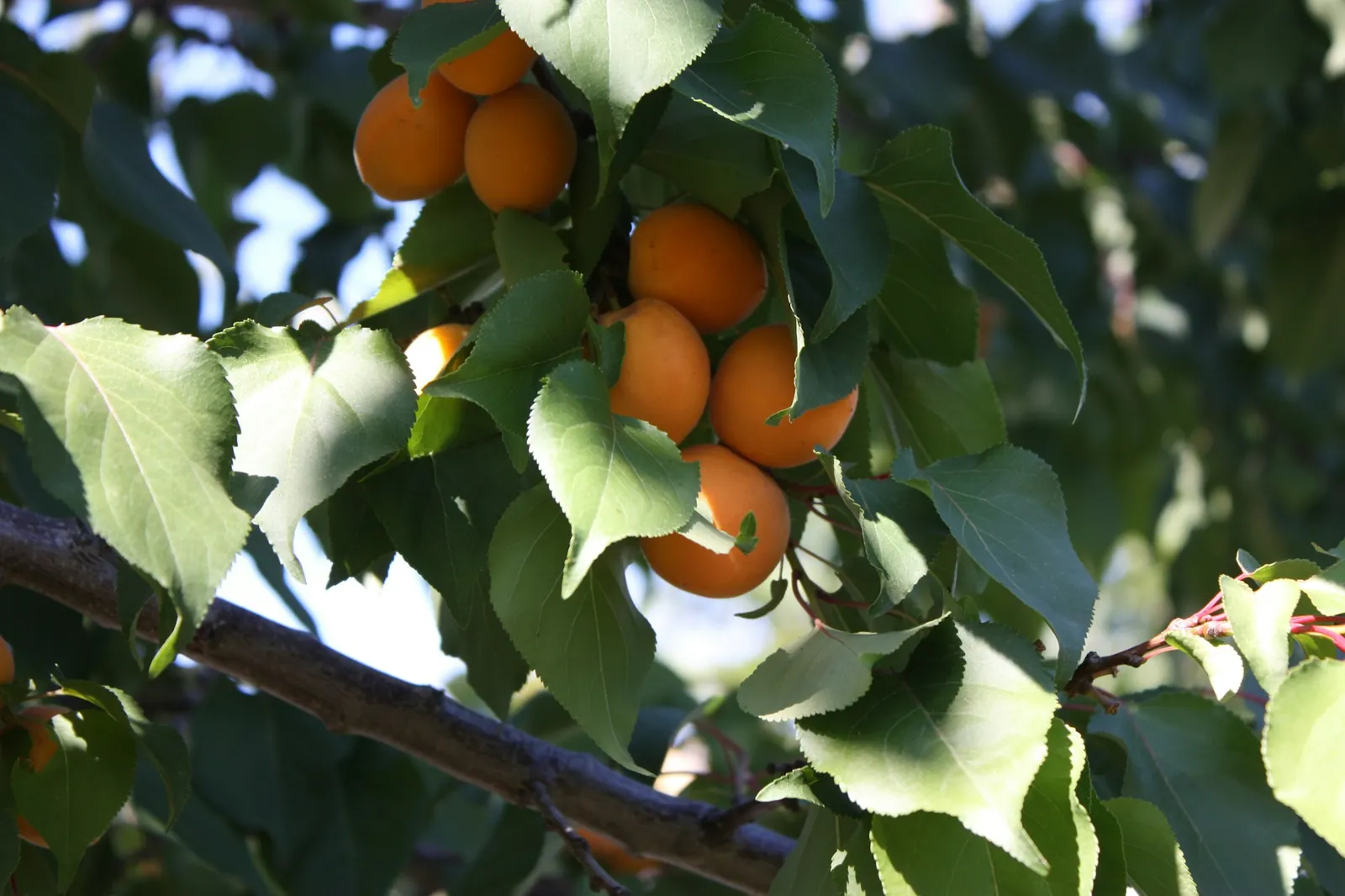
An apricot (Prunus armeniaca) is a deciduous stone fruit tree, a close cousin of the peach, plum, cherry and almond. It flowers on bare wood in late winter or early spring, then carries velvety orange fruit that ripens from late June into August, depending on the variety and your climate.
The tree is tough, but the flowers are not. Apricots bloom earlier than almost any other fruit tree, so one cold spring night can wipe out the year’s crop. That is why this guide spends as much time on protecting blossoms as on planting and pruning.
The guidance below draws on Utah State, UC IPM, UC Master Gardeners, NC State, New Mexico State, Colorado State, Iowa State, University of Minnesota and Ontario agriculture ministry sources.
Apricot Climate, Hardiness And Chill Hours
Apricots like cold winters, dry springs and warm, dry summers. Utah State University Extension rates them best in USDA zones 5 to 8, and NC State lists the species for zones 5a to 7b. Many common varieties survive zone 4 winters but fruit only now and then, because the blossoms freeze. In zone 3, you are limited to Manchurian and Siberian types, whose fruit is usually smaller.
Wet springs are the other problem. UC Master Gardeners in Marin County note that heavy spring rain means poor fruit set and more disease.
Chill Hours
Like peaches, apricots need a set amount of winter cold before their buds open normally. Standard varieties need roughly 600 to 900 hours below 45°F. Low-chill varieties such as Katy get by on about 350 hours, Blenheim needs about 400 to 500, and Moorpark needs about 600 to 700. A high-chill variety in a mild-winter area blooms weakly and sets little fruit.
How Often You Can Expect A Crop
Utah State reports that apricots fruit in only about 3 of every 5 years in Utah, and Iowa State expects a good crop about once every 3 or 4 years. Spring frost, not winter cold, is the reason.
Why Spring Frost Is The Biggest Threat
A mild week in late winter pushes apricot buds open, and an ordinary cold front then catches them exposed. Bloom comes in February and early March in coastal California, in March in New Mexico and about the third week of April in Minnesota.
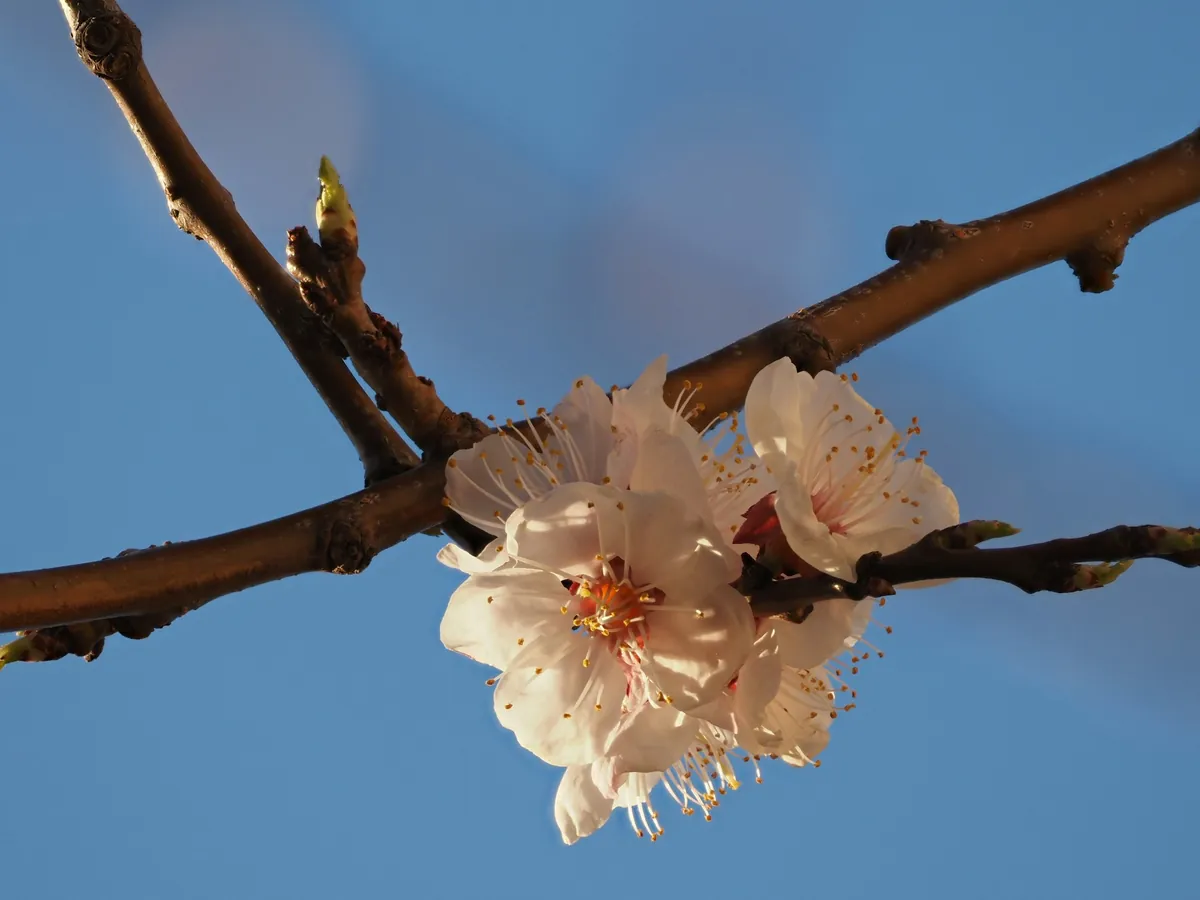
The further a bud develops, the less cold it can take. New Mexico State University publishes these critical temperatures for apricot, measured as the point where 10% and 90% of buds are damaged.
| Bud stage | What you see | 10% damage | 90% damage |
|---|---|---|---|
| Tip separation | Swollen bud, scales parting | 20°F | 0°F |
| First white | Petals just showing | 24°F | 14°F |
| First bloom | First flowers open | 25°F | 19°F |
| Full bloom | Most flowers open | 27°F | 22°F |
| In the shuck | Petals falling | 27°F | 24°F |
| Shuck split | Tiny green fruit | 28°F | 25°F |
The pattern is clear: once flowers open, a few degrees below freezing is enough to cost you most of the crop. To check for damage a day after a frost, slice a few flowers or tiny fruits across the middle. A green center is alive; a brown or black center is dead.
How To Protect Apricot Blossoms From Frost
Protection works in three layers: plant where cold air does not collect, choose a later-blooming variety and cover the tree on the nights that matter.
Pick The Right Spot
Cold air flows downhill and pools in low ground like water. NC State advises a sheltered spot away from low-lying frost pockets, and New Mexico State recommends a gentle slope that lets cold air drain away. Avoid hollows and spots boxed in by a solid fence.
Skip the warmest wall in the yard. A south-facing wall warms apricot buds early and invites earlier bloom. A site that stays cool in late winter but gets full summer sun tends to hold flowers back.
Choose A Later-Blooming Variety
Utah State names Goldrich and Harglow as the latest-blooming apricots it lists, with Chinese (also sold as Mormon), Moorpark and Tilton also blooming later than average. Colorado State suggests Goldcot and Moorpark for the Rocky Mountain region for the same reason.
Colorado State also suggests a thick layer of wood chips over the root zone, spread after the ground freezes in fall, to keep the soil cold longer and slow bloom slightly.
Cover Or Warm The Tree On Frost Nights
For a small tree, a cover is the most practical tool. Drape a frost blanket or tarp over the canopy in the evening, reaching the ground so it traps heat from the soil, and remove it in the morning.
The NMSU guide to fruit tree freeze and frost damage adds that strings of old-style 7-watt incandescent Christmas lights under a cover add useful warmth. LED lights do not, since they give off almost no heat. Overhead sprinklers work only with water running all night, which rules them out for most yards. No method saves flowers in a hard, windy freeze.
Best Apricot Varieties For Home Growers
Match a variety to your chill hours and spring weather first, then to flavor.
| Variety | Best for | Pollination | Bloom | Notes |
|---|---|---|---|---|
| Blenheim (Royal) | Mild-winter California | Self-fruitful | Very early | Classic flavor for fresh eating and drying; about 400 to 500 chill hours |
| Katy | Low-chill areas | Self-fruitful | Early | About 350 chill hours |
| Moorpark | Zones 5 to 8 | Self-fruitful | Later | Large, rich fruit; hardy in southern Iowa; 600 to 700 chill hours |
| Tilton | Inland and mountain West | Self-fruitful | Later | Winter-hardy; good fresh and for canning |
| Chinese (Mormon) | Cold, frost-prone sites | Self-fruitful | Late | Zone 4 hardy; early bearing, heavy crops |
| Goldcot | Midwest and Northeast | Self-fruitful | Later | Dependable and hardy; zone 4 to 5 |
| Harcot | Eastern growers | Self-fruitful | Mid to late | Early ripening with a red blush; bred in Ontario |
| Harglow | Frost-prone sites | Self-fruitful | Latest | Bright orange, firm and flavorful |
| Goldrich | Frost-prone sites | Needs a partner | Latest | Large fruit; resists winter injury; zone 5 |
Blenheim is the California classic, but Utah State does not recommend it there because it blooms very early and is not winter hardy. Moorpark and Tilton are safer inland, and the Harrow series from Ontario (Harcot, Harglow, Harlayne) suits eastern gardens.
Do Apricots Need A Pollinator?
Most apricots are self-fruitful, so one tree can set a crop. Utah State notes yields still improve with a second variety that blooms at the same time. A few varieties need a partner. Goldrich needs a pollinator other than Perfection, and Colorado State lists Perfection, Rival and Riland as needing another apricot. The University of Minnesota’s very hardy Moongold and Sungold are self-unfruitful and are meant to be planted together.
Choosing An Apricot Rootstock
Nursery apricots are grafted onto a separate rootstock, which sets the tree’s vigor, soil tolerance and resistance to some soil pests.
| Rootstock | Type | Strengths | Weak points |
|---|---|---|---|
| Apricot seedling | Apricot | Resists root lesion nematode; well matched to the variety | Needs good drainage |
| Peach seedling (Lovell, Nemaguard) | Peach | Vigorous; Nemaguard resists root-knot nematode | Sensitive to crown rot and crown gall; poor in heavy soil |
| Myrobalan | Plum | Handles a wide range of soils; 29C resists root-knot nematode | Variable bacterial canker resistance |
| Marianna 2624 | Plum hybrid | Tolerates wetter, heavier soil; resists root-knot nematode | Shallow rooted, suckers heavily, prone to bacterial canker |
| Citation | Peach and plum hybrid | Dwarfing, about 8 to 12 feet; tolerates wet soil | Can overcrop; keep fruit thinned |
With decent drainage, apricot or peach seedling stock is fine. Choose a plum-based stock for heavier ground, or Citation for a small tree that is easy to cover and net.
How To Plant An Apricot Tree
Plant bare-root trees in late winter or early spring while they are dormant.
Site And Soil
Choose full sun, good air movement and deep, well-drained soil. Utah State warns that apricots do not tolerate wet, heavy soils, which encourage root rot. Keep trees out of lawns. NC State suggests planting at least 10 feet from patios and pipes. Utah State spaces standard trees 18 to 22 feet apart; trees on dwarfing rootstock can go much closer.
Planting Steps
- For a potted tree, dig a hole twice as wide as the container and the same depth.
- For a bare-root tree, spread the roots in a hole slightly wider than they are and keep them moist while you work.
- Set the root flare just above the soil line, with the graft union 2 to 4 inches above ground.
- Backfill with native soil and water thoroughly to settle it around the roots.
- In windy sites, stake a bare-root tree for its first year only, then remove the stake.
Watering And Fertilizing Apricots
Water a new tree about twice a week through its first season, keeping the soil moist but never soggy. After that, Utah State suggests a deep watering about every two weeks, adding up to roughly 30 inches over the growing season, less if rain does part of the work. Drip lines keep leaves dry and limit disease.
Do not fertilize in the first year. After that, judge by growth. Utah State considers 10 to 20 inches of new shoot growth a year healthy for young trees and 8 to 10 inches for older ones. If growth falls short, apply ½ to 1 cup of 20-0-0 nitrogen fertilizer around the dripline of a tree under five years old, or 1 to 2 cups for an older tree, in spring.
In alkaline Western soils, apricots often show iron chlorosis: yellow leaves with green veins. Overwatering makes it worse. Deep, infrequent watering and a chelated iron product (EDDHA) are the usual fixes.
Pruning An Apricot Tree To An Open Center
Most home apricots are trained to an open center, also called an open vase, the same shape used for a peach tree. Light reaching the middle ripens fruit evenly and dries the canopy after rain.
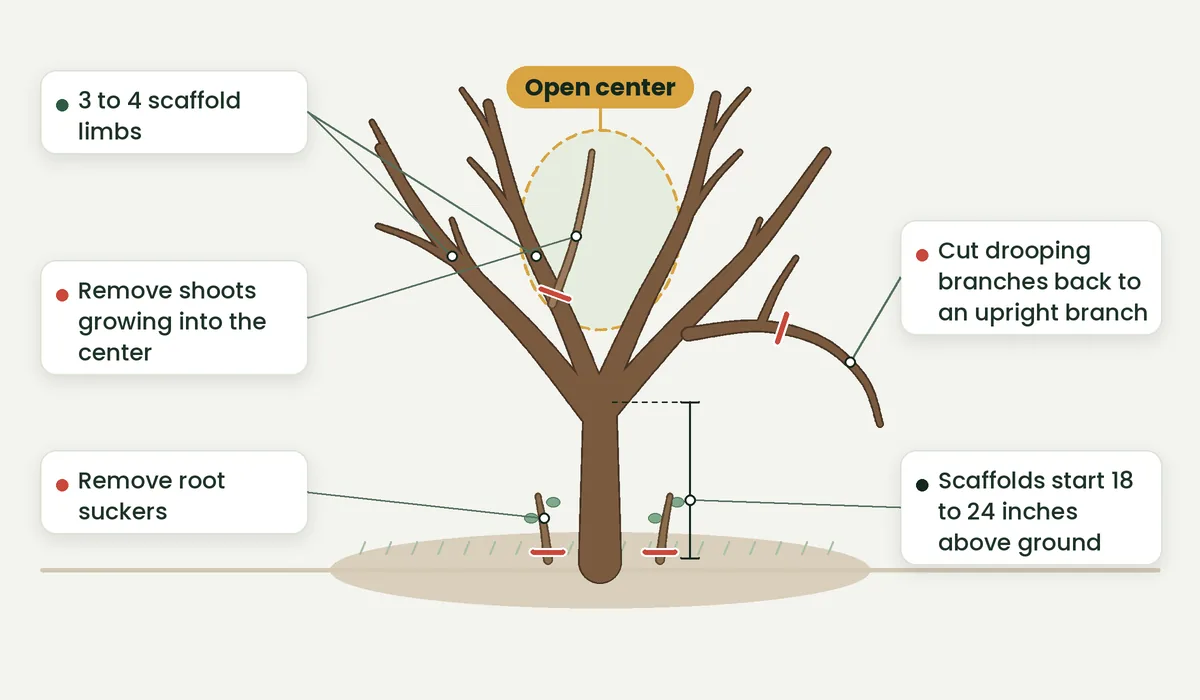
- At planting or in year one: choose three or four evenly spaced shoots arising 18 to 24 inches above the ground as scaffold limbs, and remove the central stem.
- Years two and three: keep the center open, remove shoots growing straight up into it, and cut out limbs that cross or rub.
- Mature trees: remove dead, diseased and damaged wood first, then thin out about a quarter of the branches to let in light.
- All season: pull or cut root suckers as they appear.
Apricots fruit on short spurs that stay productive for about 3 to 5 years, and on one-year-old wood. Prune moderately every year rather than hard every few years. When an older branch starts to droop, UC IPM recommends cutting it back to an upright side branch instead of simply shortening it. UC Master Gardeners suggest holding mature trees near 10 to 14 feet.
When To Prune Apricots
Pruning cuts let in two serious diseases, Eutypa dieback and bacterial canker, and both spread in wet weather.
In wet-winter climates such as California, UC IPM advises pruning in late August, which gives cuts about six weeks to close before winter rains arrive. In cold-winter regions, Utah State prunes in late winter and does not recommend fall pruning. Whichever season applies, prune during a dry spell with no rain in the forecast
Thinning Apricots For Bigger Fruit
Apricots routinely set far more fruit than they can size up. An overloaded tree gives small, bland fruit and risks broken limbs.
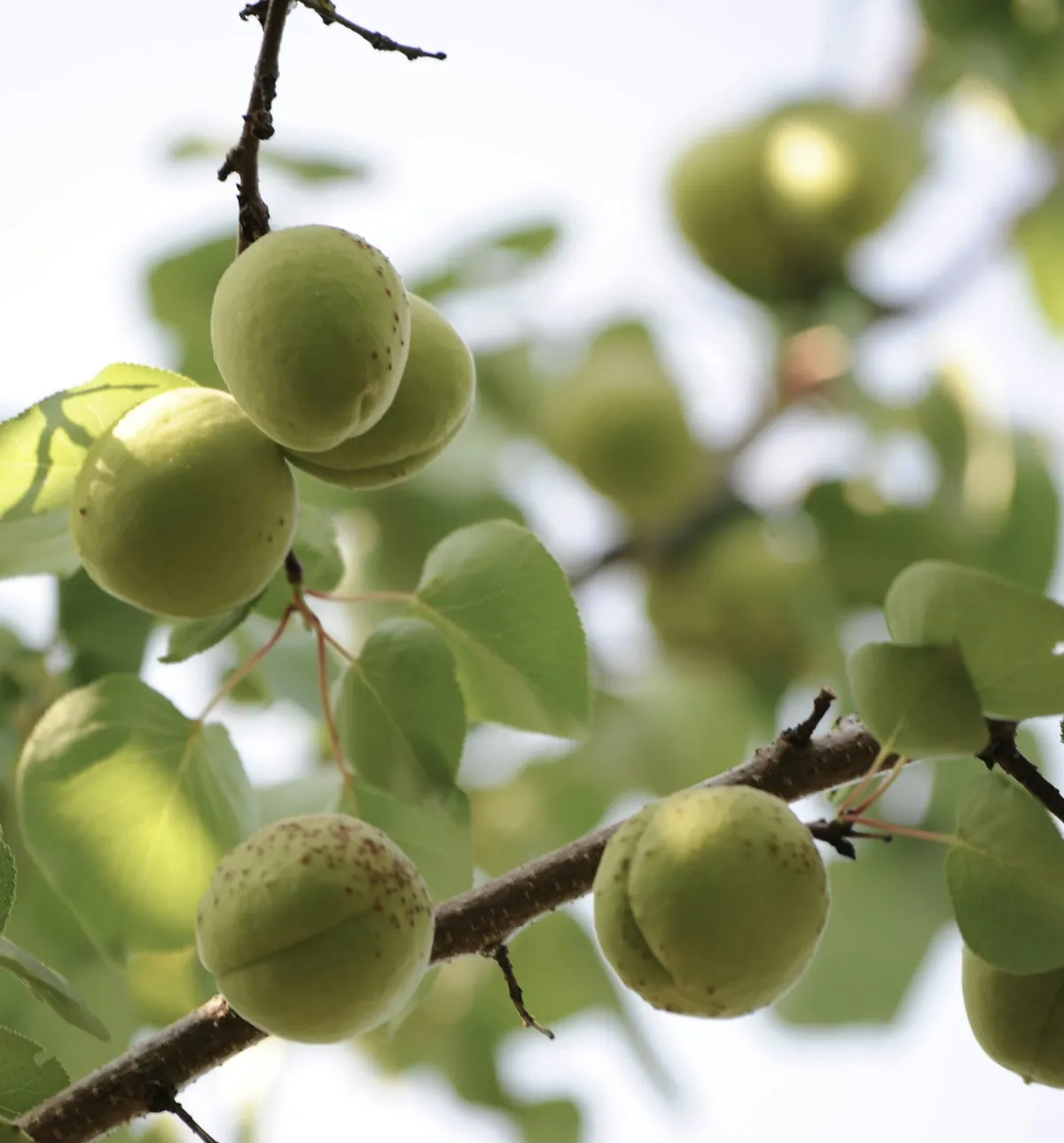
Thin by hand when the fruits are about grape-sized, roughly four to six weeks after full bloom. Utah State recommends leaving one fruit every 4 to 6 inches along the branch. Twist or snip off the smallest, damaged and doubled fruit first, and keep the biggest ones. The fruit you keep grows larger and sweeter.
Apricot Pests And Diseases
Most apricot problems are diseases favored by wet spring weather.
Brown Rot
Brown rot is the major apricot disease in humid and rainy areas. Blighted blossoms turn brown and cling to the twig, and ripening fruit develops spreading brown patches with gray or tan spore tufts. UC IPM advises removing every mummified fruit and blighted twig, keeping water off blossoms and fruit, and pruning for ventilation. Where it has been a problem before, a fungicide labeled for stone fruit at the pink bud stage, repeated as fruit colors in rainy weather, gives better control.
Bacterial Canker And Eutypa Dieback
Bacterial canker causes elongated, sunken cankers that ooze amber gum, along with blasted flowers and shoots that die back. It thrives in cold, wet springs and can kill young trees. Eutypa dieback shows up as a limb that suddenly wilts and dies in late spring or summer with its leaves still attached. For both, cut out affected wood during dry weather, well below the visible damage. Utah State suggests cutting about a foot below the last symptoms. UC IPM notes bactericide sprays have not given reliable control.
Shot Hole
Shot hole, also called Coryneum blight, starts as small purple-edged spots on leaves that fall out and leave holes. On fruit it causes rough, scabby spots with dark margins. Rake up fallen leaves, prune out infected twigs and, where the disease is severe, Utah State times protective sprays at petal fall and again at about 50% leaf drop in autumn.
Peach Twig Borer And Other Insects
Peach twig borer larvae tunnel into new shoots in spring, causing tips to wilt and die back a few inches, a symptom called flagging. UC IPM recommends a Bt spray at early bloom and again before petal fall, or spinosad at petal fall, sprayed in the late afternoon to protect bees.
Peachtree borers attack the trunk at or just below the soil line, leaving gummy sawdust at the base. Aphids, spider mites and San Jose scale also feed on apricots. Utah State recommends insecticidal soap, horticultural oil or neem for moderate aphid and mite outbreaks, and a horticultural oil spray at the delayed-dormant stage for scale.
Birds And Squirrels
Birds and squirrels often find ripe apricots first. Netting closed at the bottom is the most reliable defense on a small tree. Our cherry tree guide covers netting setups that work just as well for apricots. For general disease prevention, see our tree care guides.
Harvesting And Storing Apricots
Apricots ripen from late June in California to July and August in colder states. UC Master Gardeners put harvest about 100 to 120 days after full bloom.
Signs An Apricot Is Ripe
- Color: the green background color has turned fully yellow or orange, often with a red blush on the sunny side.
- Feel: the fruit gives slightly to gentle pressure.
- Release: it comes away easily with a slight twist.
- Taste: sweet and fragrant, not starchy.
Pick with a gentle twist rather than a pull. Utah State notes this avoids tearing the fruiting spur, which carries next year’s crop.
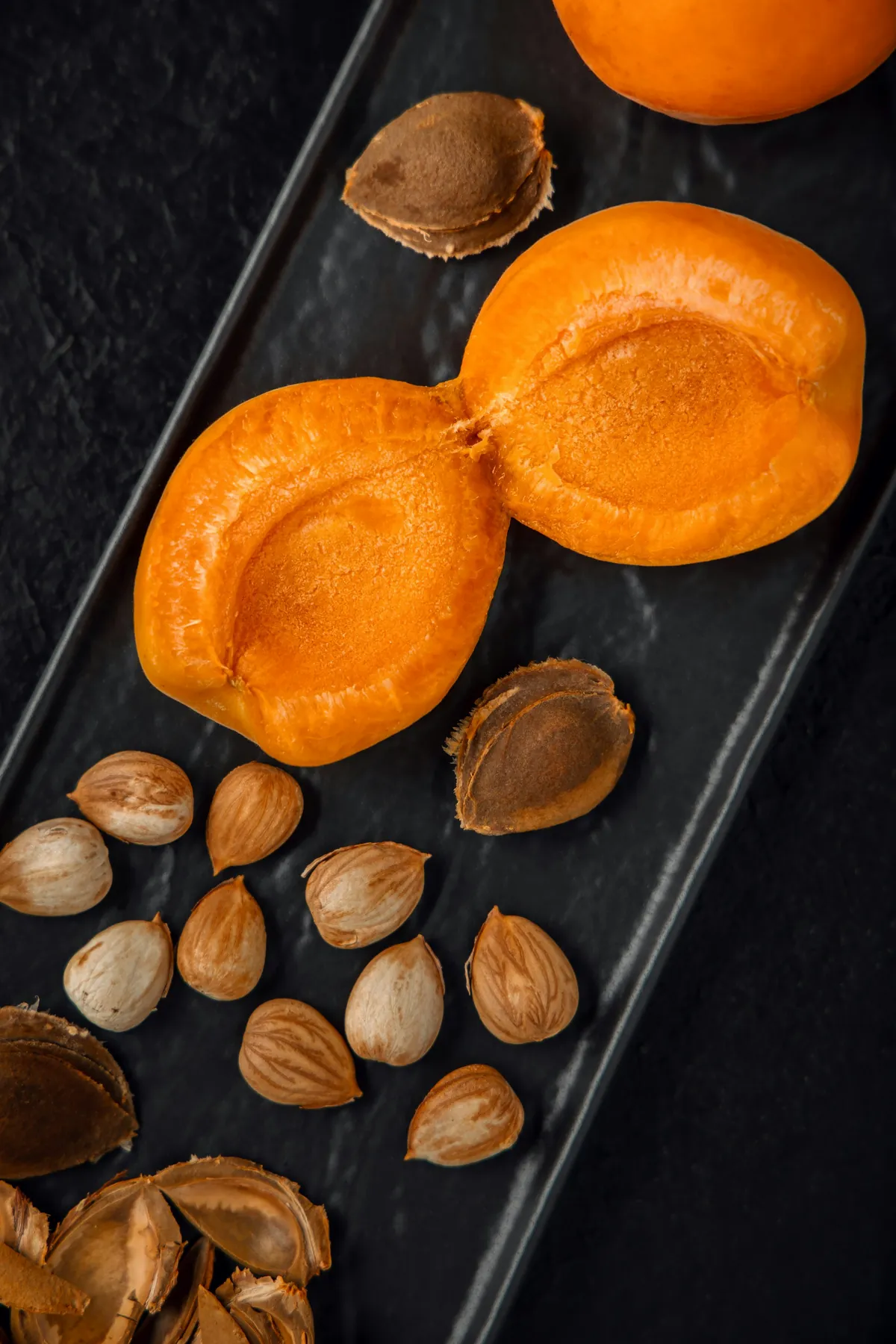
Apricots are delicate. Utah State advises ripening slightly underripe fruit at room temperature and refrigerating ripe fruit for 3 to 5 days. A healthy mature tree can produce around 3 to 4 bushels in a good year, so plan to dry, can or freeze the surplus. See the Utah State apricot home garden guide for more detail.
After harvest, pick up dropped fruit promptly. It feeds brown rot and draws wasps. Iowa State notes apricots are short-lived there, often 10 to 15 years.
Want another stone fruit for the same yard? A plum tree blooms later and crops more reliably in frosty areas, and a peach tree uses the same open-center pruning and thinning. If late frosts are a constant battle, a pear tree or an apple tree blooms later still. Or browse all our fruit trees.
Apricot Tree FAQs
How Long Does An Apricot Tree Take To Bear Fruit?
Most nursery apricot trees begin bearing worthwhile crops about 3 to 5 years after planting. Trees grown from a pit take longer and may not match the parent. In frost-prone areas, expect some years with no crop even on mature trees.
Do You Need Two Apricot Trees To Get Fruit?
No, most apricots are self-fruitful, so one tree can set a crop. A second variety blooming at the same time can raise yields. A few varieties do need a partner, including Goldrich, Perfection, Rival, Moongold and Sungold.
Why Is My Apricot Tree Not Producing Fruit?
The most common cause is spring frost killing the blossoms, since apricots bloom very early. Other causes include a tree that is still young, too few chill hours for the variety, a self-unfruitful variety with no partner, wet spring weather during bloom and heavy pruning that removed fruiting spurs.
How Cold Can Apricot Blossoms Get Before They Are Damaged?
At full bloom, about 10% of flowers are damaged at 27°F and about 90% at 22°F, according to New Mexico State University. Tightly closed, swelling buds are much hardier, while tiny green fruit just after bloom is the most tender stage.
When Is The Best Time To Prune An Apricot Tree?
In wet-winter climates such as California, prune in late August so cuts heal before winter rains spread Eutypa dieback. In cold-winter regions, prune in late winter. In either case, prune during dry weather and avoid fall pruning in cold areas.
How Do You Know When An Apricot Is Ripe?
A ripe apricot has lost all its green background color and turned fully yellow or orange, often with a red blush. It gives slightly when pressed, comes off with a gentle twist and tastes sweet. Pick every few days as the crop ripens unevenly.
Pingback: How To Prune Fruit Trees: When, Where And How Much