Pomegranate Tree: How To Grow, Care For And Harvest Pomegranates
On this page
- Pomegranate Tree Growing Guide For Home Gardens
- Pomegranate Climate, Cold Hardiness And Chill Hours
- Which Approach Fits Your Zone?
- Best Pomegranate Varieties For Home Growers
- Pomegranate Flowers And Pollination
- How To Plant A Pomegranate Tree
- Growing Pomegranates In Pots
- Watering And Fertilizing Pomegranates
- Pruning And Training A Pomegranate
- Why Pomegranates Split And How To Stop It
- Pomegranate Pests And Diseases
- Harvesting And Storing Pomegranates
- Pomegranate Tree FAQs
Pomegranate Tree Growing Guide For Home Gardens
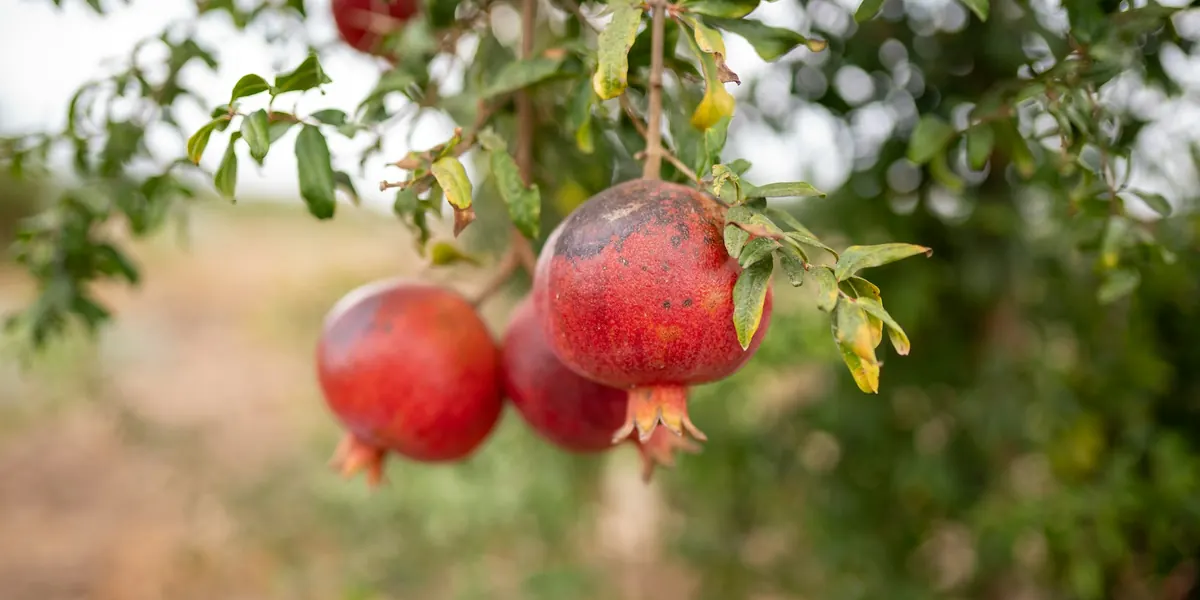
A pomegranate (Punica granatum) is a deciduous shrub or small tree that thrives on summer heat. It carries glossy leaves, ruffled orange-red flowers from late spring into summer, and leathery fruit packed with juicy seed sacs called arils. Left alone it grows as a suckering, multi-stemmed bush, but you can train it into a small tree.
Pomegranates handle drought, salt spray and poor soil better than most fruit trees. What they struggle with is hard winter cold, uneven watering in late summer and humid climates where flowers fail to set fruit.
The guidance below draws on Clemson, NC State, UF/IFAS, University of Georgia, Texas A&M, NMSU and University of California extension sources.
Pomegranate Climate, Cold Hardiness And Chill Hours
Pomegranates come from regions with long, hot, dry summers and cool winters. The University of Georgia notes that trees perform best with temperatures above 85°F for at least 120 days a year. NC State Extension lists the species for USDA zones 8 to 10, and University of Florida IFAS includes zone 7 for hardier plants. Look up your zone on the USDA Plant Hardiness Zone Map before you plant in the ground.
How Much Cold A Pomegranate Can Take
The University of Georgia reports that most cultivars are hardy to about 12°F, while the hardiest types survive down to about 7°F. Clemson and NC State both warn that temperatures below 10°F can kill a plant to the ground. Texas A&M adds that the weakest varieties may be damaged at 18°F.
Timing matters as much as the low. Bark is most easily injured in fall before the plant goes fully dormant and again at spring bud break, often on the south side of the trunk near the ground. A plant frozen to the ground usually regrows from the roots but loses a year or more of fruit.
Chill Hours And Summer Heat
Pomegranates need little winter chill compared with apples or peaches. Nursery data put Wonderful at about 150 chill hours and Parfianka at 100 to 200 hours. The University of Georgia notes that most varieties have no firm chill requirement, though all benefit from a dormant rest. Heat is the bigger limit: in cool-summer areas the fruit may not color or sweeten before frost.
Which Approach Fits Your Zone?
Use your winter low and your summer humidity to decide how to grow one.
| Your zone | Best approach | Varieties to try | Main risk |
|---|---|---|---|
| 6 and colder | Large pot, moved into an unheated garage or sunroom for winter | Russian 26, Salavatski, dwarf Nana | Root ball freezing, too little summer heat |
| 7 | In the ground against a south or west wall, mulched in winter | Russian 26, Salavatski, Russian 18 | Dieback in severe winters |
| 8 to 10, dry summers | In the ground, as a bush or small tree | Wonderful, Parfianka, Angel Red | Fruit splitting, leaffooted bugs |
| 8 to 10, humid summers | In the ground, in the sunniest, airiest spot | Salavatski, Al-Sirin-Nar, Kazake | Poor fruit set, leaf and fruit spots |
| 11 | In the ground or in pots | Low-chill types; test locally | Weak dormancy, humidity |
Best Pomegranate Varieties For Home Growers
Pick a variety for your winters first, then for flavor and seed texture. Hard-seeded types tend to be the most cold tolerant, according to both the University of Georgia and Texas A&M trials.
| Variety | Fruit | Seeds | Cold hardiness | Ripens |
|---|---|---|---|---|
| Wonderful | Large, purple-red, tangy | Firm | Low | September to October |
| Parfianka | Large, red, sweet with slight tartness | Soft | Medium | Late September to October |
| Angel Red | Red, juicy, sweet | Soft | Medium | Early September |
| Russian 26 | Red, sweet-tart | Medium to firm | High | Fall |
| Salavatski (Russian 8) | Large, red, mostly sweet | Medium to firm | High | Mid-October |
| Al-Sirin-Nar | Red, vigorous, heavy yields | Medium to firm | Not well tested | Late October |
| Nana (dwarf) | Small, mostly ornamental | Firm | Medium | Fall |
Wonderful is the main commercial variety in California, but Texas A&M rates its cold hardiness as insufficient, and the University of Georgia found it performs poorly there. Parfianka, bred by Dr. Gregory Levin and introduced through UC Davis, is a favorite for flavor and soft, edible seeds. Angel Red is a soft-seeded variety found as a chance seedling in Tulare County, California, and it ripens about a month before Wonderful.
For colder gardens, the Russian group is the safest bet. Clemson recommends the Russian series for South Carolina, and New Mexico State University cites reports of Russian 26 surviving about 5°F. University of Florida IFAS lists Wonderful, Al-sirin-nar, Kazake and Girkanets among varieties that perform well in Florida.
Pomegranate Flowers And Pollination
Pomegranates bloom from about April into June, and some plants keep flowering into fall. The University of Georgia notes that most fruit comes from the early spring bloom.
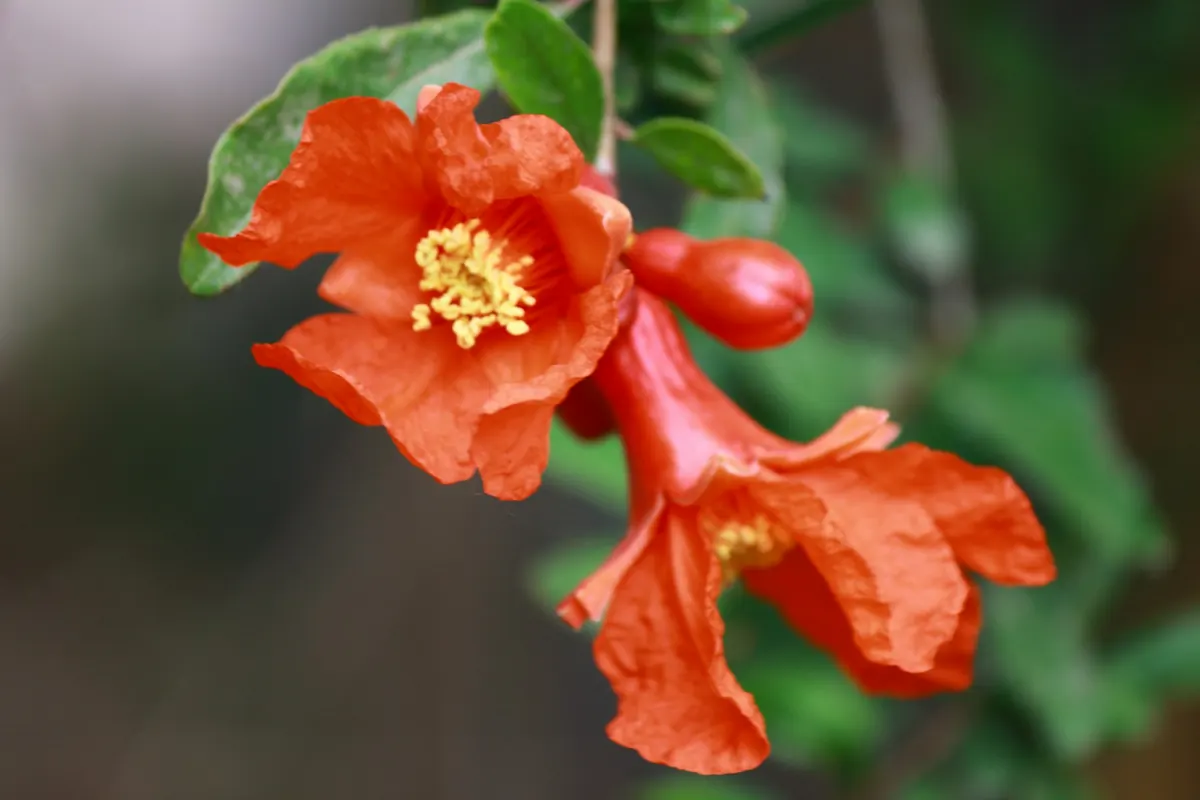
A tree carries two kinds of flowers. Fruit-bearing flowers have a rounded, bell-shaped base that swells into the fruit. Narrow, vase-shaped flowers are not fruit-bearing and drop off after blooming. Seeing many flowers fall is normal, as long as the bell-shaped ones stay on.
Pomegranates are self-fruitful, so one plant can crop alone. Bees, other insects and hummingbirds move the pollen. Clemson notes that a second plant is not required but increases the number of fruit. In humid parts of the Southeast, NC State Extension reports that fruit set is often unreliable because of poor pollination. Double-flowered ornamental types rarely fruit at all.
How To Plant A Pomegranate Tree
Plant bare-root pomegranates in late winter or early spring. Container plants can go in most of the year, though spring planting gives roots a full season before winter.
Site And Soil
Choose full sun. Pomegranates grow in clay, loam or sand and tolerate a wide pH range, but they need good drainage. On heavy or wet ground, the University of Georgia recommends a raised bed 6 to 12 inches high. In cold zones, plant beside a south- or west-facing wall that stores daytime heat. Texas A&M spaces plants 12 to 15 feet apart; a shrub hedge can be closer if you prune it every year.
Planting Steps
- Dig a hole as deep as the root ball and two to three times as wide.
- Loosen circling roots and set the plant at the same depth it grew in the nursery.
- Backfill with the native soil and firm it gently to remove air pockets.
- Water deeply, then spread 2 to 3 inches of mulch over the root zone, kept a few inches from the stems.
Growing Pomegranates In Pots
A pot lets you grow pomegranates in zone 6 and colder, where a plant in the ground would freeze back most winters. Dwarf Nana grows only about 3 feet tall, and standard varieties stay compact with regular pruning. UC Master Gardeners note that midsummer pruning can hold a pomegranate near 6 feet.
Use a large container with drainage holes and a well-drained potting mix. Keep the pot in full sun from spring to fall. Water deeply when the top 2 inches of mix are dry, and keep moisture steady in late summer while fruit sizes up.
In fall, let the plant drop its leaves outdoors, then move it into an unheated garage, shed or cool sunroom for winter dormancy. New Mexico State University advises watering dormant potted plants occasionally so the roots do not dry out. Move the pot back outside once hard freezes have passed.
Watering And Fertilizing Pomegranates
Water a new plant deeply once or twice a week through its first summer. Established pomegranates tolerate drought, but steady moisture is what produces large, unsplit fruit.
New Mexico State University suggests soaking the whole root zone, out past the dripline, to a depth of 2 to 3 feet. In hot, dry climates that means every 7 to 10 days when highs are above 90°F, every 2 to 3 weeks when days are above 70°F, and about once a month in winter. In rainy climates, water only during dry spells.
Pomegranates need only modest feeding. Clemson recommends fertilizing based on a soil test. As a guide, the University of Georgia suggests 1 ounce of 10-10-10 per foot of plant height, three times a year, rising to 8 ounces for an 8-foot plant. Avoid nitrogen in late summer and early fall, since it hurts fruit color and size and makes the plant more sensitive to cold. Potted plants need lighter, more frequent feeding during the growing season.
Pruning And Training A Pomegranate
Pomegranates naturally send up many suckers from the roots and crown. You can grow one as a multi-trunk bush or as a single-trunk tree. Clemson and the University of Georgia favor three to six trunks, because if one trunk is lost to cold or borers, the others keep bearing.
- Year one: let the plant grow without pruning so it builds roots.
- Year two: choose four to six strong, well-spaced shoots as the main framework and remove the rest.
- Every year: prune in late winter before bud break, thinning crowded inner shoots so light reaches the center.
- All season: remove root suckers as they appear, especially in midsummer.
Keep pruning light. Heavy cuts remove flowering shoots and reduce that season’s crop. The University of Georgia suggests holding trees near 9 feet for easy picking and supporting heavy branches so fruit does not rest on the ground. For general cuts and tools, see our tree care guides.
Why Pomegranates Split And How To Stop It
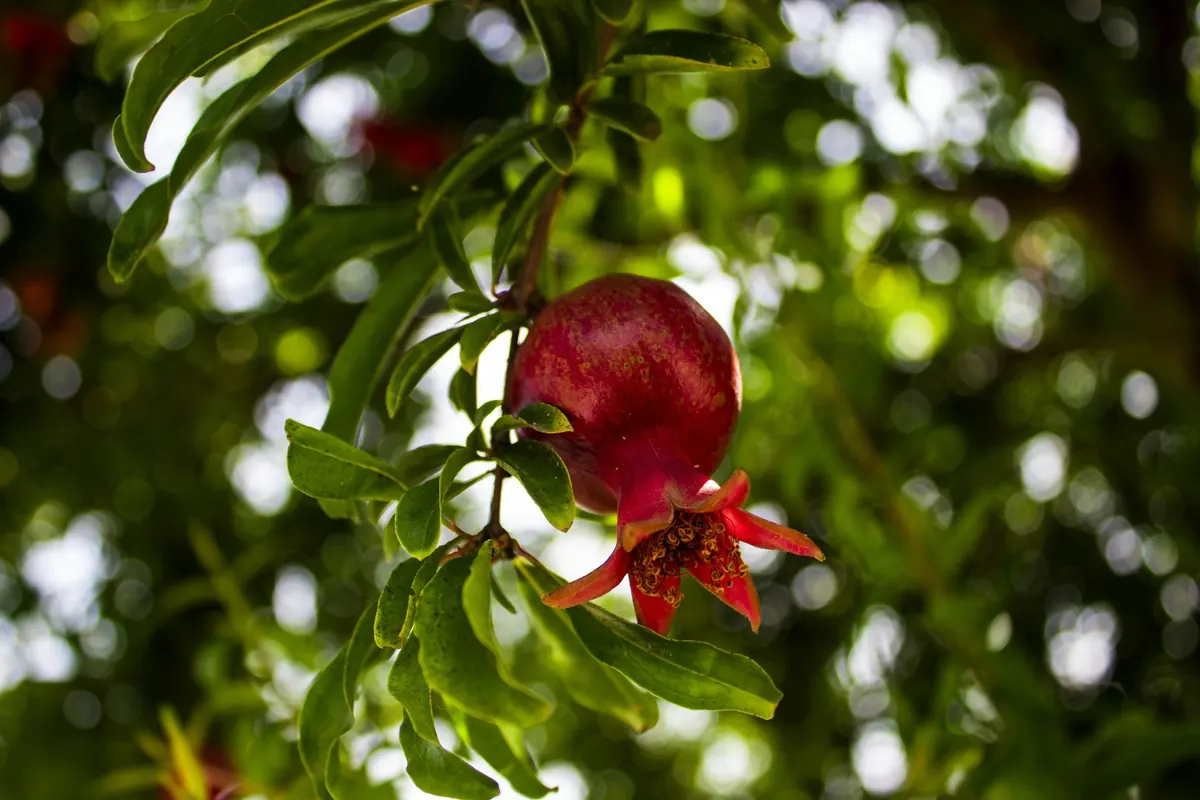
Fruit splitting is the most common complaint from home growers. The usual trigger is uneven water as fruit nears maturity. When a plant is dry for a while, the rind slows its growth and hardens. A sudden heavy rain or deep watering then swells the arils faster than the rind can stretch, and the fruit cracks open.
- Water on a steady schedule from midsummer to harvest, and mulch to even out soil moisture.
- After a missed watering, return to your normal amount. Do not overcompensate, since a stressed plant takes up water quickly.
- Avoid heavy watering in fall. The University of Georgia notes excess fall irrigation can add to splitting.
- Pick ripe fruit before forecast rain. University of California sources note that fruit often cracks with the first fall rains.
Young plants split more fruit than older ones. Strong sun can also scald the rind, which may lead to cracking; Texas A&M and the University of Georgia mention kaolin clay sprays as a sunburn shield. Eat or juice split fruit quickly, before mold or insects move in.
Pomegranate Pests And Diseases
In home gardens, pomegranates have fairly few problems.
Leaffooted Bugs
Leaffooted bugs are the main pomegranate pest across the South and West. Adults are about 3/4 to 1 inch long, gray to dark gray, with a flattened, leaf-like section on each hind leg; the common western species has a thin white zigzag line across its back. According to UC IPM’s pomegranate guidelines, numbers can build sharply from mid-August through harvest, with large clusters of nymphs on single fruit.
Their feeding is hard to see on the outside. Cut a damaged fruit open and you find brown spots on the inner rind, withered arils and sometimes soft, black rot. Split fruit attracts them most.
- Check fruit from mid-August, and hand-pick or knock bugs into a bucket of soapy water. Wear gloves, as they smell.
- Shake branches or spray with a strong hose stream and squash fallen bugs. Repeat about weekly.
- Remove every fruit from the tree after harvest, since split fruit left hanging is a favored overwintering site.
- Clear debris, weedy growth and woodpiles nearby, where adults overwinter.
UC Master Gardeners say insecticides are usually not warranted in home gardens unless an infestation is severe, and many products harm bees.
Other Insects
Aphids, whiteflies, mealybugs and scale feed on new shoots and leave sticky honeydew. Ants and fruit flies gather on overripe fruit left on the plant. A hose spray, insecticidal soap or winter dormant oil handles most outbreaks.
Leaf Spot, Fruit Rot And Root Rot
In humid climates, fungal leaf blotch and fruit spot cause dark spots and early leaf drop. University of Florida IFAS recommends a fungicide labeled for pomegranates where these are serious, along with pruning for airflow and clearing fallen leaves. Heart rot, also called black heart, makes the arils rot inside an outwardly normal fruit. Root rot occurs only in wet, poorly drained soil.
Harvesting And Storing Pomegranates
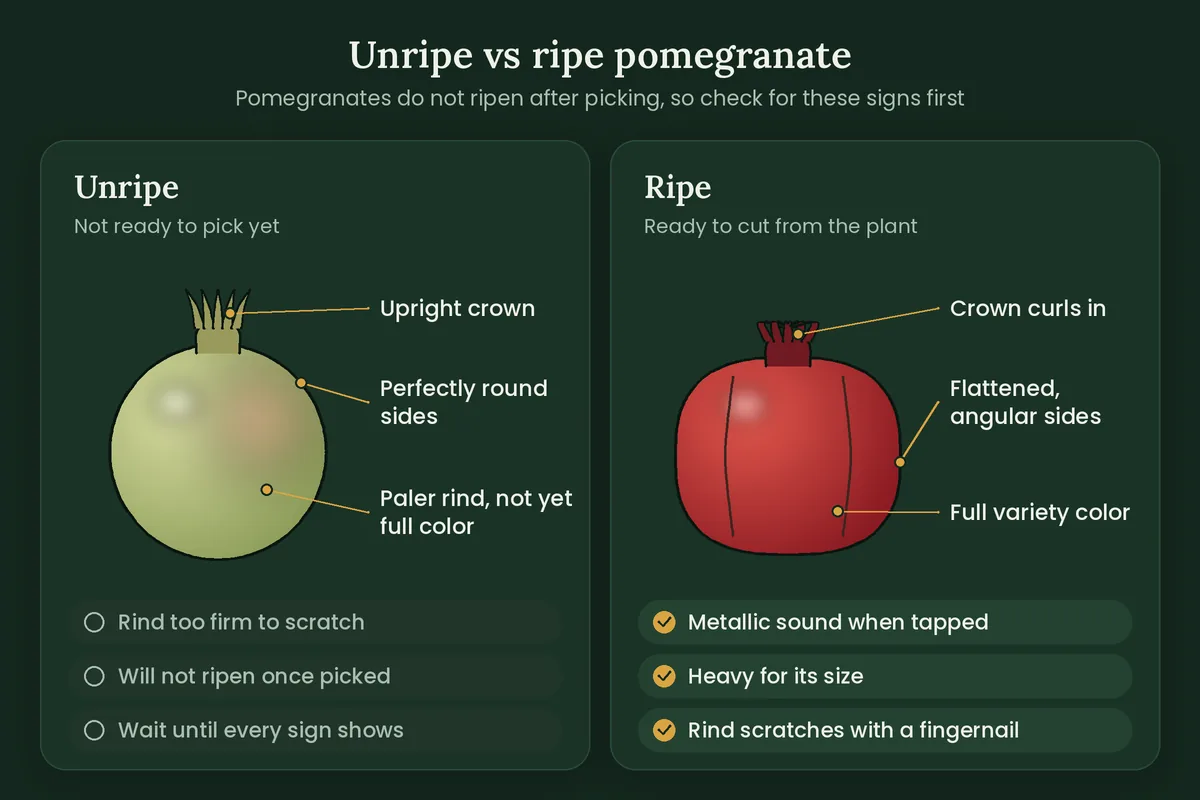
Pomegranates ripen from September into December, about six to seven months after flowering. Early varieties such as Angel Red come first, and late types like Al-Sirin-Nar finish near the end of October or later. Unlike many fruit, pomegranates do not continue ripening after picking, so leave them on the plant until they are fully ready.
Signs A Pomegranate Is Ripe
- Shape: unripe fruit is perfectly round; ripe fruit develops flatter, slightly angular sides as the arils swell.
- Color: the rind reaches the full red, pink or yellow-red typical of the variety.
- Sound: tapping a ripe fruit gives a metallic sound.
- Rind: it softens enough to scratch with a fingernail.
- Weight: ripe fruit feels heavy for its size.
Cut fruit off with hand pruners close to the base. Pulling can tear the branch, and a long stem can puncture other fruit.
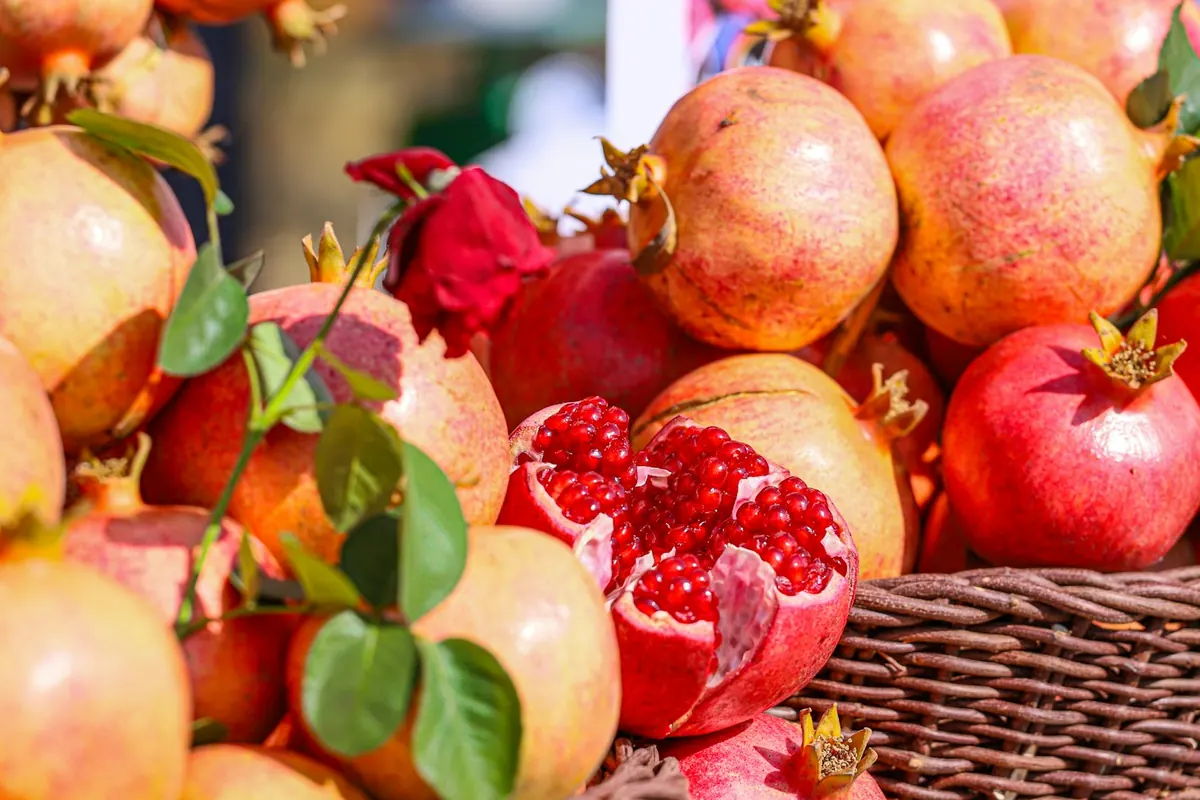
Whole, unsplit pomegranates store well. Texas A&M suggests about 40 to 45°F with high humidity for up to three months, and University of California sources note up to two months in a home refrigerator. Keep them out of near-freezing temperatures for long periods, since University of California research on Wonderful found chilling injury below about 41°F during long storage.
Want another heat-loving fruit for a sunny yard? A fig tree shares the pomegranate’s love of hot summers and grows well in a pot, and an olive tree suits the same dry, sunny spots. If you have more winter chill than heat, a peach tree may be the better choice. Our citrus tree care guide covers container watering in more depth, or browse all our fruit trees.
Pomegranate Tree FAQs
How Long Does A Pomegranate Tree Take To Bear Fruit?
Most nursery-grown pomegranates start bearing about 2 to 3 years after planting, and Texas A&M notes worthwhile crops around year four. Plants grown from seed take longer and may not match the parent. The first fruits are often small and may drop.
Do You Need Two Pomegranate Trees To Get Fruit?
No, pomegranates are self-fruitful, so a single plant can produce fruit. Bees and hummingbirds carry the pollen. A second plant nearby is not required, but Clemson Extension notes that cross-pollination increases the number of fruit.
What Is The Most Cold-Hardy Pomegranate?
The Russian varieties, such as Russian 26 and Salavatski (Russian 8), are among the most cold-hardy pomegranates. Russian 26 is reported to survive temperatures near 5°F. Most other cultivars are hardy only to about 12°F, and plants can die back to the ground below 10°F.
Why Are My Pomegranates Splitting On The Tree?
Pomegranates split when the arils swell faster than the rind can stretch, usually after a dry spell followed by heavy rain or deep watering. Water on a steady schedule from midsummer to harvest, mulch the root zone and pick ripe fruit before forecast rain.
Why Is My Pomegranate Tree Flowering But Not Fruiting?
Narrow, vase-shaped flowers naturally drop without forming fruit, so some flower loss is normal. If no fruit sets at all, the usual causes are too little sun, a young plant, heavy pruning, humid weather that hurts pollination or a double-flowered ornamental variety.
How Do You Know When A Pomegranate Is Ready To Pick?
A ripe pomegranate has its full variety color, slightly flattened sides, a rind you can scratch with a fingernail and a metallic sound when tapped. It also feels heavy for its size. Pomegranates do not ripen after picking, so wait for these signs.
Pingback: Persimmon Tree: Grow American And Asian Persimmons
Pingback: Crepe Myrtle: How To Plant, Prune And Get Bigger Blooms - Grovoi
Pingback: Date Palm Tree: How To Grow, Pollinate And Harvest Dates - Grovoi