Best Trees For Small Yards: 20 Compact Picks For Shade, Flowers And Fruit
On this page
A small yard does not have to mean no trees. It means choosing trees that stay in scale: ones that top out around 10 to 30 feet, keep their roots in check, and give you something back, whether that is spring flowers, cooling shade, fall color, or fruit.
This list covers 20 compact trees that suit city lots, townhouse gardens, and tight side yards across the United States. Each pick includes its mature height, USDA hardiness zones, and the reason it earns a place in a small space. Sizes are typical for garden conditions and come from university extension and arboretum plant profiles. Individual trees and cultivars can vary, so always check the nursery tag.
How To Choose A Tree For A Small Yard
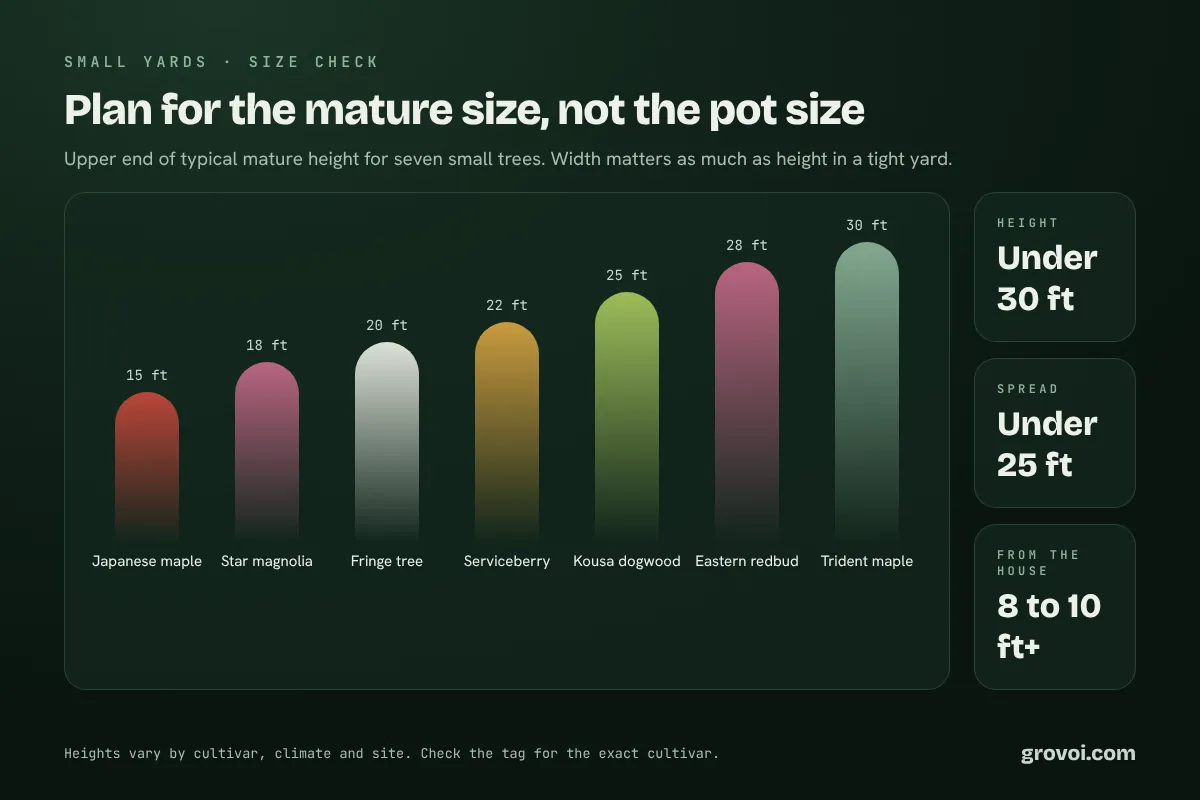
A tree that fits on day one may not fit in fifteen years. Plan for the mature size, not the size in the pot.
Height And Spread
For most small yards, look for a mature height under 30 feet and a spread under 25 feet. Width matters as much as height. A tree that grows 20 feet tall and 35 feet wide will shade the whole yard and crowd the house. Upright or narrow forms fit beside driveways and along fences.
Root Behavior
Every tree has roots that spread wider than its canopy, but some are gentler than others. The trees on this list are not known for aggressive surface roots. Still, plant medium trees at least 8 to 10 feet from foundations, and keep any tree away from septic fields and old clay sewer lines.
Seasons Of Interest
In a small yard you see every tree up close, every day. Favor trees with more than one feature, such as spring flowers followed by fall color, or peeling bark that looks good in winter.
Mess And Maintenance
Fruit trees give a harvest but also drop fruit. Some flowering trees shed petals onto patios. Think about what sits under the canopy: a deck, a car, or a lawn.
Small Flowering Trees
These ten trees are grown first for their blooms. Several also offer berries, fall color, or striking bark.
1. Eastern Redbud
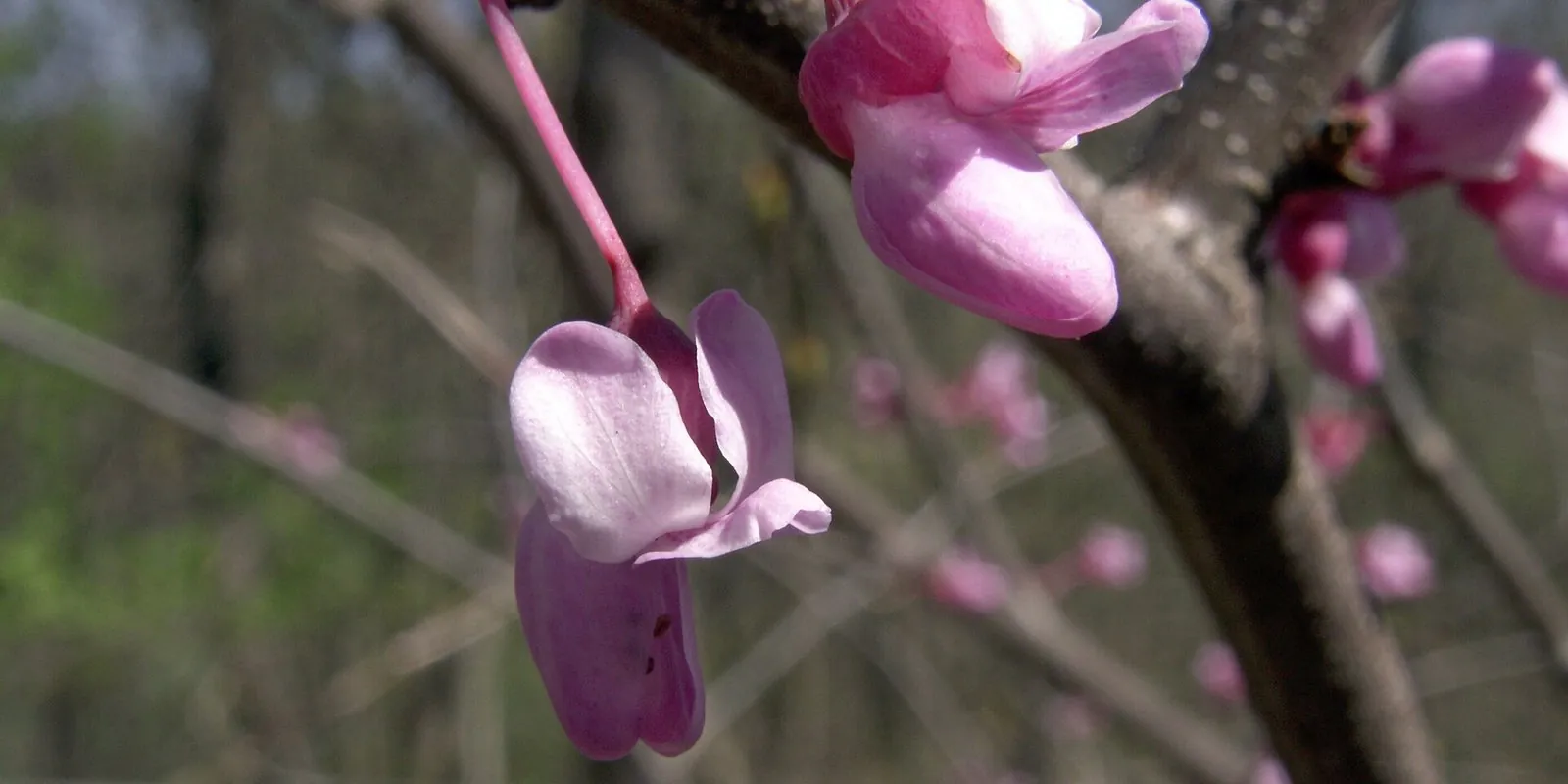
Eastern redbud (Cercis canadensis) is a native tree that covers its bare branches in small magenta pink flowers in early spring. Heart shaped leaves follow and turn yellow in fall. It grows 20 to 30 feet tall and often a little wider, in zones 4 to 9. Weeping and purple leaved cultivars stay smaller. Redbud handles part shade and is one of the best native trees for pollinators in early spring.
2. Kousa Dogwood
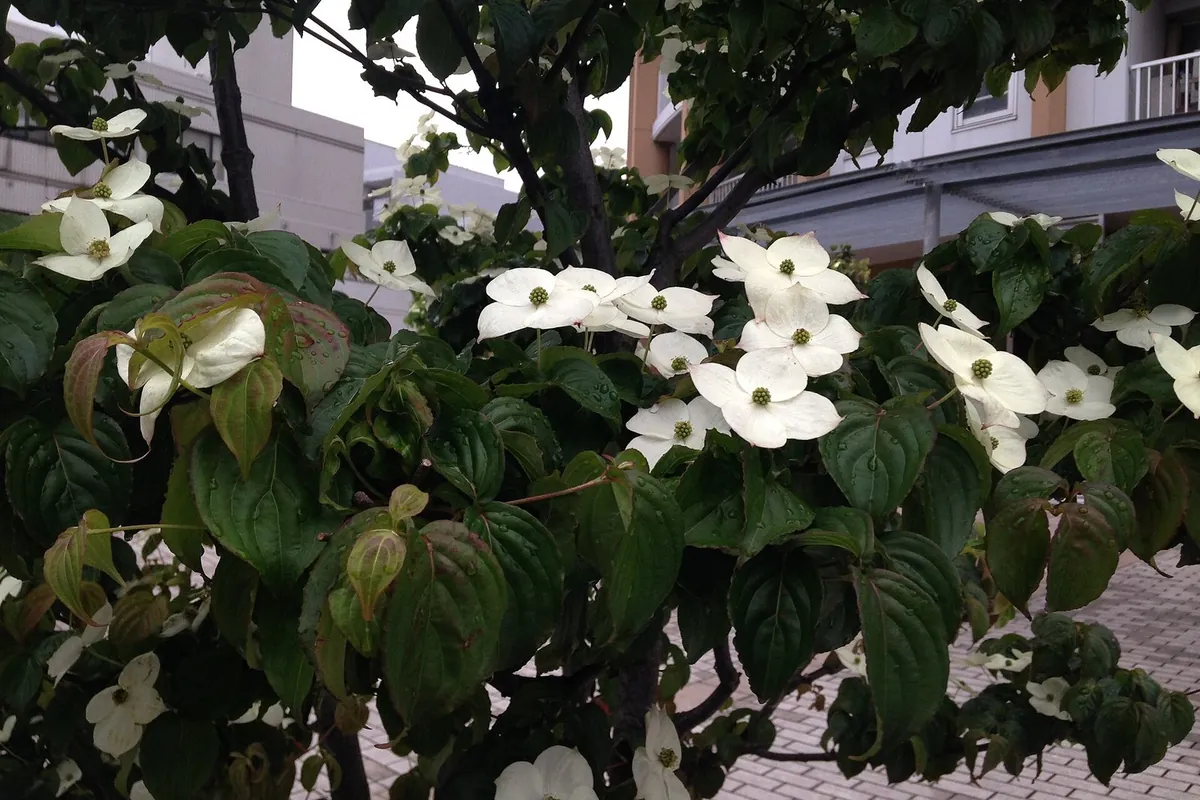
Kousa dogwood (Cornus kousa) blooms in late spring with pointed white bracts that last for weeks. Red, raspberry like fruit hangs from the branches in late summer, and the leaves turn red to purple in fall. It grows 15 to 30 feet tall in zones 5 to 8. Kousa resists dogwood anthracnose much better than the native flowering dogwood, which makes it a safer choice in humid regions.
3. Serviceberry
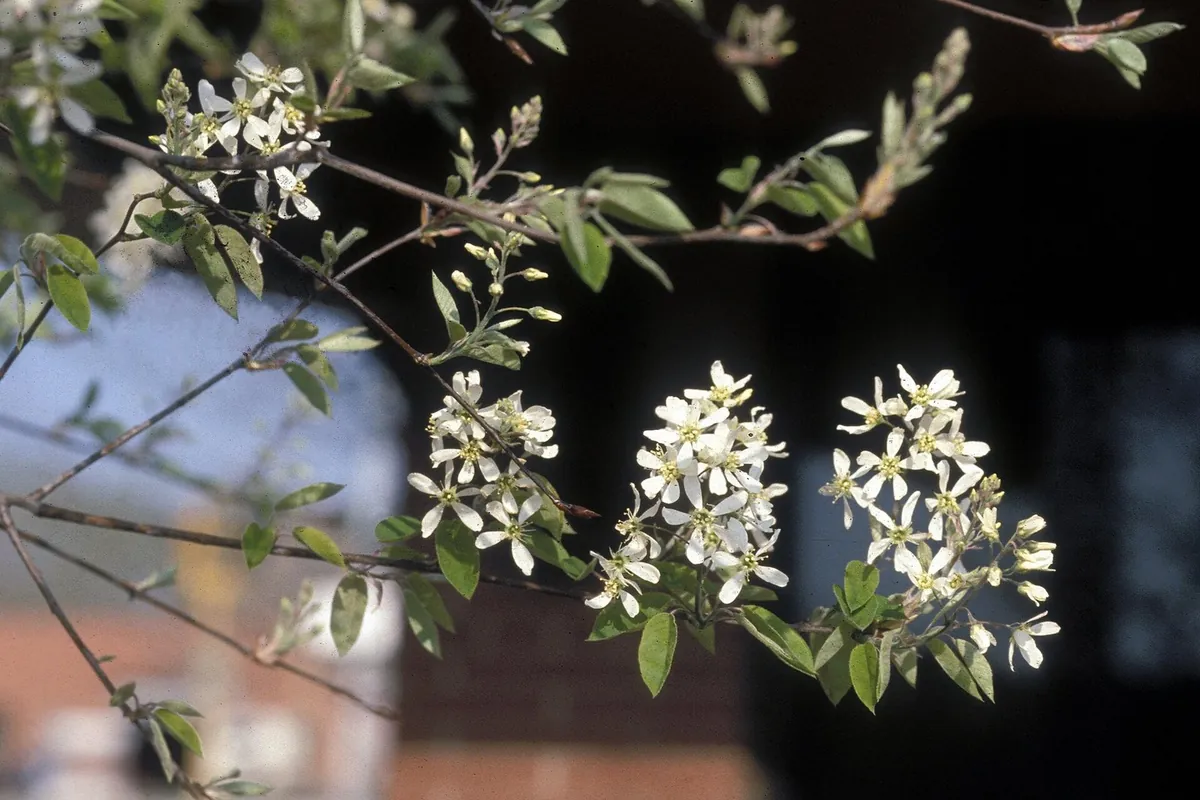
Serviceberry (Amelanchier) opens clouds of small white flowers in early spring, often before the leaves. Sweet, blueberry like fruits ripen in June, and fall color runs orange to red. Most garden forms grow 15 to 25 feet tall in zones 4 to 8. Grow it as a multi trunk tree or a large shrub. Birds love the berries, so pick quickly if you want any.
4. Japanese Maple
Japanese maple (Acer palmatum) is the classic small yard tree. Cultivars range from 6 foot dwarfs to 25 foot trees, in green, red, or variegated leaves, with brilliant fall color. It grows in zones 5 to 8 and prefers morning sun with afternoon shade in hot areas. Our Japanese maple guide explains how to choose a cultivar by size.
5. Crepe Myrtle
Crepe myrtle (Lagerstroemia) flowers from early summer into fall in pink, red, lavender, or white. Peeling bark adds winter interest. Size depends entirely on the cultivar, from 3 foot dwarfs to 25 foot trees, so semi dwarf and intermediate types suit small yards. It grows in zones 7 to 9. Read our crepe myrtle guide before you buy to match the cultivar to your space.
6. Star Magnolia
Star magnolia (Magnolia stellata) bears fragrant white, star shaped flowers on bare branches in very early spring. It grows slowly to 15 to 20 feet tall and 10 to 15 feet wide, in zones 4 to 8. Plant it where late frosts are less likely, such as a north or east facing spot, so the buds do not open too early and get browned by frost.
7. Crabapple
Flowering crabapples (Malus) offer pink, red, or white spring blooms and small fruits that feed birds through winter. Most grow 15 to 25 feet tall, while compact types such as Sargent crabapple stay near 6 to 10 feet. They grow in zones 4 to 8. Choose cultivars rated resistant to apple scab, fire blight, and cedar apple rust, since older varieties lose their leaves early in wet summers.
8. Fringe Tree
Native fringe tree (Chionanthus virginicus) produces drooping clusters of white, fringe like, lightly fragrant flowers in late spring. Female trees follow with blue fruits that birds eat. It grows 12 to 20 feet tall in zones 3 to 9 and tolerates city conditions well. Leaves come out late in spring, so do not mistake it for dead.
9. Japanese Tree Lilac
Japanese tree lilac (Syringa reticulata) blooms in early summer with large, creamy white flower clusters, weeks after common lilacs finish. It grows 20 to 30 feet tall and 15 to 20 feet wide in zones 3 to 7. It is tough, cold hardy, and less prone to powdery mildew than shrub lilacs. Its glossy, cherry like bark looks good in winter.
10. Seven Son Flower
Seven son flower (Heptacodium miconioides) blooms in late summer, when little else does, with fragrant white flowers that pollinators love. After the petals fall, the sepals turn rosy red and look like a second bloom. It grows 15 to 20 feet tall in zones 5 to 8, usually with several trunks and peeling tan bark.
Small Shade Trees
These five trees cast light to medium shade over a patio or seating area without overwhelming the yard.
11. Paperbark Maple
Paperbark maple (Acer griseum) has cinnamon colored bark that peels in thin, curling sheets. Leaves turn red to orange late in fall. It grows slowly to 20 to 30 feet tall and 15 to 25 feet wide in zones 4 to 8. It is one of the best four season trees for a small space.
12. American Hornbeam
American hornbeam (Carpinus caroliniana), also called musclewood, has smooth gray bark with ridges that look like flexed muscles. It grows 20 to 35 feet tall in zones 3 to 9 and tolerates shade and periodic wet soil. Fall color runs yellow, orange, and red.
13. Trident Maple
Trident maple (Acer buergerianum) is a tough, heat tolerant maple with small, three lobed leaves. It grows 20 to 30 feet tall in zones 5 to 9 and handles drought and city soils better than most maples. It offers a rounded canopy and orange to red fall color.
14. Pagoda Dogwood
Pagoda dogwood (Cornus alternifolia) is a native tree with branches arranged in flat, horizontal tiers. Creamy flowers in late spring are followed by blue black berries on red stalks. It grows 15 to 25 feet tall in zones 3 to 7 and prefers cool, moist, partly shaded sites.
15. Persian Ironwood
Persian ironwood (Parrotia persica) is a tough, pest resistant tree with mottled bark and some of the most reliable fall color of any tree, in yellow, orange, and red. It grows 20 to 40 feet tall in zones 5 to 8. Upright cultivars such as ‘Vanessa’ fit narrow spaces.
Small Fruit Trees
A single fruit tree can supply a family. These five stay compact or can be kept small with pruning.
16. Dwarf Apple
Apples grafted on dwarfing rootstocks grow only 8 to 10 feet tall, and they start bearing in two to four years. They grow in zones 4 to 8, depending on variety. Most apples need a second variety nearby for pollination. Our apple tree guide covers rootstocks and pollination partners.
17. Fig
Figs (Ficus carica) can be pruned to a 6 to 12 foot bush and still bear well. Most varieties are self fertile, so one tree is enough. Figs grow in the ground in zones 7 to 10 and in pots almost anywhere. See our fig tree guide for care.
18. Meyer Lemon
Meyer lemon grows 6 to 10 feet tall on dwarf rootstock and bears fragrant flowers and sweet, juicy lemons. It grows outdoors in zones 9 to 11 and adapts well to large pots that move indoors for winter elsewhere.
19. Pawpaw
Pawpaw (Asimina triloba) is a native fruit tree with large, tropical looking leaves and custard textured fruit that tastes of banana and mango. It grows 15 to 25 feet tall in zones 5 to 8. Plant two unrelated trees for good fruit set.
20. Asian Persimmon
Asian persimmon (Diospyros kaki) grows 15 to 25 feet tall, with glossy leaves, orange fall color, and bright fruit that hangs on after the leaves drop. Many cultivars, such as ‘Fuyu’, set fruit without a pollinator. It grows in zones 7 to 10.
Quick Comparison Table
Use this table to narrow your choices by size and climate.
| Tree | Mature height | USDA zones | Main feature |
|---|---|---|---|
| Eastern redbud | 20 to 30 ft | 4 to 9 | Spring flowers |
| Kousa dogwood | 15 to 30 ft | 5 to 8 | Flowers, fruit, fall color |
| Serviceberry | 15 to 25 ft | 4 to 8 | Flowers, edible berries |
| Japanese maple | 6 to 25 ft | 5 to 8 | Leaf color |
| Crepe myrtle | 3 to 25 ft | 7 to 9 | Summer flowers, bark |
| Star magnolia | 15 to 20 ft | 4 to 8 | Fragrant spring flowers |
| Crabapple | 6 to 25 ft | 4 to 8 | Flowers, bird fruit |
| Fringe tree | 12 to 20 ft | 3 to 9 | Fringed white flowers |
| Japanese tree lilac | 20 to 30 ft | 3 to 7 | Early summer flowers |
| Seven son flower | 15 to 20 ft | 5 to 8 | Late summer flowers |
| Paperbark maple | 20 to 30 ft | 4 to 8 | Peeling bark |
| American hornbeam | 20 to 35 ft | 3 to 9 | Shade tolerant, fall color |
| Trident maple | 20 to 30 ft | 5 to 9 | Heat and drought tolerance |
| Pagoda dogwood | 15 to 25 ft | 3 to 7 | Tiered branches |
| Persian ironwood | 20 to 40 ft | 5 to 8 | Fall color |
| Dwarf apple | 8 to 10 ft | 4 to 8 | Fruit |
| Fig | 6 to 12 ft (pruned) | 7 to 10 | Fruit |
| Meyer lemon | 6 to 10 ft | 9 to 11 | Fruit, fragrance |
| Pawpaw | 15 to 25 ft | 5 to 8 | Native fruit |
| Asian persimmon | 15 to 25 ft | 7 to 10 | Fruit, fall color |
Planting And Care Tips For Small Spaces
A few habits help small trees stay healthy and in scale for decades.
Site It Right
Plant the tree where its mature canopy clears the house, fences, and neighbors’ property. Check overhead wires as well. Trees under 25 feet are generally safe near utility lines, but confirm with your local utility.
Plant At The Right Depth
Set the root flare at or slightly above the soil line, dig a wide, shallow hole, and water deeply for the first two seasons. Spread mulch in a wide ring but keep it off the trunk.
Prune For Structure, Not Size
Choose a tree that fits, and you will only need light pruning to remove dead, crossing, or low branches. Fruit trees are the exception. They benefit from yearly pruning to stay small and productive, and our guide on how to prune fruit trees shows how.
Consider Containers
On a patio or balcony, many of these trees grow well in large pots, especially Japanese maples, figs, citrus, and dwarf apples. See our list of dwarf fruit trees for pots for container friendly picks. For native choices in your area, the Lady Bird Johnson Wildflower Center keeps regional native plant lists.
Frequently Asked Questions
What is the best tree for a small yard?
There is no single best tree, but eastern redbud, Japanese maple, serviceberry, and kousa dogwood are top choices in many regions. They stay under 30 feet, have gentle roots, and offer more than one season of interest. Match the tree to your zone, light, and space.
How far from the house should I plant a small tree?
Plant small trees under 25 feet tall at least 8 to 10 feet from the house. Allow half the mature spread plus a few feet, so branches do not rub the roof or walls.
What small tree has non invasive roots?
Japanese maple, redbud, serviceberry, fringe tree, kousa dogwood, and Japanese tree lilac all have roots that rarely cause trouble near patios and foundations. Avoid willows, silver maples, and poplars in small yards.
What is a good small shade tree?
Paperbark maple, trident maple, American hornbeam, and Persian ironwood give useful shade while staying at 20 to 35 feet tall. They suit a patio corner or the south side of a small yard.
Can I grow fruit trees in a small yard?
Yes. Dwarf apples, figs, Meyer lemons, Asian persimmons, and pawpaws all fit small spaces. Dwarfing rootstocks and yearly pruning keep fruit trees at 8 to 12 feet, which also makes picking easier.
What small tree flowers the longest?
Crepe myrtle flowers the longest of the trees on this list, often from early summer into early fall in warm climates. Kousa dogwood bracts also last several weeks, and seven son flower extends the show into late summer.
Final Thoughts
The right small tree makes a compact yard feel larger. Pick one that fits its space at maturity, suits your climate, and gives you at least two seasons of interest.
Your Small Yard Tree Checklist
Measure the space and note sun and drainage. Check your USDA zone. Choose a tree that stays under 30 feet tall and fits the spread you have. Favor trees with flowers, fruit, color, and bark across the year. Plant at the right depth and water for two seasons. For more ideas, browse our tree finder.