Bonsai Tree Care For Beginners: Watering, Pruning And Repotting
On this page
A bonsai is a real tree kept small in a shallow pot through careful pruning, root care, and patience. It is not a special dwarf species. Almost any tree can become a bonsai, and with the right basics a beginner’s first tree can live for decades.
The three skills that keep a bonsai alive and in shape are watering, pruning, and repotting. This guide covers each one in plain terms, along with choosing a beginner friendly species, picking the right spot indoors or out, feeding, and avoiding the mistakes that kill most first bonsai. The advice follows guidance from university extension services and public bonsai collections such as the U.S. National Arboretum.
Choosing Your First Bonsai
The single most important choice is whether your tree should live indoors or outdoors. Get this wrong and no amount of care will save it.
Outdoor Versus Indoor Bonsai
Most traditional bonsai, including junipers, pines, and maples, are temperate trees. They need sun, fresh air, and a cold winter rest outdoors. Kept on a windowsill year round, they slowly decline and die, often within a year. A few tropical and subtropical trees tolerate indoor conditions, as long as they get bright light.
Best Beginner Species
| Species | Where to keep it | Why it suits beginners |
|---|---|---|
| Ficus (Ficus retusa, F. microcarpa) | Indoors, bright window | Tolerates low humidity and pruning mistakes |
| Chinese elm | Outdoors, or indoors in bright light | Fine twigs, small leaves, very forgiving |
| Jade plant | Indoors, sunny window | Stores water, hard to underwater |
| Hawaiian umbrella (Schefflera) | Indoors | Handles lower light than most |
| Japanese juniper | Outdoors only | Tough, classic look, cold hardy |
| Trident or Japanese maple | Outdoors only | Strong growth, fall color |
A Note On Mall Junipers
Many first bonsai are junipers sold as indoor plants in gift shops. Junipers cannot live indoors long term. If you have one, move it outside to a bright, sheltered spot and treat it as an outdoor tree.
Light And Placement
Bonsai grow in very little soil, so they rely on light to make the energy that keeps them healthy.
Outdoor Bonsai
Place outdoor species where they get at least four to six hours of direct sun, with some afternoon shade in hot summers. Set pots on a bench or stand, not on the ground, to improve drainage and keep pests off. Shelter them from strong wind, which dries the soil quickly.
Indoor Bonsai
Indoor bonsai need the brightest spot you have, usually right next to a south or west facing window. Even there, winter light is weak, so many growers add a full spectrum LED grow light for 12 to 14 hours a day. Keep trees away from heating vents and cold drafts. In summer, most tropical bonsai enjoy a move outdoors to a bright, partly shaded spot once nights stay above about 55°F.
Humidity
Indoor air in winter can be very dry. Setting the pot on a shallow tray of gravel and water raises humidity around the tree. Make sure the pot sits above the water, not in it.
How To Water A Bonsai
Watering is the skill that keeps a bonsai alive. More bonsai die from wrong watering than from any other cause.
Water When The Soil Starts To Dry
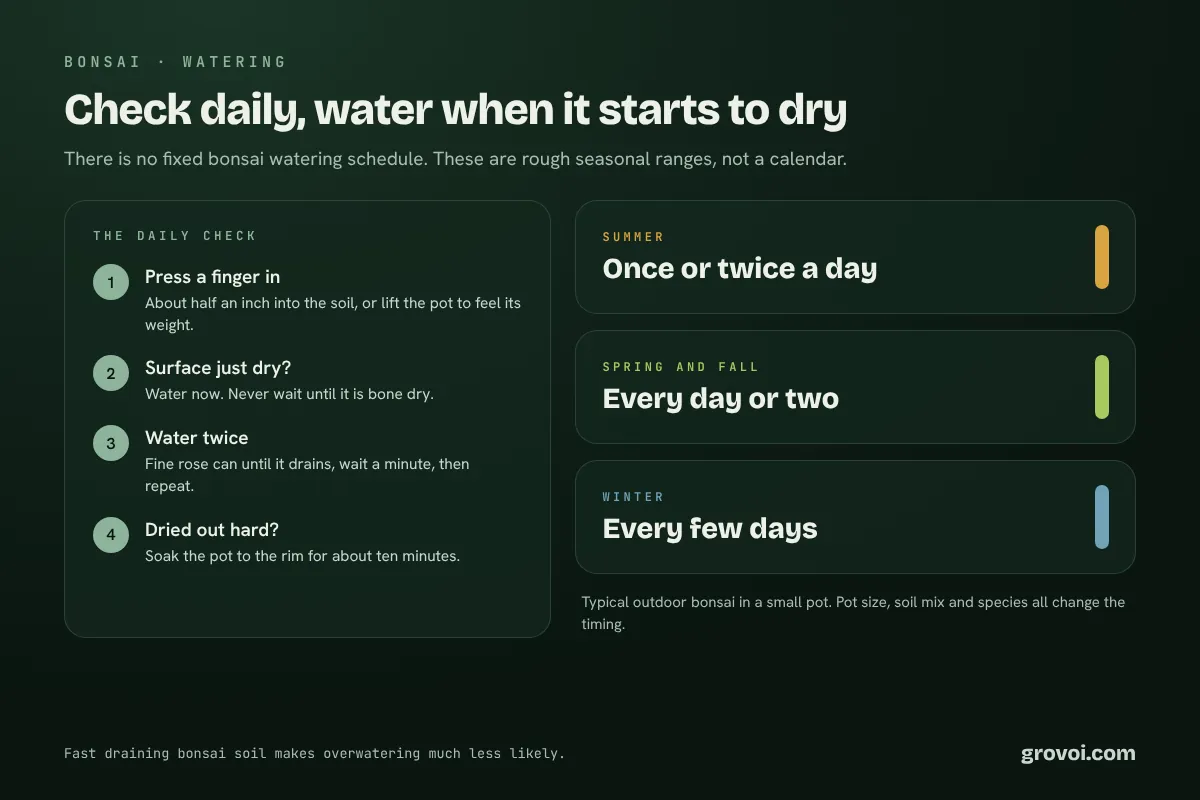
There is no fixed schedule. Check the soil every day by pressing a finger about half an inch into it, or by feeling the weight of the pot. Water when the surface feels just dry. Never water on a calendar, and never let the soil become bone dry, since a small pot has no water reserve.
How To Water
Water slowly over the whole soil surface with a fine rose watering can until water runs from the drainage holes. Wait a minute and water again, so the whole root ball is soaked. If the soil has dried out and water runs straight off, set the pot in a basin of water up to the rim for about ten minutes, then let it drain.
How Often In Each Season
In summer heat, an outdoor bonsai may need water once or even twice a day. In spring and fall, every day or two is common. In winter, dormant outdoor trees and slow growing indoor trees may need water only every few days. The tree, the pot size, and the soil mix all change the timing, which is why checking beats any schedule.
Signs Of Over And Under Watering
Wilted, crispy leaves that drop suddenly suggest the soil dried out. Yellowing leaves, a sour smell, and soil that stays wet for days point to overwatering and possible root rot. A fast draining soil mix makes overwatering much less likely.
Soil And Feeding
Bonsai soil is not garden soil. It needs to drain fast, hold some moisture, and let air reach the roots.
The Right Soil Mix
A common mix uses roughly equal parts akadama, a hard baked Japanese clay, pumice, and lava rock. Pure organic potting soil stays too wet and compacts in small pots. Buy a ready made bonsai mix to start, and sift out fine dust before use.
Fertilizing
Because bonsai grow in so little soil, they need regular feeding. From early spring to early fall, apply a balanced liquid fertilizer at half strength every one to two weeks, or place slow release organic pellets on the soil surface once a month. Reduce feeding in late fall, and stop for dormant outdoor trees in winter. Indoor tropical trees can take a light feed every month or so in winter. Never feed a dry tree or one that was just repotted.
How To Prune A Bonsai
Pruning keeps a bonsai small and shapes it into a mature looking tree.
Maintenance Pruning
Through the growing season, new shoots extend and the tree loses its shape. Let a shoot grow six to eight leaves, then cut it back to two or three. On junipers, pinch or cut back long new growth with sharp scissors rather than shearing, which browns the foliage. Regular trimming forces the tree to branch more and keeps growth compact and balanced.
Structural Pruning
Larger cuts that remove whole branches set the tree’s basic shape. Make them in late winter or early spring, just before new growth starts, on deciduous trees and most conifers. Tropical trees can be pruned harder in spring or early summer, during strong growth. Use concave cutters for branches, since they leave a slight hollow that heals almost flush with the trunk. Seal large cuts with bonsai cut paste.
Leaf Size And Ramification
Leaves on a well kept bonsai shrink over time as the tree develops fine twigs, a process called ramification. Consistent pinching, good light, and moderate feeding all help produce smaller leaves.
Wiring Branches
Wire lets you bend branches into position. Use anodized aluminum wire about one third the thickness of the branch. Wrap it at about a 45 degree angle, then bend gently. Check every few weeks, and remove the wire before it cuts into the bark, which can happen within one growing season on fast growers.
How To Repot A Bonsai
Over time, roots fill the pot and the soil breaks down. Repotting refreshes both.
When To Repot
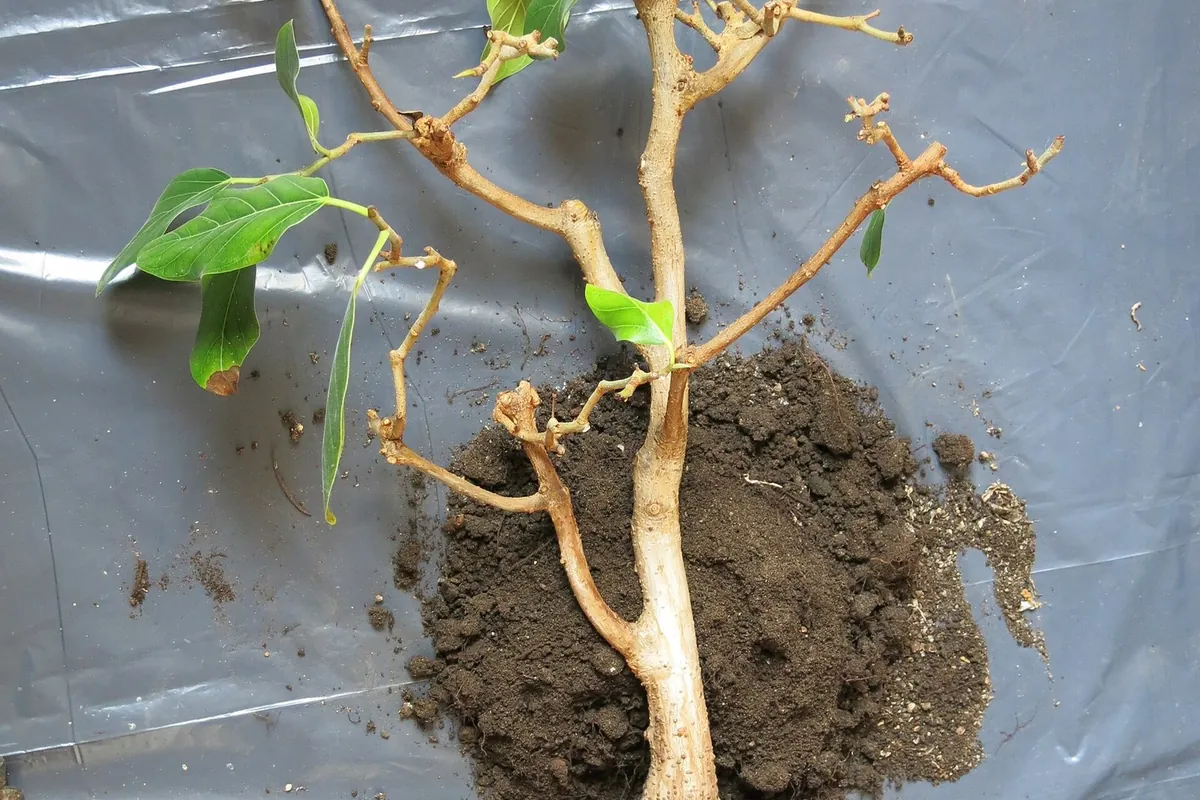
Repot young and fast growing trees every two years and older, established trees every three to five years. The best time is early spring, just as buds begin to swell. Tropical species can also be repotted in early summer. Signs that a tree needs repotting include roots circling the inside of the pot, water draining very slowly, or water running straight off the surface.
Step By Step Repotting
- Water the tree the day before so the root ball is moist.
- Remove any tie down wires and lift the tree from its pot.
- Comb out the outer soil with a root hook or chopstick, working from the outside in.
- Trim long, circling, and thick roots, removing no more than about a quarter to a third of the root mass on a healthy tree.
- Cover the drainage holes with mesh and add a thin layer of fresh soil.
- Set the tree in place and secure it with wire through the drainage holes.
- Work fresh soil into all gaps with a chopstick, then water thoroughly until it runs clear.
Aftercare
Keep the tree out of direct afternoon sun and strong wind for two to three weeks while new roots form. Water carefully, and wait about a month before feeding again.
Winter Care And Common Mistakes
A few seasonal habits and avoided mistakes go a long way.
Winter Protection For Outdoor Trees
Outdoor bonsai need cold to rest, but roots in a small pot freeze much faster than roots in the ground. In regions with hard freezes, move trees into an unheated garage, cold frame, or sheltered spot against the house when nights drop well below freezing. Keep the soil slightly moist all winter. The National Bonsai Foundation, which supports the bonsai museum at the U.S. National Arboretum, shares more on caring for outdoor species.
Common Beginner Mistakes
- Keeping outdoor species such as junipers indoors.
- Watering on a fixed schedule instead of checking the soil.
- Using ordinary potting soil that stays wet.
- Forgetting to feed in the growing season.
- Repotting at the wrong time or removing too many roots.
- Leaving wire on until it scars the bark.
Pests To Watch
Spider mites, scale, aphids, and mealybugs are the usual pests, especially indoors. Check the undersides of leaves weekly. Rinse light infestations off with water, and use insecticidal soap or horticultural oil for heavier ones. Our guides to fiddle leaf fig care and the rubber tree plant cover the same indoor pests on related ficus.
Frequently Asked Questions
How often should I water a bonsai tree?
Water whenever the soil surface feels just dry, rather than on a set schedule. In summer this may be daily or twice a day for outdoor trees. In winter it may be every few days. Always water until it drains from the bottom of the pot.
What is the easiest bonsai tree for beginners?
Ficus is the easiest indoor bonsai, since it tolerates dry air and pruning mistakes. Chinese elm is a good choice indoors or out. For outdoor growers, Japanese juniper and trident maple are tough and forgiving.
Can a bonsai tree live indoors?
Only tropical and subtropical species such as ficus, jade, Hawaiian umbrella, and Fukien tea do well indoors, and they still need very bright light. Junipers, pines, and maples must live outdoors.
When should I repot my bonsai?
Repot in early spring as buds start to swell. Young trees need repotting every two years, older trees every three to five years. Repot sooner if roots circle the pot or water stops draining well.
How do I keep my bonsai small?
Regular pruning of new shoots, periodic root pruning during repotting, and a shallow pot all keep a bonsai small. Cut new shoots back to two or three leaves once they have grown six to eight.
Why are my bonsai leaves turning yellow?
Yellow leaves are most often caused by overwatering or poor drainage. Other causes include too little light, lack of fertilizer, or a sudden move to a new spot. Some leaf drop is normal for indoor trees after moving.
How long do bonsai trees live?
With good care, bonsai can live as long as their full size relatives, and some well known trees in public collections are hundreds of years old. A beginner’s tree can easily live for decades.
Final Thoughts
Bonsai care rests on three habits: check the soil daily and water thoroughly, trim new growth through the season, and repot every few years in early spring. Choose a species that suits where you can keep it, and the rest is patience.
Your Bonsai Care Checklist
Pick a species for indoors or outdoors and keep it there. Give it the brightest light you can. Water when the surface feels dry, until it drains. Feed every one to two weeks in the growing season. Trim shoots back to two or three leaves. Repot in early spring every two to five years. For more trees that grow indoors, browse our indoor trees section or read our money tree care guide.