Citrus Tree Care Guide: How Much To Water, When To Fertilize And How To Stop Pests, Yellow Leaves And Fruit Drop
On this page
- Climate And Growing Zones
- Sunlight And Location
- Soil And Drainage
- How Much To Water A Citrus Tree
- Signs Of Overwatering And Underwatering
- Watering Potted Citrus Trees
- When To Fertilize A Citrus Tree
- Best Fertilizer For Citrus Trees
- How Much Fertilizer To Use
- Mulching Citrus Trees
- Pruning Citrus Trees
- Common Citrus Tree Pests
- How To Get Rid Of Citrus Pests
- Citrus Tree Diseases
- Why Citrus Leaves Turn Yellow
- Why Citrus Trees Drop Fruit
- Protecting Citrus From Cold
- Harvesting Citrus Fruit
- Citrus Tree Care FAQs
Citrus tree care comes down to three habits: watering deeply, feeding on a schedule and catching pests early. Get these right, and citrus trees reward backyard gardeners with fresh fruit and fragrant blooms for decades.
One routine works for lemons, limes, oranges, grapefruit, tangerines and mandarins. Picks like Meyer lemon, Key lime, Valencia orange, Navel orange, Ruby Red grapefruit and satsuma share the same needs for water, food and sunlight.
Homegrown citrus is forgiving once you understand what it wants. This guide gives watering amounts, a feeding calendar, pest fixes and answers for yellow leaves and fruit drop, so proper care produces healthy citrus yearly.
Climate And Growing Zones
Citrus is a warm climate, semi-tropical crop that thrives outdoors in USDA Hardiness Zones where winters stay mild. Top regions include Florida, Southern California, Arizona and the Gulf Coast, where trees fruit with minimal protection.
Zone 9, Zone 10 and Zone 11 suit most varieties outdoors. Zone 8 carries real frost risk, so choose cold-hardy varieties or grow in pots. Anywhere colder, containers that move indoors for winter are essential.
Hardiness varies. Satsumas, kumquats and Meyer lemons tolerate about 20°F, sweet oranges handle the mid-20s°F, while lemons and limes suffer below 30°F. The ideal temperature for steady growth sits in the 55 to 85°F range.
Sunlight And Location
Citrus needs full sun to flower and fruit well. Aim for 6 to 8 hours of sun every day, since trees receiving less direct sunlight grow leggy, set fewer blooms and produce smaller, sourer fruit.
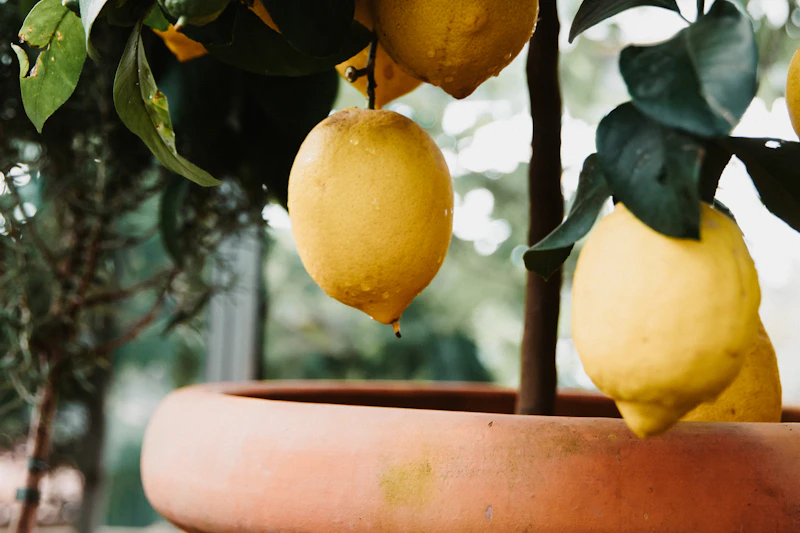
A south-facing location gives the longest exposure and supports maximum fruit production. In cooler zones, a nearby wall or fence adds heat reflection, keeping the canopy several degrees warmer on cold nights and extending ripening.
Choose a sheltered spot with wind protection. Strong gusts tear new growth, knock blossoms off and dry leaves quickly. Avoid low corners where cold air settles, because frost pockets damage citrus more than open slopes.
Soil And Drainage
Citrus roots rot in soggy ground, so well-draining soil matters more than rich soil. Sandy loam is ideal. Dense soil, salty soil and wet soil stress roots and invite disease that is hard to reverse.
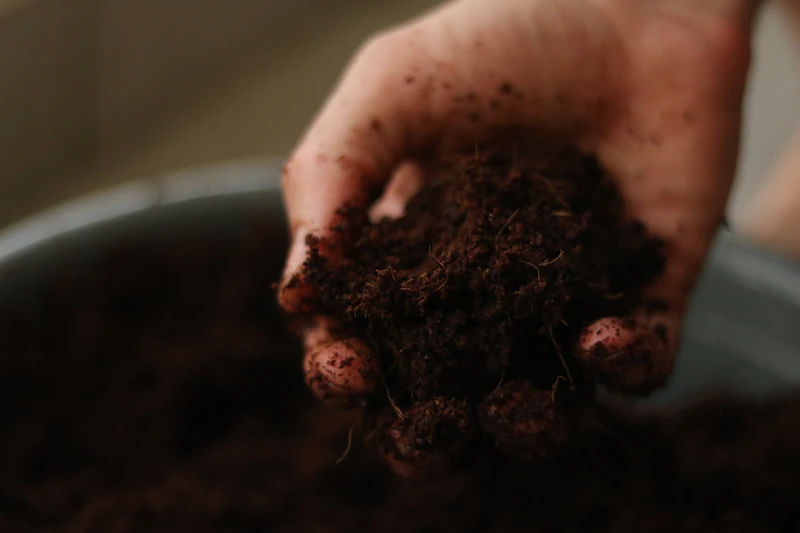
Trees prefer slightly acidic soil with a soil pH in the pH 6.0 to 7.0 range. Test first, then blend native soil with compost for structure. Avoid heavy amendments in the hole, which trap water.
Run a drainage test: dig a foot-deep hole and fill it with water. Water should vanish within 4 to 6 hours. If not, plant on a raised mound or use citrus potting soil in containers.
How Much To Water A Citrus Tree
Deep watering beats frequent sipping. Newly planted trees need water twice a week during their first year. Young trees up to three years old need a deep soak once or twice a week in summer.
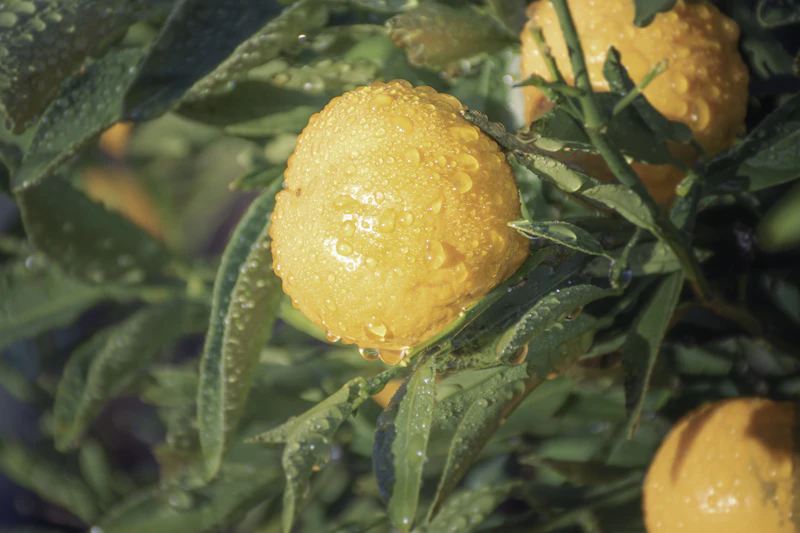
Established trees and mature trees need less: summer watering every 1 to 2 weeks, winter watering every 3 to 4 weeks, counting rainfall. Let soil dry through the top 2 to 3 inches of soil.
| Tree | Summer | Winter |
|---|---|---|
| Newly planted (year 1) | Twice a week | Weekly, when the topsoil is dry |
| Young (1 to 3 years) | Once or twice a week | Every 2 to 3 weeks |
| Mature (4+ years) | Every 1 to 2 weeks | Every 3 to 4 weeks |
| Potted citrus | Every 2 to 7 days, by pot size | Every 10 to 14 days indoors |
Build a soil moat or watering basin so water soaks down instead of running off. Drip irrigation, a sprinkler, a bubbler or a low-flow hose all work. Just water deeply, and add extra during drought.
Signs Of Overwatering And Underwatering
Overwatering kills more citrus than drought. Constantly soggy soil starves roots of oxygen and leads to root rot. Early warning signs include yellow leaves, sudden leaf drop and a sour smell rising from wet soil.
Underwatering looks different. Leaves turn crisp, curling leaves fold inward along the midrib, and foliage hangs limp in heat. The soil pulls away from pot edges, and fruit may split or shrivel before it ripens.
Both problems can cause wilting leaves, so always check soil first. The finger test is simple: push a finger two inches down. Dry soil means water now. A moisture meter gives better readings for containers.
Watering Potted Citrus Trees
Potted citrus needs more frequent watering than ground-planted trees because limited soil holds limited moisture. In summer heat, a pot dries out in two or three days, while larger containers may stretch to a week.
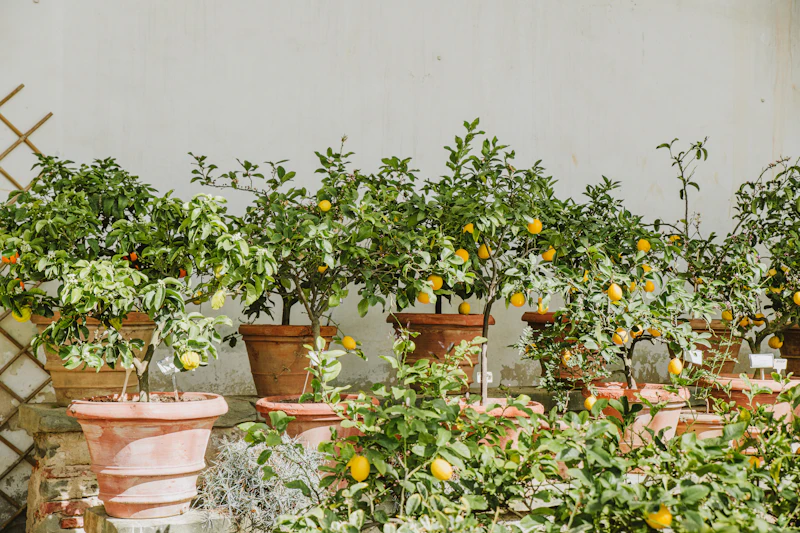
Choose a 10 to 15 gallon container for young trees and upgrade to a 20 to 24 inch pot as dwarf citrus matures. All need drainage holes, and never leave pots in saucers of water.
Use a fast-draining potting mix made for citrus rather than garden soil. Container citrus grown as indoor citrus in winter needs less water, often every 10 to 14 days, because growth slows under lower light.
When To Fertilize A Citrus Tree
Citrus are heavy feeders, and timing matters as much as product. A reliable fertilizing schedule starts in late January or early spring and continues through the main growing season while new leaves and fruit develop.
| Period | Young trees | Mature trees |
|---|---|---|
| Late January to February | First feed, balanced 10-10-10 | First feed, 15-5-10 |
| March to August | Every 6 to 8 weeks | Every 6 weeks |
| September to October | Light feed in warm zones only | Light feed in warm zones only |
| November to mid-January | No feeding | No feeding |
Most home growers apply citrus fertilizer every six weeks, or every 6 to 8 weeks with slow-release products. Container trees often prefer lighter monthly feeding. Many nurseries recommend feeding from Valentine’s Day to Labor Day.
Keep fall feeding light in warm zones and follow no winter fertilization in colder ones, to avoid frosted growth. For new plantings, wait 3 to 4 months after planting so roots settle before receiving fertilizer.
Best Fertilizer For Citrus Trees
Check the NPK ratio on every bag. It lists nitrogen, phosphorus and potassium. Citrus uses nitrogen most, so mature trees over age four do best with a nitrogen-rich fertilizer like 15-5-10 through spring and summer.
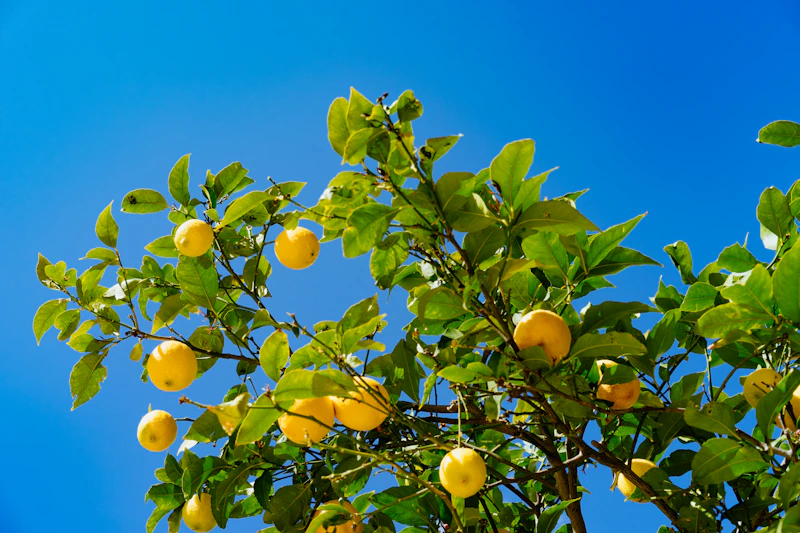
Younger trees establish better on a balanced fertilizer like 10-10-10 or 13-13-13. Gentler blends labeled 6-6-6 or 8-8-8 also work well, especially an organic fertilizer that feeds soil life while releasing nutrients over several weeks.
Micronutrients separate good products from average ones. Look for iron, zinc, manganese and magnesium on the label. A citrus-specific fertilizer or slow-release fertilizer includes them and prevents the pale, patchy leaves caused by hidden deficiencies.
How Much Fertilizer To Use
Rates depend on tree age and product strength, so start with the label. One common rule of thumb is 1 to 1.5 pounds per year of tree age annually, split evenly across several seasonal feedings.
Newly established trees need less, often just 1 to 2 pounds for their first year. Too much at once causes fertilizer burn, which shows as brown, crispy leaf edges and sudden leaf drop within days.
Spread granules beneath the canopy and beyond it. Feeder roots sit near the drip line, so apply around the drip line rather than against the trunk. Water in after feeding so nutrients reach the roots.
Mulching Citrus Trees
Citrus has shallow roots that dry out and overheat in summer. A good mulch protects them, holds soil moisture longer between waterings and keeps cool roots active during heat waves when bare soil would bake.
Spread a 2 to 3 inch layer of wood chips, bark or shredded leaves. Shape a mulch ring that matches the canopy diameter, since feeder roots extend that far from the trunk in healthy trees.
Always keep mulch away from trunk bark. Mulch piled against wood traps moisture and invites collar rot, a bark disease. Keep the area beneath the canopy weed-free, because grass and weeds steal water and nutrients.
Pruning Citrus Trees
Citrus needs far less pruning than apples or pears. Focus on removing dead branches, diseased branches and crossing branches that rub together. Opening the center improves air circulation and lets light reach the inner fruit.
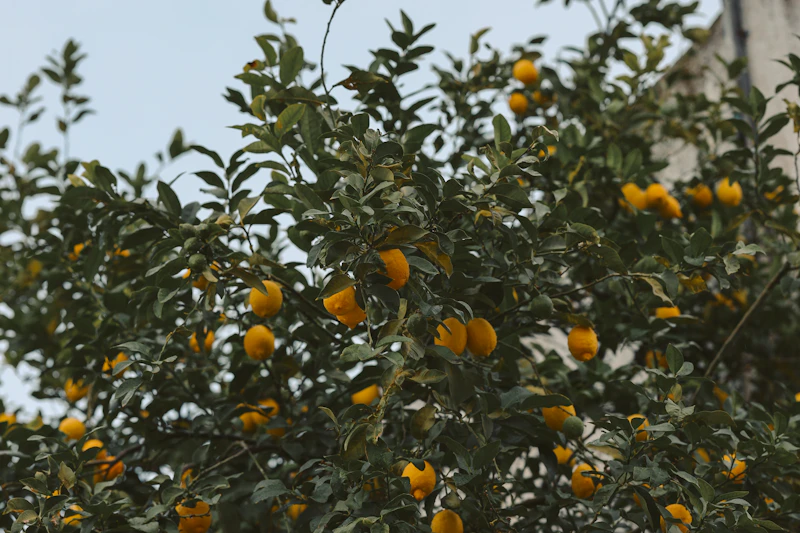
Watch for suckers, shoots growing below the graft where the graft union swells near the trunk base. They come from rootstock and should be cut flush. Also trim leggy growth and keep four main branches.
Prune in late winter or early spring, after harvest and before bloom. Many varieties carry sharp thorns. Older neglected trees may benefit from renovation pruning every five to ten years to restore compact, productive growth.
Common Citrus Tree Pests
Most citrus pest problems start with sap-sucking insects. Aphids cluster on new shoots, scale insects cling to stems like tiny bumps, mealybugs form white cottony masses and whiteflies rise in clouds when branches are disturbed.
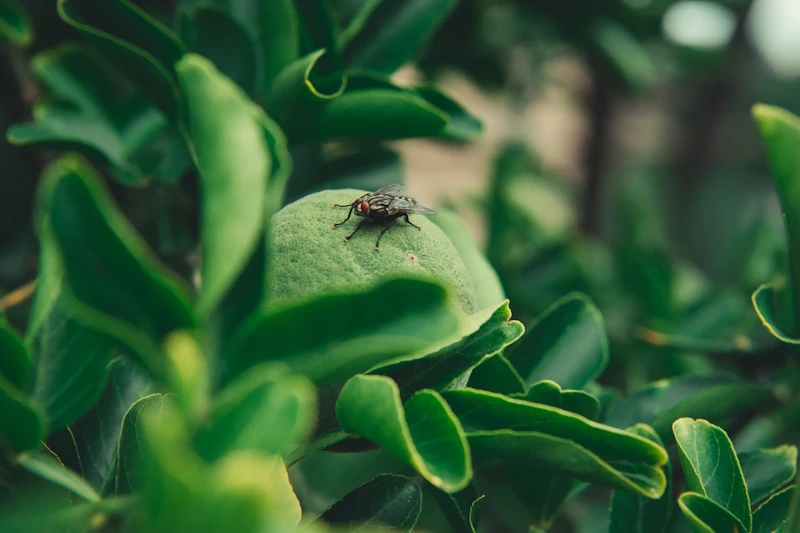
Spider mites leave pale spotted leaves and webbing. The citrus leaf miner carves silvery tunnels in young foliage, while citrus thrips cause distorted leaves and scarred fruit. Always inspect leaf undersides, where most pests hide.
Sticky honeydew from aphids and scale attracts ants, which protect those pests from predators. Indoors, fungus gnats breed in wet potting mix. Outdoors, snails chew leaves and fruit, while rats and squirrels hollow out citrus.
How To Get Rid Of Citrus Pests
Early detection makes control easy. Monitor regularly, checking a few leaves weekly during spring flushes. Small infestations need nothing more than a high-pressure water spray that knocks aphids and mites off without harming the tree.
For persistent pests, use insecticidal soap, neem oil or horticultural oil, coating leaf undersides thoroughly. Apply in the cool evening, never above 90°F. Where damage is concentrated, remove infested branches and bag them for disposal.
Natural pest control works best long term. Beneficial insects such as ladybugs and lacewings devour aphids and scale. Wash leaves to remove dust and honeydew, and apply a dormant-season oil as a preventive spray yearly.
Citrus Tree Diseases
Phytophthora is the most common soil-borne threat. It causes root rot below ground and collar rot at the trunk base, where bark oozes sap and cracks. Good drainage and dry trunks prevent most cases entirely.
Citrus canker creates raised, corky lesions on leaves, twigs and fruit. Greasy spot, a fungal infection, leaves dark blotches on leaf undersides. Sooty mold grows on pest honeydew and fades once the insects are controlled.
Citrus greening, also called HLB or huanglongbing, is a bacterial disease spread by psyllids with no cure. Buy disease-free trees from certified nursery stock, and remove infected trees quickly to protect neighboring gardens and orchards.
Why Citrus Leaves Turn Yellow
Yellow leaves are the most common citrus distress signal, and the pattern reveals the cause. Uniformly pale older leaves usually point to nitrogen deficiency, which is quickly corrected with a dose of nitrogen-rich citrus fertilizer.
| Symptom | Likely cause | Fix |
|---|---|---|
| Older leaves pale all over | Nitrogen deficiency | Feed a nitrogen-rich citrus fertilizer |
| Yellow between green veins on new leaves | Iron, zinc or manganese deficiency, often from high pH | Use a citrus fertilizer with micronutrients and test pH |
| Yellow leaves with soggy soil | Overwatering or poor drainage | Let soil dry and improve drainage |
| Sticky, spotted or curled leaves | Pests | Inspect leaf undersides, treat with soap or oil |
| Sudden yellowing and drop after a cold night | Cold stress | Protect from frost and wait for regrowth |
Yellowing between veins while veins stay green signals chlorosis, usually iron deficiency or another nutrient deficiency such as zinc or manganese. It often appears when soil pH climbs too high, locking nutrients away from roots.
If feeding is fine, check water. Overwatering and poor drainage yellow leaves. Heavy infestations of pests and sudden cold stress also trigger yellowing followed by leaf drop, though trees recover once the cause is removed.
Why Citrus Trees Drop Fruit
Some fruit drop is normal. Citrus sets more fruit than it can carry, then sheds the excess in a natural thinning process. The biggest wave, called June drop, happens in late spring or early summer.
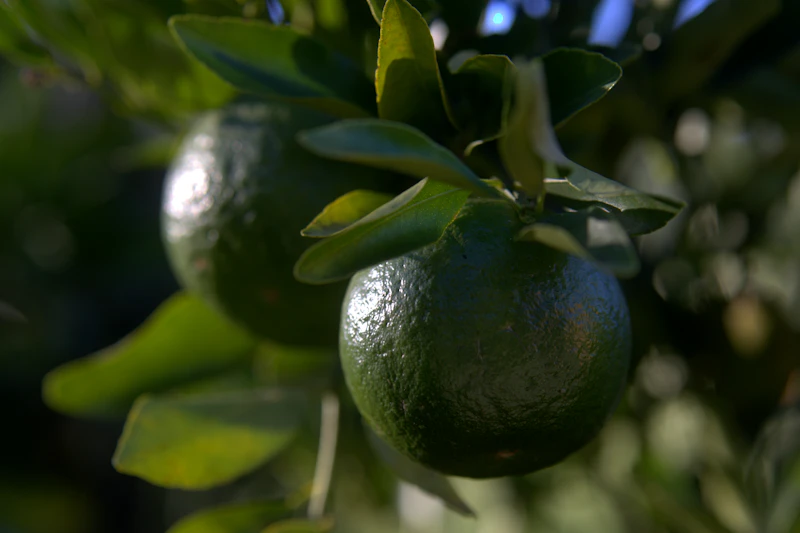
Excessive drop usually signals stress. Water stress from irregular watering is the leading cause, followed closely by heat stress during sudden hot spells. Keep soil evenly moist through fruit set to hold far more fruit.
A nutrient imbalance, low nitrogen or potassium, weakens fruit stems. A young tree often drops most fruit because its roots cannot support it yet. Overbearing trees shed fruit to protect themselves, so thinning crops helps.
Protecting Citrus From Cold
Plan frost protection before winter arrives. When forecasts show freezing temperatures, water the soil a day ahead, since moist ground releases more heat than dry soil. Young trees suffer cold damage faster than established ones.
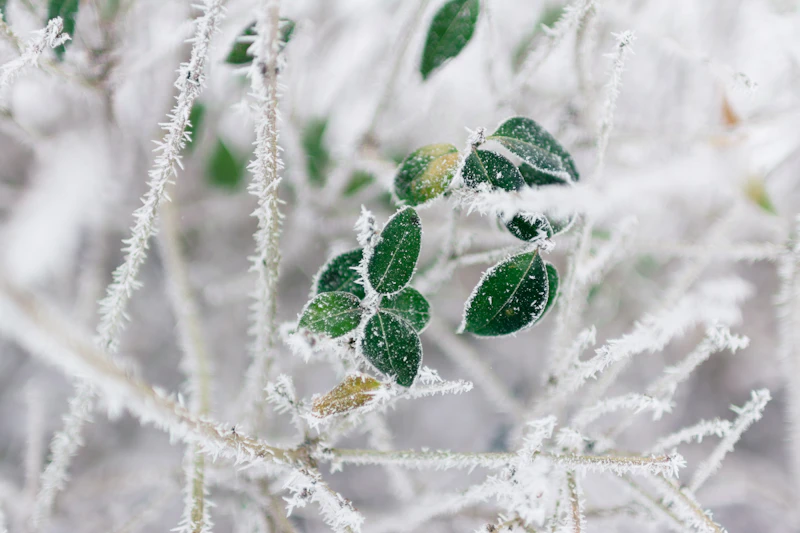
Use frost cloth or blankets to cover the canopy down to the ground, trapping warmth rising from the soil. Avoid plastic directly touching leaves. Remove covers each morning so trees receive sunlight and fresh air.
For hard freezes, add supplemental heat under covers. Incandescent holiday lights wrapped through branches give gentle warmth. In Zone 8 and colder, move pots indoors to a bright, cool room before nights drop below freezing.
Harvesting Citrus Fruit
Most citrus ripens from late fall to early spring, though exact timing depends on variety and climate. Mandarins usually come first, while Valencia oranges often hang until the following summer before reaching their sweetest flavor.
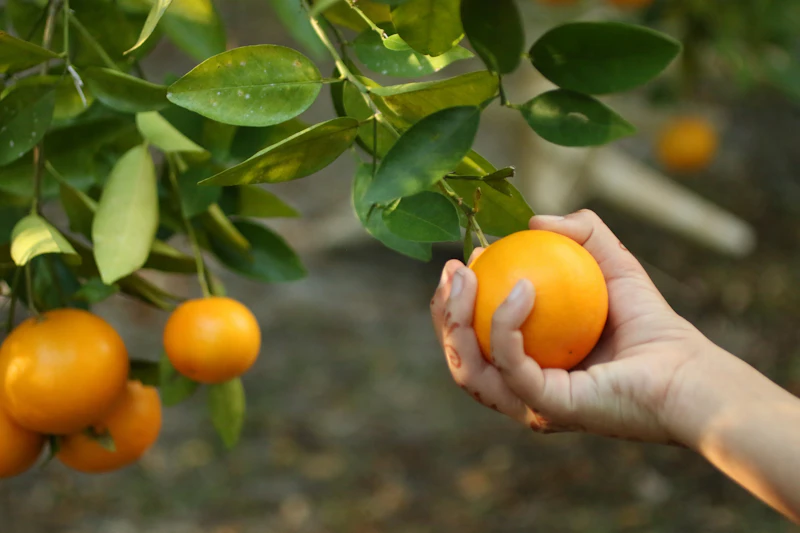
Fruit color can mislead, since some ripe oranges stay partly green in warm climates. Use the twist test: ripe fruit detaches easily with a gentle twist. Then do a taste test before picking the rest.
Citrus does not ripen after picking, but ripe fruit stays on the tree for weeks without spoiling, so harvest gradually. Clip stems with pruners rather than pulling, which prevents torn peel and extends storage life.
Citrus Tree Care FAQs
How Often Should You Water A Citrus Tree?
How often to water citrus depends on age and season. Water new trees twice weekly, established trees every 1 to 2 weeks in summer and every 3 to 4 weeks in winter, letting topsoil dry.
Why Are My Citrus Leaves Turning Yellow?
If you are wondering why are citrus leaves yellow, check water, since overwatering and poor drainage are common causes. Then study the pattern: uniformly pale leaves mean nitrogen deficiency, while green veins suggest iron deficiency.
When Should You Fertilize Citrus Trees?
Knowing when to fertilize citrus is simple: begin in late January or early spring, feed every six weeks through summer, then stop by early fall. Skip winter feeding in cold zones to avoid frost-prone growth.
Why Is My Citrus Tree Not Fruiting?
When gardeners ask why is my citrus not fruiting, the answer is usually too little sun, too much nitrogen or a tree under three years old. Grafted trees fruit sooner than citrus grown from seed.
What Is Citrus Greening And Can It Be Cured?
Citrus greening is a bacterial disease spread by the citrus psyllid. It causes blotchy yellow leaves, lopsided bitter fruit and slow decline. There is no cure, so infected trees must be removed to protect others.
When Is The Best Time To Plant A Citrus Tree?
The best planting time is spring after last frost. Planting into soil 60°F or warmer helps roots grow quickly before summer heat. For pots, choose a container size of at least 10 to 15 gallons.
Pingback: Plum Tree: How To Grow, Prune & Harvest Plums
Pingback: Areca Palm Care: Light, Water, Feeding And Brown Tips
Pingback: Pomegranate Tree: How To Grow, Care For And Harvest Pomegranates - Grovoi
Pingback: Olive Tree: How To Grow Olives Indoors, In Pots Or In The Ground - Grovoi