Banana Tree: How To Grow Bananas Outdoors Or In Containers
On this page
A banana plant turns any yard or patio tropical almost overnight. In a warm climate it can grow from a small sucker to a fruiting plant in about a year. In cooler regions it still makes a striking plant, and with the right variety and a bit of planning you can harvest homegrown bananas from a pot.
This guide explains how to grow bananas outdoors in warm zones and in containers anywhere else. You will learn which varieties to choose, how to plant and feed them, how to manage suckers, how to protect plants in winter, and when to harvest. The advice draws on university extension sources, including the University of Florida IFAS, which works with bananas in the warmest parts of the United States.
What Is A Banana Tree?
A banana “tree” is not a tree at all. It is a giant herbaceous plant in the genus Musa, and it has no woody trunk.
How A Banana Plant Grows
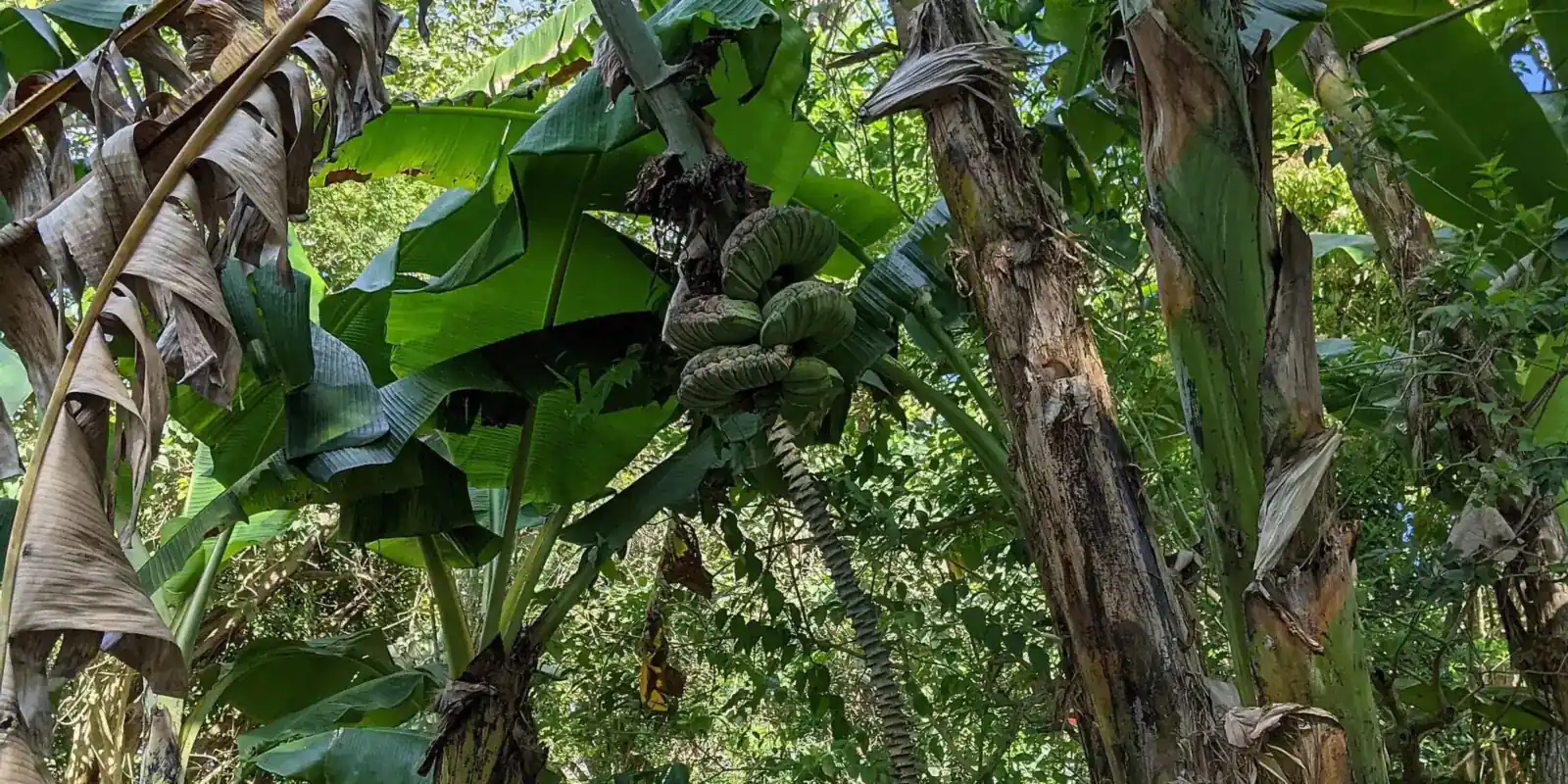
The trunk you see is a pseudostem made of tightly wrapped leaf sheaths. The real stem is an underground rhizome, or corm, which sends up new shoots called suckers or pups. Each pseudostem grows leaves, flowers once, produces a single bunch of fruit, and then dies. A sucker from the same rhizome takes its place, so a healthy clump lives for many years.
Climate And Hardiness Zones
Edible bananas fruit reliably outdoors in USDA zones 9b to 11, which includes South Florida, Hawaii, parts of Southern California, and the Gulf Coast. They grow best between about 75 and 95°F. Growth slows sharply below the mid 50s, and frost kills the leaves. In zones 7 to 9a, plants usually regrow from the roots each spring but rarely have time to ripen fruit.
Best Banana Varieties For Home Growers
Choosing the right variety matters more than any other decision. Size, cold tolerance, and flavor vary widely.
Dwarf Varieties For Pots
‘Dwarf Cavendish’ grows about 6 to 10 feet tall and produces the familiar supermarket type of banana. ‘Super Dwarf Cavendish’ stays smaller still and suits indoor pots. ‘Dwarf Red’ bears sweet red skinned fruit on a compact plant. Dwarf types are the best choice for patios and greenhouses.
Cold Tolerant Edible Varieties
‘Rajapuri’, ‘Blue Java’ (often sold as Ice Cream banana), and ‘Orinoco’ handle cool spells better than Cavendish types. They are popular along the northern edge of banana country, including north Florida and the Gulf Coast. ‘Blue Java’ bears fruit with a creamy, vanilla like texture.
Hardy Ornamental Bananas
Japanese fiber banana (Musa basjoo) survives winters in zones 6 to 10 when its roots are mulched deeply. It grows 10 feet or more in a single summer and brings a tropical look to cold climates. Its fruit is small, seedy, and not worth eating, so grow it for its leaves.
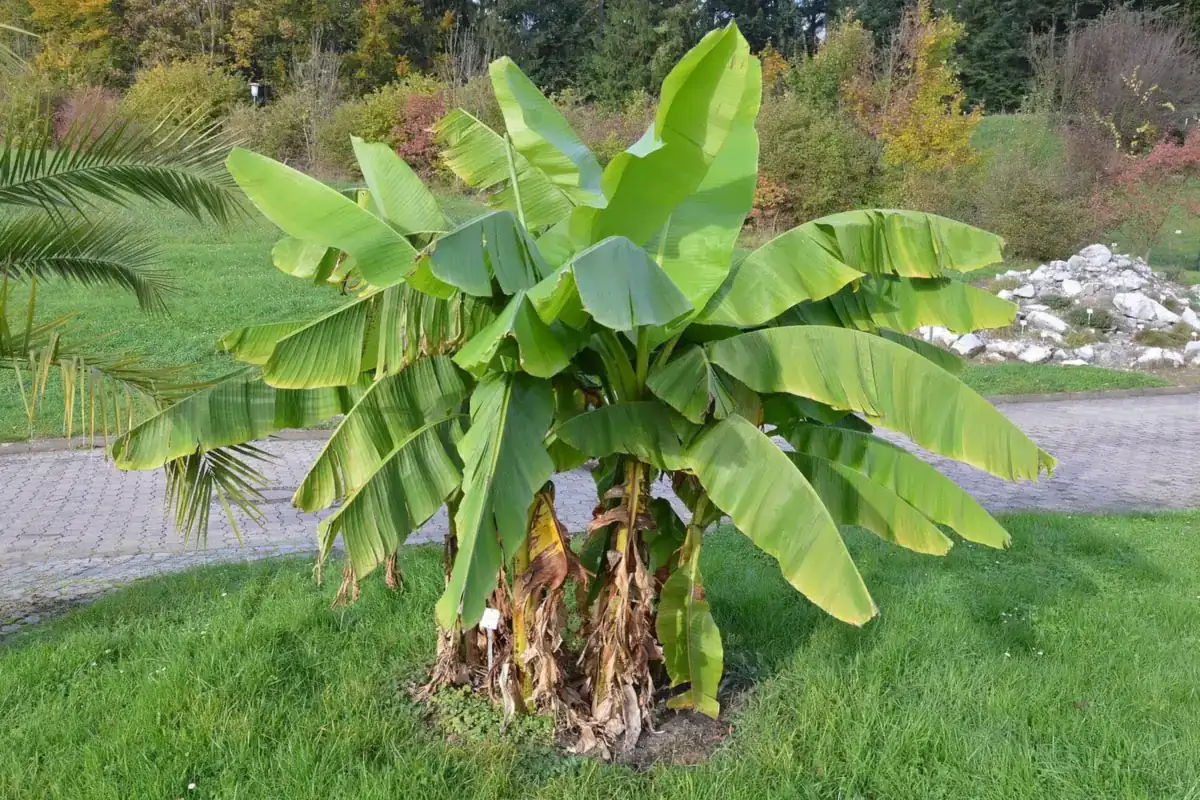
| Variety | Typical height | Cold tolerance | Best for |
|---|---|---|---|
| Super Dwarf Cavendish | 3 to 5 ft | Low | Indoor pots |
| Dwarf Cavendish | 6 to 10 ft | Low | Patio pots, small yards |
| Dwarf Red | 7 to 10 ft | Low | Containers, sweet fruit |
| Rajapuri | 8 to 12 ft | Moderate | Cooler edges of zone 9 |
| Blue Java | 12 to 20 ft | Moderate | Dessert fruit, wind tolerance |
| Musa basjoo | 10 to 18 ft | High (roots) | Ornamental in cold zones |
How To Plant A Banana Tree Outdoors
Bananas grow fast and feed hard. Give them the warmest, most sheltered spot you have.
When To Plant
Plant in spring once nights stay above 50°F. That gives the plant a full warm season to grow before winter. In frost free areas, you can plant almost any time, though spring is still best.
Picking The Site
Choose full sun and shelter from strong wind, which shreds leaves and can snap a pseudostem carrying a heavy bunch. A south facing wall helps in cooler zones. Allow 10 to 12 feet between plants of tall varieties, and keep them away from pools and paths, since leaves and fruit drop.
Soil Preparation
Bananas need rich, deep soil that holds moisture but drains well. Work in plenty of compost over a wide area. Slightly acidic soil, with a pH of about 5.5 to 7, suits them. In heavy clay or sites where water pools, plant on a raised mound.
Planting Step By Step
- Dig a hole about 2 feet wide and 2 feet deep, or wider for large plants.
- Mix compost into the backfill soil.
- Set a container plant at the same depth it grew in the pot. Set a sucker so its corm sits just below the soil surface.
- Backfill, firm gently, and water thoroughly.
- Mulch 3 to 4 inches deep in a wide ring, keeping mulch off the pseudostem.
Growing Bananas In Containers
Outside the tropics, a pot gives you control. You can move the plant into the sun in summer and indoors before frost.
Pot Size And Mix
Start with a pot of at least 15 to 20 gallons for a dwarf variety, with large drainage holes. Use a quality potting mix with extra compost or bark for structure. Garden soil packs down in pots and holds too much water.
Watering And Feeding In Pots
Container bananas dry out fast in summer heat. Water whenever the top inch of mix feels dry, which may mean daily in July. Feed every two to four weeks in the growing season with a balanced or potassium rich fertilizer. Cut back in fall as growth slows.
Moving Indoors For Winter
Bring the pot in before nights drop below about 50°F. Place it in the brightest window you have, or under grow lights, and keep it between 60 and 75°F if possible. Water less, letting the top few inches dry between waterings. Our guide to dwarf fruit trees for pots covers other tropical fruits that overwinter the same way.
Banana Plant Care
Water, food, and warmth drive banana growth. Give all three and the plant will grow a new leaf every week or so in summer.
Watering
Bananas use a lot of water because of their huge leaves. Keep the soil evenly moist through the growing season. Water deeply two or three times a week in hot, dry weather. Never let the soil stay soggy, since standing water rots the rhizome.
Fertilizing
Bananas are heavy feeders, especially of potassium. Apply a balanced fertilizer in small amounts every month or two from spring through early fall, spreading it in a wide circle and watering it in. The University of Florida IFAS banana guide gives fertilizer rates by plant age. For more on reading fertilizer labels, see our guide to the best fertilizer for fruit trees.
Managing Suckers
A clump left alone becomes a crowded thicket with small bunches. For fruit, keep one main plant plus one or two followers at different stages. Choose sword suckers, which have narrow, pointed leaves and grow from deep in the rhizome. Remove broad leaved water suckers, which are weakly attached and produce poor fruit. Cut unwanted suckers off at ground level and dig out the growing point.
Pests And Problems
Root rot from waterlogged soil is the most common killer. Banana weevils and nematodes damage roots in warm regions. Fusarium wilt, known as Panama disease, and banana bunchy top virus are serious in some areas, so buy plants from certified, disease free sources. Brown, torn leaves after wind are normal and do not harm the plant much.
Flowering And Harvesting Bananas
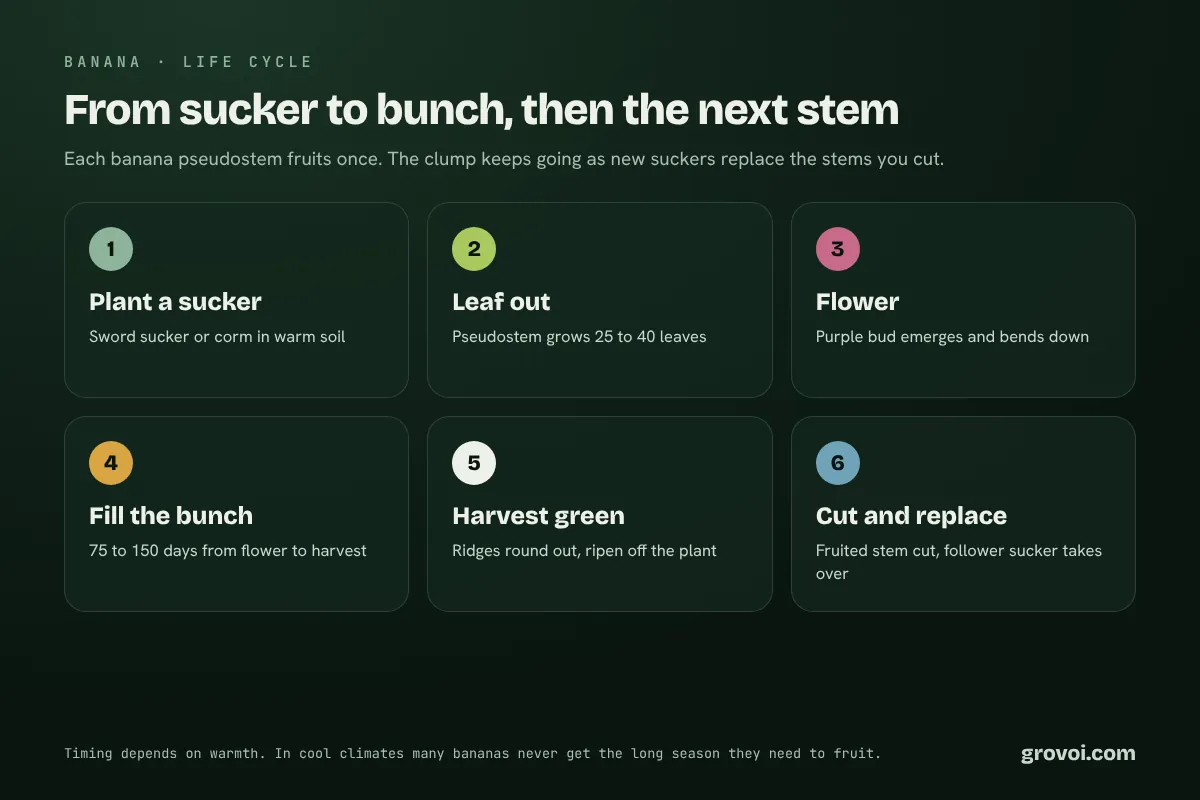
Under good conditions, a banana flowers after it has produced roughly 25 to 40 leaves. The bunch then needs several more months to fill out.
How Bananas Flower
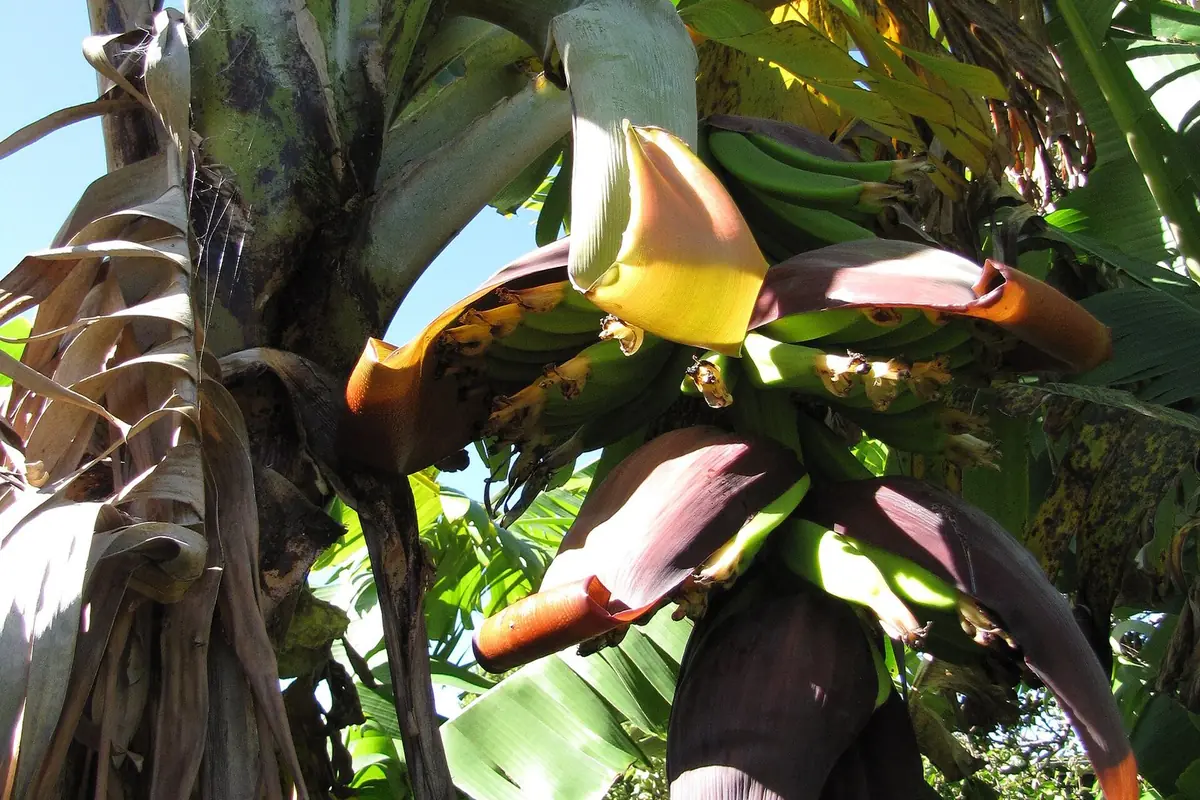
A large purple bud emerges from the top of the pseudostem and bends downward. As the purple bracts lift, rows of female flowers appear, and each becomes a “hand” of bananas. Male flowers form further down the stalk. Once all the hands have set, you can cut off the male bud a few inches below the last hand. This tidies the plant and may help the fruit fill.
When To Harvest
Bananas are picked green and ripened off the plant. Harvest when the fingers are plump and the sharp ridges along each fruit have rounded out, usually 75 to 150 days after the flower opens depending on the weather. If one or two fingers start turning yellow, harvest the whole bunch right away. Cut the stalk with a sharp knife, and have a helper support the bunch, which can be heavy.
Ripening Bananas At Home
Hang the bunch in a cool, shady spot or break it into hands. Bananas ripen over one to two weeks. A paper bag with an apple speeds things up. Do not refrigerate green bananas, since cold stops ripening.
After The Harvest
Cut the fruited pseudostem down to the ground, since it will not flower again. Chop it and lay the pieces around the clump as mulch. The strongest follower sucker then becomes the next fruiting plant.
Winter Care For Bananas
How you handle winter depends on how cold it gets.
Light Frost Areas
In zones 9 and 10, cover plants with frost cloth on cold nights and wrap the pseudostem. If leaves die back, leave them in place until spring as insulation, then trim.
Colder Areas
In zones 7 and 8, cut the plant down to 1 to 2 feet after the first frost blackens the leaves. Pile 12 inches or more of straw or shredded leaves over the stump. For hardy Musa basjoo, this is usually enough. For tender types, dig the rhizome, let it dry briefly, and store it in a cool, frost free spot until spring.
Frequently Asked Questions
How long does it take a banana tree to produce fruit?
In warm climates, a banana planted from a healthy sucker or container plant usually flowers in about 9 to 15 months. The bunch then needs another 2 to 5 months to fill. In cooler areas or containers, it often takes longer.
Can you grow bananas in a pot?
Yes. Dwarf varieties such as ‘Dwarf Cavendish’ and ‘Super Dwarf Cavendish’ grow well in pots of 15 to 20 gallons or more. They need full sun, rich potting mix, frequent watering, and regular feeding, and they must come indoors before frost.
Does a banana tree die after fruiting?
The pseudostem that fruits dies, but the plant does not. New suckers grow from the same underground rhizome, and one of them will become the next fruiting stem.
How cold can a banana tree survive?
Most edible bananas suffer leaf damage near 32°F and stop growing below about 55°F. Their roots can survive a light freeze if mulched. Musa basjoo roots survive winter in zone 6 with heavy mulch, though the top dies back.
Why are my banana leaves turning brown?
Brown, torn edges usually come from wind or low humidity. Browning that spreads from the leaf edges can mean cold damage, drought, or a lack of potassium. Yellowing older leaves are normal as the plant grows new ones.
How often should I water a banana plant?
Keep the soil evenly moist. In summer heat, water in ground plants deeply two or three times a week and container plants as often as daily. Water much less in winter, when growth slows.
Do I need two banana plants to get fruit?
No. Edible bananas develop fruit without pollination, so a single plant will produce a bunch.
Final Thoughts
Bananas reward warmth, water, and food with fast growth and, in the right conditions, a heavy bunch of fruit. In colder regions, a dwarf variety in a pot or a hardy ornamental banana still brings the tropics home.
Your Banana Growing Checklist
Pick a variety that suits your climate and space. Plant in spring in rich, well drained soil and full sun, sheltered from wind. Keep the soil moist and feed monthly in the growing season. Keep one main stem and one or two sword suckers. Harvest when the fruit plumps and the ridges round out, then cut the old stem down. For more tropical fruits, read our guides to the mango tree and the avocado tree.