Fig Tree: How To Grow And Harvest Figs In The Ground Or In Pots
On this page
- Fig Tree Growing Guide For Home Gardens
- How Fig Trees Fruit: Breba And Main Crops
- Common, Smyrna And San Pedro Figs
- USDA Zones And Cold Hardiness For Fig Trees
- Best Fig Varieties For Home Gardens
- Best Site And Soil For A Fig Tree
- How To Plant A Fig Tree In The Ground
- Growing Fig Trees In Pots
- Watering Fig Trees
- Fertilizing Fig Trees
- Pruning Fig Trees
- Winter Protection For Fig Trees
- Fig Rust And Leaf Problems
- Root-Knot Nematodes
- Fig Souring, Beetles And Birds
- When And How To Harvest Figs
- Storing Fresh Figs
- Fig Tree FAQs
Fig Tree Growing Guide For Home Gardens
A fig tree is one of the easiest fruit trees to grow at home. Most common figs need no pollination partner, little spraying and only light pruning. Give them heat, sun and drainage, and they crop reliably.
The main challenge is cold. Figs are subtropical, so your USDA zone decides whether the tree grows in the ground, needs winter wrapping or lives in a pot. Choosing a hardy variety solves most of that problem.
This guide covers each step: choosing a type and variety, planting in the ground or in pots, watering, feeding, pruning and winter protection. It finishes with pest fixes, harvest signs and tips for storing soft, ripe figs.
How Fig Trees Fruit: Breba And Main Crops
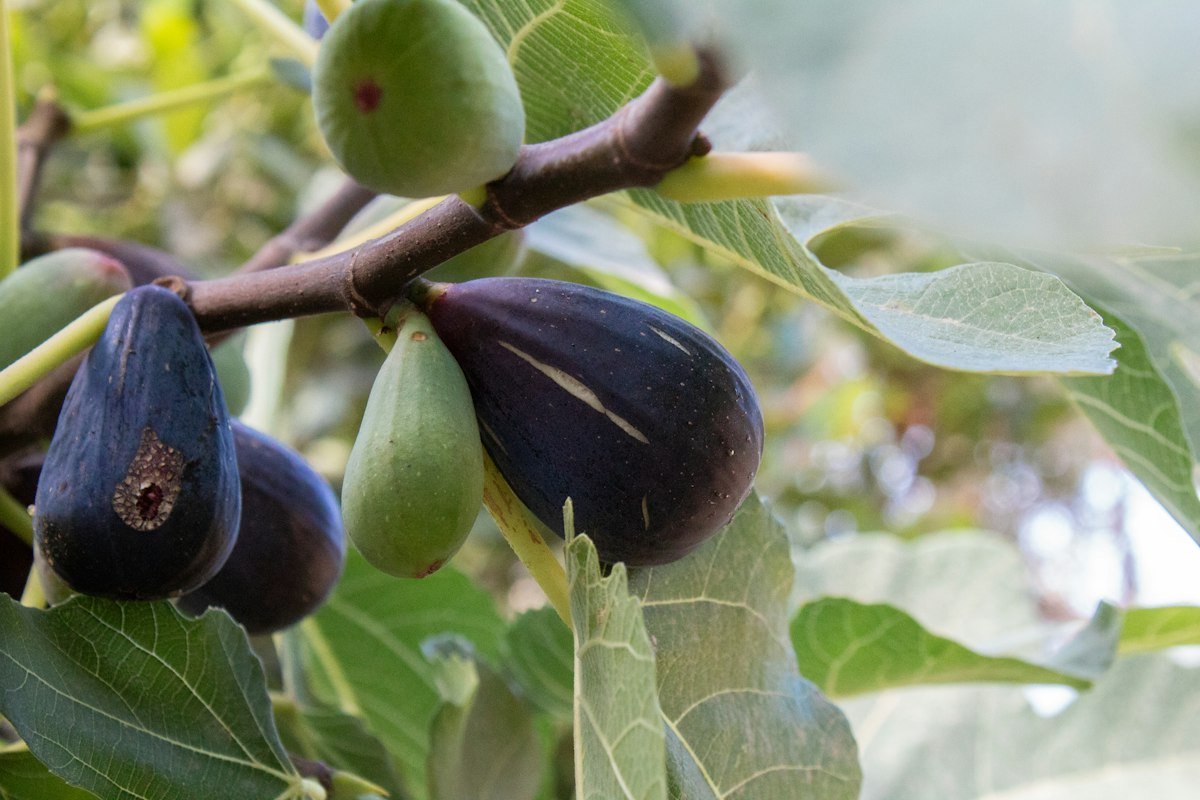
A fig is not a true fruit but a syconium, a hollow stem tip lined with tiny flowers. The small opening at the base is called the eye, or ostiole. Inside, those flowers become the jammy seeds you taste.
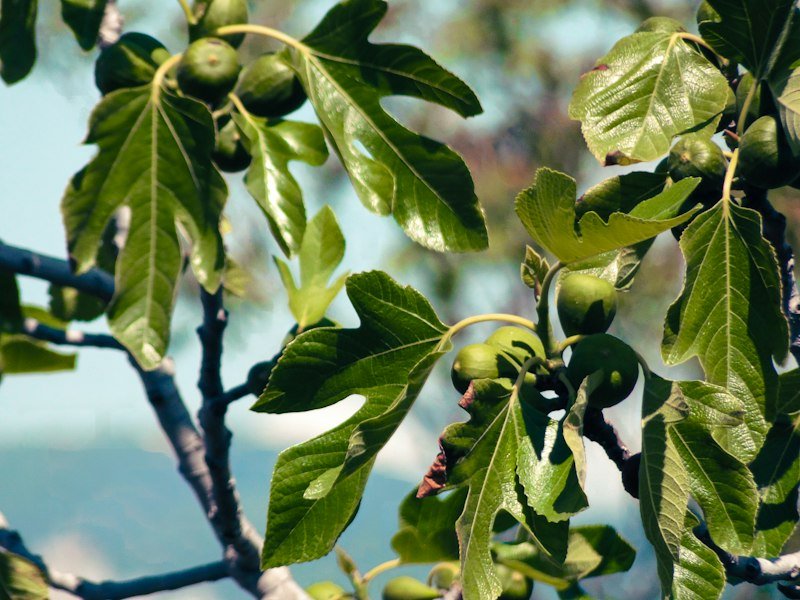
Many fig trees produce two crops. The breba crop forms on last year’s wood and ripens in early summer. The main crop forms on new shoots of the current season and ripens from late summer into fall.
This matters for pruning and cold areas. Heavy winter pruning or a hard freeze removes the breba crop. However, varieties that fruit well on new wood, such as Chicago Hardy, still give a main crop after dying back.
Common, Smyrna And San Pedro Figs
Figs fall into three groups based on pollination. Common figs set fruit without any pollination at all. Nearly every variety sold at garden centers, including Brown Turkey and Celeste, belongs to this easy group.
Smyrna figs, such as Calimyrna, drop their fruit unless a tiny fig wasp carries pollen from a wild caprifig. That wasp only survives in warm regions such as central California, so Smyrna types rarely succeed in home gardens elsewhere.
San Pedro figs fall between the two. Their breba crop sets without pollination, while the main crop needs the fig wasp. For a reliable harvest almost anywhere, choose a common fig and plant just one tree.
USDA Zones And Cold Hardiness For Fig Trees
Fig trees grow best in USDA hardiness zones 7 to 10. Dormant wood usually survives brief dips to about 15°F to 20°F. Below that, branches die back, though established roots often resprout the following spring.
In zones 5 and 6, choose hardy varieties and plan on winter protection. Chicago Hardy and Celeste are the usual picks, because they recover from dieback and still ripen a crop on the new season’s growth.
Chill needs are low, so figs suit the South and warm West Coast well. Still, a late spring frost can scorch new shoots. Ask your county extension office which fig varieties ripen reliably in your local season length.
Best Fig Varieties For Home Gardens
The best fig variety depends on your winter low, summer length and humidity. Cold gardens need hardy varieties that fruit on new wood. Humid regions benefit from closed-eye figs, which resist insects and souring.
For the Southeast, Celeste and LSU Purple are dependable and resist souring. In cold regions, Chicago Hardy and Olympian are the safest bets. Meanwhile, California and the desert Southwest suit Black Mission and Kadota.
For pots and small yards, compact varieties such as Violette de Bordeaux stay manageable. Compare the table below, then confirm local performance with a nearby nursery or your extension office before you buy.
| Variety | Fruit | Eye | Best Zones | Typical Ripening | Why Grow It |
|---|---|---|---|---|---|
| Celeste | Small, violet-brown, very sweet | Closed | 6 to 9 | July to August | Hardy, resists souring, classic Southern sugar fig |
| Brown Turkey | Medium, coppery brown | Medium | 7 to 10 | June breba, August main crop | Adaptable, two crops, good in containers |
| Chicago Hardy | Medium, dark purple | Small | 5 to 10 | August to September | Fruits on new wood after freezing back |
| LSU Purple | Medium, glossy purple | Closed | 7 to 10 | June to fall | Disease tolerant, long cropping season |
| Olympian | Large, purple-green | Medium | 6 to 9 | August to September | Cold hardy, suits cool summer regions |
| Black Mission | Medium, black-purple | Medium | 8 to 10 | June breba, late summer main crop | Rich flavor, heavy breba crop in warm areas |
| Kadota | Medium, yellow-green | Closed | 8 to 10 | July to September | Mild, nearly seedless, ideal for preserves |
| Violette de Bordeaux | Small, dark purple | Small | 7 to 10 | July to September | Compact, sweet and well suited to pots |
Best Site And Soil For A Fig Tree
Fig trees need full sun, ideally eight hours or more, to ripen sweet fruit. In marginal zones, plant against a south or west-facing wall. The masonry stores daytime heat and shields the tree from cold winds.
Figs tolerate a range of soils, but they hate soggy roots. Choose well-drained loam with plenty of organic matter. If your soil is heavy clay, plant on a wide mound or raised bed instead of a pit.
Aim for a soil pH of about 6.0 to 6.5. Also, give the tree room. Fig roots spread well beyond the canopy, so keep it several feet from foundations, drains, septic lines and paved paths.
How To Plant A Fig Tree In The Ground
Plant dormant bare-root figs in late winter or early spring. Container figs can go in during spring, once the risk of hard frost has passed. That timing gives roots a full season to establish before winter.
Dig a hole two to three times as wide as the root ball. Unlike most fruit trees, figs grow on their own roots, so you can set them 2 to 4 inches deeper. Deeper planting encourages extra stems from below ground.
Space single-trunk trees 15 to 20 feet apart and bush-form figs about 10 feet apart. Backfill with native soil, water deeply and add 2 to 3 inches of mulch, kept a few inches from the stems.
Growing Fig Trees In Pots
Figs are among the best fruit trees for containers, because restricted roots actually encourage fruiting. A pot also lets gardeners in zones 5 and colder move the tree into shelter for winter.
Start with a 5 to 7 gallon pot and move up to 15 to 20 gallons as the tree grows. Use a quality potting mix with drainage holes, not garden soil. Then, repot or root prune every two to three years.
As with a potted lemon tree, containers dry out quickly in summer heat. Once leaves drop in fall, move the dormant fig into an unheated garage or shed that stays above about 20°F. Water lightly once a month.
Watering Fig Trees
Fig roots are shallow and spread widely, so trees feel drought quickly. Water a newly planted fig about twice a week through its first summer. Keep the root zone evenly moist, not soggy.
Established figs need deep watering every week or two during dry spells, about 1 to 1.5 inches. Potted figs may need water daily in hot weather. Drip irrigation or a soaker hose keeps foliage dry.
Consistency matters most as fruit ripens. Drought stress makes figs drop early, while heavy rain or sudden deep watering on ripe fruit causes splitting. A thick layer of mulch helps smooth out both extremes.
Fertilizing Fig Trees
Figs need far less fertilizer than most fruit trees. Too much nitrogen pushes soft, leafy growth that sets little fruit and fails to harden before winter. That late growth is especially easy to kill with frost.
NC State Extension suggests about 1 pound of 8-8-8 fertilizer per year of tree age, up to 12 pounds. On heavy soils, apply it once as buds swell. On sandy soils, split it between budbreak and late May.
Then, judge by growth. About 12 inches of new shoot growth each year is a healthy target. If shoots grow longer and fruit is sparse, skip feeding the next season. Never fertilize after midsummer.
Pruning Fig Trees
Figs need only light pruning. Do it in late winter, just before growth begins, so you can see the framework clearly. Wear gloves and long sleeves, because the milky latex sap irritates skin.
Train young trees to either a single trunk with three or four scaffold branches or a multi-stem bush. Bush form suits cold regions, since several stems make recovery easier if one freezes back to the ground.
On established trees, remove dead wood, root suckers, crossing limbs and branches that droop to the ground. Prune lightly if you want a breba crop, because those figs form on last year’s wood. Varieties that crop on new wood tolerate harder cuts.
Winter Protection For Fig Trees
In zones 6 and 7, young figs benefit from winter protection until they are well established. After the first hard frost drops the leaves, pile mulch or straw 1 to 2 feet deep around the base of the stems.
For more protection, tie the branches together, wrap them in burlap and fill the gaps with dry leaves or straw. Then, cover the bundle with a waterproof layer. Remove all wrapping in spring before buds start to swell.
In zone 5, many gardeners bend flexible stems to the ground and bury them, or grow figs only in pots. Even with care, expect some dieback. Hardy varieties usually resprout and still ripen a main crop.
Fig Rust And Leaf Problems
Fig rust, caused by the fungus Cerotelium fici, is the most common leaf disease in humid regions. Small yellow spots turn reddish brown, and the undersides show rusty pustules. Badly affected leaves yellow and drop early.
Early leaf drop weakens the tree and can expose ripening fruit to sunscald. So, rake up fallen leaves each fall and prune for good airflow. Also, water at the base rather than over the foliage.
Fig mosaic virus causes mottled yellow-green patterns on leaves and is spread by tiny eriophyid mites. Most infected trees still crop normally. However, there is no cure, so buy healthy stock from a trusted nursery.
Root-Knot Nematodes
Root-knot nematodes are microscopic worms that live in soil, especially warm, sandy soils across the South. They feed inside fig roots and cause knotty swellings, or galls, that block water and nutrient uptake.
Infested trees look stunted, wilt quickly in heat and produce small crops. Because fig roots are shallow, they are especially vulnerable. NC State Extension lists nematodes as the main pest problem for figs in home gardens.
There is no simple chemical fix for home growers. Instead, buy nematode-free plants, add organic matter and mulch heavily to keep roots cool and moist. In badly infested soil, grow figs in large containers.
Fig Souring, Beetles And Birds
Souring happens when yeasts and bacteria enter ripe figs through the eye. The fruit ferments, smells sour and may ooze. Dried fruit beetles and fruit flies spread the problem as they feed on ripening fruit.
Closed-eye varieties such as Celeste and LSU Purple resist souring well. Also, harvest promptly and clear fallen fruit every day. Overripe figs left on the tree or ground attract beetles, wasps and ants.
Birds and squirrels love ripe figs too. Lightweight netting over smaller trees works well. Alternatively, pick figs as soon as they ripen, since a few hours of delay can mean losing the fruit.
When And How To Harvest Figs
Figs do not continue ripening after they are picked, so timing is everything. A ripe fig has full color, feels soft when gently squeezed and hangs down on a bent neck rather than pointing outward.
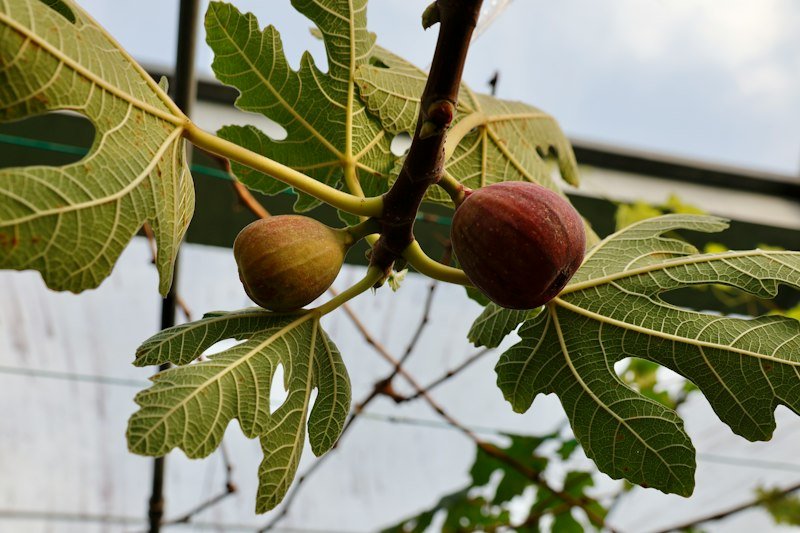
Other signs include small cracks in the skin and a drop of nectar at the eye. Unripe figs are firm, rubbery and full of bitter latex. If white sap flows from the stem when you pick, the fig was not ready.
Lift each fig gently and snap the stem, or clip it with pruners. Check the tree every day or two, because figs ripen unevenly. Wear gloves, since the latex can irritate sensitive skin.
Storing Fresh Figs
Fresh figs are among the most perishable fruits you can grow. Spread them in a single layer on a tray lined with paper towel. Then, refrigerate them unwashed and eat them within two to three days.
For longer storage, freeze figs whole or halved on a tray before bagging them. Frozen figs work well in smoothies, sauces and baking. Alternatively, cook them into jam, which keeps the summer flavor for months.
Drying is another option in dry climates. Use a dehydrator at about 135°F until the figs feel leathery but still pliable. Kadota and Black Mission are especially popular for drying and preserving at home.
Fig Tree FAQs
How Long Does A Fig Tree Take To Bear Fruit?
Most fig trees bear their first crop two to three years after planting. Container-grown trees and cuttings from fruiting wood often start sooner. Full sun and light feeding help young trees fruit earlier.
Do You Need Two Fig Trees To Get Fruit?
No. Common figs, including Brown Turkey, Celeste and Chicago Hardy, are self-fruitful and need no pollination. Only Smyrna and San Pedro types need the fig wasp, which lives in a few warm regions.
Why Is My Fig Tree Not Producing Fruit?
Common causes include a tree that is too young, too much shade, heavy nitrogen feeding or a hard freeze that killed the fruiting wood. Drought stress and over-pruning can also stop a crop from forming.
Why Are My Figs Dropping Before They Ripen?
Early fruit drop usually comes from drought stress, sudden heavy watering or nematode damage to roots. A Smyrna fig without its pollinating wasp also drops young fruit. Keep moisture steady and mulch the root zone.
Can You Grow A Fig Tree In A Pot Indoors?
Figs grow well in pots outdoors in summer, but they need a winter rest. Keep the dormant tree in a cool garage or shed rather than a warm living room. Return it outdoors once frost risk has passed.
How Long Do Fig Trees Live?
Healthy fig trees often live and crop for 50 years or more. In cold zones, roots may outlive many frozen-back tops. Good drainage, steady moisture and nematode control all help a tree stay productive.
Pingback: Olive Tree: Grow Olives Indoors, In Pots Or In Ground
Pingback: Pomegranate Tree: How To Grow, Care For And Harvest
Pingback: Fiddle Leaf Fig Care: Light, Water And Leaf Problem Fixes
Pingback: Rubber Tree Plant Care: Light, Pruning And Propagation
Pingback: Date Palm Tree: How To Grow, Pollinate And Harvest Dates - Grovoi
Pingback: Best Trees For Small Yards: 20 Compact Picks For Shade, Flowers And Fruit - Grovoi